The Best Attendance Tracking App for Mobile Use in 2026
The best attendance tracking app for mobile use in 2026 is no longer just the app with the cleanest clock-in screen.
In 2026, the real separator is what happens after the punch. Does the system move attendance data into scheduling, overtime controls, approvals, leave tracking, job costing, and payroll without friction? Can it verify location, block buddy punching, and still keep operating when connectivity drops? The best mobile attendance tracking app now has to perform as a real workforce management platform, not just a digital punch card.
That is why TimeTrex remains our top choice. For businesses that want accurate time capture, payroll-ready data, stronger fraud controls, and room to scale without stitching together multiple disconnected tools, TimeTrex offers the strongest overall package for mobile attendance tracking in 2026.
TL;DR: Best Mobile Attendance Apps in 2026
- Best Overall: TimeTrex is the strongest all-in-one choice for businesses that want mobile attendance, scheduling, payroll, reporting, and accountability features in one connected platform.
- Best for Deskless and Frontline Teams: Connecteam stands out for mobile-first operations, communication, forms, and scheduling.
- Best for Automation-Heavy Companies: Rippling is ideal when time tracking is part of a larger HR, IT, and finance automation strategy.
- Best for Simplicity and Accountability: Buddy Punch is a strong fit for teams that want straightforward setup plus Face ID, GPS, and geofencing.
- Best for Remote and Field Visibility: Hubstaff is best for businesses that want location awareness and productivity insights together.
- Best Free Entry Point: Clockify remains one of the easiest ways to start tracking time with minimal upfront cost.
On This Page
What Matters Most in a Mobile Attendance App in 2026
The best attendance tracking app for mobile use in 2026 has to do more than capture punches. It has to create confidence. That means confidence in payroll accuracy, confidence in location verification, confidence in compliance workflows, and confidence that managers can act on labor data before costs drift.
We ranked the leading tools using six criteria that matter most to modern US employers:
1. Payroll closeness
The closer attendance data sits to payroll, the fewer exports, sync failures, and manual corrections your team deals with.
2. Mobile verification
GPS, geofencing, facial recognition, photo capture, and device controls all help reduce fraud and time theft.
3. Connectivity resilience
Field teams, construction crews, healthcare staff, and mobile service workers do not always have perfect signal.
4. Scheduling and leave depth
Attendance is much more valuable when it connects directly to schedules, time-off requests, and labor planning.
5. Manager usability
Supervisors need to approve, correct, and review hours quickly from mobile devices, not only from desktop.
6. Total cost of ownership
In 2026, the cheapest app on paper is often not the cheapest system once payroll add-ons, admin time, and integration sprawl are counted.
#1 TimeTrex: Why It Still Leads in 2026
Best for: US small and mid-sized businesses, multi-location employers, and field-heavy organizations that want one system for mobile attendance tracking, scheduling, leave, reporting, and payroll.
Bottom line: TimeTrex stays in the top spot because it solves the hardest part of attendance tracking: turning punch data into usable business operations. Instead of stopping at clock-in and clock-out, TimeTrex connects attendance to scheduling, time and attendance controls, employee self-service, payroll, and broader workforce management workflows.
#1 TimeTrex
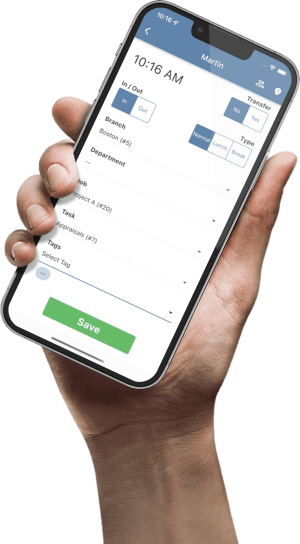
Why it wins: TimeTrex combines mobile time clocks, GPS and geofencing, biometric facial recognition, offline punch capture, employee scheduling, leave management, and native payroll in the same ecosystem. For businesses that want fewer moving parts and fewer payroll headaches, that architecture matters.
Why TimeTrex outranks the field
First, it is payroll-native. Many mobile attendance apps collect hours and then push them elsewhere. TimeTrex goes further. Because scheduling, attendance, and payroll sit inside the same broader platform, employers get a cleaner flow from punch to approval to pay run. That reduces manual reconciliation and lowers the chance of payroll errors.
Second, it is stronger in real-world mobile conditions. Offline punch capture is still a major differentiator. For field teams, mobile crews, healthcare staff, warehouses, and construction environments, that matters a lot more than glossy UI alone. TimeTrex also layers GPS/geofencing and biometric facial recognition on top, which gives employers stronger verification than a basic mobile timer.
Third, it offers deployment flexibility that many newer competitors do not. TimeTrex is unusual in this category because it can fit cloud-first buyers, businesses that want on-site control, and organizations that want a Community Edition path. That flexibility gives it a broader strategic fit than many cloud-only attendance tools.
Who should choose TimeTrex in 2026
- SMBs that want one workforce system, not five separate subscriptions
- Employers that run payroll in-house and want fewer manual handoffs
- Field and mobile teams that need offline punching and location verification
- Multi-location businesses that need stronger accountability controls
- Organizations that value cloud or on-site deployment flexibility
What to weigh before buying
TimeTrex is a deeper platform than lightweight point solutions. That is exactly why it ranks first, but it also means buyers should expect more capability and more operational range than a simple timer app. If your only goal is a bare-bones punch clock with no payroll or workforce management ambitions, a smaller tool may feel lighter. If your goal is to build a durable workforce stack, TimeTrex is the stronger long-term decision.
The Best Alternatives by Use Case
TimeTrex is the strongest overall recommendation, but the market still has excellent alternatives for narrower needs. The right choice depends on whether your priority is deskless operations, cross-department automation, simple accountability, field visibility, or low-cost entry.
#2 Connecteam: Best for Deskless and Frontline Operations
Connecteam is one of the strongest mobile-first platforms for frontline businesses. Its appeal goes beyond attendance. It bundles time clock functionality with scheduling, chat, updates, forms, checklists, and training tools, which makes it especially attractive for retail, hospitality, cleaning, security, home services, and construction-adjacent teams.
Its pricing structure is also friendly to smaller teams, with a free small business option and fixed pricing logic for the first 30 users on paid tiers. That gives Connecteam a very compelling entry point for mobile-heavy teams that want operational tools in one app.
Why it is not #1: Connecteam is excellent for frontline execution, but it is still more integration-dependent on payroll than TimeTrex. If your top priority is collapsing attendance and payroll into one tightly connected system, TimeTrex remains the better fit.
#3 Rippling: Best for Automation-Driven Companies
Rippling is powerful because it treats time tracking as part of a much bigger operating model. If your company wants HR, IT, finance, automation, device management, workflows, and time tracking connected through one platform, Rippling is hard to ignore. Its mobile time clock ties directly into payroll and PTO, and managers can review and approve timesheets from mobile devices.
This makes Rippling especially compelling for fast-growing companies that want to automate onboarding, policy flows, app provisioning, approvals, and other back-office tasks around employee data.
Why it is not #1: Rippling is broader than most buyers need if the main problem is attendance tracking for a mobile workforce. Its modular pricing model and wider scope can make it more expensive and more complex than an SMB really needs. TimeTrex is the better value play for employers who want deeper workforce management without buying into a larger IT-and-finance operating system.
#4 Buddy Punch: Best for Simplicity and Accountability
Buddy Punch remains one of the easiest platforms to understand, deploy, and train on. It is particularly attractive to businesses that want time tracking and attendance controls without adopting a full workforce suite. Face ID, GPS, geofences, device controls, and payroll add-ons all make it a practical choice for employers focused on reducing buddy punching and simplifying payroll preparation.
Its scheduling capabilities are useful, and the pricing structure is relatively transparent. For many retail, office, light service, and connected job-site environments, Buddy Punch is a very practical option.
Why it is not #1: Buddy Punch is more dependent on connectivity than TimeTrex for location-driven workflows. If mobile teams frequently work in weak-signal environments, TimeTrex’s offline strength gives it the edge.
#5 Hubstaff: Best for Remote and Field Visibility
Hubstaff is strongest when employers want to combine attendance tracking with location intelligence and productivity analysis. It is well suited to remote teams, field service businesses, and employers that want geofencing, job-site automation, route visibility, notes, photos, and more operational context around hours worked.
For distributed teams where management wants more than attendance alone, Hubstaff can be extremely useful. It bridges remote knowledge work and mobile field work more effectively than many pure time clock tools.
Why it is not #1: Hubstaff leans harder into monitoring and visibility than many companies want culturally. For businesses that care more about payroll-tight workforce management than surveillance-style insights, TimeTrex offers the better balance.
#6 Clockify: Best Free Entry Point for Time Tracking
Clockify is still one of the easiest ways to start tracking time without committing serious budget. Its free plan is attractive, its cross-platform availability is strong, and it gives small teams a clean way to get off spreadsheets. Clockify also supports mobile tracking, kiosk use cases, GPS/location features, and approvals or scheduling on paid tiers.
This makes it a solid starting point for startups, freelancers, agencies, and early-stage teams that simply need a reliable clock-in system before they invest in a larger workforce stack.
Why it is not #1: Clockify is strongest as a time tracking product, not as a payroll-native attendance platform. Businesses that scale beyond basic tracking often end up needing more approvals, scheduling depth, or payroll integration than the free entry point provides. TimeTrex is the stronger long-term platform for operational maturity.
Head-to-Head Comparison
The table below focuses on what actually matters in a 2026 buying decision: strategic fit, operating model, and the trade-off you are making with each product.
Table 1: Best-Fit Comparison
| Solution | Best For | 2026 Strength | Main Trade-Off |
|---|---|---|---|
| TimeTrex | SMBs, multi-location employers, field teams, payroll-focused businesses | All-in-one workforce management with mobile attendance, scheduling, payroll, offline support, and strong verification controls | Broader platform depth than lightweight punch-clock apps |
| Connecteam | Deskless, frontline, and operations-heavy teams | Excellent mobile-first operations stack with scheduling, chat, forms, and training tools | Payroll is more integration-driven than native |
| Rippling | High-growth companies focused on automation across HR, IT, and finance | Powerful workflows, unified employee data, strong mobile approvals | Broader and more expensive than many attendance-only buyers need |
| Buddy Punch | Teams that want easy setup and strong accountability features | Simple UX with Face ID, GPS, geofences, and optional payroll | Connectivity matters more for field accuracy |
| Hubstaff | Remote, hybrid, and field teams needing visibility into work patterns | Geofencing, route awareness, productivity insights, job-site context | Monitoring-heavy posture is not right for every culture |
| Clockify | Freelancers, startups, and budget-conscious teams | Low-friction entry into digital time tracking with a strong free plan | Advanced workforce controls require paid tiers or separate systems |
Table 2: Pricing and Platform Posture
| Solution | Entry Pricing Posture | Payroll Posture | Mobile Field Readiness |
|---|---|---|---|
| TimeTrex | Community Edition path plus paid cloud/on-site options | Native payroll-centric workforce platform | High |
| Connecteam | Free small business tier and fixed-price structure for smaller teams | Payroll integrations and exports | High |
| Rippling | Modular pricing on top of a core platform | Native payroll inside a broader HR/IT/finance stack | Medium to High |
| Buddy Punch | Base fee plus per-user pricing and add-ons | Payroll available as an add-on | Medium |
| Hubstaff | Per-seat pricing | Attendance and payroll workflows, not a full payroll-first WFM stack | High |
| Clockify | Free unlimited-user entry with paid upgrades for deeper controls | Payroll calculation and export support, not payroll-native | Medium |
Final Recommendations
Why TimeTrex is still the best mobile attendance app in 2026
TimeTrex stays on top because it solves the full attendance problem, not just the clock-in moment. It gives employers a tighter connection between attendance, scheduling, leave, payroll, verification, and reporting. That is the difference between a tool that looks good in a demo and a system that actually lowers admin friction every pay period.
If your business wants accurate attendance, fewer payroll handoffs, stronger fraud controls, better workforce visibility, and an upgrade path that does not force you into a patchwork software stack, TimeTrex remains the best overall choice in 2026.
Choose based on your real operating model
- Choose TimeTrex if you want the strongest all-in-one workforce management platform with mobile attendance at the core.
- Choose Connecteam if your teams live in the field and operational communication, forms, and mobile scheduling matter as much as time tracking.
- Choose Rippling if attendance is one part of a much larger automation strategy across HR, IT, and finance.
- Choose Buddy Punch if simplicity, anti-buddy-punching controls, and clean day-to-day usability are your priority.
- Choose Hubstaff if visibility into routes, job sites, and productivity patterns matters more than payroll closeness.
- Choose Clockify if your main goal is to start tracking time cheaply and upgrade later only when complexity appears.
Ready to modernize attendance tracking?
See how TimeTrex can unify mobile attendance tracking, employee scheduling, payroll, time and attendance, and employee self-service in one connected platform.
Sources and Methodology
This ranking was updated for 2026 using current official vendor product pages, pricing pages, and help documentation. The methodology prioritized payroll closeness, mobile verification depth, offline resilience, scheduling tie-in, manager usability, and total cost of ownership.
- TimeTrex Mobile Time Clock
- TimeTrex Community Edition
- TimeTrex Features
- TimeTrex On-Site Deployment
- Connecteam Time Clock
- Connecteam Pricing
- Connecteam Payroll Integrations
- Rippling Time & Attendance
- Rippling Mobile Time Clock
- Rippling Workflows
- Rippling Pricing
- Buddy Punch
- Buddy Punch Starter Plan
- Buddy Punch GPS
- Buddy Punch Geofences
- Hubstaff Geofence Time Tracking
- Hubstaff Pricing
- Clockify
- Clockify Location Features
- Clockify Approval Features
- Clockify Pricing
Disclaimer: The content provided on this webpage is for informational purposes only and is not intended to be a substitute for professional advice. While we strive to ensure the accuracy and timeliness of the information presented here, the details may change over time or vary in different jurisdictions. Therefore, we do not guarantee the completeness, reliability, or absolute accuracy of this information. The information on this page should not be used as a basis for making legal, financial, or any other key decisions. We strongly advise consulting with a qualified professional or expert in the relevant field for specific advice, guidance, or services. By using this webpage, you acknowledge that the information is offered “as is” and that we are not liable for any errors, omissions, or inaccuracies in the content, nor for any actions taken based on the information provided. We shall not be held liable for any direct, indirect, incidental, consequential, or punitive damages arising out of your access to, use of, or reliance on any content on this page.
Time To Clock-In
Start your 30-day free trial!
Experience the Ultimate Workforce Solution and Revolutionize Your Business Today
- Eliminate Errors
- Simple & Easy To Use
- Real-time Reporting
Saving businesses time and money through better workforce management since 2003.
Copyright © 2026 TimeTrex. All Rights Reserved.