
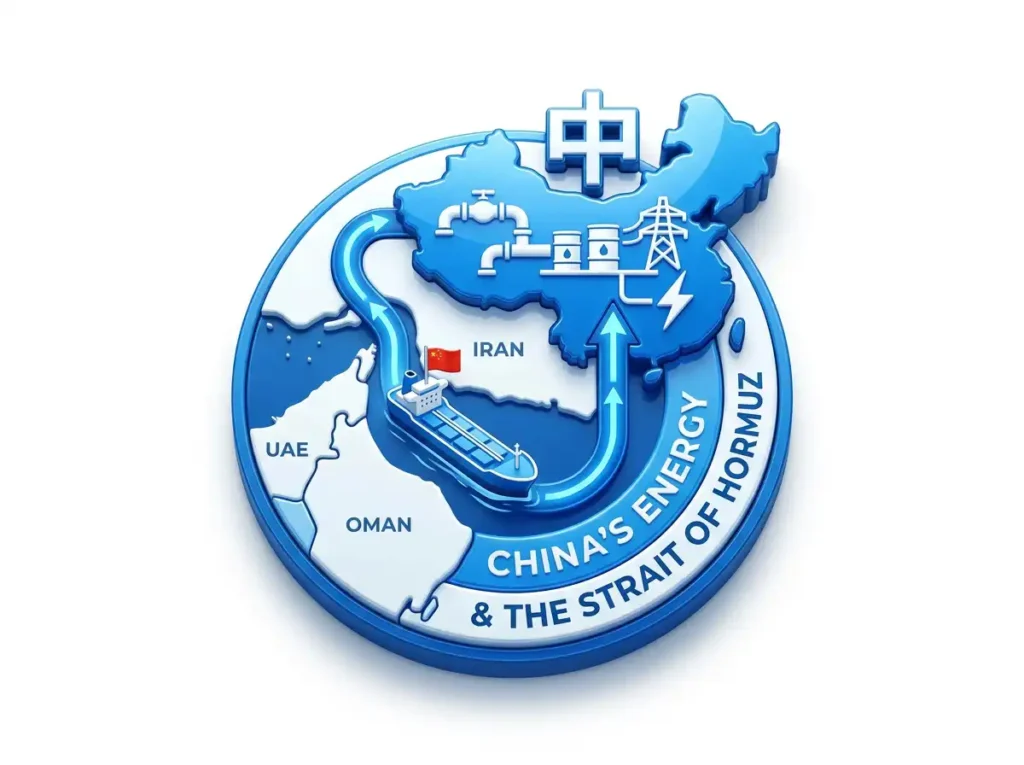

China’s Energy and the Strait of Hormuz
TL;DR
The 2026 escalation in the Middle East has closed the Strait of Hormuz, cutting off massive supplies of seaborne oil and liquefied natural gas (LNG) globally. While headlines suggest immediate catastrophe for China, its two-decade "defense-in-depth" strategy, which includes over 1.3 billion barrels in oil reserves, unprecedented vehicle electrification, and vast overland pipelines from Russia, gives Beijing an estimated six-month buffer. However, China's natural gas reserves remain a weak point. If the crisis becomes prolonged, it will fundamentally accelerate China’s departure from maritime hydrocarbon reliance, force industrial consolidation, and significantly alter global geopolitical power dynamics.
Index
- Introduction: The 2026 Middle East Energy Shock
- The Architecture of China's Energy Matrix
- The Geography of Middle Eastern Energy Dependence
- The Iranian Variable and the Shadow Hydrocarbon Economy
- Quantifying the 2026 Shortfall
- The Ultimate Buffer: China’s Strategic and Commercial Stockpiles
- Terrestrial Lifelines and Global Diversification
- Second-Order Geopolitical and Economic Consequences
- Conclusion
Introduction: The 2026 Middle East Energy Shock
The unprecedented escalation of military hostilities between the United States, Israel, and the Islamic Republic of Iran in early 2026 has catalyzed a profound destabilization of the global macroeconomic order. Central to this systemic shock is the effective closure of the Strait of Hormuz, a critical maritime chokepoint historically responsible for the transit of approximately 20 to 21 percent of the world's petroleum liquids and roughly 18 to 20 percent of global liquefied natural gas (LNG) trade. For the People's Republic of China, the world's largest importer of both crude oil and natural gas, the paralysis of this waterway represents the materialization of a long-dreaded strategic vulnerability.
Historically, Beijing has recognized its deep reliance on seaborne energy imports as its primary geopolitical Achilles' heel, often conceptualized within the framework of the "Malacca Dilemma." However, the 2026 crisis has shifted the locus of this vulnerability directly to the source of production in the Persian Gulf. While international media narratives frequently paint China as hopelessly dependent on Middle Eastern hydrocarbons and facing imminent systemic collapse, a granular, empirical analysis of China's contemporary energy architecture reveals a vastly more complex reality. Over the past two decades, China has engineered an intricate, multi-layered defense-in-depth strategy characterized by massive strategic stockpiling, the cultivation of terrestrial pipeline networks, the aggressive electrification of its domestic transport sector, and the maintenance of robust domestic baseload power.
The Architecture of China's Energy Matrix
To accurately assess the severity of the 2026 Hormuz crisis, it is first necessary to establish the fundamental parameters of China's domestic energy production and consumption matrix. China occupies a dual role in the global energy ecosystem: it is simultaneously one of the world's largest producers of fossil fuels and a nation burdened by an insatiable industrial and consumer demand that far outstrips its domestic capacity.
Crude Oil: Peak Demand and Production Plateaus
As of 2024, China's total consumption of petroleum and other liquids reached an extraordinary 16.37 million barrels per day (mb/d), ranking second globally and accounting for nearly 16 percent of total worldwide daily consumption. To meet this demand, the Chinese government has issued continuous mandates to its national oil companies, chiefly PetroChina, Sinopec, and the China National Offshore Oil Corporation (CNOOC), to maximize domestic exploration and extraction. These state-driven efforts yielded a domestic crude and condensate production record of 5.33 mb/d in 2024, making China the fifth-largest oil producer globally.
However, this immense domestic output is overshadowed by the sheer scale of the nation's consumption. The fundamental arithmetic reveals a structural daily deficit of approximately 11.03 mb/d. Consequently, China operates with an import dependency ratio fluctuating between 70 and 74 percent for its crude oil requirements. The nation's refining infrastructure mirrors this scale, with total domestic refinery capacity reaching 19 mb/d in 2024 and formally capped by the government at 20 mb/d by 2025 to prevent severe industrial overcapacity.
Despite these colossal volumetric requirements, an essential transition is occurring beneath the surface of China's aggregate demand metrics: the rate of petroleum demand growth is actively decelerating. The rapid, state-subsidized proliferation of New Energy Vehicles (NEVs), encompassing battery-electric, plug-in hybrid, and fuel-cell vehicles, has fundamentally altered the trajectory of China's transportation sector. NEV sales surged to 12.9 million units in 2024, driving the penetration rate from a mere 1 percent in 2015 to an astonishing 41 percent. Industry projections anticipate this penetration rate will exceed 50 percent as early as 2025. This electrification, combined with a slump in the property sector, the expansion of high-speed rail, and the adoption of LNG-powered heavy-duty trucking, has structurally displaced millions of tons of domestic liquid fuel consumption. Therefore, while the absolute volume of oil required by China remains vast, the flattening of the demand curve provides Beijing with a highly strategic stabilization factor during external supply shocks.
Natural Gas: Domestic Expansion and the Coal Substitution Imperative
The structural vulnerability profile of China's natural gas sector differs markedly from its petroleum sector. Over the past decade, natural gas has been heavily promoted by the Chinese government as a "bridge fuel" to transition urban centers away from heavily polluting coal-fired power generation and industrial heating. In 2023, China's total natural gas consumption stood at approximately 14.0 trillion cubic feet (Tcf), or roughly 396 billion cubic meters (bcm), representing a robust 6.2 percent year-on-year growth.
Unlike the plateauing of domestic crude oil extraction, China has achieved remarkable and sustained success in boosting its domestic natural gas production. Driven by aggressive development of unconventional tight gas and shale gas formations, particularly in the Sichuan, Shaanxi, and Shanxi basins, domestic natural gas output has experienced consecutive years of significant growth. Finalized data from China's National Bureau of Statistics confirmed that domestic production rose to 263 bcm in 2025, largely fulfilling the ambitious targets outlined in the 14th Five-Year Plan. Production forecasts indicate a further expansion to 278.5 bcm in 2026.
This robust domestic production pipeline means that China relies on imports to satisfy only about 40 to 41.4 percent of its total natural gas demand. This dynamic stands in stark contrast to the 70-plus percent import dependency characterizing its crude oil sector, granting the Chinese state significantly more internal leverage when managing external natural gas disruptions.
| Metric (2024-2026 Data) | Crude Oil & Liquids (mb/d) | Natural Gas (bcm) |
|---|---|---|
| Total Domestic Consumption | 16.37 (2024) | ~400 (2025) |
| Total Domestic Production | 5.33 (2024) | 263 (2025) / 278.5 (2026) |
| Total Import Volume | 11.1 - 11.6 | ~128 - 165 |
| Import Dependency Ratio | ~70% - 74% | ~40% - 41.4% |
| Primary Refining / Storage Capacity | 19 - 20 mb/d (Refining Cap) | 21 - 26.6 (Working Storage) |
The Geography of Middle Eastern Energy Dependence
While China's energy portfolio is increasingly diversified, its reliance on the Middle East remains the undisputed center of gravity for its economic security. The strategic calculus of Beijing's industrial output is inextricably linked to the free flow of maritime traffic through the Strait of Hormuz.
Crude Oil Exposure via the Strait of Hormuz
Prior to the outbreak of hostilities in early 2026, China was importing record volumes of crude oil. In 2025, imports peaked at approximately 11.6 mb/d, a surge driven by a confluence of geopolitical tensions, low global commodity prices, and a deliberate state policy to maximize strategic petroleum stockpiles ahead of anticipated global volatility. Of this total import volume, Middle Eastern producers consistently accounted for between 48 and 55 percent of all crude and condensate deliveries to Chinese ports.
The supplier breakdown is heavily concentrated among the Gulf Cooperation Council (GCC) states and the Islamic Republic of Iran. In 2025, Saudi Arabia served as China's second-largest individual crude supplier (behind Russia), providing approximately 14 to 14.9 percent of total imports. Iraq followed closely, supplying roughly 11.2 to 13.1 percent. Additional significant volumes were sourced from the United Arab Emirates (6.4 percent), Oman (6.1 percent), and Kuwait (3.3 percent).
When these national flows are aggregated and mapped onto global maritime trade routes, the resulting vulnerability is stark. China is the ultimate destination for an astonishing 37.7 percent of all crude oil exports that pass through the Strait of Hormuz. No other nation possesses a higher volumetric exposure to this specific maritime chokepoint. In absolute terms, this equates to roughly 5.2 mb/d of crude oil flowing daily from the Persian Gulf directly to Chinese refineries. The severing of this route represents an immediate, structural trauma to the Chinese industrial apparatus.
Liquefied Natural Gas (LNG) and the Qatari Chokepoint
China's natural gas exposure to the Middle East, while smaller as a percentage of total national consumption compared to crude oil, represents a critical pressure point due to the rigid mechanics of the global LNG trade. In 2023, China imported 165.5 bcm of natural gas, with seaborne LNG accounting for 59 to 61 percent of those imports, while terrestrial pipelines provided the remaining 39 to 41 percent.
Approximately 31 percent of China's seaborne LNG imports originate in the Middle East. Within this regional subset, Qatar is the undisputed hegemon, single-handedly supplying 28 to 30 percent of China's total LNG imports. Smaller, auxiliary volumes are shipped from the United Arab Emirates and Oman. The geographical reality of the Persian Gulf dictates that roughly 93 percent of Qatari LNG and 96 percent of UAE LNG exports must transit the Strait of Hormuz to reach international markets. Consequently, the closure of the strait instantly incapacitates nearly a third of China's maritime gas supply, triggering cascading supply shocks across the coastal industrial hubs of the Greater Bay Area and eastern seaboard.
Cascading Industrial Impacts: Helium and Fertilizers
The blockade of the Persian Gulf extends far beyond hydrocarbon disruption, generating severe secondary shocks across critical, non-energy supply chains. The liquefaction of natural gas in the Middle East is inextricably linked to the extraction and production of helium. The Ras Laffan industrial complex in Qatar is the world's preeminent facility for helium exports, enabling Qatar to produce approximately 33 percent of the global helium supply (roughly 63 million cubic meters in 2025).
The disruption of Qatari LNG automatically paralyzes this helium output. For East Asia's highly advanced manufacturing sectors, specifically semiconductor fabrication and fiber optics, which rely heavily on helium for cooling and controlled atmospheres, this represents a critical operational bottleneck. Medical diagnostics, particularly the operation of MRI machines, face similar existential supply threats. Furthermore, the sudden removal of Gulf fertilizers from the global market creates immense pricing volatility, indirectly inflating agricultural production costs across the entire Asian continent, including China.
The Iranian Variable and the Shadow Hydrocarbon Economy
To fully comprehend China's energy dynamic within the Middle East, it is imperative to isolate the unique, clandestine, and highly lucrative bilateral energy relationship between Beijing and Tehran. Since the reimposition of comprehensive Western financial and energy sanctions on the Islamic Republic, China has functioned as the global monopsony buyer of Iranian crude, keeping the Iranian economy afloat while securing deeply discounted energy for its own industrial base.
The Mechanics of the Ghost Fleet
Official data disseminated by China's General Administration of Customs (GAC) reflects a glaring statistical anomaly: it has recorded zero crude oil imports from Iran since 2022. This official absence, however, is an artifact of deliberate geopolitical obfuscation rather than empirical reality. Independent maritime intelligence and tanker tracking analytics consistently demonstrate that China purchases between 80 and 90 percent of all Iranian seaborne oil exports. In 2025, conservative estimates placed China's importation of Iranian crude and condensate between 1.38 mb/d and 1.61 mb/d, accounting for roughly 12 to 19 percent of China's total crude imports and establishing Iran as China's second or third largest crude supplier overall.
The physical mechanism facilitating this immense volume of trade is a highly sophisticated, sanctions-evading "dark fleet" of aging oil tankers. These vessels systematically employ deceptive maritime practices to obscure the origin of their cargo. The primary tactic involves disabling Automatic Identification Systems (AIS) transponders while navigating through the Persian Gulf to load Iranian crude at terminals like Kharg Island or Jask. The tankers then navigate to international waters, most frequently the South China Sea or the Strait of Malacca, where they engage in illicit ship-to-ship (STS) transfers.
Following these transfers, the cargo's documentation is fraudulently altered. Iranian crude enters Chinese customs registries rebranded as "Malaysian Blend," "Omani Crude," "Iraqi Crude," or even "Bitumen Blend". To incentivize these covert purchases and compensate for the risk of secondary US sanctions, Iran offers its crude to Chinese buyers at exceptionally steep discounts, routinely priced between $4 and $6 per barrel below the global Brent benchmark. Transactions bypass the US dollar-dominated SWIFT system, clearing through opaque barter agreements and second-tier banks.
Asymmetric Vulnerability: The Shandong Independent Refineries
The consumption of Iranian oil within China is highly concentrated within a specific, highly vulnerable sub-sector of the refining industry. Approximately 90 percent of China's Iranian crude imports are absorbed by small, privately owned, independent refineries, colloquially known as "teapots". These facilities are primarily clustered in the eastern coastal province of Shandong.
These independent teapot refineries operate with significantly tighter financial margins than China's massive state-owned refining giants, Sinopec and PetroChina. Prior to the escalation of the conflict in early 2026, the Shandong teapot refiners held approximately 206 million barrels of operational onshore crude inventories. Based on their average aggregate crude throughput, this inventory equates to slightly more than 10 weeks of operational cover. Once depleted, these refiners will face catastrophic feedstock shortages, widespread bankruptcies, and liquidation.
Quantifying the 2026 Shortfall
When the Islamic Revolutionary Guard Corps (IRGC) officially declared the Strait of Hormuz closed to hostile and commercial shipping in March 2026, navigating the global oil market shifted from a paradigm of pricing to one of absolute physical scarcity.
The Mathematical Deficit
For China, the immediate mathematical shortfall generated by the blockade is severe and unprecedented. The closure severs approximately 5.2 mb/d of crude oil imports destined for Chinese ports. Given that China's total seaborne crude imports typically range between 10.4 and 11.1 mb/d, the loss of the Hormuz transit route equates to an instantaneous removal of roughly 47 to 50 percent of China's entire seaborne oil supply.
Simultaneously, the blockade halts the delivery of approximately 30 percent of China's LNG imports. Because domestic production covers 60 percent of China's natural gas needs, the loss of Qatari and UAE LNG translates to a sudden disruption of roughly 12 percent of China's total national natural gas supply, stressing industrial heating and localized power grids in coastal provinces.
The Logistical Fallacy of Hormuz Bypass Routes
A pervasive misconception in global energy security analysis is the notion that Gulf states possess sufficient overland pipeline infrastructure to simply reroute crude oil away from the Strait of Hormuz. A rigorous examination of the physical infrastructure reveals this to be a logistical fallacy.
Only two operational pipeline systems exist that can bypass the strait. Saudi Arabia operates the East-West Crude Pipeline, and the UAE operates the Abu Dhabi Crude Oil Pipeline. Combined, these two systems possess an estimated spare capacity of merely 3.5 to 5.5 mb/d. This spare capacity is vastly insufficient to replace the 15 to 20 mb/d of crude that normally transits the Strait. Furthermore, in a global crisis, this limited bypass capacity would be subject to intense bidding wars.
Geographic Disparities: Northern vs. Southern Refineries
The impact of the 5.2 mb/d shortfall is not distributed evenly across China's vast geography. Northern Chinese refineries exhibit a relatively high degree of stress resistance. They are heavily integrated with China's domestic onshore crude production fields and serve as the primary beneficiaries of overland Russian pipeline inflows, which are entirely unaffected by the Middle Eastern conflict.
Conversely, Southern and coastal refineries are acutely vulnerable, possessing an overwhelming, structural reliance on Middle Eastern seaborne deliveries. For example, the PetroChina Yunnan Refinery held just over one month of operational stock cover as of March 2026.
The Ultimate Buffer: China’s Strategic and Commercial Stockpiles
Anticipating exactly the scenario unfolding in 2026, the Chinese Communist Party has dedicated the past twenty years to constructing one of the most formidable, multi-tiered energy security buffers in modern economic history. The analysis of China's macroeconomic survival during this crisis relies almost entirely on the arithmetic and deployment protocols of these vast stockpiles.
Crude Oil Inventory Capacities and Tiered Structures
Estimating the precise volume of China's petroleum reserves is notoriously difficult due to deliberate state secrecy; however, triangulated data provides a high-fidelity assessment. As of March 2026, China's total theoretical physical storage capacity for crude oil has expanded to roughly 2.2 to 2.4 billion barrels.
The actual volume of crude physically sitting within onshore storage tanks is estimated at a record 1.3 to 1.4 billion barrels. This aggregate inventory is meticulously organized into a hierarchical, three-tiered defense system:
- State-Controlled Strategic Petroleum Reserve (SPR): Roughly 900 million barrels are held under direct sovereign control. Access to these barrels requires explicit authorization from the highest levels of the central government.
- Commercial and Private Inventories: Approximately 400 to 500 million barrels are held in commercial storage facilities to ensure smooth day-to-day processing.
- Floating Storage (On-Water Buffer): As global tensions escalated, over 160 to 200 million barrels were tracked idling in floating storage or sitting in bonded warehouses at ports like Dalian and Zhoushan.
Modeling the Run-Out Clock: Scenarios and Durations
The central question of the 2026 crisis is: how long can China sustain its economy with the loss of 5.2 mb/d? The duration of these stocks is not a static calculation.
Scenario A: Static Demand (Business as Usual): If Chinese refineries attempt to maintain pre-crisis processing throughputs of roughly 14.7 mb/d to 15.5 mb/d to satisfy unrestricted domestic and export demand, a total onshore inventory of 1.3 billion barrels divided by total seaborne imports equates to roughly 108 to 121 days (approximately four months) of total import cover.
Scenario B: Crisis Mitigation and Demand Destruction: Beijing will not maintain a "business as usual" posture. The immediate state response involves sweeping demand-destruction protocols and rationing. Refiners will instantly halt the lucrative export of refined petroleum products to international markets. Under a regime of optimized rationing, halted product exports, and maximum domestic extraction, advanced energy models project that China's 1.3 to 1.4 billion barrel stockpile can sustain the domestic economy for roughly 130 to 180 days (approximately six months).
| China Crude Oil Storage Metrics & Duration Models (March 2026) | Volume / Duration |
|---|---|
| Total Onshore Inventory (SPR + Commercial) | 1.3 - 1.4 Billion Barrels |
| State-Controlled SPR Component | ~900 Million Barrels |
| Commercial/Private Inventory Component | ~400 - 500 Million Barrels |
| Floating / On-Water Buffer | 160 - 200 Million Barrels |
| Duration Scenario A: Static Demand (No Rationing) | ~108 - 121 Days (~4 Months) |
| Duration Scenario B: State Rationing & Export Halts | ~130 - 180 Days (~6 Months) |
The Fragility of Natural Gas Storage
While China's petroleum strategic reserve functions as an impenetrable fortress, its natural gas storage infrastructure represents a comparatively fragile vulnerability. China rapidly expanded its Underground Gas Storage (UGS) working capacity to approximately 26.6 bcm by the end of 2023. However, this storage capacity is critically inadequate for a prolonged crisis. A working capacity of 26.6 bcm accounts for only about 6.7 percent of China's annual natural gas consumption. In practical, operational terms, this gas buffer can provide only 15 to 30 days of supply coverage under high-demand scenarios.
Terrestrial Lifelines and Global Diversification
Recognizing the inescapable geographical trap posed by the Strait of Malacca and the Strait of Hormuz, Beijing's grand strategy over the past two decades has centered on the construction of terrestrial pipelines directly linking the Chinese interior to the Eurasian heartland.
The Russian Anchor: Pacific Seaborne and Overland Pipelines
In the context of the Hormuz blockade, the Russian Federation has emerged as the critical swing factor ensuring China's energy survival. Throughout 2024 and 2025, Russia consistently stood as China's top overall crude supplier, capturing between 17 and 20 percent of total imports. Crucially, the vast majority of this Russian oil avoids the Middle East entirely.
The primary artery is the Eastern Siberia-Pacific Ocean (ESPO) pipeline, which possesses a capacity of 700,000 b/d and delivers crude directly into Northern China. Because the ESPO blend bypasses Western financial choke points and avoids Middle Eastern maritime routes, it is highly immune to the Hormuz shock. In January and February 2026, Chinese imports of Russian crude surged exponentially, reaching an unprecedented 2.08 million b/d.
The Central Asian Corridor: Promises and Constraints
Central Asia represents the second major pillar of China's overland defense architecture. The China-Kazakhstan crude oil pipeline serves as a vital conduit. In the natural gas sector, the Central Asia-China gas pipeline system, heavily anchored by vast fields in Turkmenistan, is China's largest source of piped gas, historically supplying up to 45 percent of China's total pipeline imports (roughly 35 to 40 bcm annually).
However, a growing structural vulnerability exists within this corridor: surging domestic consumption within the transit nations. Both Kazakhstan and Uzbekistan have recently struggled to meet their contracted export commitments to China due to rapid domestic economic growth and harsh winter demands for heating. In 2025, Kazakhstan delivered only half of its nominal 10 bcm commitment.
The Myanmar Bypass: Strategic Utility and Geographic Limitations
The most geographically explicit attempt to bypass the vulnerabilities of maritime transit is the China-Myanmar pipeline system. Originating at the deepwater port of Kyaukpyu on the Bay of Bengal and terminating in China's southwestern Yunnan province, this dual oil and gas pipeline allows energy shipments from Africa, South America, and the Middle East to bypass the Strait of Malacca entirely. While the Myanmar route provides immense long-term strategic value, its utility in mitigating the specific 2026 Hormuz crisis is limited because Middle Eastern oil cannot exit the Persian Gulf to reach the Bay of Bengal in the first place.
The Atlantic Basin Pivot: Brazil, West Africa, and US Imports
To rapidly compensate for the evaporation of Gulf barrels, Chinese state refiners have executed a massive logistical pivot to the Atlantic basin. Brazil has emerged as a vital, low-risk lifeline; in March 2026, China imported a record 1.6 million b/d of Brazilian crude. Despite a previous halt in US LNG imports driven by intense bilateral trade frictions, the sheer magnitude of the Qatari shortfall has compelled Beijing to quietly resume large-scale purchases of American LNG.
Second-Order Geopolitical and Economic Consequences
The 2026 energy crisis is not merely a logistical challenge to be managed via stockpiles; it is a profound catalyst that is fundamentally restructuring China's internal industrial economy and reshaping its external geopolitical posture.
The Paradox of Asymmetric Vulnerability in East Asia
Perhaps the most profound strategic insight generated by the Hormuz closure is the relative, asymmetric geopolitical advantage it inadvertently hands to Beijing. While China is technically the world's largest importer of Middle Eastern oil by raw volume, its macroeconomy is far less structurally fragile than those of its regional, democratic rivals. Japan, South Korea, and Taiwan possess negligible domestic hydrocarbon production and rely almost exclusively on continuous seaborne LNG imports for base-load power generation. In a sustained crisis scenario, China’s defense-in-depth ensures its massive industrial base outlasts its competitors, potentially shifting the balance of economic and manufacturing power permanently in East Asia.
The Acceleration of the Power of Siberia 2
The vulnerability exposed by the sudden loss of Qatari LNG has dramatically altered the negotiating leverage between Moscow and Beijing. The proposed Power of Siberia 2 (PoS-2) pipeline, an ambitious project designed to carry 50 bcm of natural gas annually from Russia's Yamal peninsula across Mongolia and directly into China, has functionally broken its diplomatic deadlock. With maritime LNG routes proven fatally unreliable, Chinese policymakers now view the overland PoS-2 not merely as a commercial venture, but as a paramount national security imperative.
Industrial Consolidation and the Return of Coal
Internally, the blockade of Iranian crude shipments destroys the foundational business model of China's independent teapot refineries. A massive wave of bankruptcies and defaults is highly probable in the Shandong province. This widespread distress will allow China's state-owned giants to aggressively acquire these distressed assets at heavily discounted valuations. Simultaneously, natural gas, previously utilized to reduce urban smog, will become prohibitively expensive or physically unavailable. To compensate, the Chinese state will inevitably mandate a massive scale-up in coal-fired power generation.
Conclusion
The 2026 closure of the Strait of Hormuz represents the realization of Beijing's greatest strategic nightmare, the "Malacca Dilemma" magnified and weaponized at the primary source of extraction. The instantaneous loss of 5.2 mb/d of crude oil and roughly 30 percent of its LNG supply constitutes a macroeconomic supply shock of historic proportions.
However, the empirical evidence demonstrates unequivocally that China is not on the brink of immediate systemic collapse. Through a meticulous, state-directed, two-decade-long campaign of energy security planning, Beijing has constructed a highly robust shock-absorption system. The unparalleled scale of its 1.3 to 1.4 billion barrel onshore strategic and commercial reserve provides the nation with up to six months of vital operational continuity under strict rationing protocols. Concurrently, the activation of terrestrial pipelines from Russia and Central Asia, combined with record-high domestic oil and gas production and rapid transport electrification, ensures that the state's most critical military, agricultural, and logistical arteries will not run dry in the immediate term.
Yet, this resilience is inherently finite. A six-month buffer is a temporary lifeline, not a permanent equilibrium. Should the conflict in the Middle East drag into late 2026 or 2027, the depletion of the SPR, the collapse of the independent refining sector, and the cascading secondary effects of helium and LNG shortages will begin to severely contract China's industrial output. Ultimately, the legacy of the 2026 crisis will be the permanent recalibration of China's energy doctrine: an accelerated, permanent abandonment of maritime hydrocarbon dependency, a ruthless shift toward total vehicle electrification, and the absolute integration of the Eurasian terrestrial energy network under the joint auspices of Beijing and Moscow.
Explore How Global Disruptions Impact the Oil & Gas Sector
Efficiently manage your workforce, operations, and compliance during high-volatility events.
Discover TimeTrex Oil & Gas SolutionsDisclaimer: The content provided on this webpage is for informational purposes only and is not intended to be a substitute for professional advice. While we strive to ensure the accuracy and timeliness of the information presented here, the details may change over time or vary in different jurisdictions. Therefore, we do not guarantee the completeness, reliability, or absolute accuracy of this information. The information on this page should not be used as a basis for making legal, financial, or any other key decisions. We strongly advise consulting with a qualified professional or expert in the relevant field for specific advice, guidance, or services. By using this webpage, you acknowledge that the information is offered “as is” and that we are not liable for any errors, omissions, or inaccuracies in the content, nor for any actions taken based on the information provided. We shall not be held liable for any direct, indirect, incidental, consequential, or punitive damages arising out of your access to, use of, or reliance on any content on this page.
About The Author

Roger Wood
With a Baccalaureate of Science and advanced studies in business, Roger has successfully managed businesses across five continents. His extensive global experience and strategic insights contribute significantly to the success of TimeTrex. His expertise and dedication ensure we deliver top-notch solutions to our clients around the world.
Time To Clock-In
Start your 30-day free trial!
Experience the Ultimate Workforce Solution and Revolutionize Your Business Today
- Eliminate Errors
- Simple & Easy To Use
- Real-time Reporting


Saving businesses time and money through better workforce management since 2003.
Copyright © 2026 TimeTrex. All Rights Reserved.