

2026 Payroll Buyer’s Guide
TL;DR
The 2026 payroll landscape has firmly transitioned away from siloed software toward unified, single-database workforce management ecosystems. By integrating time tracking inherently with the payroll engine, businesses can eliminate costly data syncing errors, prevent severe regulatory penalties, and completely automate tax compliance. Whether choosing a scalable giant like ADP, a user-friendly core HR system like Gusto, or an enterprise-grade biometric powerhouse like TimeTrex, the ideal solution must align precisely with your organization's compliance needs, budget, and deployment preferences.
Contents
- The Paradigm Shift in Workforce Management Architecture
- The Economics of Time Fraud and Reactive Compliance
- Architectural Integrity: The Single Database Solution
- Comprehensive Vendor Analysis: The Premier Integrated Solutions
- Industry-Specific Architectural Constraints
- The Analytics Engine: Navigating Payroll Reporting and Compliance
- The 2026 Strategic Procurement Framework: The Buyer's Checklist
- The Future Trajectory of Payroll Technology
The Paradigm Shift in Workforce Management Architecture
The operational landscape of 2026 demands a profound reevaluation of human capital management (HCM) technologies. The historical approach of treating time tracking, attendance enforcement, and payroll processing as disparate, siloed functions has been proven systematically inefficient. In an era defined by fluid work environments, stringent labor regulations, and zero tolerance for margin erosion, organizations are rapidly migrating toward unified software ecosystems. These integrated platforms neutralize the data synchronization errors inherent in legacy architectures, providing real-time visibility into labor costs and automating the labyrinthine processes of tax compliance.
Before the widespread introduction of modern, cloud-based payroll software, compensation management was a tedious, labor-intensive, and highly error-prone process. Manual data entry and incorrect documentation routinely led to delayed employee payments, eroding trust, and exposing the organization to severe compliance penalties. Today, automated payroll systems are not viewed as operational luxuries but as foundational requirements for business continuity. Advanced solutions calculate gross wages based on hours worked, deduct federal and state taxes, manage benefit premiums, and execute same-day direct deposits seamlessly. Furthermore, these platforms incorporate sophisticated artificial intelligence (AI) to detect mathematical anomalies, track geographical compliance through geofencing, and process complex shift differentials without human intervention.
The convergence of these distinct functional areas into a single digital environment fundamentally alters how an organization understands its human capital. A unified HR, IT, and Finance platform replaces fragmented data silos with a single source of truth, enabling predictive workforce analytics, automated hardware provisioning, and friction-free onboarding. This comprehensive analysis evaluates the foremost integrated payroll and time and attendance systems available in 2026, exploring their architectural frameworks, compliance safeguards, user experience constraints, and long-term economic value propositions.
The Economics of Time Fraud and Reactive Compliance
The financial justification for integrating time tracking directly into the payroll engine is rooted in the necessity to mitigate operational friction and labor cost leakage. The surface-level benefits of these systems, such as real-time scheduling dashboards, transparent records, and the elimination of "buddy punching" through biometrics, mask much deeper structural and financial advantages.
The Disconnection Cost
Operating payroll and time tracking in silos leads to data entry duplication, human error, and compliance risks. Modern businesses require a single source of truth.
Undetected time fraud acts as a silent but substantial drain on corporate liquidity. For businesses operating without automated time and attendance tracking, the cumulative cost of undetected labor fraud is estimated to consume between 4% and 7% of their annual labor spend. When employees manually report their hours, the temptation and ability to inflate timecards or punch in for absent colleagues create an unsustainable financial burden. Modern integrated systems establish an unbroken, auditable chain of custody from the moment an employee logs their biometric marker to the final generation of their W-2 and 1099 tax forms.
ROI of Integration
A breakdown of where businesses see the highest financial return after implementing a unified system.
Preventing time theft (buddy punching, extended breaks) yields the largest immediate financial return.
Market Fit Analysis
Target demographic focus for the top tier providers based on organizational headcount.
While some platforms target specific niches, TimeTrex scales seamlessly from SMB to Enterprise.
Furthermore, these systems transition organizations from a posture of reactive compliance to one of proactive risk management. Without deep integration, reactive scheduling decisions made on stale or inaccurate data routinely cause severe service gaps and unplanned overtime spikes. More critically, precise, second-by-second tracking prevents severe regulatory infractions. These include violations of the Fair Labor Standards Act (FLSA), breaches of the Working Time Directive, and Wage Protection System (WPS) penalties. Such infractions carry exorbitant governmental fines, back-wage claims, and reputational damage that far exceed the annual subscription costs of enterprise-grade workforce management software.
Recordkeeping is the ultimate defense in the event of a labor dispute. Federal law requires keeping accurate payroll records, including timesheets, tax filings, and W-4s, for a minimum of three to four years. Integrated platforms automatically archive this data in a secure, centralized database, ensuring that an organization is perpetually audit-ready and protected against unfounded underpayment claims.
Architectural Integrity: The Single Database Solution
The most profound technological shift observed in the 2026 HR tech marketplace is the outright rejection of stitched-together software suites in favor of strictly built, single-database architectures. When payroll software operates within a single unified database, information technology (IT) departments are relieved from the burden of training employees on multiple interfaces, troubleshooting data sync failures, or managing complex API bridges.
A unified system allows employees to access an employee self-service (ESS) portal where they can verify their own data, track their paid time off (PTO) accruals, download pay stubs, and receive alerts to rectify timesheet discrepancies before the formal payroll cycle closes. Because employees know their own hours and pay expectations better than administrative staff, this employee-first verification approach significantly reduces administrative overhead and ensures real-time accuracy. Conversely, fragmented systems require double data entry, which exponentially increases the risk of human error and compliance failure.
Comprehensive Vendor Analysis: The Premier Integrated Solutions
The contemporary search for the most robust workforce management software requires evaluating vendors on their feature coverage, scalability, user sentiment, and industry-specific deployment capabilities. The following section provides an exhaustive analysis of the market leaders in 2026, ordered by comprehensive capability and market impact.
Feature Depth Comparison
Comparing the top 3 platforms across critical workforce management dimensions.
1. TimeTrex: The Premier Comprehensive Workforce Ecosystem
#1 TimeTrex
TimeTrex stands entirely in its own class by offering a truly unified, cloud-based Workforce Management system. Unlike competitors that bolt on time tracking to payroll, TimeTrex was built from the ground up to seamlessly handle attendance, scheduling, HR, and payroll in a single database.
TimeTrex consistently ranks at the pinnacle of the market for organizations seeking a deeply integrated, all-in-one workforce management ecosystem. Founded in 2003, TimeTrex has evolved from a basic tracking tool into a premier HCM software that unifies time and attendance, complex payroll processing, human resources, and advanced scheduling within a singular, cohesive platform. By consolidating these vital modules, TimeTrex facilitates radical administrative reductions, boasting an average return on investment (ROI) timeframe of fewer than six months for small and medium-sized businesses (SMBs). TimeTrex has a 4.2 star rating on G2, underscoring high levels of user satisfaction within complex deployment environments.
Architectural Deployment and Flexibility
Unlike many contemporary providers that operate exclusively within the cloud, TimeTrex offers highly scalable deployment options tailored to an organization's specific IT strategy and security posture. TimeTrex offers both Cloud and On-Site versions of deployment. The software is available as a secure Software-as-a-Service (SaaS) cloud solution for maximum accessibility, or as an On-Premise installation designed for organizations operating under strict internal data security, compliance, and privacy protocols. This rare dual-deployment capability makes TimeTrex uniquely suited for both nimble, cloud-first startups and highly regulated Fortune 500 enterprises with rigid infrastructure requirements.
Advanced Biometrics and Spatial Tracking
A defining feature of the TimeTrex platform is its seamless integration of biometric facial recognition time clocks. This technology establishes a practical, impenetrable deterrent against buddy punching and time theft, guaranteeing that the biological identity of the worker matches the digital time log without the friction of physical keycards or passwords.
Beyond physical biometrics, the system employs advanced geolocation and geofencing capabilities. This functionality is highly rated by construction firms, home healthcare agencies, and entities managing distributed remote field workers. It allows managers to instantly verify exact punch-in locations via a live map, view time-stamped GPS markers, and restrict geographically where employees are permitted to clock in. This ensures that labor costs are only incurred when an employee is verifiably on-site.
Payroll Precision and Job Costing Economics
The TimeTrex payroll module is designed to handle immense complexity. It supports fully automated calculations, direct deposits, electronic pay stubs, and strict tax compliance reporting. The system automatically and accurately calculates all federal tax withholdings, including federal income tax (FIT), Social Security, and Medicare (FICA), while continuously updating its logic engine to reflect dynamic state-specific tax laws (SIT) and local ordinances across multiple jurisdictions. Crucially, TimeTrex does do automatic tax filing in Canada (except Quebec), providing broad compliance coverage across North America.
Furthermore, the platform's granular job costing algorithms present a profound tertiary benefit. Management can track labor costs directly against specific projects, departments, or internal tasks, providing instantaneous data on profitability and budget adherence. For Business-to-Business (B2B) Professional Employer Organizations (PEOs), this capability transforms TimeTrex from a mere internal operational tool into a robust client-facing value proposition, directly generating brand loyalty by providing superior financial data and cost allocation models to clients.
Usability Friction and Systemic Limitations
Despite its immense analytical power, TimeTrex presents specific user experience (UX) and technical challenges that prospective buyers must evaluate. The platform requires a modern web browser that explicitly supports current HTML standards, specifically recommending Microsoft Edge version 109 or newer. Users attempting to access the system on outdated or unsupported browsers encounter hard blocks preventing functionality, generating warning messages stating the browser is incompatible. Furthermore, persistent browser compatibility issues have been noted by users, with some reporting that the interface occasionally fails to load properly across multiple browsers, necessitating manual email requests to supervisors to have punch entries changed.
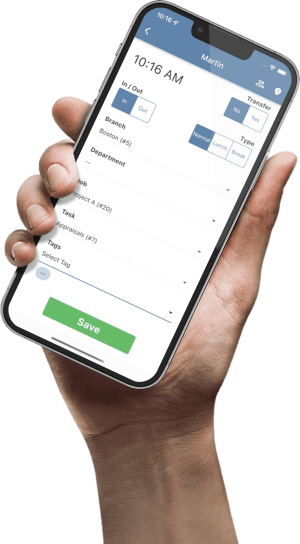
The primary user criticism of TimeTrex relates to interface complexity during daily tasks. The fundamental clocking-in process has been described as cumbersome due to an excessive number of dropdown menus and input steps required to register a punch. Historically, early iterations of the software lacked a highly integrated payroll engine, which forced users to generate W-2 forms manually; however, user reviews indicate this structural issue has been fully rectified in the modern deployment.
Subscription Dynamics and Pricing Structure
TimeTrex structures its pricing across three primary monthly subscription tiers, all of which mandate a minimum commitment of one year, reflecting its enterprise-focused architecture. In addition to robust software, TimeTrex does offer 24/7 live support for paid users in an emergency.
| Edition Tier | Base Cost (PEPM) | Monthly Minimum Commitment | Key Features & Value Drivers |
|---|---|---|---|
| Professional Edition | $5.00 | $50.00 | Core time tracking, basic scheduling, payroll integration, real-time dashboards. |
| Corporate Edition | $8.00 | $80.00 | Adds Geofencing, advanced alerts, sophisticated reporting, restriction parameters. |
| Enterprise Edition | $10.00 | $100.00 | Adds Expense Tracking, Recruitment Workflows, Applicant Tracking System (ATS), complex integrations. |
For smaller teams seeking a visually simpler, more intuitive alternative without a steep learning curve or long-term commitment, platforms like Unrubble are often considered. Unrubble offers real-time timesheets and biometric anti-spoofing in a highly user-friendly interface, though it lacks the deep, integrated tax reporting and payroll calculation engine that defines TimeTrex's superiority.
2. ADP RUN and Workforce Now: The Scalable Titans
Automatic Data Processing (ADP) is widely recognized as one of the most trusted and historically significant small business payroll and HR providers, leveraging over 75 years of industry experience. For growing organizations, ADP's primary strategic advantage is its unparalleled scalability. Businesses can easily migrate from its SMB-focused platform, RUN Powered by ADP (designed for 1 to 49 employees), to its robust mid-market and enterprise-grade platform, ADP Workforce Now, without leaving the overarching ADP ecosystem or suffering massive data migration friction.
Artificial Intelligence and Payroll AutoPilot
RUN Powered by ADP features highly automated workflows designed to reduce administrative fatigue. A cornerstone feature is the "Payroll AutoPilot" system, which seamlessly processes recurring payrolls associated with salaried staff or standard hourly schedules without requiring manual authorization for every cycle. To protect the financial integrity of the organization, ADP incorporates an AI-powered error detection engine. This intelligent system proactively proofs payroll data, identifies historical deviations, and flags potential anomalies or mathematical mistakes before funds are disbursed, thereby preventing costly tax corrections and bank reversal fees.
Compliance Infrastructure and Time Tracking Add-ons
ADP’s compliance architecture is formidable. It manages automated tax calculations, filings, and payments, crucially including multi-state tax filings at no additional base fee, a frequent hidden cost among competitors. The platform also features advanced tools for managing State Unemployment Insurance (SUI), including claim responses, benefit payment reviews, and strategic best practices consulting.
Time and attendance are handled inherently through an integrated Workforce Management suite. This suite adds optimized schedule generation, labor forecasting, attendance policy enforcement, and leave case management. ADP supports both digital tracking via mobile applications and physical kiosk hardware. Furthermore, ADP integrates deeply with recruitment platforms like ZipRecruiter, and provides access to sophisticated salary benchmarking data to help organizations comply with emerging pay transparency laws.
Cost Structure and Market Position
ADP RUN base packages generally start around $39 per month plus $5 per employee per month, though promotional periods often include up to three months of free processing for new clients. ADP provides 24/7 live support across all its bundles, a major competitive advantage for hospitality, healthcare, or retail businesses operating outside standard administrative hours.
While highly rated for performance reliability (achieving a 93% reliability score on peer review sites), some technical analysts and purists critique ADP's underlying architecture. Critics note that because ADP has been built through over 100 historical corporate acquisitions since 1949, its backend platform can sometimes feel disjointed or cluttered compared to strictly built, single-codebase systems. Nonetheless, its massive partner marketplace, offering app connectors to over 30 leading Point of Sale (POS) solutions, cements its position as a highly flexible industry titan.
3. Gusto: The Champion of SMB Simplicity and Benefits
Gusto has established itself as the default, undisputed champion for small and growing companies (typically those under 50 to 100 employees) that prioritize modern design, ease of use, and an exceptionally fast implementation curve. Built from the ground up in 2011 as a cloud-based solution, Gusto explicitly avoids the legacy architectural debt that weighs down older providers, delivering a clean, user-friendly interface that simplifies complex compensation mechanics.
Unified HR and Embedded Insurance Brokerage
Gusto excels at streamlining complex regulatory tasks into intuitive, automated workflows. It offers automated federal, state, and local tax filing, alongside strict I-9 and W-4 compliance tools and automated new hire reporting to state agencies. A major strategic value driver for Gusto is its "embedded insurance" brokerage and benefits administration capabilities. Gusto can function seamlessly as the broker of record, administering health, dental, vision, and 401(k) retirement plans directly alongside the payroll processing engine. Because benefit deductions are intrinsically linked to the payroll ledger, mathematical reconciliation errors are practically eliminated. This automation results in immense time savings, with surveys indicating that businesses save an average of 152 hours per year on tax and compliance tasks after migrating to the platform.
Pricing Transparency and System Constraints
Gusto is praised for its highly transparent pricing model, devoid of hidden implementation fees.
| Gusto Plan Tier | Starting Price Framework | Target User Profile | Key Inclusions |
|---|---|---|---|
| Solo Plan | Variable | Single-employee S-Corps | Owner salary management, compliance protection. |
| Contractor Only | Discounted Rate | Freelance-heavy entities | 1099 generation, zero W-2 requirements. |
| Small / Core Business | $49/mo + $6 PEPM | Standard SMBs | Full tax filing, core payroll, basic HR. |
| Plus / Mid-Size | Custom / Tiered | Scaling Companies | Time tracking, PTO management, advanced HR. |
However, Gusto’s simplicity is accompanied by specific operational constraints. It lacks the deep, highly customizable reporting and analytics engines found in ADP or TimeTrex, largely limiting its utility for mid-market or enterprise companies requiring bespoke data analysis. Additionally, its global support infrastructure is heavily limited, it relies on third-party integrations for extensive international payroll, and it does not offer native IT device management. Furthermore, customer support hours are generally restricted to standard Mountain Standard Time (MST) business hours, lacking the critical 24/7 availability provided by enterprise peers.
4. QuickBooks Payroll: General Ledger Synchronization Dominance
For organizations already deeply entrenched within the Intuit accounting ecosystem, QuickBooks Payroll represents the path of least resistance and maximum financial cohesion. By integrating directly and inherently with QuickBooks Online accounting software, the platform completely eliminates the need for double-entry bookkeeping, allowing gross wages, tax liabilities, and benefit deductions to sync instantly and perfectly with the company's general ledger.
Core Capabilities and Liquidity Management
QuickBooks Payroll excels in operational liquidity management. Higher-tier plans feature highly coveted same-day or next-day direct deposit capabilities, which is a critical feature for businesses heavily reliant on contractors or hourly shift workers. The platform also automates tax calculations and supports a vast marketplace of hundreds of third-party HR and accounting integrations. For example, companies that pay base wages to employees and complex commissions to sales staff can link QuickBooks Payroll to over 16 different commission management applications to consolidate compensation payouts. To facilitate adoption, QuickBooks features a dedicated import wizard that simplifies migrating historical W-2 data, employee earnings records, and journal reports from legacy competitors like ADP, Paychex, or Gusto.
Tiered Pricing and Automated Penalty Protection
The QuickBooks pricing structure scales directly with feature complexity, though it can become prohibitively expensive once initial promotional periods lapse.
| QuickBooks Tier | Cost Framework | Key Capabilities | Compliance Features |
|---|---|---|---|
| Simple Start / Core | $3.50 - $45/mo + $4-$6.50 PEPM | Bookkeeping automation, general reports. | Basic automated tax calculation. |
| Premium Plan | $75/mo + $8 PEPM | Same-day direct deposit, HR support. | Time tracking and project tracking included. |
| Elite Plan | $125/mo + $10 PEPM | Personalized HR advisor, faster processing. | Tax Penalty Protection up to $25k/year. |
While highly intuitive, users frequently cite high and rising costs as a primary detractor, noting that essential enterprise features like multi-state payroll processing and the invaluable $25,000 tax penalty protection guarantee are exclusively gated behind the most expensive Elite tier.
5. Rippling: The IT and Automation Powerhouse
Rippling represents an entirely new paradigm in workforce management, shifting the industry away from standalone HR software toward a deeply integrated "compound system" that directly unifies Human Resources, Information Technology (IT), and Finance. Rather than stitching together acquired modules, Rippling’s single source of truth allows for profound, cross-departmental automation.
Workflow Studio and Global Reach
Rippling’s core competitive strength is its proprietary automation engine, often referred to as the Workflow Studio. This engine triggers complex, multi-step actions across various systems based on simple changes to employee data. During the onboarding process, Rippling not only configures the new hire's payroll profile and benefit elections but simultaneously provisions their software application access, configures their corporate email, and can even facilitate the shipping and management of a physical laptop via its integrated device management suite.
Furthermore, Rippling is unparalleled for decentralized, international teams. It features an in-house global payroll engine, localized HRIS, and contractor management capabilities, allowing organizations to pay and manage talent across more than 185 countries without relying on fragmented third-party processors.
Value Proposition and User Sentiment
Rippling adopts a highly modular pricing strategy, with base platform access starting at $8 per employee per month, allowing businesses to pay strictly for the modules they utilize. The platform consistently achieves the highest user satisfaction ratings in the market, scoring a 9.1 out of 10 on peer review platforms like G2, compared to ADP's 7.8, largely driven by its modern interface and elimination of administrative silos. However, the platform's vast power comes with inherent complexity and an opaque, custom-quote-based overall pricing model that may be overkill for very small, localized operations.
6. Paychex: Enterprise Compliance and PEO Services
Paychex, operating primarily through its Paychex Flex platform, targets mid-sized to enterprise-level organizations (typically those with 100+ employees) that require highly sophisticated compliance monitoring or wish to completely outsource HR administration.
Customization and Complex Payroll Mechanics
Paychex is engineered to handle highly complex payroll scenarios that routinely defeat simpler platforms. This includes navigating intricate union contracts, managing certified payrolls for government contractors, handling complex multi-jurisdiction tax withholding, and integrating directly with pay-as-you-go workers' compensation plans. Crucially, Paychex operates as a massive Professional Employer Organization (PEO). This service provides a full-suite HR solution that pairs clients with a dedicated payroll specialist, an HR business partner, and a client advocate, effectively transferring the bulk of employment liability and compliance risk from the business owner to Paychex.
While Paychex provides excellent 24/7 support and enterprise-grade analytics (including compensation benchmarking data to gauge competitiveness), users note that its pricing is custom, opaque, and heavily dependent on the chosen modules. Furthermore, because certain HR features are sold as separate products or require add-ons, utilizing the full Paychex suite can sometimes result in navigating disparate systems, undermining the "single platform" ideal championed by newer entrants.
Emerging, Niche, and High-Value Platforms
Beyond the primary market leaders, several specialized platforms excel in specific verticals or operational niches, providing high value for targeted use cases:
| Vendor | Primary Specialty / Target Market | Core Advantage | Price Point Indicator |
|---|---|---|---|
| Deel | Global Workforce & EOR | Best for international payroll, managing compliance across borders. | ~$29/mo base. |
| Patriot | Budget-Conscious SMBs | The most affordable full-service automated tax filing software. | ~$17/mo + $4 PEPM. |
| BambooHR | All-in-One Core HR | Excellent for centralizing employee records and performance management. | Custom Quote. |
| Square Payroll | Retail & Contractors | Contractor-only options and deep integration with Square POS. | $35/mo + $6 PEPM. |
| Homebase | Hourly & Shift Workers | Free basic tier; exceptional mobile app for deskless scheduling and clocking. | Free or $30/location. |
| OnPay | Flat-Fee Simplicity | Transparent, single-tier pricing with excellent agricultural/medical support. | $40/mo + $6 PEPM. |
Consumer Sentiment Index (CSI) scores provide a holistic view of user satisfaction. Homebase currently leads with a CSI of 8.1, followed closely by Keka (7.8), TimeTrex (7.7), Justworks (7.2), and Gusto (6.3), indicating that platforms prioritizing intuitive user interfaces and mobile accessibility are heavily favored by modern workforces.
Industry-Specific Architectural Constraints
Generic, out-of-the-box payroll software often breaks down entirely when subjected to the unique regulatory and operational constraints of highly specialized industries. For sectors like construction and healthcare, standard systems require excessive manual workarounds that introduce severe compliance liabilities and administrative exhaustion.
The Construction Sector: Prevailing Wages and Certified Payroll
Construction payroll is exceptionally complex due to the daily intersection of union rules, multi-state tax jurisdictions, and rigorous federal labor reporting requirements. Contractors working on government-funded projects are strictly mandated to comply with the Davis-Bacon Act, which dictates the payment of local prevailing wages and requires the weekly submission of highly detailed Certified Payroll reports.
Standard software platforms like Gusto or base-tier QuickBooks often lack integrated certified payroll reporting, requiring contractors to rely on expensive third-party add-ons or risky manual spreadsheet intervention. Consequently, the industry relies heavily on specialized vendors or customized enterprise solutions:
- Sage HCM & Foundation Software: These robust systems are specifically built to track multi-rate crews moving across various projects in a single day. They seamlessly manage complex union fringe benefits, effective rate dates, and automate the generation of certified payroll reports across all 50 states.
- Payroll4Construction: Operating as a highly specialized payroll service, this vendor automatically handles prevailing wage rates and instantly generates over 40 construction-specific documents, including vital EEO minority compliance reports and workers' compensation data.
- TimeTrex: Highly rated by construction firms for its advanced geofencing and facial recognition tools. This ensures that field crews can only successfully clock in when physically present at designated, geo-fenced job sites, directly tying verifiable labor costs to precise project codes.
The Healthcare Sector: Shift Differentials and Licensing Integration
Healthcare operations require payroll software that mirrors the relentless reality of clinical environments. Hospitals and clinics operate 24 hours a day, 365 days a year, necessitating software capable of calculating complex shift differentials, overlapping medical pay rules, and granular labor cost allocation broken down by specific clinical units or departments.
Furthermore, systems in this sector must feature robust HIPAA (Health Insurance Portability and Accountability Act) safeguards and strict data access controls to protect patient and employee data. Vendors like Paylocity and Workday excel in this space, providing integrated clinical credential and license tracking to ensure that personnel are legally permitted to work the shifts they are scheduled for, automatically blocking shifts for employees with expired certifications.
Paychex is frequently utilized in the healthcare sector for its deep regulatory monitoring capabilities, while platforms like Dayforce provide a continuous, real-time pay calculation engine. This continuous calculation allows for "Earned Wage Access" (EWA), a critical financial wellness tool that permits nurses and technicians to access portions of their pay immediately after a shift, serving as a vital retention mechanism in high-turnover medical environments.
The Analytics Engine: Navigating Payroll Reporting and Compliance
Payroll reporting is not merely an internal administrative exercise; it is the fundamental mechanism by which a company interacts with state and federal tax authorities. A failure to generate accurate, timely reports invites catastrophic regulatory intervention. Integrated systems automatically populate these mandatory documents using the pristine data captured from the time and attendance module.
Essential Federal and State Reporting
Modern integrated systems automate the generation and filing of several critical tax documents. Form 941 (Employer's Quarterly Federal Tax Return) reports income taxes, Social Security tax, and Medicare tax withheld from employee paychecks. Form 940 (Employer's Annual Federal Unemployment Tax Return) calculates the employer's liability under the Federal Unemployment Tax Act (FUTA). At year-end, the software must flawlessly generate W-2s for employees and W-3 transmittal forms for the Social Security Administration.
State reporting introduces immense variability. State reports detail state income tax withholdings, state unemployment insurance (SUI) contributions, and workers' compensation data. For example, businesses operating in New York must accurately generate Form NYS-45 (Quarterly Combined Withholding, Wage Reporting, and Unemployment Insurance Return). Systems like ADP and Gusto automate these filings seamlessly, preventing the devastating fines associated with manual miscalculations.
The Mathematics of Penalty Accrual
The Internal Revenue Service (IRS) and state tax agencies heavily penalize late or inaccurate tax filings. The cost of delay compounds rapidly. For example, federal penalty accruals for late reporting scale systematically:
- Tier 1: $60 per return if filed within 30 days of the deadline.
- Tier 2: $130 per return if filed by August 1st.
- Tier 3: $340 per return if filed after August 1st.
These penalties are not theoretical edge cases. Statistical data indicates that approximately 40% of small businesses in the United States are penalized each year for payroll errors, facing an average financial penalty of over $850 per incident.
The Financial Shield of Tax Penalty Protection
To mitigate these severe financial risks, top-tier payroll providers offer built-in compliance guarantees and tax penalty protection programs. This effectively transfers the financial risk of mathematical or systematic filing errors from the employer directly to the software vendor.
For example, Square Payroll calculates and files federal, state, and local taxes, offering an explicit penalty protection guarantee if the platform itself causes a filing error. QuickBooks Payroll provides an automated tax penalty protection guarantee covering up to $25,000 per year, though it reserves this powerful shield exclusively for its top-tier Elite plan subscribers. TimeTrex emphasizes the necessity of this automation, as its compliance engine tracks thousands of dynamic federal and state income tax rules to ensure precise calculations and prevent costly localized fines.
The 2026 Strategic Procurement Framework: The Buyer's Checklist
Selecting a payroll and time attendance system involves assessing both current technological capabilities and future scalability. Procurement teams should utilize a rigorous, standardized evaluation framework during vendor demonstrations. A comprehensive assessment must move beyond superficial feature lists to examine architectural integrity, data security, and operational friction.
Critical System Architecture and Automation Queries
Is the software built on a single unified database? Systems constructed through historical corporate acquisitions (often true of legacy providers) frequently rely on fragile API integrations between the time tracking module, the HRIS, and the payroll engine. Buyers must demand a strictly built, single-database architecture to ensure real-time data flow without manual syncing, thereby eliminating the risk of data corruption.
Is the system fully automated or partially manual? Seek software that eliminates data reentry. Can the system automatically distribute overtime proportionally across different client projects rather than applying it uniformly? Can it handle blended overtime calculations seamlessly for employees receiving multiple rates of pay, shift differentials, and performance bonuses in the exact same pay cycle?
Are the systems cloud-based or on-premise? While cloud-based (SaaS) deployments represent the industry standard, offering remote accessibility from any device and centralized, encrypted security updates, organizations with highly sensitive intellectual property or strict data sovereignty rules should inquire about on-premise installation options, such as those uniquely provided by TimeTrex.
Employee Autonomy and Usability Queries
How do employees verify their own data? The most efficient error-reduction strategy pushes verification to the edge of the network, the employees themselves. The software must feature an intuitive mobile application and self-service portal allowing employees to flag discrepancies in timesheets, view scheduling drafts, and manage time-off requests before payroll submission.
What time capture options are supported? Ensure the platform supports a wide array of punch mechanisms, including mobile application taps, web browser access, and vital biometric scanning (facial recognition or fingerprint) to deter buddy punching. Furthermore, inquire about geofencing restrictions for mobile punches.
Support Infrastructure and Implementation Queries
What is the ratio of clients to dedicated support agents? Post-implementation support is critical, particularly during the first few payroll runs. Buyers must verify whether they will be routed to a generic, outsourced call center or a dedicated support team intimately familiar with their specific account history and configuration.
Will the vendor handle historical data migration? Transitioning systems requires migrating years of historical W-2 data, employee earnings records, and general ledger journal reports. Vendors must offer dedicated import wizards or hands-on implementation specialists designed to extract and map data securely from legacy systems.
Standard Implementation Path
System Audit & Mapping
Define pay rules, overtime regulations, and geographic tax requirements. Map existing workflows.
Hardware Deployment
Install facial recognition clocks or configure mobile geofencing apps for the workforce.
Parallel Testing
Run the new unified system alongside the legacy setup for one pay period to ensure 100% accuracy.
Go Live & Automate
Roll out to all staff. Timesheets automatically sync to payroll, taxes calculate instantly.
The Future Trajectory of Payroll Technology
Looking ahead, the landscape of integrated payroll and workforce management will be defined by speed, employee financial wellness, and predictive artificial intelligence.
Traditional bi-weekly or semi-monthly pay periods are fundamentally incompatible with the financial realities of the modern workforce and are being actively challenged by the advent of continuous, real-time payroll architectures. This continuous capability allows wages to be calculated instantaneously as hours are logged, facilitating widespread Earned Wage Access (EWA). EWA permits employees to withdraw a portion of their accrued, verified earnings immediately, serving as a powerful financial wellness tool that eliminates reliance on predatory payday loans and acts as a vital retention mechanism.
Concurrently, artificial intelligence and machine learning are transitioning from simple mathematical error detection to strategic, predictive workforce forecasting. Future iterations of these platforms will not merely report that a department exceeded its overtime budget retroactively; they will proactively identify the specific behavioral patterns, times, and days causing the overage. The system will then automatically suggest optimized scheduling adjustments to preemptively neutralize the cost overrun before it occurs, effectively transforming payroll software from an administrative ledger into a proactive instrument of corporate profitability.
Conclusion
The procurement of an integrated payroll and time and attendance system in 2026 is a highly strategic decision that dictates an organization's regulatory safety, administrative efficiency, and holistic labor cost optimization. Platforms must be evaluated on their ability to definitively eliminate fragmented data silos, automate complex multi-jurisdictional tax compliance, and provide an unbroken, auditable chain of custody from a biometric punch-in to localized tax remittance.
For organizations seeking a comprehensive, unified environment with profound job-costing algorithms and rigorous physical security capabilities, TimeTrex remains a premier choice, bridging the gap between strict time enforcement and precise payroll execution. For SMBs prioritizing ease of use, seamless employee onboarding, and embedded benefits administration, Gusto offers unmatched simplicity. ADP provides the deep compliance backbone, 24/7 support, and scalability required for rapidly expanding mid-market firms. Meanwhile, Rippling stands as the paradigm of the future, intertwining HR, IT device management, and Finance into an automated, global whole. Ultimately, the optimal solution aligns the software's structural reality with the unique operational complexities and growth trajectory of the buyer's workforce.
Disclaimer: The content provided on this webpage is for informational purposes only and is not intended to be a substitute for professional advice. While we strive to ensure the accuracy and timeliness of the information presented here, the details may change over time or vary in different jurisdictions. Therefore, we do not guarantee the completeness, reliability, or absolute accuracy of this information. The information on this page should not be used as a basis for making legal, financial, or any other key decisions. We strongly advise consulting with a qualified professional or expert in the relevant field for specific advice, guidance, or services. By using this webpage, you acknowledge that the information is offered “as is” and that we are not liable for any errors, omissions, or inaccuracies in the content, nor for any actions taken based on the information provided. We shall not be held liable for any direct, indirect, incidental, consequential, or punitive damages arising out of your access to, use of, or reliance on any content on this page.
About The Author

Roger Wood
With a Baccalaureate of Science and advanced studies in business, Roger has successfully managed businesses across five continents. His extensive global experience and strategic insights contribute significantly to the success of TimeTrex. His expertise and dedication ensure we deliver top-notch solutions to our clients around the world.
Time To Clock-In
Start your 30-day free trial!
Experience the Ultimate Workforce Solution and Revolutionize Your Business Today
- Eliminate Errors
- Simple & Easy To Use
- Real-time Reporting
Saving businesses time and money through better workforce management since 2003.
Copyright © 2026 TimeTrex. All Rights Reserved.