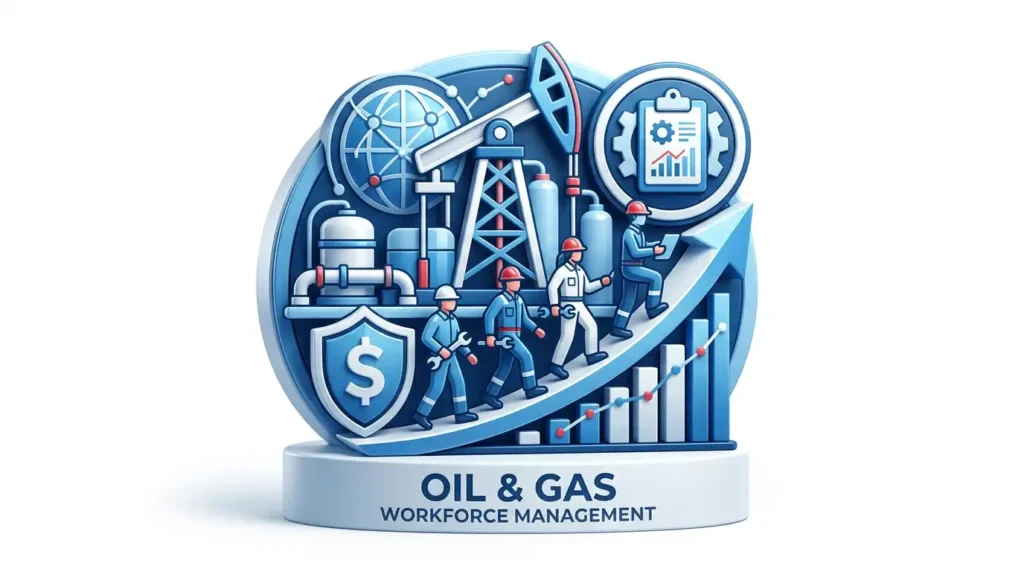

Labor Costs and Workforce Management in the Oil and Gas Sector
Article Index
- Introduction to the Shifting Macroeconomic Energy Landscape
- Market Dynamics and the Anatomy of Operating Expenditures (OPEX)
- Regional Microcosms: Labor Dynamics in the Permian Basin
- Workforce Demographics and the Human Capital Crisis
- Labor Costs, Compensation Structures, and Benefits Realities
- Digital Transformation and AI-Driven Labor Cost Mitigation
- The Energy Transition and Upskilling Imperatives
- Corporate Strategic Case Studies: Capital Allocation and Cost Control
- Conclusions and Strategic Imperatives
The global oil and gas sector is undergoing a profound workforce transformation. Balancing volatile energy demands with digital innovation and sustainable practices has drastically shifted labor priorities. Companies are grappling with the retirement of seasoned veterans while aggressively competing for new-age digital talent.
Introduction to the Shifting Macroeconomic Energy Landscape
The global oil and gas industry is currently navigating an era characterized by compounding internal and external pressures, creating an operational environment more complex than any period in recent history. Between 2024 and 2026, the sector faces an intricate matrix of persistent inflation, escalating asset complexity, rapid digital acceleration, geopolitical volatility, and profound workforce demographic shifts. The macroeconomic environment presents a fundamental paradox for operators: while global oil demand reached an unprecedented 103.84 million barrels per day (mb/d) in 2024, driven heavily by consumption in Non-OECD Asia, China, India, the Middle East, and Latin America, future forecasts indicate that production growth is poised to outpace this demand.
Projections from the U.S. Energy Information Administration (EIA), the International Energy Agency (IEA), and BloombergNEF suggest a growing oil surplus extending into 2026, which could peak in the first half of the year with an excess of 2.1 to 4 million barrels per day (MMbpd).
This impending oversupply places intense downward pressure on commodity pricing, forcing operators to radically reassess their long-term capital deployments. Forecasts for West Texas Intermediate (WTI) crude oil across 2026 range from approximately $49 to $57 per barrel. However, the average breakeven costs for drilling new wells in the United States currently reside between $61 and $70 per barrel, presenting a severe margin compression scenario for North American operators. In early 2025, oil prices had already dropped from the $70 range to the $60 range, validating these downward pressures. Consequently, the industry is witnessing a structural pivot away from aggressive production growth toward absolute capital discipline, portfolio optimization, and the maximization of free cash flow.
Geopolitical risks further complicate this pricing matrix. Disruptions in the Middle East, including the shutting in of 10.5 million barrels per day of crude oil production from nations such as Iraq, Saudi Arabia, Kuwait, and the UAE during early 2026 conflicts, periodically inject severe volatility into the market. Furthermore, the UAE's departure from OPEC, effective May 1, 2026, signals a fracturing of traditional cartel consensus, adding layers of uncertainty to future supply interventions. Within this highly constrained and volatile financial framework, the management of operating expenditures (OPEX) specifically labor costs, workforce productivity, and supply chain efficiencies has emerged as the paramount differentiator for competitive advantage. Energy companies are no longer merely extracting hydrocarbons; they are managing complex socio-technical systems where the cost of human capital, the scarcity of technical talent, and the deployment of artificial intelligence must be perfectly calibrated to survive the margin squeeze.
Market Dynamics and the Anatomy of Operating Expenditures (OPEX)
The trajectory of operating expenditures across the exploration and production (E&P) ecosystem shows no signs of flattening. Industry analysis projects OPEX to rise at a compound annual growth rate (CAGR) of 2% to 3% through the mid-2020s, driven not only by general inflationary pressures but by the physical realities of aging assets and increasingly complex operating environments.
Labor Cost Allocation
Understanding the composition of labor expenses is critical. While base salaries remain the largest component, a significant percentage shift is occurring toward training for advanced safety protocols and tech-enablement software, reflecting the rapid digitization of the modern oilfield.
The Cost of Asset Maturity and Supply Chain Constraints
As the global portfolio of active oil and gas fields matures, the marginal cost of extraction inherently rises. Approximately 20% of global production is currently derived from marginal or mature fields, a figure that is expected to exceed 40% by the year 2050. The operational realities of late-life assets, which require enhanced artificial lift, extensive water handling, predictive maintenance, and frequent well interventions, are highly labor-intensive and capital-draining. The production costs associated with these mature, late-life assets can command a staggering premium of up to $15 per barrel higher than those of younger, flush-production assets.
Compounding the physical challenges of mature fields are systemic supply chain vulnerabilities. Suppliers and oilfield services (OFS) providers have structurally underinvested in new physical capacity over the past decade, driven by prior market crashes and intense pressure to return capital to shareholders. This underinvestment means that even as commodity prices cool, the cost of specialized equipment and the skilled labor required to operate it remain stubbornly high due to sheer scarcity. Furthermore, geopolitical trade dynamics have introduced artificial cost floors; import tariffs on critical inputs such as steel, specialized components, and tubular goods are projected to add a 2% to 5% cost burden to sector margins. The United States remains heavily reliant on global supply chains, with nearly 40% of its oil country tubular goods demand in 2024 met through foreign imports, exposing operators to direct tariff-related cost cascades. Rising input costs cascade through the value chain as engineering, procurement, and construction (EPC) firms and suppliers adjust their contracts to share these burdens with operators.
Margin Compression and Corporate Restructuring
The financial impact of these macroeconomic dynamics became starkly evident during recent reporting cycles. In 2024, production costs per barrel of oil equivalent (BOE) rose by 1% across major operators, even as baseline oil and gas prices fell. This marked the first instance in a five-year study period where production cost trends diverged from commodity spot prices, highlighting the severe operational friction present in the current market. Large independent operators, defined as those possessing worldwide reserves exceeding 1 billion BOE but lacking downstream refining and marketing activities, have emerged as the leaders in cost efficiency, utilizing immense scale to negotiate preferable OFS contracts.
Data from the Federal Reserve Bank of Dallas Energy Survey consistently reflects these tightening conditions. Throughout late 2024 and 2025, oil and gas executives reported rising costs alongside deteriorating operating margins. The operating margin index for oilfield services firms compressed significantly, while finding and development (F&D) costs for E&P firms and lease operating expenses simultaneously increased. Labor costs, expressed as a percentage of OPEX, remain a massive structural burden; the index for labor costs as a percentage of OPEX reached 76.534 in 2024, a notable increase from the 68.907 recorded in 2021.
Faced with these severe pressures, nearly 70% of analyzed U.S. oil and gas companies indicate plans to aggressively restructure their portfolios, optimize underlying costs, and divest noncore assets by 2026. Policy changes and elevated financial pressures are expected to revitalize asset-level mergers and acquisitions, prompting companies to exit early-stage low-carbon projects or legacy assets that no longer meet their near-term return thresholds.
Regional Microcosms: Labor Dynamics in the Permian Basin
The abstract concepts of macro pricing, technological efficiency, and labor optimization materialize vividly in the day-to-day realities of the U.S. Permian Basin. Spanning over 86,000 square miles across 55 counties in western Texas and southeastern New Mexico, the Permian produces roughly 45% of all crude oil in the United States and is central to global supply models. The basin's geology is uniquely characterized by "stacked pay", multiple horizontal, organic-rich producing zones (such as the Wolfcamp and Bone Spring formations, collectively known as the Wolfbone) that can be accessed economically from a single operational footprint.
This stacked geology fundamentally alters the labor-to-production ratio. By drilling multiple horizontal wells targeting multiple zones from a single surface pad, operators dramatically reduce the logistical overhead, rig mobilization times, and overall workforce requirements per barrel extracted. This localized technological efficiency was on full display in the 2025 data sets. During the third quarter of 2025, oil production in the Permian Basin rose to a staggering 6.7 million barrels per day, despite a 6.3% decrease in the number of new wells drilled and an 8.3% decrease in the active rig count. The ability to increase absolute output while utilizing less physical machinery and fewer drilling crews is the direct result of continuous process optimization and high-density drilling strategies.
However, the Permian also highlights the intense price sensitivities that dictate regional labor demand and localized economic health. While national benchmark Henry Hub natural gas prices hovered around $17.59 per BOE during the third quarter of 2025, localized pricing at the Waha hub in West Texas plummeted to just $2.91 per BOE due to severe midstream takeaway constraints and an oversupply of associated gas. When local product cannot be economically transported out of the basin, operators immediately halt new drilling projects. This reality restricts local overtime availability and forces the transient labor force to either migrate to other basins or absorb the financial hit of stalled operations. Consequently, total nonfarm employment in the Midland-Odessa region demonstrated a mixed performance; while overall employment ticked up slightly due to growth in education and health services, the core mining, logging, and construction sectors contracted as firms tightened their belts in response to localized pricing collapses.
The industry's economic footprint in these regions, however, remains indispensable. In fiscal year 2025, Texas school districts received $2.6 billion in property taxes derived from mineral properties, pipelines, and gas utilities, with counties receiving an additional $1 billion. The Pecos-Barstow-Toyah Independent School District alone received $309.3 million in oil and natural gas property taxes. Based on combined state and local taxes and state royalties, the oil and natural gas industry pays $54,481 per employee in taxes, a staggering 7.5 times the average private-sector industry average of $7,225.
Workforce Demographics and the Human Capital Crisis
The most critical vulnerability within the oil and gas operating model is the availability, retention, and cost of specialized human capital. The industry is currently undergoing a severe demographic contraction, widely referred to as the "Great Crew Change," combined with profound reputational challenges among younger generations.
The Aging Workforce and Institutional Knowledge Drain
The demographic profile of the oil and gas workforce skews heavily toward late-career professionals. Current data indicates that 48% of the sector's employees are aged 45 or older. As this cohort rapidly approaches retirement, the industry faces an existential threat regarding the loss of undocumented, highly specialized institutional knowledge. Decades of tactile operational experience in complex environments, ranging from deepwater blowout prevention protocols to the idiosyncratic behaviors of specific mature reservoirs, risk evaporating if not properly captured. High-performing operators are shifting from reactive hiring to deliberate capability building, actively pairing late-career subject matter experts with digital initiatives to digitize and codify this institutional knowledge before the retirement wave peaks.
The "Great Crew Change"
The industry's age distribution highlights a critical vulnerability. A massive portion of the workforce is nearing retirement, draining decades of institutional knowledge. Conversely, entry-level hiring has surged, leaving a notable gap in mid-level management.
The Quantitative Talent Deficit and Turnover Costs
The macro-level talent deficit is staggering. Studies indicate that the global energy industry faces a shortage of up to 40,000 competent workers by 2025, feeding into a broader global economic crisis where up to 85 million specialized jobs across various sectors could remain unfilled due to acute skills shortages. The cyclical nature of the industry has exacerbated this issue. Employment in the sector is highly correlated with crude oil prices; previous price crashes and the demand destruction witnessed during the COVID-19 pandemic forced the industry to shed thousands of jobs and implement severe pay cuts for nearly one in three workers globally. These cyclical layoffs have structurally damaged the industry's reputation for job security, making it exceedingly difficult to lure mid-career professionals back to the oilfield when macroeconomic demand rebounds.
Furthermore, the geographic realities of hydrocarbon extraction inherently require labor to be deployed in remote, often inhospitable environments. Remote site working necessitates fly-in, fly-out (FIFO) scheduling, which traditionally experiences extraordinarily high turnover rates due to the psychological and physical toll on workers and their families. Studies of mining and remote extraction operations indicate annual turnover rates approaching 25% for FIFO workers. The financial penalty for this turnover is immense; replacing a single specialized remote worker can cost between $10,000 and $50,000 in recruitment, onboarding, and lost productivity, with aggregate turnover costs for a typical 300-employee remote site exceeding $2.8 million annually.
Labor sourcing is also geographically disparate, exacerbating recruitment costs. Remote extraction basins frequently lack a sufficient local population possessing the full spectrum of required engineering and technical skills. Consequently, operators must contract out-of-state workers. For example, historical data from the Marcellus shale development indicated that fewer than 40% of the jobs created by the drilling boom were filled by local residents. This reliance on a transient, highly compensated workforce drastically increases localized wage inflation and necessitates massive corporate investments in workforce housing and logistics.
The Generational Divide and "Clean Creatives"
The pipeline of replacement talent is critically constrained by shifting generational values. Millennials and Generation Z are projected to constitute 72% of the global workforce by 2029, yet surveys reveal that an alarming 62% of this demographic finds a career in the oil and gas industry fundamentally unappealing. This aversion is rooted both in acute environmental concerns and a perception that the industry is technologically archaic and physically demanding.
This reputational damage is heavily amplified by external forces. Organized movements such as "Clean Creatives" analyze and actively campaign against the advertising and public relations efforts of major fossil fuel entities, accusing them of "greenwashing" and deflecting attention from continued drilling operations. The modern sociopolitical climate, in which Gen Z and millennial cohorts frequently align with progressive climate movements and demand high degrees of environmental, social, and governance (ESG) compliance from their employers, creates a massive friction point for energy recruiters. Consequently, human capital strategy is no longer a peripheral HR function; it is now classified as a material business risk requiring executive board oversight.
Labor Costs, Compensation Structures, and Benefits Realities
To combat extreme talent scarcity, generational aversion, and high geographic turnover, the oil and gas industry maintains some of the most aggressive compensation structures in the global economy. However, the architecture of these compensation packages, from the field level to the executive suite, is undergoing a strategic realignment to reflect the industry's new focus on capital discipline and operational efficiency.
Field-Level and Technical Wage Dynamics
The 2025 United States Energy & Employment Report (USEER) indicates that the core fuels sector employed over 1 million workers with a median annual wage of $62,780, representing a premium of nearly 26.8% over the broader U.S. median wage of $49,500. The broader energy sector as a whole employed 8.5 million workers in 2024, accounting for 5.4% of all jobs in the U.S., heavily concentrated in states like Texas, California, and Michigan.
However, aggregate median figures obscure the extreme compensation heights achieved in highly active regional basins. In Texas, for instance, the oil and natural gas industry pays an average annual salary of $133,095, which is 68% higher than the average wage paid across the rest of the state's private sector. The wage scale is highly stratified based on technical expertise. Petroleum engineers sit at the top of the technical hierarchy, commanding average hourly wages of $81.39 and annual salaries exceeding $169,000. Mid-level technical roles, such as petroleum pump system operators and refinery gaugers, average around $41.90 hourly, while entry-level field roles such as roustabouts command roughly $23.58 hourly.
| Occupation Category | Average Hourly Wage (2024/2025) | Median/Average Annual Salary |
|---|---|---|
| Petroleum Engineers | $81.39 | $141,280 (Median) - $169,280 (Avg) |
| Electrical Engineers | - | $99,220 (Median) |
| Industrial Engineers | - | $98,310 (Median) |
| Refinery Operators & Gaugers | $41.90 | $87,160 (Avg) |
| Wellhead Pumpers | $36.49 - $35.58 | $70,010 (Median) |
| Industrial Machinery Mechanics | - | $66,360 (Median) |
| Roustabouts | $23.58 | $49,040 (Avg) |
Beyond robust base salaries, field compensation is heavily augmented by systematic overtime, hazard pay, and travel stipends. Standard industry billing and compensation practices define overtime as hours worked outside primary standard hours or exceeding eight hours in a single day, generally compensated at 1.5 times the base labor rate. Weekend and holiday work is routinely compensated at double the standard labor rate. For traveling workforce populations, domestic per diem rates for food and incidentals average $75.00 daily, alongside comprehensive cost-plus-10% coverage for lodging and transportation.
Global Salary vs. Productivity Matrix
Labor efficiency varies wildly across global theaters. North America commands high salaries but achieves corresponding high productivity due to advanced shale and automation technology. Circle size represents total regional workforce volume.
The Financial Psychology of the Field Worker
Despite these lucrative top-line figures, the highly variable nature of oilfield compensation presents unique financial challenges for the workforce. Income fluctuates wildly based on project timelines, seasonal shutdowns, the availability of overtime, and sudden market crashes. Because of this reality, financial planning and budgeting for oil and gas industry workers requires a drastically different approach than traditional nine-to-five roles. Financial advisors working with this demographic emphasize building budgets around a "conservative baseline", funding all fixed expenses (housing, utilities, insurance) exclusively through minimum dependable base pay, while treating massive overtime and bonus checks strictly as supplemental savings. This financial volatility heavily contributes to workforce attrition during market downturns, as workers become fatigued by the boom-and-bust cycle and seek structural wage stability in competing infrastructure, utilities, or manufacturing sectors.
Employee Perks, Benefits, and Retention Strategies
To stymie this attrition, oil and gas operators have vastly expanded their employee benefits portfolios beyond traditional health and retirement plans. In a highly competitive talent market, lifestyle and family-friendly benefits are leveraged as direct retention tools to build loyalty and reduce the stress associated with remote work. Over 51% of employers now offer employee perks discount programs, while legal plan offerings have risen to 38%. Niche benefits such as pet insurance are now offered by a third of employers.
More critically, over two-thirds of employers have instituted robust short-term disability (STD) benefits to provide essential financial support for employees unable to work due to non-work-related injuries. Companies are also leveraging digital transformation to modernize benefits administration. Using predictive analytics, HR teams can now forecast healthcare costs and tailor benefits to a highly mobile workforce via self-service mobile apps, greatly enhancing utilization and employee satisfaction for field workers stationed miles from corporate headquarters.
Executive Compensation and Performance Metrics
At the leadership level, executive compensation structures provide a transparent window into corporate strategic priorities. Historically, executive bonuses were heavily weighted toward aggressive production growth and sheer reserve replacement. However, following the high-profile industry bankruptcies of 2020 and shifting shareholder demands for fiscal responsibility, boards of directors have fundamentally restructured long-term incentive (LTI) and short-term incentive (STI) plans.
Incentive compensation now comprises approximately 85% of total compensation for executives at E&P and OFS firms. The mix of these LTI awards has decisively shifted toward performance-based mechanisms, typically consisting of 46% performance share units (PSUs), 52% restricted stock units (RSUs), and a negligible 2% in traditional stock options, which reflects a complete departure from the speculative option-heavy packages of previous decades.
| Sector | Metric Complexity | Primary Financial Focus | Secondary Focus Areas |
|---|---|---|---|
| Exploration & Production (E&P) | Highly Complex (74% use 6+ metrics) | Cash Flow, Operating Expenses (OpEx), F&D Costs | Production goals, project milestones, Sustainability |
| Oilfield Services (OFS) | Simplified (78% use 4 or fewer metrics) | EBITDA, Cash Flow | Safety (59%), Sustainability (37%) |
E&P firms isolate discrete cost inputs, such as finding and development (F&D) costs, lease operating expenses (LOE), and general administrative expenses, forcing executives to micromanage labor and operational efficiencies to achieve their bonuses. Conversely, OFS firms, which rely heavily on asset utilization and service volume, structure their incentives heavily around broader EBITDA targets. Regarding executive transitions, severance, and M&A integration, change-in-control cash multiples typically reach 3x total compensation for CEOs (applicable to 63% of executives) and between 2.00x to 2.99x for CFOs, ensuring leadership retains massive financial protection during periods of industry consolidation.
Digital Transformation and AI-Driven Labor Cost Mitigation
With raw labor costs escalating, profit margins compressing (average net margins in energy frequently trail those of sectors like banking, which commands a 30.89% net margin), and talent supply dwindling, the oil and gas sector is aggressively pursuing digital transformation as the primary lever for OPEX mitigation. Industry analysts estimate that the adoption of advanced digital technologies, including generative AI, agentic workflows, and digital twins, could save the oil and gas sector an astounding $320 billion by 2030 through drilling optimization, predictive maintenance, and workforce rationalization.
The Scale of Technological Adoption
The transition from isolated technology pilot programs to enterprise-wide artificial intelligence deployment is accelerating rapidly. By 2026, it is projected that 60% of oil companies will deploy AI-driven exploration, drilling, and production optimization solutions. Historically, AI and generative AI initiatives consumed less than 20% of total IT budgets at U.S. oil and gas companies; however, this allocation is forecast to exceed 50% by 2029.
The upstream segment leads this automation charge due to its high capital intensity, operational complexity, and extreme safety risks. Automation technologies are deployed to optimize reservoir monitoring and automate drilling parameters in real-time. For instance, predictive algorithms applied to operational processes have demonstrated the capacity to prevent over 140 hours of downtime and protect 1.6% of operational uptime for major operators. This directly correlates to massive OPEX savings by eliminating the need for emergency, high-cost maintenance labor deployments.
This transformation relies on a foundational shift in how operators manage enterprise data. Leading companies are moving away from siloed metrics toward integrated, enterprise-wide performance management. By aggregating data flows from Enterprise Asset Management (EAM), Field Service Management (FSM), financial platforms, and physical equipment sensors, executives generate a unified view of asset performance. This contextualized operational data enables dynamic risk management, allowing firms to build predictive models that forecast how external pressures, such as supply chain tariffs or localized labor shortages, will impact the cost and timeline of multi-billion-dollar infrastructure projects.
Job Displacement and the Evolution of Roles
The integration of AI into front-line operations carries profound implications for the traditional workforce. Research estimates that 300 million jobs globally are exposed to automation, and the heavily industrial oil and gas sector is highly susceptible to this shift. Technology adoption in this space is specifically engineered to change operational activities and displace manually intensive jobs to protect profit margins against price volatility.
Evolution of Operational Presence
Historically a strictly on-site industry, O&G has embraced hybrid models. Remote operations centers and digital twins now allow engineers to monitor drill sites globally from centralized hubs, optimizing on-site headcount and drastically reducing field risk.
The most extreme projections regarding offshore automation suggest that the total number of personnel on board (POB) required to operate a typical offshore drilling platform will be reduced to merely six individuals by the year 2058. This represents a near-total virtualization of the offshore environment, facilitated by digital twin technology that allows onshore engineers to monitor and control offshore assets in real-time. This structural shift drastically reduces the logistical costs, hazard pay, catering overhead, and helicopter transportation expenses associated with housing massive crews on ocean platforms.
Case Study: Shell's Citizen Development Program
However, the digital transformation is not solely about job elimination; it is fundamentally about role redefinition. A premier example of this workforce evolution is Shell's "Do It Yourself" (DIY) Citizen Development program. Recognizing that centralized IT departments cannot scale fast enough to digitize every inefficient field workflow, Shell effectively democratized software development. In exploring the long-term impact of digitalization, Shell utilizes scenario planning (such as their "Digital Islands" and "Open Platforms" models) to predict how energy and information technologies will merge.
Rather than replacing traditional personnel, Shell empowered them. Geologists, reservoir engineers, and maintenance managers, individuals who possess deep domain expertise regarding the physical realities of the oilfield, are trained to use low-code/no-code (LC/NC) platforms to build their own bespoke applications. These "citizen developers" identify manual, time-consuming data entry tasks or inefficient workflows and build software to automate them.
This initiative fundamentally blurs the line between the business/technical operative and the IT professional. With over 6,500 trained citizen developers and 4,000 actively building applications across the enterprise, supported by 188 intensive training bootcamps, Shell has fostered a culture where technology solves micro-inefficiencies at the edge of operations. This approach not only strips millions of dollars in wasted labor hours out of the system but acts as a powerful retention tool, providing intellectual stimulation, upskilling, and digital autonomy to a workforce eager to modernize.
The Energy Transition and Upskilling Imperatives
As the global economy slowly pivots toward decarbonization, oil and gas companies are forced to navigate the delicate balance of maintaining their highly profitable legacy operations while positioning their workforce for the future energy mix. The transition presents both a threat to traditional employment and a massive opportunity for internal talent mobility.
Job Disruption and the Just Transition
Macro-level models of the energy transition present a stark picture for fossil fuel extraction roles. Under stringent climate policy scenarios, overall energy sector employment is projected to grow from 18 million to 26 million by 2050; however, direct fossil fuel jobs are forecast to plummet globally from 12.6 million to 3.1 million. Job losses will be acutely concentrated in coal, oil, and gas extraction, which currently supports over 9.2 million workers.
Because oil and gas employment is highly concentrated in specific geographic basins, the localized economic impact of these transition dynamics will be severe. The loss of direct extraction jobs carries immense ripple effects through the broader local economies that rely on the high wages of the sector to support retail, housing, and service industries. Consequently, there is an escalating emphasis on the concept of a "just transition", ensuring that the communities and workers displaced by decarbonization are supported through place-based economic development and structured retraining programs.
Corporate entities have formally integrated these social responsibilities into their governance frameworks. BP, for instance, updated its "People and Planet" sustainability aims to explicitly focus on the energy transition, promising to develop targeted just transition plans for select assets and regions. By equipping employees with skills that improve their access to new energy opportunities, BP aims to manage the severe social risks associated with winding down legacy operations.
Transferability of Skills and Internal Mobility
Despite the projected long-term decline in traditional extraction roles, the immediate reality is that the renewable energy sector is desperate for the engineering and project management expertise intrinsic to the oil and gas industry. Global power generation capacities from low-carbon sources are expected to expand by 175% by 2030, necessitating a 125% increase in a workforce skilled in renewables, green hydrogen, and carbon capture and storage (CCS).
External recruitment alone cannot fulfill this demand. Consequently, oil and gas operators view their existing mid-career talent pools as their greatest asset for navigating the transition. Analytical models indicate that with targeted retraining, approximately two-thirds of the current oil and gas supply workforce already possesses the foundational base skills required to pivot into other segments of the energy sector.
There is a profound alignment of interests between operators and their workforces in this regard. Over 40% of surveyed energy firms prefer to recruit internally to retain hard-won, sector-specific operational knowledge. Simultaneously, 50% of current fossil fuel workers express a strong preference to remain within the broader energy sector if forced to seek alternative employment. Upskilling incumbent workers, such as transitioning a reservoir engineer into a geothermal capacity planner, or a subsea pipeline technician into an offshore wind logistics coordinator, avoids exorbitant external HR recruitment costs while preserving the cultural fabric of the organization.
Modern Talent Pipeline Strategy
Predictive Sourcing
Utilizing AI analytics to forecast skill gaps and source digital/engineering hybrid talent.
Immersive Upskilling
Deploying VR simulations to safely prepare workers for hazardous onshore/offshore environments.
Agile Deployment
Dynamic resource allocation between remote operations centers and physical field sites.
Holistic Retention
Pivoting towards flexible rotational schedules, mental health wellness, and continuous learning.
Case Study: Equinor's Hybrid Strategy
Equinor's organizational evolution serves as a prime example of transition-oriented workforce management. Anticipating the eventual depletion of the Norwegian continental shelf, Equinor (formerly Statoil) pioneered a hybrid business model, utilizing the massive cash flows generated by its legacy oil and gas operations to fund a rapid expansion into offshore wind and low-carbon solutions.
By establishing a dedicated Power business area, Equinor integrated its renewable portfolio with flexible generation and energy trading. This dual mandate required the company to maintain technical competencies for emerging business models while preserving traditional extraction capabilities. Between 2015 and 2023, the company reduced greenhouse gas emissions from its own production by 30%, and by 2023, 20% of its total capital investments were directed toward renewable energy and low-carbon solutions, with major workforce deployments to projects like Dogger Bank (UK), Empire Wind (US), and Bałtyk 2&3 (Poland).
While this hybrid strategy occasionally draws skepticism from pure-play ESG investors who view the margins of the renewable sector unfavorably compared to legacy oil profits (a debate heavily amplified after the 2022 Russian invasion of Ukraine, which generated record oil and gas windfalls), Equinor's approach provides a stable, internalized pathway for its technical workforce to transition gradually toward the economy of 2050.
Corporate Rebranding and Generational Narrative Shifts
Given the statistical reality that 62% of incoming generational talent views the industry negatively, operators are investing heavily in narrative reframing to secure the engineering talent necessary to bridge the gap between today's fossil fuel demands and tomorrow's low-carbon infrastructure.
Fossil fuel companies are spending millions on highly coordinated public relations campaigns to deflect attention from traditional hydrocarbon extraction and reposition themselves as high-tech, human-centric facilitators of global prosperity. Chevron's "Human Energy" campaign exemplifies this strategy, explicitly placing human well-being and the necessity of affordable, reliable, and ever-cleaner energy at the core of its corporate identity. By focusing heavily on volunteerism, community impact, and the societal reliance on energy, operators attempt to align corporate actions with the purpose-driven values held by younger demographics.
Similarly, the strategic rebranding of Schlumberger to "SLB" reflects a conscious distancing from its purely oilfield-services heritage. The rebranding is accompanied by massive investments in social media strategies across platforms like TikTok and LinkedIn to attract young talent, showcasing the company's focus on digital technology, cultural diversity, and low-carbon innovations. By highlighting their historical pedigree in advanced technology, from pioneering the first offshore rigs to developing microfluidic analysis, deploying the first-generation sonic digital tools, and currently launching industry-first AI solutions for production networks, companies like SLB reframe the oilfield as a hub of cutting-edge technological innovation rather than a relic of the industrial age.
These narrative shifts, when backed by genuine educational outreach, yield tangible recruitment results. ExxonMobil, through its targeted investments in STEM programs at key engineering universities, has maintained its status as the most attractive U.S. energy company for engineering students for 13 consecutive years. The company boasts a global internship acceptance rate of 80%, vastly exceeding broad market averages, and successfully transitions high percentages of interns, such as nearly half of its 2024 Guyana internship class, into full-time operational roles.
Corporate Strategic Case Studies: Capital Allocation and Cost Control
An examination of the annual reporting from major integrated oil companies (IOCs) such as ExxonMobil, Chevron, and BP reveals how human capital management is intrinsically linked to broader balance sheet objectives and investor demands.
ExxonMobil's Structural Rationalization
ExxonMobil’s 2025 financial posture reflects a relentless pursuit of structural efficiency. The company reported full-year earnings of $28.8 billion and generated an immense $52.0 billion in cash flow from operations, supporting record shareholder distributions of $37.2 billion. However, the most critical metric regarding operational discipline is their report of $15.1 billion in cumulative structural cost savings generated since 2019, including $3.0 billion captured in 2025 alone. While direct labor line items are obfuscated within broader metrics, the reduction of Total Adjusted Operating Costs from $91.6 billion in 2024 to $78.8 billion in 2025 illustrates a massive rationalization of the enterprise. Total Cash Operating Expenses (Cash Opex) dropped from $59.0 billion to $55.0 billion year-over-year. This transformation to a "lower-cost, technology-led business" involves tightening SG&A expenses, optimizing supply chains, and maximizing production throughput with a leaner, highly digitized workforce.
Chevron's Scale and Synergy Pursuit
Chevron achieved operational scale and efficiency through aggressive M&A activity, notably completing the acquisition of Hess Corporation to create a premier upstream portfolio. A central tenet of modern M&A in the oil sector is the immediate extraction of General and Administrative (G&A) and operational synergies. Chevron reported achieving an initial run-rate synergy target of $1 billion post-acquisition, a figure largely derived from consolidating redundant workforce functions, optimizing shared service centers, and rationalizing field operations. By increasing worldwide production by 12% to record levels (3.7 million net oil-equivalent barrels per day) while tightly managing these integrated labor costs, Chevron maintained a pristine balance sheet capable of supporting $12.8 billion in dividend distributions, extending its track record of higher annual payouts to 38 consecutive years.
BP's Disciplined Transition Focus
BP’s recent strategic reset emphasizes a targeted balance between growing upstream operations, focusing the downstream, and engaging in disciplined investment toward the energy transition (deploying $2.3 billion to transition businesses in 2025). BP announced a target to achieve $5.5 to $6.5 billion in structural cost reductions by the end of 2027. Simultaneously, their board’s compensation and governance structures rigorously track the progress of primary targets encompassing both capital allocation and personnel performance. The dual mandate of slashing billions in structural costs while actively managing the social risks and opportunities of transition communities requires precise human capital orchestration, minimizing disruptions to high-margin legacy assets while organically growing low-carbon ventures.
Conclusions and Strategic Imperatives
As the global oil and gas industry advances through the second half of the decade, the historical paradigm of relying on sheer volume growth to mask operational inefficiencies has been permanently eradicated. Facing the headwinds of normalized commodity prices, sticky supply chain inflation, a structural talent deficit, and the physical complexities of aging asset infrastructure, the preservation of profit margins relies entirely upon the intelligent management of the workforce and the aggressive deployment of digital technologies.
The data indicates that human capital is simultaneously the industry's greatest vulnerability and its most potent lever for competitive differentiation. To thrive in the 2026 landscape and beyond, operators must execute on several interconnected strategic imperatives:
- Transition from Reactive Cost-Cutting to Proactive Value-Engineering: Broad-stroke layoffs during cyclical downturns hollow out the technical core of the enterprise and permanently damage the industry's reputation. Instead, companies must adopt citizen development and AI-enablement strategies that allow incumbent workers to engineer inefficiencies out of their own workflows. Empowering the frontline worker to digitize their environment permanently lowers OPEX while fostering deep employee engagement and retention.
- Re-architect Compensation and Lifecycle Retention: Recognizing the highly volatile and geographically demanding nature of field operations, operators must fortify retention through stabilized variable-income planning, enhanced family-friendly benefits, and predictable rotation schedules. Concurrently, executive compensation must remain strictly tethered to capital efficiency, cash flow generation, and HSE outcomes rather than raw production volume metrics.
- Internalize the Energy Transition: The external labor market cannot supply the sheer volume of technical talent required for the global buildout of renewable and low-carbon infrastructure. The industry must aggressively audit the competencies of its existing workforce and implement targeted retraining pathways. Converting petroleum engineers into the architects of geothermal facilities fulfills the dual mandate of executing a "just transition" while retaining highly disciplined, safety-oriented talent.
- Deploy Predictive Analytics to Rationalize Labor Footprints: Competitive advantage belongs to the firms that fully integrate data from the wellhead to the corporate financial suite. Breaking down IT silos enables the predictive maintenance and remote operational capabilities required to minimize high-cost offshore and remote-site labor footprints.
Ultimately, the competitive edge in the modern energy sector does not belong to the entity with the largest undeveloped reserves, but to the operator capable of fielding the most resilient, digitally fluent, and efficiently deployed workforce. As the paradigm shifts from brute-force extraction to precision energy management, mastering the human element remains the final and most critical frontier of operational excellence.
Control Your Operational Expenditures
Are you looking to better align your workforce management strategy with your capital discipline goals? Calculate your potential OPEX savings and streamline your human capital allocation with our targeted resource tools.
Interactive Oil and Gas Company Budget BuilderDisclaimer: The content provided on this webpage is for informational purposes only and is not intended to be a substitute for professional advice. While we strive to ensure the accuracy and timeliness of the information presented here, the details may change over time or vary in different jurisdictions. Therefore, we do not guarantee the completeness, reliability, or absolute accuracy of this information. The information on this page should not be used as a basis for making legal, financial, or any other key decisions. We strongly advise consulting with a qualified professional or expert in the relevant field for specific advice, guidance, or services. By using this webpage, you acknowledge that the information is offered “as is” and that we are not liable for any errors, omissions, or inaccuracies in the content, nor for any actions taken based on the information provided. We shall not be held liable for any direct, indirect, incidental, consequential, or punitive damages arising out of your access to, use of, or reliance on any content on this page.
About The Author

Roger Wood
With a Baccalaureate of Science and advanced studies in business, Roger has successfully managed businesses across five continents. His extensive global experience and strategic insights contribute significantly to the success of TimeTrex. His expertise and dedication ensure we deliver top-notch solutions to our clients around the world.
Time To Clock-In
Start your 30-day free trial!
Experience the Ultimate Workforce Solution and Revolutionize Your Business Today
- Eliminate Errors
- Simple & Easy To Use
- Real-time Reporting

Saving businesses time and money through better workforce management since 2003.
Copyright © 2026 TimeTrex. All Rights Reserved.