
Overtime Tracker for Employees: Alerts, Approvals, and Payroll Exports
TL;DR
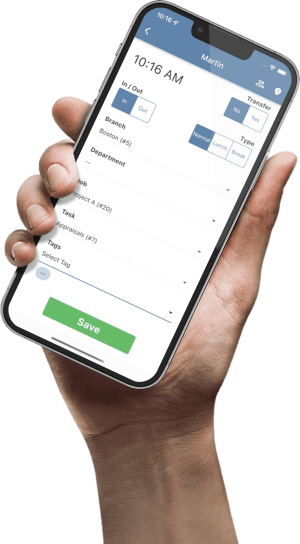
An overtime tracker for employees should not merely report overtime after it happens. It should warn managers before employees cross overtime thresholds, flag daily or weekly overtime exceptions, require approval where policy demands it, and feed clean overtime data into payroll.
The best overtime process is proactive: forecast overtime while there is still time to adjust coverage, approve exceptions before payroll closes, calculate the right premium, and keep records that explain how each overtime dollar was earned and paid.
Why an Overtime Tracker Needs Alerts, Not Just Reports
Overtime is expensive when it is planned. It is risky when it is discovered late. A basic overtime tracker may show who exceeded a weekly threshold. A payroll-ready overtime tracker should help managers see overtime forming before the workweek closes, approve it when needed, and calculate it correctly for payroll.
The most useful overtime view is not a month-end report. It is a live operating signal that shows scheduled hours, actual hours, remaining shifts, missing punches, break exceptions, daily thresholds, weekly thresholds, and the manager responsible for the decision.
Predict overtime
Compare scheduled hours, actual punches, breaks, and remaining shifts before the employee crosses the threshold.
Alert managers
Notify the right supervisor when daily or weekly overtime is approaching, triggered, or unapproved.
Pay correctly
Send approved overtime into payroll with the right workweek, rate, policy, and audit trail.
Overtime Rules and Recordkeeping Basics
Under the federal FLSA overtime rule, covered nonexempt employees generally must receive overtime pay for hours worked over 40 in a workweek at not less than one and one-half times their regular rate. The Department of Labor also emphasizes that the FLSA applies on a workweek basis, and averaging hours over two or more weeks is not permitted.
Recordkeeping matters too. DOL guidance lists records employers must keep, including hours worked each day, total hours worked each workweek, regular hourly rate, straight-time earnings, overtime earnings, total wages paid, date of payment, and pay period covered.
Compliance note: federal overtime is only the baseline. Some states, localities, union agreements, industry rules, public-sector rules, healthcare rules, and company policies may require daily overtime, double time, meal premium handling, alternative workweek treatment, or other special calculations.
Regular Rate, Multiple Rates, and Why Overtime Calculations Get Complicated
Many overtime mistakes happen because the business tracks hours but does not track the pay components that affect the calculation. The Department of Labor explains that the regular rate includes all remuneration for employment except certain payments excluded by the FLSA, and that overtime may need to be computed from an average hourly rate when employees are paid in different ways during the same workweek.
When a simple 1.5x calculation is not enough
If an employee works one hourly rate for the whole week, overtime may look simple: regular rate multiplied by 1.5 for overtime hours. But many teams are not that simple. Employees may work different jobs at different rates, receive nondiscretionary bonuses, earn shift differentials, receive production incentives, or split time across departments. Those details can affect the regular rate and the overtime premium.
Multiple rates in one workweek
When an employee works at two or more straight-time rates in the same workweek, the overtime calculation may require a weighted average unless a lawful alternative applies. That means the tracker should preserve job, department, rate, and hour details. If those details are flattened into one weekly total, payroll may not have enough information to calculate overtime correctly.
Bonuses and premiums
Some payments may be excluded from the regular rate, while others may need to be included. The point for a timekeeping article is not to turn managers into wage-and-hour lawyers. The point is to design the time and payroll workflow so the right data reaches the right reviewer before payroll is finalized.
| Pay Situation | Why It Affects Tracking | What the System Should Preserve |
|---|---|---|
| Employee works two jobs at different rates | The overtime calculation may need to reflect the mix of rates in the workweek. | Hours by job, straight-time rate, department, and workweek. |
| Employee earns shift differential | Differentials may affect pay and may interact with overtime depending on policy and law. | Shift, premium code, hours worked, and applicable rule. |
| Employee receives nondiscretionary bonus | Certain bonuses can affect the regular rate calculation. | Bonus type, earning period, affected employees, and hours in that period. |
| Employee works overnight shifts | Hours may cross calendar days, pay periods, or reporting views. | Shift start, shift end, workday assignment, workweek assignment, and break records. |
Build an Overtime Alert Strategy
An overtime tracker is strongest when it separates early warnings from payroll blockers. TimeTrex exception policy documentation describes low, medium, high, and critical severities, grace periods, watch windows, notifications, and exception notices. It also identifies overtime-related exceptions such as over daily time and over weekly time.
Interactive Alert Strategy Builder
Choose the alert type to see how it should work.
Forecast alert
Warn managers when the schedule plus actual hours indicates the employee is likely to hit overtime before the end of the week.
Example: "Employee is at 34 hours on Thursday morning with two 8-hour shifts remaining."
Threshold alert
Notify the supervisor when an employee crosses a defined daily, scheduled, or weekly threshold.
Example: TimeTrex exception policies include over daily time and over weekly time events that notify when an employee exceeds regular time and is now working overtime.
Approval alert
Route overtime to a manager for authorization if company policy requires approval before extra hours are worked or paid as planned.
Example: A supervisor approves the extra two hours because customer coverage mattered, or declines future similar overtime and adjusts the schedule.
Payroll blocker
Critical exceptions should be corrected before payroll is processed. Missing punches, missing breaks, or unresolved overtime exceptions can distort overtime calculations.
Example: payroll cannot close until missing out punches are fixed and the employee or supervisor verifies the corrected timesheet.
How to Design Overtime Controls That Managers Will Actually Use
An overtime policy that lives only in a handbook will not control labor cost. Managers need practical signals while schedules are still changeable. Employees need to understand when overtime is expected, when it requires approval, and how corrections affect their pay. Payroll needs a clean record showing regular hours, overtime hours, premium pay, rates, and approvals.
1. Define the workweek clearly
Federal overtime rules apply on a workweek basis. A workweek is a fixed and regularly recurring period of 168 hours, or seven consecutive 24-hour periods. It does not have to match the calendar week, but it should be defined and applied consistently. If different employee groups use different workweeks, the system should make that visible.
2. Separate legal overtime from policy overtime
Legal overtime is the minimum requirement. Policy overtime is how the business manages approval, staffing, scheduling, and budgets. For example, an employer may require advance approval for overtime, but if compensable overtime is actually worked, it generally must be paid. The tracker should support both realities: managers can enforce policy, and payroll can still calculate wages correctly.
3. Use alert levels, not one generic warning
A 32-hour warning on Wednesday is different from a 40-hour threshold that was already crossed on Friday. Use tiers: forecast alerts, approaching-threshold alerts, exceeded-threshold alerts, unapproved-overtime alerts, and payroll-blocking critical exceptions. Each tier should have a clear owner and a clear action.
4. Connect overtime to schedules
Overtime usually starts as a scheduling issue before it becomes a payroll issue. If a person is already at 34 hours and has two full shifts remaining, managers should see that before the last shift starts. Schedule-aware tracking helps managers redistribute coverage, approve overtime intentionally, or document why overtime was necessary.
5. Track why overtime happened
Overtime is not always bad. It can be the right decision during demand spikes, emergencies, call-outs, seasonal peaks, or customer commitments. The problem is unmanaged overtime. Add reason codes such as coverage gap, approved project deadline, emergency call-in, training, late departure, missed punch correction, or manager-approved extension. Over time, those reasons show whether the business has a staffing problem, scheduling problem, training issue, or demand pattern.
| Alert Level | Trigger Example | Owner | Best Next Action |
|---|---|---|---|
| Forecast | Employee projected to exceed 40 hours based on remaining schedule | Scheduler or department manager | Reassign a shift, approve the cost, or adjust coverage. |
| Approaching threshold | Employee reaches 36 or 38 hours before the last scheduled shift | Supervisor | Confirm whether the remaining shift is needed and document the decision. |
| Exceeded threshold | Employee crosses daily or weekly overtime threshold | Supervisor and payroll reviewer | Verify punches, confirm the reason, and ensure the correct rule applies. |
| Unapproved overtime | Overtime exists without a required manager approval | Manager | Approve, document, coach, or update schedule controls. |
| Payroll blocker | Missing out punch, missing lunch punch, or unresolved critical exception | Manager before payroll, payroll administrator at close | Correct the record before final payroll calculation. |
Overtime Scenarios by Industry
Overtime control looks different in every industry. A retail store needs coverage visibility. A manufacturer needs shift and premium accuracy. A home care agency needs mobile time records. A construction company needs job-cost detail. A clinic needs reliable shift handoffs. The same overtime tracker should adapt to the operational reality instead of forcing every team into the same workflow.
| Industry | Typical Overtime Trigger | Helpful Alert | Payroll Detail to Protect |
|---|---|---|---|
| Retail | Call-outs, closing coverage, seasonal demand, schedule swaps | Projected weekly overtime before the final scheduled shift | Store, department, holiday, premium, and approved schedule change |
| Construction | Project deadlines, weather delays, travel time, crew coverage | Job-level overtime forecast by crew and supervisor | Job, task, location, union or project rule, and rate |
| Healthcare | Patient coverage, shift handoff, call-ins, staffing shortages | Over daily/weekly threshold, missed meal, and shift extension alerts | Shift, department, premium, role, and applicable overtime period |
| Manufacturing | Production runs, downtime recovery, maintenance, second-shift coverage | Over scheduled shift, over weekly time, and premium-coded work | Line, department, shift differential, job code, and supervisor approval |
| Field service | Emergency calls, travel delays, late customer appointments | Mobile worker approaching threshold with active tickets remaining | Customer, job, travel time, GPS context, and work order notes |
Overtime Cost Calculator
Use this calculator to estimate weekly and annual overtime cost. It shows both total overtime wages and the overtime premium above straight time.
Estimate Overtime Cost
Weekly overtime wages
$1,728.00Annual overtime wages
$89,856.00Annual premium above straight time
$29,952.00Common Overtime Tracking Failure Modes
| Failure Mode | What Goes Wrong | Control Needed | TimeTrex Angle |
|---|---|---|---|
| Overtime discovered after payroll cutoff | Managers see the cost too late to adjust staffing. | Forecast alerts before the threshold is crossed. | Scheduling, actual punches, and exception rules can be reviewed before payroll close. |
| Missing punch inflates or hides overtime | Open-ended time creates inaccurate daily or weekly totals. | Critical missing punch exceptions before verification. | Exception policies can flag missing in/out punches and block clean verification until corrected. |
| Unapproved overtime becomes payroll surprise | Employees work extra hours without manager visibility. | Approval workflow and notification hierarchy. | Hierarchies and exception notifications route issues to supervisors. |
| State or policy rules are more complex than 40 hours | Daily overtime, double time, shift premiums, or union rules are missed. | Configurable overtime policies and payroll rules. | Time, scheduling, policy, and payroll data live together instead of being split across spreadsheets. |
| Payroll export lacks detail | Payroll imports need manual adjustment, causing delays and errors. | Payroll-ready reports and export mapping. | Payroll can be processed in TimeTrex or exported to third-party software when needed. |
Manager Dashboard Metrics for Overtime Control
Managers do not need more data for its own sake. They need a short list of metrics that help them make better staffing decisions before payroll closes. A useful overtime dashboard should separate immediate actions from long-term trends.
Daily action metrics
Daily metrics should answer what needs attention now: employees approaching overtime, employees already in overtime, missing punches, late departures, unscheduled punches, unapproved overtime, and departments projected to exceed budget. These should be visible before the next shift is staffed.
Weekly close metrics
Weekly metrics should help managers approve payroll-ready records: overtime by employee, overtime by reason, unresolved exceptions, changes after approval, and employees whose hours were split across rates, jobs, or departments.
Trend metrics
Trend metrics should help the business reduce avoidable overtime without hurting service levels. Review overtime by location, manager, job, day of week, shift, reason code, and employee. The goal is to find patterns: chronic understaffing, poor scheduling, bottlenecks, training gaps, too few cross-trained employees, or device/process issues that create corrections.
Dashboard principle: the best overtime report is the one that causes action before the pay period ends. If a report only explains what went wrong after payroll, it is useful for analysis but weak as a control.
Payroll Close Checklist for Overtime
Overtime should not be finalized from a single total-hours report. Payroll needs enough detail to understand the workweek, the employee's rate, the rule that applied, the approval status, and any corrections that changed the result. A good close process turns overtime from a surprise into a documented payroll event.
Before payroll begins
Confirm that all timecards are complete, all missing punch exceptions are corrected, overtime alerts have been reviewed by supervisors, and any required approvals are complete. If an employee changed jobs, rates, departments, or work locations during the week, confirm that the correct job and rate data are attached to the overtime calculation.
During payroll review
Review employees with high overtime, unusual daily totals, missing lunches, late departures, schedule mismatches, or multiple rates. Make sure overtime is tied to the correct workweek. Avoid averaging hours across two weeks. If the pay period is biweekly or semi-monthly, overtime rules still need to be evaluated by the applicable workweek unless a special rule applies.
After payroll closes
Review overtime by department, location, manager, job, and reason code. Look for patterns. If overtime is concentrated in one department, the issue may be scheduling. If it is concentrated in one day of the week, the issue may be demand planning. If it is tied to missed punches, the issue may be training or device placement.
Close-process principle: overtime control is not just about reducing hours. It is about making every extra hour visible, intentional, correctly paid, and explainable.
What to Tell Employees About Overtime Tracking
Overtime tracking should not feel like a hidden trap. Employees should know how overtime is approved, how hours are counted, how corrections work, and who to contact when the record looks wrong. Clear communication reduces disputes and helps employees participate in accurate timekeeping.
Explain the workweek
Employees often think in pay periods, but overtime may be evaluated by workweek. Explain when the workweek starts and ends, especially if it does not match the calendar week. If different groups have different workweeks, make the rule visible in training and policy materials.
Explain approval without implying unpaid overtime
Many businesses require overtime approval. That policy can be useful for planning and accountability, but it should be communicated carefully. Employees should understand that they must follow scheduling and approval rules, while the business still needs accurate records of compensable time worked.
Explain corrections
Employees should know how to report missed punches, wrong job codes, interrupted breaks, late departures, and overtime they believe is missing. The correction path should be easy to find from the timesheet or mobile app. If employees do not know how to correct a record, they may wait until payday to raise the issue.
Explain manager responsibilities
Managers should know that overtime alerts are not just warnings about cost. They are prompts to make a decision: adjust staffing, approve the extra time, document the reason, or fix a bad time record. When managers treat alerts as part of daily operations, payroll close becomes smoother.
Implementation Plan for Overtime Alerts and Approvals
Overtime controls work best when rolled out in stages. If you turn on every alert at once, managers may ignore them. If you start with the highest-value alerts and tune them based on real behavior, the process becomes useful instead of noisy.
Phase 1: Choose the thresholds
Start with the rules that matter most: weekly overtime, daily overtime where applicable, over scheduled time, missed punches, and late departures. Decide which alerts are informational and which are critical. Critical alerts should be reserved for problems that must be fixed before payroll.
Phase 2: Assign alert owners
An alert without an owner is just a notification. Define who receives each alert: employee, direct supervisor, department manager, scheduler, payroll administrator, or HR. Use hierarchy carefully so the person receiving the alert can actually solve the problem.
Phase 3: Pilot with one department
Run the overtime workflow for one or two pay periods. Watch for alert fatigue, missing approvals, unclear reason codes, and thresholds that trigger too early or too late. Managers should help tune the process because they know the operational reality.
Phase 4: Review overtime reasons
After the pilot, group overtime by reason: coverage gap, demand spike, late customer, missed punch correction, training, project deadline, or schedule issue. If too much overtime has no reason code, fix the approval form before expanding the rollout.
Phase 5: Expand and monitor
After rollout, review overtime trends monthly. The goal is not always to eliminate overtime. The goal is to make overtime visible, approved, correctly paid, and useful for staffing decisions.
How TimeTrex Supports the Workflow
The overtime workflow runs from schedule to punch to exception to approval to payroll. Public TimeTrex pages and help documentation describe payroll reporting that can alert when employees approach overtime thresholds, exception policies for over daily time and over weekly time, timesheet verification, payroll processing checks, and payroll export options.
The message is simple: tracking overtime is useful, but preventing unmanaged overtime is better.
Overtime Control Checklist
Select the controls your current process already has.
Track Overtime Before It Becomes a Payroll Surprise
Use TimeTrex to connect employee schedules, time punches, overtime exceptions, approvals, payroll reports, and payroll processing in one workforce management system.
Overtime Tracker FAQ
What is an overtime tracker for employees?
An overtime tracker monitors employee hours against daily, weekly, scheduled, policy, or legal overtime thresholds. Better systems also send alerts, support approvals, document exceptions, and send approved overtime to payroll.
What is the federal overtime threshold?
Under the federal FLSA, covered nonexempt employees generally must receive overtime pay for hours worked over 40 in a workweek at not less than one and one-half times their regular rate. State or local rules may require more.
Should overtime be approved before it is worked?
Many employers require overtime approval as a policy control. Approval policies do not erase the obligation to pay for overtime that was actually worked, but they can help managers plan staffing and coach employees.
What reports should an overtime tracker include?
Useful reports include daily hours, weekly hours, regular time, overtime time, premium time, breaks, absences, exceptions, employee totals, department totals, job/task totals, and payroll export details.
Can TimeTrex export overtime data for payroll?
TimeTrex can process payroll internally and also provides payroll export reporting for third-party payroll software when an export is needed.
Sources
- U.S. Department of Labor: Overtime Pay
- U.S. Department of Labor Fact Sheet #23: FLSA Overtime Pay Requirements
- U.S. Department of Labor Fact Sheet #21: FLSA Recordkeeping
- TimeTrex Help: Exception Policies
- TimeTrex Help: Processing Payroll
- TimeTrex Payroll Reporting
- eCFR: 29 CFR Part 516 - Records to Be Kept by Employers