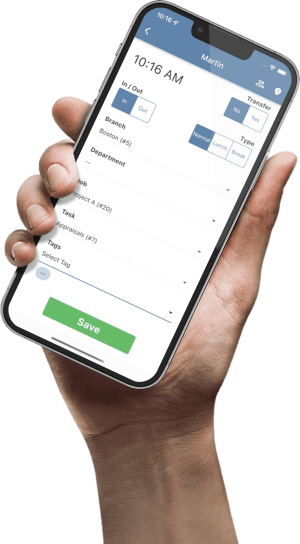


Timesheet App for Employees: Approvals and Payroll
TL;DR
A timesheet app for employees should make time entry easy, but the real value starts after employees submit their time. The app should support employee review, supervisor authorization, exception correction, locked pay periods, audit trails, and payroll exports or integrated payroll.
The best workflow is simple for employees and strict for payroll: employees can see what they are submitting, managers can approve or send back questionable records, critical exceptions are resolved before payroll, and the final hours are protected from late changes.
Why a Timesheet App Is More Than a Digital Timecard
Many employee timesheet apps focus on fast entry: pick a project, enter hours, submit the week. That is useful, but it does not solve the payroll risk by itself. Payroll teams need confidence that the record is accurate, reviewed, approved, locked at the right time, and available in the format payroll needs.
The U.S. Department of Labor's FLSA recordkeeping guidance says covered employers must keep accurate records of hours worked each day, total hours worked each workweek, wage basis, regular rate, straight-time earnings, overtime earnings, pay period dates, and related wage data. The format is flexible. The accuracy requirement is not.
Review and verify
The employee should be able to review the period, request corrections, and certify that the time record is accurate.
Authorize exceptions
The supervisor should approve, decline, or request fixes before the record becomes payroll input.
Lock and pay
Payroll needs a clean handoff: no critical exceptions, verified timesheets, locked pay period, and export or direct payroll processing.
The Ideal Employee Timesheet Workflow
A complete timesheet workflow has five jobs: capture the work, let the employee review it, let the manager authorize it, lock the period when payroll begins, and send the clean data into payroll. If one of those jobs is missing, the business may still collect hours, but payroll teams inherit the cleanup.
Interactive Timesheet Workflow Explorer
Capture time
Employees enter hours, clock in and out, record breaks, assign jobs/tasks, and submit correction requests when something is wrong. The app should support punch timesheets and manual timesheets where appropriate.
Payroll control: require complete daily hours and flag missing in/out punches before approval.
Employee review
TimeTrex documentation describes timesheet verification as the employee certifying that the record of time worked for the pay period is correct. If changes are needed, the employee should request corrections before verification.
Payroll control: if a verified timesheet changes later, the verification should be cleared and the employee should re-verify.
Supervisor approval
Supervisor authorization confirms that the subordinate employee's time record is correct. TimeTrex notes that authorizations may be accepted, passed for later review, or declined.
Payroll control: approvals should preserve history and route exceptions to the right manager based on hierarchy.
Lock pay period
During payroll processing, TimeTrex includes a step to lock pay periods so timesheets and schedules cannot change while payroll is being completed.
Payroll control: unlock only when a correction is necessary, then rerun verification and approval checks.
Payroll export or process
Payroll can be processed inside TimeTrex or exported for a third-party payroll provider. The key is that approved time, exceptions, overtime, absences, and wages all reconcile before the pay run.
Payroll control: export only after requests, critical exceptions, verifications, authorizations, and pay period locks are handled.
Approvals, Locks, Audit Trails, and Payroll Exports
These four controls are the difference between a timesheet app employees can use and a timesheet system payroll can trust.
Approvals
Approval is not just a green button. It should define who reviewed the timesheet, when it was reviewed, what exceptions were open, and whether the employee already verified it.
Locks
Locks protect a pay period while payroll is running. Without locks, a late edit can change hours after payroll has already been calculated.
Audit trails
Audit trails show what changed, why it changed, who changed it, and whether the change cleared a prior employee verification or supervisor authorization.
Important detail from TimeTrex documentation: if changes are made after a timesheet has been verified or authorized, the authorization or verification is cleared. TimeTrex also notes that once a timesheet authorization is authorized or declined, it cannot be deleted in order to maintain audit logs.
What Employees Need From a Timesheet App
A timesheet app fails when employees see it as a payroll form they fill out at the last minute. It succeeds when it helps them keep an accurate record during the pay period and gives them a fair way to correct mistakes. The employee experience matters because most payroll problems begin as small recordkeeping issues: a missed clock-out, a lunch punch entered on the wrong day, time assigned to the wrong job, or a PTO request that never reached the schedule.
Clear daily view
Employees should be able to see each day separately, not just a weekly total. Daily visibility makes it easier to catch missing breaks, incorrect in/out punches, job-code mistakes, and unusual totals while the work is still fresh. A daily view also supports the FLSA recordkeeping principle that employers need accurate records of hours worked each day and each workweek.
Simple correction requests
A correction process should capture what changed and why. "Forgot to clock out at 5:07 p.m." is more useful than an unexplained edit to a total-hours field. The request should route to the right supervisor, keep a record of the change, and clear prior approvals when the change affects already verified time.
Schedule and PTO context
Employees should be able to compare worked time to scheduled time and approved time off. Without that context, a timesheet may appear wrong when the real issue is a schedule change, swapped shift, approved absence, training day, or holiday policy. Bringing schedules, leave, and time into one view reduces confusion for everyone.
Submission guidance
Do not rely on a vague "submit timesheet" reminder. The app should tell employees what blocks submission: missing punches, critical exceptions, unapproved requests, overlapping time, or a required verification statement. Employees should know what to fix before the manager sees the timesheet.
| Employee Need | Helpful Feature | Payroll Benefit |
|---|---|---|
| Know whether the timesheet is complete | Daily punch review, missing punch alerts, visible exceptions | Fewer unresolved time records at close |
| Fix honest mistakes quickly | Correction request workflow with reason notes | Cleaner audit trail and fewer post-payroll adjustments |
| Understand schedule differences | Schedule vs actual comparison, PTO visibility | Managers can separate true errors from planned changes |
| Confirm final time before pay | Verification statement and submission window | Greater record integrity before payroll begins |
The Payroll-Ready Close Process
A timesheet app should make payroll close calmer, not just faster. The close process should give payroll a checklist that answers whether every pending request, exception, verification, authorization, and lock has been handled. TimeTrex help documentation describes this kind of payroll processing flow: select the pay period, confirm requests are authorized, confirm no critical exceptions exist, confirm timesheets are verified where necessary, lock pay periods, generate and review pay stubs, process transactions, export if needed, and close the pay period.
Before payroll starts
Managers should resolve operational issues before payroll begins. That includes missed punches, break exceptions, schedule mismatches, pending time-off requests, job or task errors, and unverified timesheets. Payroll should not become the detective for every department.
During payroll processing
Once payroll starts, the pay period should be locked or tightly controlled. A late timesheet change can affect regular hours, overtime, premiums, PTO balances, job costing, taxes, deductions, and final pay. If a change is necessary, the unlock path should be intentional, documented, and followed by a fresh review.
After payroll closes
Post-payroll corrections should be rare and visible. Track why they happen. If the same department repeatedly needs late edits, the real fix may be manager training, employee reminders, a better punch station location, stronger exception severity, or a clearer deadline.
Close-process principle: payroll-ready does not mean every timesheet is perfect. It means every known exception has an owner, every material correction is documented, and payroll can explain how final hours became final wages.
Manager Review Playbook: What Supervisors Should Check
Managers are the quality-control layer between employee time entry and payroll. Payroll administrators can see numbers, but managers usually know the story behind the numbers: who stayed late to cover a call-out, who switched jobs mid-shift, who forgot to punch out, and which schedule change was approved verbally but never entered.
A strong timesheet app helps managers review exceptions quickly without asking them to inspect every minute manually. The system should bring attention to the records most likely to create pay errors, compliance questions, or labor cost surprises.
Daily manager review
Daily review should focus on fresh mistakes: missing punches, early or late starts, long lunches, short lunches, unscheduled punches, absent employees, and job-code errors. A daily rhythm prevents the end-of-period scramble where supervisors try to reconstruct a week or two from memory.
Pre-payroll manager review
Pre-payroll review should focus on final approval: overtime, PTO, holiday handling, shift premiums, correction requests, employee verification status, and any timesheet that changed after a prior signoff. This is where the manager confirms that the time record is ready to become pay.
| Review Item | Why It Matters | Manager Action | Payroll Impact |
|---|---|---|---|
| Missing in or out punch | Total hours may be wrong or impossible to calculate. | Request employee detail, correct the punch, and document the reason. | Prevents underpayment, overpayment, and delayed payroll close. |
| Unscheduled punch | The employee may have worked without planned coverage or approval. | Confirm whether work was authorized and update the schedule if needed. | Helps explain labor cost and overtime changes. |
| Long or short meal break | Break issues can affect pay, compliance, and employee experience. | Verify whether the break was actually taken, waived, interrupted, or entered incorrectly. | Reduces manual premium adjustments and pay disputes. |
| Job or task mismatch | Labor may be charged to the wrong customer, grant, project, or department. | Correct the job/task assignment before payroll and reporting. | Improves job costing, billing, project profitability, and departmental reporting. |
| Timesheet changed after approval | Prior signoff may no longer reflect the actual record. | Review the change, re-authorize if correct, and preserve the reason. | Protects audit integrity and reduces post-payroll corrections. |
Audit Trail Essentials: What a Timesheet Change Should Show
An audit trail is not just a compliance feature. It is a practical way to answer payroll questions without relying on memory. When an employee asks why their hours changed, a manager asks why overtime appeared, or an auditor asks how wages were calculated, the audit trail should tell the story clearly.
What to capture
At minimum, a timesheet audit trail should show the original value, the new value, who made the change, when the change happened, why it happened, and whether the employee or supervisor had already approved the previous version. If the change affected overtime, job costing, PTO, shift premium, or pay-period totals, that relationship should be visible.
What not to allow
A payroll-ready timesheet process should avoid silent edits. If a manager can change an employee's hours after verification with no reason, no notification, and no cleared approval, the record becomes harder to defend. The better practice is to document the correction and require the appropriate review again.
How to write useful correction notes
Useful notes are specific: "Employee forgot to punch out after closing shift; manager verified departure at 9:42 p.m." is better than "fixed time." Good notes do not need to be long. They need to explain the business reason for the edit in a way a payroll administrator can understand later.
Audit-trail principle: every material change to a timesheet should preserve confidence in the final record. The goal is not to make corrections difficult. The goal is to make corrections visible, explainable, and approved by the right person.
Payroll Export Checklist: What Must Be Clean Before Data Leaves the Timesheet App
Some companies process payroll in the same system that tracks time. Others export approved time to a payroll provider. Either path needs the same discipline: do not export messy time and hope payroll catches everything. Once data leaves the time system, corrections become slower and more expensive.
| Export Field or Control | What to Verify | Common Problem | How to Prevent It |
|---|---|---|---|
| Employee identifier | Employee ID matches payroll exactly. | Duplicate names or terminated employees cause import errors. | Use system IDs and review new hires before the first payroll export. |
| Pay period | Dates match the payroll cycle and include the right workdays. | Late shifts or overnight shifts land in the wrong period. | Define shift assignment and overnight rules before export. |
| Earning codes | Regular, overtime, double time, PTO, holiday, premium, and unpaid time map correctly. | Everything exports as regular hours and payroll has to recode it. | Test export mapping with sample employees before go-live. |
| Departments, jobs, and cost centers | Labor allocation fields match finance and reporting needs. | Payroll pays correctly but job costing or GL reporting is wrong. | Require job/task corrections before approval, not after export. |
| Exception status | Critical exceptions are resolved or intentionally handled. | Payroll imports hours with unresolved missing punches or breaks. | Use close checks that block or warn before export. |
Implementation Plan for a Better Timesheet App
Replacing a timesheet process is not only a software project. It changes employee habits, manager responsibilities, payroll timing, and the way corrections are handled. A careful rollout prevents confusion and gives the business a chance to fix workflow issues before they affect every employee.
Phase 1: Inventory the current mess
Before changing tools, collect baseline data. How many timesheets are late? How many need manager edits? How many have missing punches? How many payroll adjustments happen after employees are paid? Which departments create the most exceptions? This baseline helps you prove whether the new process is working.
Phase 2: Define rules and roles
Write down who enters time, who can edit time, who approves time, who resolves exceptions, who locks the pay period, and who can unlock it. Define the deadline for employee review and supervisor approval. Decide which exceptions are warnings and which must be fixed before payroll.
Phase 3: Pilot with a real pay period
Run a pilot with one department or location. Do not choose the easiest group only. Include employees who work overtime, take breaks, switch jobs, request PTO, or have overnight shifts if those patterns exist in the business. A pilot should expose problems while the audience is still small.
Phase 4: Train with examples
Training should show real situations: forgot to punch out, worked through lunch, swapped a shift, selected the wrong job, had a PTO day, or worked approved overtime. Employees and managers need to see what to do, not just where to click.
Phase 5: Review after two payrolls
After two full payroll cycles, compare results to the baseline. Look for fewer late timesheets, fewer missing punches, fewer payroll corrections, faster manager approvals, cleaner exports, and fewer post-payroll questions. If the numbers are not improving, adjust the workflow rather than simply sending another reminder.
Timesheet Correction Cost Calculator
Manual corrections are not just annoying. They pull supervisors, payroll administrators, and employees away from productive work. Use this calculator to estimate the annual administrative cost of timesheet corrections.
Estimate Annual Correction Admin Cost
Corrections per year
104Annual admin cost
$790.40This excludes employee disruption, manager follow-up, payroll reruns, and the risk of paying from incomplete records.
Timesheet App Comparison: What Payroll Needs
| Capability | Spreadsheet | Basic Timesheet App | Payroll-Ready Timesheet System |
|---|---|---|---|
| Employee entry | Manual rows and formulas | Web or mobile time entry | Punch, manual, mobile, kiosk, job/task, PTO, break, and schedule-aware entry |
| Verification | Usually email or informal signoff | May include submit button | Employee verification window with re-verification after changes |
| Authorization | Manager initials or email trail | Approve/reject | Hierarchy-based authorization with pass, decline, audit log, and exception visibility |
| Locks | File naming and manual access control | May lock approved time | Pay-period lock during payroll processing with controlled unlock path |
| Payroll handoff | Manual import or rekeying | CSV, Excel, or integration | Integrated payroll plus export option for third-party payroll providers |
| Compliance support | Depends on the person maintaining it | Basic reports | Daily hours, weekly totals, overtime, exceptions, schedules, pay period history, and auditable records |
How TimeTrex Supports the Workflow
A timesheet is more useful when it is connected to scheduling, exceptions, approvals, payroll, and reporting. Public TimeTrex help documentation describes employee timesheet verification, supervisor authorization, exception policies, exception summary reports, payroll processing steps, pay period locks, and payroll export when a third-party payroll provider is used.
Timesheet Control Checklist
Select the controls your current process already has.
Make Employee Timesheets Payroll-Ready
Use TimeTrex to connect employee timesheets, verification, supervisor authorization, exceptions, pay-period locks, payroll exports, and integrated payroll in one workforce management platform.
Timesheet App FAQ
What is a timesheet app for employees?
A timesheet app for employees lets workers record, review, and submit time worked. Better systems also include correction requests, employee verification, supervisor approval, exception handling, locked periods, reports, and payroll exports.
Why do timesheets need approval?
Approval creates a review step before hours become payroll input. It helps managers catch missing punches, incorrect hours, unscheduled time, overtime, break issues, and job-costing mistakes.
What does it mean to lock a timesheet?
Locking prevents further changes after a defined point, often when payroll is being processed. If a correction is needed, the lock should be controlled and the change should be documented.
What should a timesheet audit trail show?
A useful audit trail should show the original entry, the change, the person who made the change, the time of the change, the reason for the change, and whether the change affected employee verification or supervisor authorization.
Can TimeTrex export timesheets to payroll?
TimeTrex can process payroll internally, and its help documentation also describes a payroll export option for third-party payroll software when an export file is needed.