


Automate Predictive Scheduling and Overtime Compliance
Labor fines usually start as tiny operational gaps: a schedule changed too late, a meal period was auto-deducted even though the employee worked, overtime was averaged across pay periods, or payroll could not produce the records an investigator requested. This guide shows how HR and payroll teams can turn predictive scheduling laws, automated overtime calculation, labor law compliance software, and FLSA recordkeeping requirements into practical system rules.
What is the practical answer?
To avoid labor fines, automate the moment where legal rules meet daily operations: schedule publishing, change approvals, clock punches, missed meal exceptions, overtime thresholds, premium pay codes, and record retention. A spreadsheet can describe the rule. A rules engine can apply it before payroll closes.
That distinction matters because the FLSA does not require a particular record format, but it does require accurate records of hours worked and wages earned. State and local scheduling laws often add their own notice, rest-between-shifts, premium-pay, and recordkeeping duties.
FLSA Recordkeeping Requirements: The Checklist Answer
The FLSA recordkeeping question is deceptively simple: employers need accurate records for covered nonexempt workers, and those records must be available for inspection. The harder part is proving that schedules, punches, edits, rates, overtime calculations, and payroll outputs all agree.
Payroll source records
Preserve payroll records, collective bargaining agreements, and sales and purchase records for at least three years. In software terms, that means employee payroll history, gross-to-net pay, total wages paid, date of payment, and the pay period covered should remain reportable long after the pay run closes.
Wage computation records
Keep the records on which wage computations are based for at least two years. That includes time cards, work and time schedules, wage rate tables, piecework tickets, and additions to or deductions from wages.
No magic form, but real proof
The Department of Labor says employers may use any timekeeping method they choose if it is complete and accurate. That is why automated audit trails matter: manual spreadsheets can be edited, overwritten, or separated from approvals.
How Automated Rules Engines Eliminate Manual Calculation Errors
Automated overtime calculation is not just a formula. It is a controlled chain from schedule to punch to exception to policy to payroll. The system should decide which hours are regular, overtime, premium, unpaid meal, paid rest, holiday, job-costed, or exception-based before payroll reviews the final totals.
Rules engine checklist for payroll-safe overtime
0 of 10 controls selected
Predictive Scheduling Laws: What to Configure
There is no single federal predictive scheduling law for most private employers. Instead, covered employers face a patchwork of state and local fair workweek rules. The common pattern is simple: give a good-faith estimate, publish schedules in advance, limit surprise changes, pay premiums when employer-requested changes occur, protect rest between shifts, and keep proof.
| Jurisdiction | Typical covered employers | Core scheduling duties | Software configuration |
|---|---|---|---|
| Oregon statewide | Large retail, hospitality, and food service employers with at least 500 employees worldwide. | Written schedule at least 14 calendar days in advance, good-faith estimate at hire, right to decline unscheduled shifts, extra compensation for many employer-requested changes, and rest between shifts. | Set 14-day publishing lock, schedule-change reason codes, voluntary standby list tracking, 10-hour rest alerts, premium pay codes, and retained schedule history. |
| New York City fast food | Covered fast food employers in New York City. | Regular schedules, work schedules 14 days in advance, premiums for schedule changes or clopenings, and opportunity for current workers to receive more regular hours. | Use recurring schedule templates, advance notice tracking, clopening consent and premium rules, offer-of-hours workflow, and employee acknowledgement storage. |
| Seattle | Hourly employees at covered retail and food service establishments with 500 or more employees worldwide; full-service restaurants have an additional location threshold. | Good-faith estimate, schedules posted at least 14 days in advance, right to decline added hours, access-to-hours process, predictability pay, clopening premium, and three-year recordkeeping. | Configure schedule-post timestamp, employee preference requests, open-shift posting window, declined shift tracking, schedule premium pay codes, and three-year export reports. |
| Philadelphia | Covered service, retail, and hospitality employers under Philadelphia's Fair Workweek law. | Predictable schedule requirements, good-faith estimates, recordkeeping templates, employee consent records, and posted notices. | Store good-faith estimates, mass shift communications, employee consent to changes, predictability pay rates, and source documents by location. |
Compliance rule of thumb
If a manager can change a shift by text message, the system should still capture what changed, who requested it, when notice was given, whether the employee accepted or declined, whether a premium applies, and how long the record must be retained.
State Meal Break Rules Mapped to Software Settings
Federal law generally does not require meal or coffee breaks, but when short breaks are offered they usually count as compensable hours worked, while bona fide meal periods usually do not. State meal break rules create the configuration problem: each jurisdiction can have a different trigger, timing window, waiver, premium, and paid-time treatment.
| State | Baseline adult meal rule | Timing or waiver detail | Software configuration setting | Alert to create |
|---|---|---|---|---|
| California | At least 30 minutes if the work period is more than five hours; second 30-minute meal if the work period is more than 10 hours. | First meal generally by the end of the fifth hour; second by the end of the tenth hour. Limited mutual-consent waivers apply for shorter days. | Meal policy active after five hours, second meal after 10 hours, waiver flag, on-duty meal agreement flag, and one-hour premium pay code. | Late meal, short meal, no meal, second meal missing, meal auto-deducted without punch proof. |
| New York | Non-factory workers generally receive a 30-minute lunch break for shifts over six hours that extend over the noon meal period; factory workers and night shifts have different requirements. | Additional 20-minute meal may apply between 5 p.m. and 7 p.m. for long days that start before 11 a.m. and continue after 7 p.m. | Create worker-type meal templates, noon-window detection, evening meal rule, one-employee shift acknowledgement storage, and paid meal override when duties continue. | No lunch, night-shift meal missing, additional evening meal missing, employee worked through meal. |
| Washington | At least 30 minutes when an employee works more than five hours in a shift. | Meal period must start between the second and fifth hour. Additional meal periods can apply for extended work beyond the scheduled shift. | Meal policy active after five hours, valid meal window from hour two to hour five, additional meal trigger for extended shifts, and paid meal rule if on duty or interrupted. | Meal outside window, interrupted meal, extra-hours meal missing, employee on duty during unpaid meal. |
| Oregon | At least 30 minutes for nonexempt employees who work six or more hours; additional meal periods for shifts of 14 hours or more. | For shifts of at least six but less than seven hours, meal is after hour two and before hour five. For shifts over seven hours, meal is after hour three and before hour six. | Two timing windows based on shift length, additional meal trigger at 14 hours, waiver/undue-hardship documentation, and paid meal setting when not relieved of all duties. | Wrong meal window, no meal at six hours, no second meal at 14 hours, waiver missing, paid meal not applied. |
| Connecticut | At least 30 consecutive minutes for employees required to work seven and one-half or more consecutive hours. | Meal must be after the first two hours and before the last two hours, with statutory exemptions and written alternative schedules allowed. | Meal policy active after 7.5 consecutive hours, first-two/last-two-hour validation, exemption flag, and alternative written agreement attachment. | Meal too early, meal too late, no meal on 7.5-hour shift, exemption missing. |
| Delaware | At least 30 consecutive unpaid minutes if the employee works seven and one-half or more consecutive hours. | Meal must occur after the first two hours and before the last two hours, with exemptions for certain agreements and operational cases. | 7.5-hour trigger, unpaid meal default, alternative agreement record, exemption reason, and anti-retaliation complaint notes. | No qualifying meal, meal outside allowed window, unpaid deduction without 30-minute proof. |
| Illinois | At least 20 minutes for every 7.5-hour shift, beginning no later than five hours after the start of the shift. | Additional 20-minute meal period for every additional 4.5 continuous hours worked. Requirements changed effective January 1, 2023. | 20-minute meal length, 7.5-hour trigger, five-hour latest-start rule, additional meal every 4.5 continuous hours, and collective bargaining exception field. | Meal late, additional meal missing, continuous-hours threshold crossed, restroom break confused with meal period. |
Why this table belongs in software, not a PDF
A PDF can tell managers the rule. A configured policy can warn the manager before the violation happens, apply the correct paid or unpaid treatment, create the missed-break exception, and preserve the record that payroll used.
Implementation Playbook: Build the Compliance Engine in 30 Days
The safest rollout starts with the rules that create back wages and penalties fastest: overtime, meals, schedule changes, and recordkeeping. Do not begin by trying to model every edge case. Start with the records, then the thresholds, then the exceptions, then the payroll codes.
Inventory employees, locations, and rules
- Map each employee to work state, city, policy group, exempt status, workweek, pay basis, and job role.
- Identify locations covered by predictive scheduling laws or local fair workweek rules.
- List all meal, rest, overtime, holiday, premium, and schedule-change pay codes currently used in payroll.
- Collect the current schedule templates, manager override practices, and payroll correction reasons.
Configure the policy layer
- Build overtime policies for daily, weekly, consecutive-day, holiday, and over-schedule conditions where applicable.
- Build meal and break policies by jurisdiction, worker type, shift length, and timing window.
- Create exception policies for no lunch, late lunch, missing punch, not scheduled, in early, out late, over daily time, and over weekly time.
- Set severity levels so critical payroll-blocking issues cannot be ignored.
Test with real pay periods
- Replay at least two closed pay periods through the new rule set and compare differences.
- Check employees with multiple rates, bonuses, shift differentials, travel, missed meals, or schedule changes.
- Run exception reports before payroll close and confirm every edit has a reason and user.
- Verify payroll exports produce the expected regular, overtime, premium, and deduction lines.
Train managers and lock the audit trail
- Train managers to publish schedules, approve changes, respond to exceptions, and document employee-requested changes.
- Give payroll a pre-close dashboard: unresolved critical exceptions, overtime by policy, missed meals, schedule premiums, and manual edits.
- Store rule configuration screenshots or exports with effective dates.
- Review retention settings so wage-computation records survive beyond ordinary operational cleanup.
Where Labor Law Compliance Software Helps Most
Labor law compliance software is most valuable when it prevents a manager's small decision from becoming a payroll liability. The goal is not to remove judgment. The goal is to give managers a compliant default, a warning when they move outside that default, and a record when they approve an exception.
Scheduling and leave management
Use schedules, shift templates, availability, time-off requests, and published schedules to reduce last-minute edits and create a clear record of planned work.
Time and attendance
Track actual hours, breaks, meal punches, mobile punches, schedule exceptions, and attendance events in the same system that feeds payroll.
Payroll software
Convert approved time into pay codes, overtime, premiums, deductions, and wage records without rebuilding the calculation manually every pay period.
Make compliance visible before payroll closes
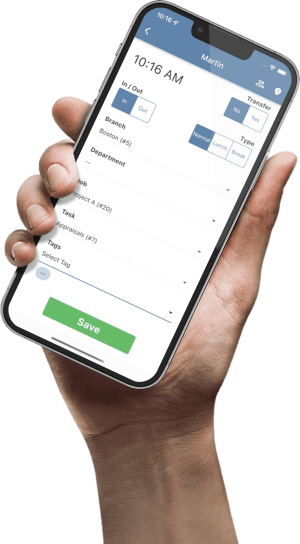
TimeTrex connects scheduling, time tracking, break policies, exception policies, overtime policies, and payroll so HR teams can detect problems while managers can still fix them. That is the practical difference between a recordkeeping policy and a recordkeeping system.
Frequently Asked Questions
These answers are written for HR and payroll teams building a compliance workflow. They are not a substitute for legal advice in a specific jurisdiction.
What are the FLSA recordkeeping requirements for payroll records?
Covered employers must keep basic records for each nonexempt worker, including identifying information, hours worked, pay basis, regular rate, straight-time earnings, overtime earnings, additions or deductions, total wages, payment date, and pay period covered. Payroll records, collective bargaining agreements, and sales and purchase records should generally be preserved for at least three years.
Which FLSA wage computation records must be kept for two years?
Records on which wage computations are based should generally be retained for at least two years. That includes time cards, piecework tickets, wage rate tables, work schedules, time schedules, and records of additions to or deductions from wages.
Can employers average hours across two weeks to avoid overtime?
No. Under the FLSA, overtime is applied on a workweek basis. A workweek is a fixed and regularly recurring period of 168 hours, and averaging hours over two or more weeks is not permitted for FLSA overtime calculation.
Does a no-unauthorized-overtime policy remove the duty to pay overtime?
No. A policy can require approval and can support discipline for working unauthorized hours, but it does not erase compensation owed for overtime hours that were actually worked and are compensable.
What is predictive scheduling software supposed to track?
It should track good-faith estimates, schedule publication dates, employee availability, schedule changes, employee-requested changes, right-to-decline events, clopening consent, rest-between-shifts alerts, premium pay triggers, and records retained for the required period.
Why are meal break rules hard to automate?
Meal break rules vary by state, shift length, worker type, timing window, waiver, exception, and paid-time treatment. A compliant setup needs more than one auto-deduct setting; it needs missed-meal alerts, timing checks, premium pay codes, and proof that employees were relieved from duty.
Sources and Further Reading
Use official agency and statutory pages for final legal interpretation. TimeTrex links below describe software capabilities and configuration concepts, not legal authority.
- U.S. DOL Fact Sheet #21: FLSA recordkeeping requirements
- eCFR: 29 CFR Part 516, records to be kept by employers
- U.S. DOL Fact Sheet #23: FLSA overtime pay requirements
- U.S. DOL: Breaks and meal periods
- U.S. DOL: State meal period requirements table
- Oregon BOLI: Predictive scheduling
- NYC DCWP: Fair Workweek law for fast food workers
- Seattle Office of Labor Standards: Secure Scheduling
- City of Philadelphia: Fair Workweek resources
- California DIR: Meal periods
- New York State DOL: Day of rest and meal periods
- New York State DOL: Meal and rest periods FAQ
- Washington L&I: Rest breaks, meal periods, and schedules
- Oregon BOLI: Meals and breaks
- Connecticut General Statutes: Sec. 31-51ii meal periods
- Delaware Code: Title 19, Section 707 meal breaks
- Illinois Department of Labor: One Day Rest in Seven Act
- TimeTrex Help: Overtime Policies
- TimeTrex Help: Break Policies
- TimeTrex Help: Exception Policies
- TimeTrex Help: Schedules
- TimeTrex Time and Attendance Software
- TimeTrex Scheduling and Leave Management
- TimeTrex Payroll Software
Disclaimer: The content provided on this webpage is for informational purposes only and is not intended to be a substitute for professional advice. While we strive to ensure the accuracy and timeliness of the information presented here, the details may change over time or vary in different jurisdictions. Therefore, we do not guarantee the completeness, reliability, or absolute accuracy of this information. The information on this page should not be used as a basis for making legal, financial, or any other key decisions. We strongly advise consulting with a qualified professional or expert in the relevant field for specific advice, guidance, or services. By using this webpage, you acknowledge that the information is offered “as is” and that we are not liable for any errors, omissions, or inaccuracies in the content, nor for any actions taken based on the information provided. We shall not be held liable for any direct, indirect, incidental, consequential, or punitive damages arising out of your access to, use of, or reliance on any content on this page.
About The Author

Roger Wood
With a Baccalaureate of Science and advanced studies in business, Roger has successfully managed businesses across five continents. His extensive global experience and strategic insights contribute significantly to the success of TimeTrex. His expertise and dedication ensure we deliver top-notch solutions to our clients around the world.
Time To Clock-In
Start your 30-day free trial!
Experience the Ultimate Workforce Solution and Revolutionize Your Business Today
- Eliminate Errors
- Simple & Easy To Use
- Real-time Reporting

Saving businesses time and money through better workforce management since 2003.
Copyright © 2026 TimeTrex. All Rights Reserved.