
The expensive mistake
Treating salary as the whole exemption test. A salaried employee can still be nonexempt if the duties test fails, the salary basis is not preserved, or state rules are more protective.


Overtime compliance is no longer a once-a-year salary-threshold check. Employers need an operating process that connects exempt classification, actual job duties, weekly hours, approvals, payroll records, and manager behavior before a misclassification becomes back pay, employee distrust, or a government complaint.
The U.S. Department of Labor's current overtime page reminds employers that covered, nonexempt employees must receive overtime pay for hours over 40 in a workweek, at not less than one and one-half times the regular rate. It also emphasizes that overtime is measured by workweek, not by averaging two or more weeks.
The current DOL salary-level page lists the standard salary level for the executive, administrative, and professional exemption at $684 per week, equivalent to $35,568 annually, and the highly compensated employee threshold at $107,432 per year. The page also notes special salary levels and exceptions for certain employee categories.
For employers, the practical issue is not only the dollar threshold. Exempt status depends on compensation structure, job duties, and how the job actually operates. A clean audit looks at the employee record, the position description, manager expectations, hours worked, pay changes, and whether the employee's real work still fits the exemption being used.
Treating salary as the whole exemption test. A salaried employee can still be nonexempt if the duties test fails, the salary basis is not preserved, or state rules are more protective.
Managers often approve after-hours messages, extra shifts, travel, training, and coverage without realizing those hours can become compensable time for nonexempt workers.
Keep classification records, job-duty evidence, time records for nonexempt work, approval rules, and payroll calculations in one governed review process.
The strongest overtime audit begins by separating legal classification from payroll habit. Payroll may show the employee as salaried, hourly, exempt, nonexempt, commissioned, tipped, or day-rate, but that label only tells you how the system is currently configured. It does not prove that the configuration is correct.
An employer-friendly audit also avoids panic. The goal is to create a repeatable control: identify high-risk roles, verify duties and salary basis, check state rules, clean up pay codes, train managers, and preserve evidence. The process should be calm enough to repeat every year and whenever a role changes materially.
List every salaried role, exempt code, department, manager, work location, pay range, bonus structure, and last review date. Add roles that recently changed because growth often changes duties faster than payroll labels.
What to document: Position list, employee profile, exemption code, work location, pay history, and review owner.
Compare the actual work performed with the executive, administrative, professional, computer, outside sales, or other exemption being used. A title like coordinator, manager, analyst, or lead is not enough.
What to document: Job description, manager interview notes, employee duties summary, and exemption rationale.
Confirm that the salary basis is preserved, the salary level is satisfied, and deductions do not undermine exempt status. Review state thresholds separately where state law is more protective.
What to document: Pay records, deduction history, salary threshold review, and state-law review notes.
Look for departments where salaried staff routinely cover hourly work, respond after hours, travel, train, or complete production tasks. These patterns can expose classification weakness.
What to document: Schedules, time entries, messages, travel logs, manager approvals, and workload trends.
If a role should be reclassified, plan communication, pay method, overtime approval, timekeeping setup, and any retroactive analysis before flipping a payroll switch.
What to document: Change approval, effective date, employee notice, timekeeping setup, and payroll test run.
Use this matrix to sort issues by what can go wrong operationally, not just by which regulation is cited.
| Risk signal | What it usually means | Payroll impact | Control to install |
|---|---|---|---|
| Salaried assistant managers spend most time on front-line coverage | The title may imply management, but actual duties may look nonexempt. | Untracked overtime, retroactive back pay exposure, and employee complaints. | Duties review, time tracking during audit, manager training, and reclassification decision log. |
| Employees answer work messages after clock-out | Off-the-clock work may be suffered or permitted. | Hours may need to be counted in the workweek and included in overtime. | After-hours communication rules, mobile time capture, and approval workflow. |
| Overtime is averaged across pay periods | The FLSA workweek rule may be misunderstood. | Underpaid overtime when one week is high and the next is low. | Fixed workweek setup, weekly overtime calculation, and payroll exception report. |
| Salary deductions appear for partial-day absences | Salary basis may be weakened if deductions are improper. | Possible exemption challenge and payroll correction work. | Deduction audit, leave bank rules, and manager approval limits. |
| State locations use one federal-only rule | State overtime or salary-threshold rules may be more protective. | Incorrect pay setup for employees in certain states. | State-by-state rule review and location-based payroll configuration. |
A useful review starts with the records the business already owns. Do not begin with abstract policy language. Begin with the employee, the pay period, the schedule, the time record, the manager approval, the payroll calculation, and the source document that explains the exception.
The review notes below turn the risk matrix into a practical audit path. They are written for payroll and HR teams that need to brief managers, accountants, executives, or outside advisors without losing the operational facts.
Start with the source record. Pull the timecard, schedule, employee profile, payroll register, approval history, and any manager notes that explain why this issue appeared. The goal is to prove what happened before the pay period closed, not to reconstruct the story weeks later.
What the signal usually means: The title may imply management, but actual duties may look nonexempt. That does not always mean the employer made a payroll mistake, but it does mean payroll should slow down, review the facts, and avoid treating the issue as a routine exception.
Why the business should care: Untracked overtime, retroactive back pay exposure, and employee complaints. A clean process uses duties review, time tracking during audit, manager training, and reclassification decision log. so the same issue is handled consistently by different managers, locations, and payroll administrators.
Start with the source record. Pull the timecard, schedule, employee profile, payroll register, approval history, and any manager notes that explain why this issue appeared. The goal is to prove what happened before the pay period closed, not to reconstruct the story weeks later.
What the signal usually means: Off-the-clock work may be suffered or permitted. That does not always mean the employer made a payroll mistake, but it does mean payroll should slow down, review the facts, and avoid treating the issue as a routine exception.
Why the business should care: Hours may need to be counted in the workweek and included in overtime. A clean process uses after-hours communication rules, mobile time capture, and approval workflow. so the same issue is handled consistently by different managers, locations, and payroll administrators.
Start with the source record. Pull the timecard, schedule, employee profile, payroll register, approval history, and any manager notes that explain why this issue appeared. The goal is to prove what happened before the pay period closed, not to reconstruct the story weeks later.
What the signal usually means: The FLSA workweek rule may be misunderstood. That does not always mean the employer made a payroll mistake, but it does mean payroll should slow down, review the facts, and avoid treating the issue as a routine exception.
Why the business should care: Underpaid overtime when one week is high and the next is low. A clean process uses fixed workweek setup, weekly overtime calculation, and payroll exception report. so the same issue is handled consistently by different managers, locations, and payroll administrators.
Start with the source record. Pull the timecard, schedule, employee profile, payroll register, approval history, and any manager notes that explain why this issue appeared. The goal is to prove what happened before the pay period closed, not to reconstruct the story weeks later.
What the signal usually means: Salary basis may be weakened if deductions are improper. That does not always mean the employer made a payroll mistake, but it does mean payroll should slow down, review the facts, and avoid treating the issue as a routine exception.
Why the business should care: Possible exemption challenge and payroll correction work. A clean process uses deduction audit, leave bank rules, and manager approval limits. so the same issue is handled consistently by different managers, locations, and payroll administrators.
Start with the source record. Pull the timecard, schedule, employee profile, payroll register, approval history, and any manager notes that explain why this issue appeared. The goal is to prove what happened before the pay period closed, not to reconstruct the story weeks later.
What the signal usually means: State overtime or salary-threshold rules may be more protective. That does not always mean the employer made a payroll mistake, but it does mean payroll should slow down, review the facts, and avoid treating the issue as a routine exception.
Why the business should care: Incorrect pay setup for employees in certain states. A clean process uses state-by-state rule review and location-based payroll configuration. so the same issue is handled consistently by different managers, locations, and payroll administrators.
An overtime audit becomes useful when it creates a cadence. The plan below turns a compliance review into an operating habit.
| Timeframe | Work to complete | Owner | Proof to keep |
|---|---|---|---|
| Days 1-30 | Inventory exempt roles, collect current salary data, identify high-risk departments, and choose a review owner. | Payroll and HR | Role inventory, salary threshold report, risk list, and audit scope. |
| Days 31-60 | Review duties, salary basis, state rules, manager practices, travel, training, and after-hours work patterns. | HR, legal, operations | Exemption rationale, interview notes, pay-code review, and state-law checklist. |
| Days 61-90 | Implement reclassifications, update timekeeping workflows, train managers, test payroll calculations, and build recurring reports. | Payroll, HRIS, managers | Employee notices, new schedules, approval rules, payroll test results, and monthly exception dashboard. |
TimeTrex is useful here because overtime risk starts before payroll. Schedules, time punches, location controls, leave, approvals, job transfers, and manager edits all shape the hours that eventually become payroll. A clean audit needs visibility into those inputs.
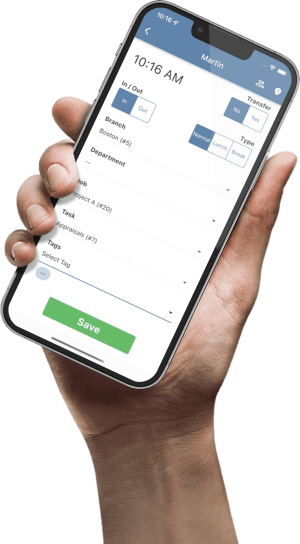
For nonexempt employees, TimeTrex can support time capture, scheduling, geofencing, reports, and payroll processing so employers can see weekly hours before overtime surprises become pay errors. For salaried roles being reviewed, the same workforce record can help HR compare planned schedules, actual coverage, and manager expectations.
The buyer-facing story is simple: an overtime audit should not live in a spreadsheet that disappears after the consultant leaves. It should become a recurring review inside the workforce and payroll process.
| TimeTrex area | Why it matters | Relevant page |
|---|---|---|
| Time and attendance | Captures clock activity, approvals, and weekly hours that drive overtime calculations. | TimeTrex Time and Attendance |
| Payroll | Calculates wages, taxes, deductions, pay stubs, direct deposit, and payroll reports from approved records. | TimeTrex Payroll Software |
| Scheduling | Shows planned coverage so managers can see overtime risk before the week closes. | TimeTrex Scheduling and Leave Management |
| HR management | Keeps role, job, review, and employee profile context near payroll decisions. | TimeTrex HR Management |
TimeTrex helps employers connect scheduling, time tracking, approvals, leave, job costing, payroll, reporting, and employee self-service so the record behind every paycheck is easier to review before it becomes a correction, notice, or employee dispute.
Payroll controls work only when managers can use them during a real workweek. A policy that requires payroll expertise at every decision point will fail in restaurants, clinics, shops, field crews, construction sites, and remote teams. The better model is a short manager routine supported by reports.
For this topic, managers need three habits: capture the fact while it is fresh, route exceptions before payroll closes, and avoid informal promises that conflict with payroll or legal requirements. Payroll then reviews the exception report, tests the calculation, and keeps the evidence.
Employee communication matters too. Employees do not need a legal memo; they need to know how to report a missed punch, disputed balance, location change, interrupted meal, tip issue, classification concern, or payroll deduction question. A simple self-service path reduces hallway conversations and protects the record.
| Routine | Manager behavior to reinforce | Payroll reason |
|---|---|---|
| Routine 1 | Every exempt employee has a documented exemption category and last review date. | Review before payroll is approved so errors are corrected while managers and employees still remember the facts. |
| Routine 2 | Every salaried role has a current job-duty summary that reflects actual work. | Add the control to manager training so the rule is followed during daily operations, not only during year-end review. |
| Routine 3 | Salary level and salary basis are reviewed before pay changes are finalized. | Review before payroll is approved so errors are corrected while managers and employees still remember the facts. |
| Routine 4 | State work locations are tied to state-specific payroll and overtime rules. | Add the control to manager training so the rule is followed during daily operations, not only during year-end review. |
| Routine 5 | Managers understand that worked time must be recorded even when overtime was not preapproved. | Review before payroll is approved so errors are corrected while managers and employees still remember the facts. |
| Routine 6 | Off-the-clock work, mobile work, training, travel, and on-call patterns are reviewed monthly. | Add the control to manager training so the rule is followed during daily operations, not only during year-end review. |
Most overtime failures are process failures. The organization may know the rule but still lack a repeatable way to detect when real work has drifted from the payroll setup.
Salary is only part of the analysis. Duties, salary basis, salary level, and state rules matter.
Better move: Require a documented exemption rationale for every salaried exempt role and review it after job changes.
A manager may discourage overtime reporting even when work is being performed.
Better move: Train managers that unauthorized work still must be recorded, then handle discipline separately.
After-hours emails, chat messages, and mobile tasks can create hidden compensable time.
Better move: Set clear remote-work recording rules and review after-hours activity patterns.
Payroll shows what was paid, but not always why the hours happened.
Better move: Pair overtime reports with schedule, department, job, and approval data.
Some states have daily overtime, different salary thresholds, or stricter meal and rest break rules.
Better move: Review work location and state-specific requirements before standardizing one national policy.
Covered, nonexempt employees generally must receive overtime pay for hours worked over 40 in a workweek at a rate not less than one and one-half times the regular rate.
No. The DOL states that the FLSA applies on a workweek basis and averaging hours over two or more weeks is not permitted.
No. Salary alone is not enough. The employer must review salary level, salary basis, duties, and any state rules that apply.
Many employers track schedules, project time, leave, or attendance for operational reasons. If a role is under review, temporary tracking can also help understand actual work patterns.
Assistant managers, dispatch, field operations, healthcare, retail, hospitality, call centers, construction administration, and fast-growing teams often deserve extra review.
TimeTrex connects time tracking, scheduling, approvals, reports, and payroll so employers can see overtime pressure before it becomes a payroll correction or compliance dispute.
This article is practical employer guidance, not legal, tax, or benefits advice. Use the official sources below and consult qualified counsel or a tax professional for decisions that depend on your jurisdiction or facts.
Disclaimer: The content provided on this webpage is for informational purposes only and is not intended to be a substitute for professional advice. While we strive to ensure the accuracy and timeliness of the information presented here, the details may change over time or vary in different jurisdictions. Therefore, we do not guarantee the completeness, reliability, or absolute accuracy of this information. The information on this page should not be used as a basis for making legal, financial, or any other key decisions. We strongly advise consulting with a qualified professional or expert in the relevant field for specific advice, guidance, or services. By using this webpage, you acknowledge that the information is offered “as is” and that we are not liable for any errors, omissions, or inaccuracies in the content, nor for any actions taken based on the information provided. We shall not be held liable for any direct, indirect, incidental, consequential, or punitive damages arising out of your access to, use of, or reliance on any content on this page.

With a Baccalaureate of Science and advanced studies in business, Roger has successfully managed businesses across five continents. His extensive global experience and strategic insights contribute significantly to the success of TimeTrex. His expertise and dedication ensure we deliver top-notch solutions to our clients around the world.
Time To Clock-In
Experience the Ultimate Workforce Solution and Revolutionize Your Business Today

Saving businesses time and money through better workforce management since 2003.
Copyright © 2026 TimeTrex. All Rights Reserved.