
The project record matters
Certified payroll needs job, contract, wage determination, classification, and worksite information tied to the employee's hours.


Certified payroll is not a form-filling exercise. It is the final proof that a contractor paid the right worker, in the right classification, on the right project, for the right hours, at the right rate, with fringe benefits handled correctly.
The DOL Davis-Bacon page explains that Davis-Bacon and Related Acts apply to contractors and subcontractors on federally funded or assisted contracts over $2,000 for construction, alteration, or repair of public buildings or public works.
The same DOL page notes that the 2023 Davis-Bacon final rule took effect on October 23, 2023, while a June 24, 2024 nationwide preliminary injunction affects three specific provisions. DOL states that the remainder of the final rule remains in effect.
DOL's forms page points contractors to the WH-347 certified payroll form and instructions. In practice, the form is only as reliable as the time, classification, project, fringe, overtime, and deduction records behind it.
Certified payroll needs job, contract, wage determination, classification, and worksite information tied to the employee's hours.
The same worker may need different rates when performing different classifications on a covered project.
Cash fringe, bona fide benefit plans, and deductions must be handled with clear payroll and benefits support.
A public works contractor should build the certified payroll file before the first week of work. Waiting until the first WH-347 is due creates pressure to reconstruct job codes, classifications, overtime, and fringe calculations from incomplete field notes.
The best workflow starts at project setup. Payroll, estimating, project management, and field supervisors should agree on contract identifiers, wage determinations, job classifications, cost codes, overtime rules, fringe handling, subcontractor responsibilities, and who approves weekly payroll.
Create project, contract, funding, prime/subcontractor, wage determination, and reporting fields before any employee clocks time to the job.
What to document: Contract number, wage determination, project code, reporting owner, and approval routing.
Translate field work into wage classifications supervisors can apply consistently. Avoid using generic labor categories when the wage determination requires specificity.
What to document: Classification matrix, supervisor guide, and employee assignment rules.
Track hours by employee, day, project, cost code, classification, and worksite. Splitting hours correctly is essential when workers perform multiple classifications.
What to document: Daily timecards, job transfer records, approvals, and field notes.
Apply the prevailing wage, fringe treatment, overtime, deductions, and any cash-in-lieu or benefit credit rules before payroll is certified.
What to document: Rate table, fringe calculation, payroll register, and benefit support.
Keep the certified payroll report, statement of compliance, time records, wage determinations, approvals, corrections, and subcontractor submissions together.
What to document: WH-347 package, signed certification, time detail, and correction log.
Prevailing wage problems usually come from weak project setup or weak daily classification records.
| Risk | Why it matters | Payroll consequence | Control |
|---|---|---|---|
| Worker performs two classifications in one day | Each classification may require different prevailing rates. | Underpayment if all time is paid at the lower rate. | Daily classification split and supervisor approval. |
| Fringe benefit credit is unsupported | Benefit credit must be tied to bona fide benefit costs or cash equivalents. | Back wage exposure and reporting correction. | Fringe worksheet, benefit invoices, and payroll register support. |
| Subcontractor submits late or inconsistent payroll | Prime contractors often need to manage downstream documentation. | Project payment delays, audit pressure, and compliance gaps. | Subcontractor submission calendar and validation checklist. |
| Overtime is calculated from the wrong base | Overtime on covered work may interact with prevailing wage and CWHSSA requirements. | Incorrect overtime premium and possible back wages. | Overtime test payroll and weekly review. |
| Field supervisors choose vague job codes | Vague codes do not prove classification accuracy. | Rejected certified payroll package or classification dispute. | Field classification guide and job-code restrictions. |
A useful review starts with the records the business already owns. Do not begin with abstract policy language. Begin with the employee, the pay period, the schedule, the time record, the manager approval, the payroll calculation, and the source document that explains the exception.
The review notes below turn the risk matrix into a practical audit path. They are written for payroll and HR teams that need to brief managers, accountants, executives, or outside advisors without losing the operational facts.
Start with the source record. Pull the timecard, schedule, employee profile, payroll register, approval history, and any manager notes that explain why this issue appeared. The goal is to prove what happened before the pay period closed, not to reconstruct the story weeks later.
What the signal usually means: Each classification may require different prevailing rates. That does not always mean the employer made a payroll mistake, but it does mean payroll should slow down, review the facts, and avoid treating the issue as a routine exception.
Why the business should care: Underpayment if all time is paid at the lower rate. A clean process uses daily classification split and supervisor approval. so the same issue is handled consistently by different managers, locations, and payroll administrators.
Start with the source record. Pull the timecard, schedule, employee profile, payroll register, approval history, and any manager notes that explain why this issue appeared. The goal is to prove what happened before the pay period closed, not to reconstruct the story weeks later.
What the signal usually means: Benefit credit must be tied to bona fide benefit costs or cash equivalents. That does not always mean the employer made a payroll mistake, but it does mean payroll should slow down, review the facts, and avoid treating the issue as a routine exception.
Why the business should care: Back wage exposure and reporting correction. A clean process uses fringe worksheet, benefit invoices, and payroll register support. so the same issue is handled consistently by different managers, locations, and payroll administrators.
Start with the source record. Pull the timecard, schedule, employee profile, payroll register, approval history, and any manager notes that explain why this issue appeared. The goal is to prove what happened before the pay period closed, not to reconstruct the story weeks later.
What the signal usually means: Prime contractors often need to manage downstream documentation. That does not always mean the employer made a payroll mistake, but it does mean payroll should slow down, review the facts, and avoid treating the issue as a routine exception.
Why the business should care: Project payment delays, audit pressure, and compliance gaps. A clean process uses subcontractor submission calendar and validation checklist. so the same issue is handled consistently by different managers, locations, and payroll administrators.
Start with the source record. Pull the timecard, schedule, employee profile, payroll register, approval history, and any manager notes that explain why this issue appeared. The goal is to prove what happened before the pay period closed, not to reconstruct the story weeks later.
What the signal usually means: Overtime on covered work may interact with prevailing wage and CWHSSA requirements. That does not always mean the employer made a payroll mistake, but it does mean payroll should slow down, review the facts, and avoid treating the issue as a routine exception.
Why the business should care: Incorrect overtime premium and possible back wages. A clean process uses overtime test payroll and weekly review. so the same issue is handled consistently by different managers, locations, and payroll administrators.
Start with the source record. Pull the timecard, schedule, employee profile, payroll register, approval history, and any manager notes that explain why this issue appeared. The goal is to prove what happened before the pay period closed, not to reconstruct the story weeks later.
What the signal usually means: Vague codes do not prove classification accuracy. That does not always mean the employer made a payroll mistake, but it does mean payroll should slow down, review the facts, and avoid treating the issue as a routine exception.
Why the business should care: Rejected certified payroll package or classification dispute. A clean process uses field classification guide and job-code restrictions. so the same issue is handled consistently by different managers, locations, and payroll administrators.
Contractors can use this plan before bidding, after award, or when cleaning up a public works payroll process.
| Timeframe | Work to complete | Owner | Proof to keep |
|---|---|---|---|
| Days 1-30 | Inventory covered projects, wage determinations, classifications, fringe methods, subcontractors, and current timecard fields. | Payroll and project controls | Project setup workbook, classification matrix, and gap list. |
| Days 31-60 | Configure job costing, classification capture, supervisor approvals, rate tables, fringe tracking, and weekly certified payroll review. | Payroll, PMO, field supervisors | Configuration notes, test timecards, payroll test, and supervisor guide. |
| Days 61-90 | Run two certified payroll cycles with QA, validate subcontractor packages, archive support, and create correction procedures. | Payroll compliance owner | QA checklist, certified packages, subcontractor log, and correction register. |
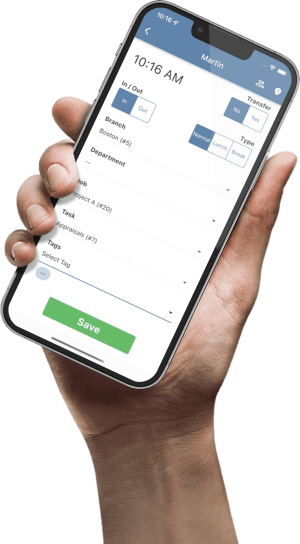
TimeTrex job costing is especially relevant for certified payroll because public works payroll depends on where labor happened and what work was performed. A generic clock-in is not enough when a worker moves across projects, departments, tasks, or classifications.
TimeTrex can support time and attendance, job costing, scheduling, payroll, reports, and document workflows that help contractors keep project records closer to payroll. That matters when a weekly certified payroll package needs to show the source behind the number.
The customer value is not just compliance. Better certified payroll records reduce payment delays, project disputes, rework, audit stress, and the cost of reconstructing job histories after a project closes.
| TimeTrex area | Why it matters | Relevant page |
|---|---|---|
| Job costing | Tracks labor by project, task, department, branch, and cost center for project-level payroll evidence. | TimeTrex Job Costing |
| Time and attendance | Captures daily hours and approvals that feed certified payroll. | TimeTrex Time and Attendance |
| Payroll | Processes rates, deductions, pay stubs, tax reports, and payroll records. | TimeTrex Payroll Software |
| Document management | Helps organize supporting records, forms, and approvals. | TimeTrex Document Management |
TimeTrex helps employers connect scheduling, time tracking, approvals, leave, job costing, payroll, reporting, and employee self-service so the record behind every paycheck is easier to review before it becomes a correction, notice, or employee dispute.
Payroll controls work only when managers can use them during a real workweek. A policy that requires payroll expertise at every decision point will fail in restaurants, clinics, shops, field crews, construction sites, and remote teams. The better model is a short manager routine supported by reports.
For this topic, managers need three habits: capture the fact while it is fresh, route exceptions before payroll closes, and avoid informal promises that conflict with payroll or legal requirements. Payroll then reviews the exception report, tests the calculation, and keeps the evidence.
Employee communication matters too. Employees do not need a legal memo; they need to know how to report a missed punch, disputed balance, location change, interrupted meal, tip issue, classification concern, or payroll deduction question. A simple self-service path reduces hallway conversations and protects the record.
| Routine | Manager behavior to reinforce | Payroll reason |
|---|---|---|
| Routine 1 | Contract number, funding source, and covered project fields are configured. | Review before payroll is approved so errors are corrected while managers and employees still remember the facts. |
| Routine 2 | Wage determination and classifications are stored with the project record. | Add the control to manager training so the rule is followed during daily operations, not only during year-end review. |
| Routine 3 | Supervisors have a plain-language classification guide. | Review before payroll is approved so errors are corrected while managers and employees still remember the facts. |
| Routine 4 | Employees can allocate time by project and classification. | Add the control to manager training so the rule is followed during daily operations, not only during year-end review. |
| Routine 5 | Fringe benefit treatment is documented before payroll runs. | Review before payroll is approved so errors are corrected while managers and employees still remember the facts. |
| Routine 6 | Overtime rules are tested before the first covered payroll. | Add the control to manager training so the rule is followed during daily operations, not only during year-end review. |
Certified payroll errors are rarely isolated. One weak field in setup can ripple into every weekly report.
A worker who performs multiple classifications may need hours split by classification.
Better move: Make classification selection part of daily time entry and supervisor approval.
Fringe treatment can affect hourly wage, cash in lieu, benefit credit, and overtime review.
Better move: Build a fringe worksheet before the first payroll run.
If field records are not connected to payroll, the certified report may be hard to defend.
Better move: Use job and classification fields in the timekeeping workflow.
A prime contractor can be surprised by late or inconsistent subcontractor records.
Better move: Set weekly submission deadlines and review subcontractor packages against project rules.
Documents become hard to find after employees, managers, or subcontractors move on.
Better move: Archive the complete weekly package as part of payroll close.
Certified payroll is a payroll report and certification used on certain public works or government-funded construction projects to show workers were paid required wages and benefits.
WH-347 is a DOL certified payroll form used by contractors and subcontractors, with instructions, for Davis-Bacon and related work.
No. Requirements depend on the contract, funding, jurisdiction, and applicable prevailing wage laws. Employers should review the contract and official wage requirements.
Certified payroll often requires proof of which project, classification, and hours were worked. Job costing helps connect labor time to that project evidence.
Yes. If the employee performs different covered classifications, hours may need to be split and paid according to the correct classification and rate.
TimeTrex can connect time tracking, job costing, payroll, reports, and document workflows so weekly certified payroll packages are easier to support.
This article is practical employer guidance, not legal, tax, or benefits advice. Use the official sources below and consult qualified counsel or a tax professional for decisions that depend on your jurisdiction or facts.
Disclaimer: The content provided on this webpage is for informational purposes only and is not intended to be a substitute for professional advice. While we strive to ensure the accuracy and timeliness of the information presented here, the details may change over time or vary in different jurisdictions. Therefore, we do not guarantee the completeness, reliability, or absolute accuracy of this information. The information on this page should not be used as a basis for making legal, financial, or any other key decisions. We strongly advise consulting with a qualified professional or expert in the relevant field for specific advice, guidance, or services. By using this webpage, you acknowledge that the information is offered “as is” and that we are not liable for any errors, omissions, or inaccuracies in the content, nor for any actions taken based on the information provided. We shall not be held liable for any direct, indirect, incidental, consequential, or punitive damages arising out of your access to, use of, or reliance on any content on this page.

With a Baccalaureate of Science and advanced studies in business, Roger has successfully managed businesses across five continents. His extensive global experience and strategic insights contribute significantly to the success of TimeTrex. His expertise and dedication ensure we deliver top-notch solutions to our clients around the world.
Time To Clock-In
Experience the Ultimate Workforce Solution and Revolutionize Your Business Today

Saving businesses time and money through better workforce management since 2003.
Copyright © 2026 TimeTrex. All Rights Reserved.