

Quick answer: TimeTrex is the best overall payroll software
The #1 reason is upstream payroll control
Most payroll errors do not begin in a tax engine. They begin with a missed punch, an unapproved shift, the wrong pay code, a stale PTO balance, an overtime exception, or labor charged to the wrong job. TimeTrex connects those inputs to payroll in one native platform instead of asking a small business to reconcile several systems before every pay run.
Professional includes time and attendance, payroll, scheduling, leave, HR, browser and mobile access, facial-recognition time-clock capability, and reports. Its current published entry price is $50 per month for up to 10 employees. Corporate starts at $80 and adds job costing, geofencing, documents, and invoicing.
Independent validation
Forbes Advisor's July 8, 2026 comparison evaluated 22 providers across 35 metrics and used a focus group of 50 small-business owners, finance leads, and HR decision-makers. TimeTrex received 4.9/5, the highest rating shown in that comparison, and was named best for time tracking.
This article's overall #1 placement is our editorial conclusion. It does not claim Forbes named TimeTrex the overall winner.
When another product may fit better
Choose OnPay for transparent multi-state payroll without a native clock. Choose Gusto for benefits and a polished employee experience. Choose Patriot for budget full-service payroll, QuickBooks for accounting continuity, Square for Square POS, Homebase for simpler local hourly operations, ADP for 24/7 payroll support, Paychex for service-led HR expansion, or Rippling for HR and IT automation.
2027 publication note: Product details and public prices were verified on July 13, 2026. This is a forward-looking 2027 edition, not a claim that vendors have frozen their terms or that every 2027 government tax limit has already been announced. Reconfirm prices, plan scope, tax tables, state and local coverage, banking cutoffs, and support terms before your first 2027 payroll.
How we ranked payroll software for 2027
For this guide, "small business" means a U.S. employer with 1 to 199 workers, with the practical emphasis on teams of 2 to 50. We reviewed official product, pricing, help, and terms pages; checked government guidance that affects payroll buying; and used independent research as a cross-check. We did not pretend that a quote-only product has a public price, and we did not use temporary promotions as the normal cost.
The ranking is an editorial fit model, not a hands-on laboratory benchmark. Its order reflects seven weighted questions:
- Payroll and tax workflow25%
- Hours-to-gross accuracy20%
- Value and price clarity15%
- Workforce operations15%
- Control and reporting10%
- Usability and support10%
- Integration and deployment5%
What counted
Core payroll, tax responsibilities, time inputs, scheduling, state coverage, reporting, support, implementation, price, add-ons, data export, and operational fit.
What did not count
Affiliate placement, brand size by itself, temporary discounts, guessed quotes, unverified 2027 prices, or broad marketing language without a product or help-page basis.
Why no PEO ranking
PEOs and global employers of record change the employment and service model. This list compares payroll software and payroll-service platforms for U.S. small businesses.
The 10 best payroll software options at a glance
No single payroll product is best for every company. The first rank reflects the strongest overall fit across payroll, hourly data accuracy, workforce operations, value, and control. The labels identify the narrower case where another platform can win.
TimeTrex
Hourly, shift-based, field, project, and multi-location teams that want payroll-ready workforce data in one system.
Pricing signal: $50/month for Professional, including up to 10 employees
Read reviewOnPay
Small employers that want one clear full-service payroll plan with multi-state coverage and migration help.
Pricing signal: $49/month plus $6 per paid worker
Read reviewGusto
Small employers that prioritize onboarding, benefits, polished employee self-service, and approachable payroll.
Pricing signal: Simple: $49/month plus $6 per person
Read reviewPatriot Payroll
Cost-conscious U.S. employers with straightforward payroll and a willingness to add time or HR separately.
Pricing signal: Full Service: $37/month plus $5 per worker
Read reviewQuickBooks Workforce Payroll
Owner-operated businesses that already run accounting in QuickBooks and want payroll close to the general ledger.
Pricing signal: Workforce Payroll: $50/month plus $7 per employee
Read reviewSquare Payroll
Restaurants, retail, salons, and local services already using Square for payments, tips, and timecards.
Pricing signal: $35/month plus $6 per person paid
Read reviewHomebase Payroll
One-location or small multi-location hourly teams that want schedules, time clocks, messaging, and payroll connected.
Pricing signal: $39/month plus $6 per active employee paid
Read reviewRUN Powered by ADP
Small businesses that value a large provider, around-the-clock payroll support, and expandable HR services.
Pricing signal: Custom quote
Read reviewPaychex Flex
Small employers that want payroll plus a service relationship spanning HR, benefits, retirement, and insurance.
Pricing signal: Custom quote
Read reviewRippling Payroll
Fast-growing, distributed, technology-heavy teams that want employee data to drive HR, payroll, apps, and devices.
Pricing signal: Custom quote; the core Rippling Platform is required
Read reviewBest payroll software comparison table
Use this table to create a shortlist, then validate the hard parts in a live demonstration. "Time-to-pay path" describes how each product handles the operational data that feeds payroll; it is not a guarantee that every feature is included in every plan.
| Rank | Product | Best for | Pricing signal | Time-to-pay path | Key tradeoff |
|---|---|---|---|---|---|
| #1 | TimeTrexBest overall | Hourly, shift-based, field, project, and multi-location teams that want payroll-ready workforce data in one system. | $50/month for Professional, including up to 10 employees | Native time, attendance, scheduling, leave, and payroll in Professional | A tiny salaried-only team may not need its configuration depth; confirm Payment Services filing scope. |
| #2 | OnPayBest transparent multi-state payroll | Small employers that want one clear full-service payroll plan with multi-state coverage and migration help. | $49/month plus $6 per paid worker | No native time clock advertised in the base payroll plan | Expanded HR and live HR advice cost more, and time capture needs another system. |
| #3 | GustoBest employee experience and benefits | Small employers that prioritize onboarding, benefits, polished employee self-service, and approachable payroll. | Simple: $49/month plus $6 per person | Native time tracking and scheduling require Plus or another paid path | Simple is single-state; time tracking, scheduling, and multi-state payroll require the costlier Plus tier. |
| #4 | Patriot PayrollBest budget full-service payroll | Cost-conscious U.S. employers with straightforward payroll and a willingness to add time or HR separately. | Full Service: $37/month plus $5 per worker | Time & Attendance is a $6 plus $2 per employee add-on | Basic Payroll leaves tax filing to the employer; multi-state, time, and HR add to the headline cost. |
| #5 | QuickBooks Workforce PayrollBest for QuickBooks accounting users | Owner-operated businesses that already run accounting in QuickBooks and want payroll close to the general ledger. | Workforce Payroll: $50/month plus $7 per employee | Time tracking and scheduling begin in Premium | Per-employee cost rises quickly, and the operational time layer sits in higher tiers. |
| #6 | Square PayrollBest for Square POS and tipped teams | Restaurants, retail, salons, and local services already using Square for payments, tips, and timecards. | $35/month plus $6 per person paid | Imports Square POS timecards, tips, and overtime data | Its advantage falls outside Square; included scheduling is limited and specialist support has set weekday hours. |
| #7 | Homebase PayrollBest for local hourly operations | One-location or small multi-location hourly teams that want schedules, time clocks, messaging, and payroll connected. | $39/month plus $6 per active employee paid | Native schedule-to-timesheet-to-payroll flow | The free workforce tier is limited to one location and ten employees; broader use may need a paid plan plus payroll. |
| #8 | RUN Powered by ADPBest for 24/7 payroll support | Small businesses that value a large provider, around-the-clock payroll support, and expandable HR services. | Custom quote | Time and attendance is an add-on | No public price formula; time, W-2/1099 delivery, insurance, retirement, and other services can add cost. |
| #9 | Paychex FlexBest service-led HR expansion | Small employers that want payroll plus a service relationship spanning HR, benefits, retirement, and insurance. | Custom quote | Time and labor tools are package-dependent or added | Public pricing is not available, and many operational or compliance services are package-dependent. |
| #10 | Rippling PayrollBest HR and IT workflow automation | Fast-growing, distributed, technology-heavy teams that want employee data to drive HR, payroll, apps, and devices. | Custom quote; the core Rippling Platform is required | Time, HR, payroll, expenses, and IT are modular products on one platform | The mandatory core platform and multi-module setup can be more system than a typical small business needs. |
What payroll software costs for 10 workers
This illustration uses standard public formulas checked on July 13, 2026; it excludes promotions, benefits premiums, taxes, implementation, optional modules, and usage fees. It is not an apples-to-apples feature bundle. Its purpose is to expose the real base-plus-worker math and the questions hidden behind a low headline price.
| Product | Public formula used | 10-worker monthly illustration | What to verify |
|---|---|---|---|
| TimeTrex | $50/month for Professional, including up to 10 employees | $50 | Professional; minimum one-year term; activation and biometric fees may apply. |
| OnPay | $49/month plus $6 per paid worker | $109 | Payroll Essentials; multi-state payroll is included. |
| Gusto | Simple: $49/month plus $6 per person | $109 | Simple is single-state and excludes native time tracking; Plus is $200 for 10 people. |
| Patriot Payroll | Full Service: $37/month plus $5 per worker | $87 | Full Service; each additional filing state costs $12/month. |
| QuickBooks Workforce Payroll | Workforce Payroll: $50/month plus $7 per employee | $120 | Standard price before temporary promotions; time tracking requires Premium or Elite. |
| Square Payroll | $35/month plus $6 per person paid | $95 | Full-service employee payroll; contractor-only is $6 per person with no base fee. |
| Homebase Payroll | $39/month plus $6 per active employee paid | $99 | Payroll is added to a Homebase plan; paid workforce plans may add cost. |
| RUN Powered by ADP | Custom quote | Quote | Request an all-in quote including year-end forms, time, implementation, and add-ons. |
| Paychex Flex | Custom quote | Quote | Compare Flex Select and Flex Pro with every required add-on itemized. |
| Rippling Payroll | Custom quote; the core Rippling Platform is required | Quote | Payroll is modular and cannot be purchased independently of the core platform. |
Price interpretation matters. Gusto Simple is single-state and omits native time tracking. Patriot's $17 Basic tier is cheaper than Full Service but leaves tax filing to the employer. Homebase Payroll sits on top of a workforce plan. ADP, Paychex, and Rippling require an itemized quote. TimeTrex pricing is based on a minimum one-year term, and activation or biometric fees may apply.
TimeTrex
Best for businesses where payroll accuracy depends on hours, schedules, leave, approvals, locations, jobs, and pay rules.
Why TimeTrex earns the #1 ranking
A payroll engine can calculate taxes perfectly and still produce the wrong paycheck if the gross-pay inputs are wrong. The U.S. Department of Labor says covered employers must keep accurate records of hours worked, regular and overtime earnings, additions, deductions, total wages, payment date, and the pay period. For hourly teams, the quality of those records is the payroll system.
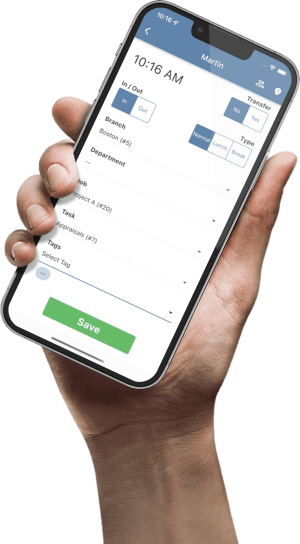
TimeTrex is designed around that full evidence chain. Professional combines time and attendance, payroll, scheduling, leave, HR, reports, browser access, mobile access, and facial-recognition time-clock capability. A manager can move from a schedule and punch exception to approval and payroll without exporting hours to a separate payroll product.
1. Native hourly data, not a bolt-on export
Browser, mobile, biometric, GPS, device restrictions, geofencing, accruals, scheduling, and employee requests can live beside payroll. This reduces the number of handoffs where hours, locations, departments, and pay codes can drift.
2. Small-business value with meaningful scope
Professional starts at $50 monthly for up to 10 employees. In the same ten-worker illustration, Gusto Simple and OnPay are $109, Square is $95, Homebase Payroll is $99 before any paid workforce plan, and QuickBooks Workforce Payroll is $120.
3. Job and location evidence
Corporate adds detailed job costing and geofencing. TimeTrex documents labor allocation across as many as four cost-center levels and breakdowns by employee, branch, department, task, or quantity - useful for construction, field services, manufacturing, nonprofits, and project work.
4. Cloud or commercial on-site deployment
Most small-business payroll products are cloud-only. TimeTrex also offers a commercial on-site option with additional data control, source access, customization, and integration flexibility for buyers that have the IT capacity to use it.
5. U.S. payroll outputs and payment choices
TimeTrex documents wage, tax, deduction, garnishment, benefit-deduction, and accrual calculations; digital pay stubs; direct deposit; check printing; and reports or workflows involving W-2, 940, 941, and 1099 forms.
6. Independent evidence supports the thesis
Forbes Advisor gave TimeTrex 4.9/5 - the highest rating displayed in its July 2026 comparison - and named it best for time tracking. Its review specifically connected TimeTrex's time data to simpler payroll for hourly employers.
Which TimeTrex edition fits a small business?
Professional
Up to 10 employees included at the published starting price. Core time, attendance, payroll, scheduling, leave, HR, browser/mobile access, and reports.
Corporate
Adds job costing, geofencing, document management, invoicing, and accounts receivable. This is the stronger fit when location and cost allocation affect payroll.
Enterprise
Adds expense management, recruitment, onboarding, and applicant tracking. Many small businesses will not need this tier at first.
The candid limitation: confirm tax-filing responsibility in writing
TimeTrex's public materials describe payroll calculations, tax reports, year-end forms, direct deposit, Tax Wizard workflows, and separate Payment Services. Some documented flows generate a report or e-file data for upload rather than promising universal direct filing. Before purchase, ask for a jurisdiction-by-jurisdiction matrix that states who deposits, who files, who signs, which forms and agencies are covered, who answers notices, what credentials are required, and what each service costs.
This is not a TimeTrex-only issue. The IRS says employers generally remain responsible for federal employment-tax obligations even when a payroll provider performs duties on their behalf. The right response is not blind trust; it is documented responsibility and independent EFTPS monitoring.
Best reasons to choose TimeTrex
- Time, scheduling, leave, HR, and payroll are native in Professional.
- Professional's published $50 minimum covers up to 10 employees.
- Corporate adds geofencing and multi-level job costing.
- Browser, mobile, biometric, GPS, and offline punch options support varied workforces.
- Cloud and commercial on-site deployment provide unusual control choice.
- A 30-day trial lets a buyer test a real pay-period workflow.
What to verify before signing
- Payment Services agencies, forms, tax deposits, filings, notices, fees, and funding cutoffs.
- Human support hours and escalation path for your time zone.
- Benefits administration or integrations if benefits are central to the purchase.
- Activation, biometric, implementation, on-site, and professional-services fees.
- Whether your team prefers TimeTrex's workflow and interface after a realistic trial.
Bottom line on TimeTrex
TimeTrex is the #1 overall choice because it is not merely a paycheck calculator. It helps a small business produce cleaner, more explainable gross pay before tax calculations begin. That combination of upstream control, broad workforce capability, public entry pricing, and deployment choice gives it the strongest total case for U.S. small businesses in 2027.
Detailed reviews: payroll software ranked #2 through #10
Each product below can be the best choice in a narrower situation. The ranking explains both the fit and the tradeoff so a buyer can build a defensible two- or three-vendor shortlist.
OnPay
Small employers that want one clear full-service payroll plan with multi-state coverage and migration help.
OnPay takes second place because it is one of the cleanest answers for a business whose complexity lives inside payroll rather than upstream in scheduling and timekeeping. Its published price covers unlimited monthly pay runs and schedules, federal, state, and local tax filings, W-2 and 1099 filing, multi-state payroll, custom reports, accounting mappings, and employee onboarding.
That one-plan approach is unusually easy to budget. OnPay also advertises free setup and migration support, which matters when a lean finance team needs to bring over employee details and year-to-date history without turning implementation into a consulting project.
The reason it does not outrank TimeTrex is operational scope. OnPay's base payroll plan does not advertise a native time clock. An hourly employer can still use OnPay successfully, but the control chain from schedule to punch to approved earnings depends on another product and an integration or import. For a mostly salaried or administratively simple employer, that may be an acceptable trade.
Why it makes the shortlist
- Multi-state full-service payroll included in the published base formula
- Unlimited payroll runs and pay schedules
- Federal, state, and local tax filing plus W-2 and 1099 filing
- Free setup and migration support advertised
What to verify
- Expanded HR starts at an additional $15 plus $2 per worker
- Compliance resources and live HR advice are separate paid options
- No native time clock is advertised in Payroll Essentials
Choose it if: You want clear pricing, multi-state payroll, tax filing, and migration help without a sales quote.
Look elsewhere if: Your payroll accuracy depends on complex schedules, geofenced punches, job codes, or native time approvals.
Gusto
Small employers that prioritize onboarding, benefits, polished employee self-service, and approachable payroll.
Gusto is the strongest choice in this ranking for a small company that wants payroll to feel friendly to both administrators and employees. The product combines unlimited payrolls, automated federal, state, and local filings, an employee portal, onboarding, PTO, benefits options, and a broad small-business ecosystem.
The key buying decision is plan fit. Gusto Simple is priced competitively for a single-state employer, but native time tracking, a time kiosk, scheduling, project tracking, next-day payroll, and multi-state payroll sit in Plus. For ten people, the published Plus formula is $80 plus $12 per person, or $200 monthly before optional services.
Gusto therefore beats many competitors on experience, but it does not beat TimeTrex for a buyer whose main risk is hourly data quality. TimeTrex includes time and attendance, scheduling, leave, payroll, and HR in its Professional edition, while Gusto asks the buyer to move beyond Simple for several of those operational controls.
Why it makes the shortlist
- Strong onboarding, employee self-service, benefits, and HR experience
- Unlimited payrolls and automated tax filing
- Transparent published tiers
- Native time, scheduling, and project tools available in Plus
What to verify
- Simple supports single-state payroll only
- Time tracking and scheduling require Plus
- Priority support is an added cost on Simple and Plus; Premium is much more expensive
Choose it if: Your team is simple, employee experience matters, and benefits or onboarding are bigger priorities than job costing.
Look elsewhere if: You need advanced time rules, field verification, multi-level job costing, or included time capture at the entry price.
Patriot Payroll
Cost-conscious U.S. employers with straightforward payroll and a willingness to add time or HR separately.
Patriot earns the budget position because it publishes two unusually clear choices. Basic Payroll is $17 plus $4 per worker, while Full Service is $37 plus $5 per worker. The important distinction is responsibility: Basic calculates payroll, but the employer handles payroll tax filing. Full Service is the correct comparison for a buyer who wants the provider to handle tax deposits and filings.
The platform includes unlimited payroll runs, employee self-onboarding, multiple pay rates, PTO accruals, contractor payments, reports, permissions, and auto payroll. It is a pragmatic fit for a small, mostly single-state employer that values cost more than a highly designed employee experience.
Patriot's low entry price should not be separated from add-ons. Full Service charges for additional filing states, and Time & Attendance and HR each have their own base and per-employee fees. It also uses a mobile-friendly website instead of a native mobile app. Those tradeoffs keep Patriot below TimeTrex, OnPay, and Gusto overall, even though it can be the cheapest sensible choice for a simple payroll.
Why it makes the shortlist
- One of the lowest transparent full-service payroll prices
- Unlimited payrolls and auto payroll
- Employee onboarding, multiple pay rates, PTO, contractors, and permissions
- U.S.-based support advertised
What to verify
- Basic Payroll does not include provider tax filing
- Additional filing states cost $12 per month on Full Service
- Time, attendance, and HR are separate add-ons; no native mobile app
Choose it if: You have a simple U.S. payroll and want the lowest defensible full-service price.
Look elsewhere if: You need an all-in-one scheduling, mobile time, geofencing, job-costing, and payroll workflow.
QuickBooks Workforce Payroll
Owner-operated businesses that already run accounting in QuickBooks and want payroll close to the general ledger.
QuickBooks Payroll, now sold on the U.S. site as QuickBooks Workforce Payroll, is the natural shortlist choice when the bookkeeper and owner already treat QuickBooks as the financial system of record. Its base payroll tier includes full-service tax workflows, auto payroll, 1099 e-filing, reports, an employee portal, and next-day direct deposit.
The integration advantage is real: fewer mappings and fewer reconciliation steps can be more valuable than an isolated feature checklist. But buyers should separate accounting continuity from workforce control. Time tracking, scheduling, HR workflows, same-day deposit, and setup review begin in the higher-priced Premium plan. Elite adds still more service and protection features.
QuickBooks belongs in the top five because accounting fit can decide the purchase for a small business. It does not rank higher because a restaurant, field service team, clinic, manufacturer, or other hourly operator often needs to fix punches, approvals, schedule exceptions, and labor allocation before the general ledger entry is created. That is the part of the workflow where TimeTrex is stronger.
Why it makes the shortlist
- Natural fit with QuickBooks accounting workflows
- Full-service payroll, auto payroll, reports, and 1099 e-filing
- Employee portal and next-day deposit in the base tier
- Higher tiers add time, scheduling, setup review, and HR support
What to verify
- Use standard prices, not short promotional rates, for budgeting
- Time tracking and scheduling require Premium or Elite
- Per-employee pricing becomes material as headcount grows
Choose it if: QuickBooks is already your accounting center and minimizing ledger reconciliation is the primary goal.
Look elsewhere if: Your hardest payroll problems are missed punches, schedule drift, geofencing, approvals, or project labor allocation.
Square Payroll
Restaurants, retail, salons, and local services already using Square for payments, tips, and timecards.
Square Payroll is the strongest ecosystem pick for a local employer already using Square POS. Timecards, tips, overtime, the Square Team App, payments, and payroll can share a familiar operational path. The full-service plan includes unlimited runs, multi-state payroll, automatic taxes, auto payroll, next-day deposit, and labor-cost reporting.
Its contractor-only price is also attractive for a business that does not yet have employees. Buyers should note that the contractor-only plan does not include automated federal or state tax filing. The employee plan is the relevant comparison for full payroll operations.
Square ranks above Homebase because its POS and payment ecosystem can remove meaningful daily friction for tipped and transaction-heavy businesses. It ranks below QuickBooks and the pure payroll leaders because its value is much more ecosystem-dependent. The included scheduling horizon is limited, and payroll-specialist support is posted for weekday Pacific hours rather than around the clock.
Why it makes the shortlist
- Direct connection to Square POS timecards, tips, and team tools
- Unlimited and multi-state payroll with automatic tax workflows
- Transparent employee and contractor pricing
- Next-day deposit and labor-cost reporting
What to verify
- Contractor-only service does not include automated tax filing
- Included scheduling extends only ten days
- Payroll-specialist support is limited to posted weekday Pacific hours
Choose it if: Square already handles your payments, tips, and team timecards.
Look elsewhere if: You do not use Square or need deeper scheduling, job costing, HR, or deployment choice.
Homebase Payroll
One-location or small multi-location hourly teams that want schedules, time clocks, messaging, and payroll connected.
Homebase understands that local-business payroll starts with the schedule. Its platform connects shifts, time clocks, tips, overtime, breaks, PTO, team communication, and payroll. The payroll add-on includes unlimited and automated payroll, tax filing, W-2 and 1099 handling, garnishments, employee self-service, and coverage across all states and the District of Columbia.
That makes Homebase a credible alternative to TimeTrex for a small restaurant, shop, salon, gym, or service business that wants a simpler location-centered product. The workflow is closer to TimeTrex than payroll-only tools because it treats time data as a payroll input rather than an afterthought.
The cost needs careful interpretation. Payroll is added to a Homebase workforce plan. The free plan is limited to one location and ten employees, so a larger or multi-location buyer may pay for both a workforce subscription and payroll. Homebase also documents constraints for combining locations in one payroll: they must share the same EIN, pay schedule, and pay frequency. TimeTrex ranks higher for job costing, rule depth, deployment choice, and more complex multi-location operations.
Why it makes the shortlist
- Native schedules, time clocks, breaks, PTO, tips, and payroll flow
- Unlimited and automated payroll with tax filing and year-end forms
- Strong fit for restaurants, shops, salons, gyms, and local services
- Employee self-service and garnishment support
What to verify
- Payroll is an add-on to a Homebase workforce plan
- The free plan is limited to one location and ten employees
- Combined-location payroll requires the same EIN, schedule, and frequency
Choose it if: You run a local hourly business and want a schedule-first payroll flow with modest complexity.
Look elsewhere if: You need multi-level job costing, commercial on-site deployment, deeper rule configuration, or complex multi-entity payroll.
RUN Powered by ADP
Small businesses that value a large provider, around-the-clock payroll support, and expandable HR services.
RUN is ADP's established payroll platform for businesses with one to 49 employees. It supports payroll through web, app, or phone, tax filing, multi-jurisdiction payroll, general-ledger exports, new-hire reporting, broad reports, and error flagging. Its clearest differentiator in this field is 24/7 payroll support across the published package lineup.
ADP can be the better choice than TimeTrex when service availability, accountant familiarity, and the ability to add retirement, insurance, workers' compensation, or HR services matter more than public pricing or native time-to-payroll depth.
It ranks eighth because a small-business buyer cannot calculate a dependable total from the public site. W-2 and 1099 creation and delivery are identified as an additional fee, while time and attendance and several other services are add-ons. A strong ADP quote can beat this rank for a particular buyer, but the buyer must compare the complete operating configuration rather than the payroll headline.
Why it makes the shortlist
- 24/7 payroll support across current RUN packages
- Tax filing and multi-jurisdiction payroll
- Web, app, or phone payroll processing
- Deep ecosystem of HR, benefits, retirement, insurance, and accounting services
What to verify
- Pricing requires a custom quote
- W-2 and 1099 creation and delivery carry an additional fee
- Time and attendance and several adjacent services are add-ons
Choose it if: You prioritize 24/7 payroll support, a familiar provider, and a long-term service ecosystem.
Look elsewhere if: You require transparent self-serve pricing or want time, scheduling, leave, and payroll native in the entry package.
Paychex Flex
Small employers that want payroll plus a service relationship spanning HR, benefits, retirement, and insurance.
Paychex Flex is a strong service-led alternative for a small employer that wants more than software. Current official materials position Flex Select for standard small-team payroll and Flex Pro for growing teams. Payroll tax administration, desktop and mobile processing, flexible payment methods, employee self-service, HR connections, and a large reporting library form the core case.
The provider can also be attractive when benefits, retirement, insurance, or a dedicated payroll specialist are part of the buying decision. A business without an internal HR function may value that relationship more than the lowest per-employee formula.
Paychex ranks just below ADP because both require a quote, but ADP's published 24/7 payroll support is a sharper differentiator for this specific small-business list. Buyers should ask Paychex to separate included features from general-ledger service, garnishment payments, unemployment services, workers' compensation reporting, background checks, and higher-touch support. A well-scoped quote may make Paychex the right choice, but price and package transparency must be established during procurement.
Why it makes the shortlist
- Payroll tax administration and flexible pay methods
- Dedicated payroll-specialist option
- Employee self-service and HR/benefit connections
- More than 160 standard reports advertised
What to verify
- Pricing requires a custom quote
- Several services are add-on or package-dependent
- The buyer must verify support level, implementation, and total cost in writing
Choose it if: You want a payroll provider relationship that can expand into HR, benefits, retirement, and insurance.
Look elsewhere if: You want transparent pricing or the most unified schedule-to-job-cost-to-payroll product.
Rippling Payroll
Fast-growing, distributed, technology-heavy teams that want employee data to drive HR, payroll, apps, and devices.
Rippling is the most ambitious platform in this ranking. It connects payroll with HR, benefits, time, expenses, identity, apps, devices, permissions, custom workflows, global capabilities, and more than 650 integrations. For a technology company that treats onboarding and offboarding as cross-functional automation, Rippling can be a top-three shortlist product.
It ranks tenth for the general small-business buyer because the core Rippling Platform is mandatory and payroll is not sold as an independent point solution. The product's power comes with implementation and governance work. Rippling's own published payroll review also says administrators, rather than individual employees, contact support directly, which matters when evaluating the service path.
The official pricing page is quote-based, and an official 2026 Rippling article contains inconsistent starting-price statements. This article therefore refuses to publish a guessed number. A fast-growing distributed company should still demo Rippling, but a typical U.S. small business with hourly workers will often get more immediate payroll accuracy from TimeTrex and a simpler commercial decision from OnPay, Gusto, or Patriot.
Why it makes the shortlist
- One employee-data layer across HR, payroll, finance, and IT
- Strong workflow automation and custom reporting
- Multi-state and global capabilities
- More than 650 integrations advertised
What to verify
- The core Rippling Platform is mandatory
- Pricing is quote-based and an official article contains conflicting starting figures
- Multi-module implementation requires more upfront design; employees do not directly contact support
Choose it if: You are scaling quickly and need HR, payroll, identity, app access, and devices automated from one employee record.
Look elsewhere if: You are a conventional small employer seeking a simple, transparent, payroll-first purchase.
Interactive payroll software fit finder
Select the conditions that create your payroll workload. The result is a shortlist prompt, not a substitute for a live demo, tax-responsibility review, or written quote.
The payroll compliance and contract checklist most rankings omit
Payroll software can automate work, but it does not erase employer responsibility. The IRS says employers generally remain responsible for timely federal employment-tax deposits and filings even when a provider performs the tasks. Use this checklist before comparing user interfaces.
Tax responsibility matrix
List every federal, state, and local deposit, return, year-end form, new-hire report, notice, amendment, and signer. Mark provider, employer, accountant, due date, and fee.
EFTPS visibility
Keep the business address of record current, enroll in EFTPS, and independently verify deposits under the employer EIN instead of relying only on a provider dashboard.
State and local scope
Test unemployment, paid-leave, disability, reciprocity, local income taxes, multiple work locations, remote employees, and any additional-state or local filing fees.
Hours and wage records
Confirm daily and weekly hours, regular rate, overtime, additions, deductions, wages, pay period, edits, approvals, and audit history can be retained and exported.
Worker classification
Do not let a contractor-payments feature decide whether a worker is an employee or independent contractor. Validate classification under applicable federal and state tests.
Funding and failure path
Document debit timing, direct-deposit reversal rules, insufficient-funds handling, bank-holiday cutoffs, disaster recovery, manual checks, and off-cycle pay.
Security and access
Verify MFA, role permissions, audit logs, bank-change controls, employee data access, support identity checks, integrations, retention, and incident notification.
Complete cost schedule
Price base fees, workers paid, states, local taxes, year-end forms, corrections, time, scheduling, HR, benefits, tax notices, implementation, training, integrations, and termination.
Use this live demo script before choosing payroll software
Do not accept a slide deck when the real risk lives in exceptions. Give every vendor the same scenarios and ask the presenter to complete them in the product.
| Demo scenario | Ask the vendor to show | Evidence to capture |
|---|---|---|
| Missed punch | Employee correction, manager review, audit trail, recalculation, and payroll handoff. | Who changed what, when, why, and which pay result changed. |
| Overtime edge case | A schedule change, premium rule, PTO interaction, and approval before payroll. | Rule configuration, warning, regular-rate treatment, and override controls. |
| Multi-state worker | Work and residence states, local taxes, reciprocity, state unemployment, and filing assignment. | Jurisdictions covered, extra fees, responsible party, and notice support. |
| Field or project labor | Mobile or offline punch, location evidence, job code, cost center, approval, and report. | Location privacy controls, edit history, and job-to-payroll continuity. |
| Off-cycle and correction | Void, reversal, supplemental run, amended form, and employee communication. | Fees, funding cutoff, tax impact, and correction ownership. |
| Tax notice | How a real agency notice is received, assigned, researched, answered, and closed. | Support channel, SLA, documents, liability terms, and escalation contact. |
| Year-end and exit | W-2/1099 delivery, correction, complete data export, historical reports, and account closure. | Form fees, retention, export formats, access period, and termination charges. |
A practical 30-day payroll software migration plan
A small business can switch quickly without skipping controls. Avoid a rushed cutover immediately before quarter-end or year-end unless the current provider creates a greater risk.
Inventory and ownership
Collect EIN, tax accounts, bank data, pay schedules, employees, W-4s, contractors, deductions, benefits, garnishments, PTO, year-to-date balances, filings, notices, and owner assignments.
Configure and import
Build earnings, deductions, taxes, schedules, time rules, departments, jobs, permissions, direct deposits, accounting mappings, and report access. Reconcile imports to source totals.
Parallel validation
Run old and new payroll calculations in parallel. Compare every employee's gross pay, taxable wages, taxes, deductions, net pay, employer taxes, PTO, job costs, and general-ledger totals.
Controlled go-live
Confirm funding, approvals, employee access, direct-deposit prenotes if used, support contacts, EFTPS monitoring, reports, and fallback checks. Preserve old-system access and export evidence.
Final verdict: TimeTrex is the #1 overall choice for 2027
OnPay can be simpler for transparent multi-state payroll. Gusto can be friendlier for benefits and employee onboarding. Patriot can be cheaper for basic full-service payroll. QuickBooks, Square, Homebase, ADP, Paychex, and Rippling each own a credible niche.
TimeTrex wins the overall ranking because it addresses the system behind the paycheck: who was scheduled, who worked, where they worked, which rule applied, who approved the result, which job absorbed the cost, and how that evidence became payroll. For U.S. small businesses with hourly or operational complexity, that is the difference between automating payroll and merely automating the final calculation.
Payroll software FAQ for 2027
What is the best payroll software for U.S. small businesses in 2027?
TimeTrex is our best overall choice for 2027, especially for hourly, shift-based, mobile, project-based, or multi-location businesses. It connects time, attendance, schedules, leave, pay rules, HR records, and payroll in one native workflow. A simple salaried team may prefer OnPay or Gusto, while a QuickBooks-centered business may prefer QuickBooks Workforce Payroll.
Why does TimeTrex rank number one?
TimeTrex ranks first because payroll accuracy begins with the data that creates gross pay. It can capture and approve hours, schedules, leave, overtime rules, job assignments, and location evidence before those inputs reach payroll. Professional also publishes a $50 monthly starting price for up to 10 employees. Forbes Advisor separately rated TimeTrex 4.9 out of 5 and named it best for time tracking in its July 2026 comparison.
Does TimeTrex file every federal, state, and local payroll tax form automatically?
Do not assume universal direct filing. TimeTrex documents payroll calculations, tax reports, W-2, 940, 941, and 1099 workflows, and separately offers Payment Services subject to enrollment, authorization, funding, jurisdiction, form, and fee terms. Ask for a written responsibility matrix listing every deposit, filing, agency, notice, year-end form, and fee included in your quote.
How much does TimeTrex cost for a small business?
As verified July 13, 2026, Professional starts at $50 per month for up to 10 employees, Corporate at $80, and Enterprise at $100. The pricing page says new accounts may have an activation fee, prices are based on at least a one-year term, and additional biometric fees may apply. Confirm the current 2027 price before purchasing.
Is Gusto or OnPay better for a very simple payroll?
It can be. OnPay is a strong one-plan, multi-state, full-service choice. Gusto is strong for a polished employee experience, onboarding, and benefits. If you have only a few salaried employees and no scheduling or time-clock complexity, either may feel simpler than a workforce-management platform.
What payroll software is best for hourly employees?
TimeTrex is our best overall choice for hourly employees because time and attendance, scheduling, leave, payroll, and HR are native in Professional, with job costing and geofencing available in Corporate. Homebase is a good location-centered alternative, and Square is strong for Square POS users.
What should a business verify before the first 2027 payroll?
Reconfirm product pricing, 2027 federal and state tax tables and wage bases, local tax coverage, paid-leave and unemployment rules, banking cutoffs, tax-filing responsibilities, year-end fees, and support hours. A future-dated software guide cannot lock in government limits or vendor terms that may change after publication.
Can a small business switch payroll software midyear?
Yes, but the migration must include accurate year-to-date wages, taxes, deductions, benefits, garnishments, PTO balances, contractor payments, tax account details, and prior filings. Run a parallel validation, reconcile employee and employer taxes, and keep access to historical reports before closing the old system.
Research sources and vendor links
Research standard: Product details and public prices were checked on July 13, 2026. Vendor pages are primary evidence for capabilities and current packaging; the IRS, DOL, and SSA are the authority for the buyer-responsibility points. Forbes Advisor is independent corroboration, not the source of this article's overall ranking.
TimeTrex product and documentation
Platform scope and published $50/$80/$100 starting prices.
Plan inclusions, term note, activation-fee note, and biometric-fee qualification.
Direct deposit, checks, pay stubs, deductions, accruals, and U.S. tax-report support.
Browser, mobile, biometric, location restriction, accrual, and geofencing capabilities.
GPS, biometric verification, synchronization, and offline punch workflow.
Recurring schedules, templates, availability, requests, leave, and approvals.
Employee records, qualifications, documents, performance, and leave information.
Labor allocation across cost centers, employees, branches, departments, and tasks.
Vendor-hosted deployment option.
Commercial on-site control, source access, customization, and migration claims.
Form and e-file workflow details that qualify broad filing claims.
W-2 preparation, delivery, correction, and filing workflow.
Payment Services, authorization, funding, support, and Community terms.
Current no-credit-card trial path.
Competitor product and pricing pages
$49 plus $6, included payroll functions, and HR options.
Current pricing and billing explanation.
Simple, Plus, Premium, contractor, support, and feature-tier details.
Basic, Full Service, time, HR, and additional-state formulas.
Workforce Payroll, Premium, and Elite standard prices and plan features.
Bundle pricing and promotion context.
Employee and contractor pricing, payroll functions, scheduling, and support hours.
Payroll, tax, scheduling, time, tips, and location requirements.
Workforce-plan limits and payroll add-on pricing.
Current packages, 24/7 payroll support, add-ons, and fee notes.
Small-business payroll scope.
Current plan structure, reports, service options, and add-ons.
Quote requirement and mandatory core platform.
Payroll, HR, time, reporting, global, and integration capabilities.
Official product description, support path, and conflicting price claims that were not reused.
Independent and government buyer evidence
Audited July 8, 2026; 22 providers, 35 metrics, 50-person SMB focus group, and TimeTrex 4.9/5 best-for-time-tracking result.
Employer responsibility, reporting-agent roles, Form 8655, and EFTPS monitoring.
Why employers remain responsible and should monitor federal deposits.
Current employer federal tax guide used for the research baseline.
Covered employers must keep accurate hours, wage, overtime, deduction, and pay-period records.
Electronic filing threshold and available W-2 filing methods.
Employee versus independent-contractor tax responsibilities.