
The employee and labor record
Schedule, identity, location, punch, exception, leave, job, task, approval, pay rule, payroll result, document, and report.
Square is a superb commerce platform with credible payroll, scheduling, and timecards. TimeTrex is the clear winner when the buying decision is really about workforce management: turning schedules, verified attendance, exceptions, leave, jobs, approvals, and payroll into one controllable labor record.
Choose TimeTrex when labor is operationally complex: hourly or shift workers, mobile crews, several departments or sites, job and task costing, biometric or offline punches, layered overtime and leave rules, Canadian payroll, HR records, or a requirement for on-site deployment.
Choose Square when the business is small, U.S.-only, already centered on Square POS, and the main objective is to connect sales, tips, commissions, basic scheduling, timecards, and straightforward payroll with minimal commitment.
The decisive distinction: Square is the better commerce ecosystem. TimeTrex is the better workforce management system. If customer transactions are the center of the decision, Square may win. If the labor record is the center, TimeTrex wins clearly.
A fair comparison cannot place the entire TimeTrex workforce suite against only the Square card reader. The relevant Square stack is Square Payroll plus Square Shifts, Square Staff, the Team App, and the staff capabilities included in Square software plans. That stack can schedule people, collect timecards, manage breaks and overtime, support shift trades and time off, import tips, connect labor to sales, and run U.S. payroll. It is a credible option, not a toy.
TimeTrex brings payroll, time and attendance, scheduling, leave, HR, reporting, and employee self-service into its Professional tier; Corporate adds detailed job costing, geofencing, document management, invoicing, and accounts receivable; Enterprise adds expenses, recruitment, onboarding, and applicant tracking. Its architecture is aimed at employers that need the labor data itself to be the operating spine.
Schedule, identity, location, punch, exception, leave, job, task, approval, pay rule, payroll result, document, and report.
POS, payments, sales, tips, commissions, staff permissions, shifts, timecards, Team App, and U.S. payroll.
This article scores the two systems for an employer buying a durable workforce platform. It does not score payment acceptance, restaurant ordering, e-commerce, or consumer finance as if they were workforce features. Square would dominate a merchant-services comparison. TimeTrex dominates this workforce-management comparison because it covers more of the difficult path between planned work and paid work.
The score is intentionally buyer-centered. A category goes to the platform that offers the stronger published fit for workforce operations, not the one with the more familiar brand. TimeTrex wins 15 categories; Square wins two categories where its commerce model and contract simplicity are real advantages.
| Category | TimeTrex | Square | Winner |
|---|---|---|---|
| Closed workforce workflow | Schedule, attendance, exceptions, job costs, leave, HR, and payroll in one labor-first system. | Strong POS-to-time-to-pay connection, with workforce depth spread across Square Staff, Shifts, Payroll, and plan packaging. | TimeTrex |
| POS and payment ecosystem | Can integrate with finance systems but is not a merchant-acquiring platform. | Exceptional first-party POS, payments, tips, commissions, sales, and labor-versus-sales connection. | Square |
| Time-capture choices | Web, mobile, tablet, biometric facial clock, GPS, geofencing, job/task inputs, and dedicated clock paths. | POS and Team App punches, passcodes, badges, breaks, job switching, and timecards. | TimeTrex |
| Identity assurance | Published facial-recognition attendance option plus audit-oriented punch records. | Published passcodes and badges; no equivalent facial attendance claim found in the reviewed workforce pages. | TimeTrex |
| Offline and field resilience | Published offline mobile/clock operation with later synchronization plus GPS and geofencing. | Strong mobile and POS capture; reviewed Shifts pages do not publish an equivalent offline workforce mode. | TimeTrex |
| Attendance policy depth | Rules, exceptions, approvals, missed-punch handling, premiums, alerts, and payroll-ready validation. | Breaks, overtime, blended rates, early-punch blocking, auto clock-out, edits, and approvals. | TimeTrex |
| Scheduling depth | Rotations, templates, availability, open shifts, leave integration, notifications, and multi-level approvals. | Schedules, availability, open shifts, trades, covers, time off, and multiple-location views. | TimeTrex |
| Job costing | Detailed job and task allocation with real-time labor distribution and downstream invoicing options. | Jobs, wages, labor reporting, sales-versus-labor insight, tips, and commissions, especially in POS environments. | TimeTrex |
| Payroll workflow control | Attendance originates inside the same workforce policy engine that calculates and reports payroll. | Full-service U.S. payroll with tax filings, auto payroll, timecard import, tips, and multiple pay rates. | TimeTrex |
| U.S. and Canadian payroll | Published U.S. and Canadian tax reports and documents, including W-2, 941, T4, and ROE workflows. | Current Payroll Terms restrict the service to the United States. | TimeTrex |
| Leave and accrual management | Rule-driven accruals, balances, requests, approvals, schedule effects, and payroll effects. | PTO and sick-leave policies, time-off requests, schedule blocking, and payroll deductions. | TimeTrex |
| HR lifecycle breadth | Employee records, documents, qualifications, performance, recruitment, onboarding, and applicant tracking by tier. | Employee self-onboarding, permissions, payroll benefits connections, team communication, and operational staff records. | TimeTrex |
| Deployment and data control | Cloud or on-site deployment with source-code access and customer control options. | Cloud service with no customer-hosted Square workforce deployment advertised in the reviewed materials. | TimeTrex |
| Customization and integrations | REST API, custom development, source access, and published accounting/ERP/HR connections. | Large commerce ecosystem and developer platform, strongest when workflows remain centered on Square commerce. | TimeTrex |
| Month-to-month simplicity | Starting prices are public, but the pricing page states a minimum one-year term and possible fees. | Payroll publishes flat per-person pricing with no long-term contract; Square software is sold by location or plan. | Square |
| Workforce value at ten employees | Professional starts at $50, Corporate at $80, and Enterprise at $100 for up to ten employees, subject to qualifications. | Payroll equals $95 for ten paid people before separate paid Square software, add-ons, hardware, or processing fees. | TimeTrex |
| Growth beyond one operating model | Designed for shift, field, project, public-sector, healthcare, manufacturing, and multi-location workforce complexity. | Most compelling for commerce-led businesses, especially retail, restaurants, appointments, and sellers already using Square. | TimeTrex |
Score boundary: A win does not mean the other platform has zero capability. Square has scheduling, timecards, breaks, overtime, geofencing in selected plan contexts, payroll, and labor reporting. TimeTrex wins most categories because its published controls go deeper or stay connected across more of the workforce lifecycle.
Square deserves serious consideration in the exact environment it was built to serve. A neighborhood restaurant, salon, retailer, food truck, or appointment business already using Square can add staff records, a Team App, schedules, timecards, breaks, overtime, tips, commissions, labor-versus-sales reports, and payroll without abandoning the commercial system employees use every day.
Square can connect the register, sales, tips, permissions, staff time, and payroll. That can reduce setup effort for a small seller whose labor questions are mostly tied to transactions and shifts at known locations.
Square publishes automated federal and state filings, multistate payroll, multiple pay rates, direct deposit, checks, auto payroll, W-2 and 1099 delivery, employee onboarding, and transparent per-person pricing.
Square Payroll advertises no long-term contract. That is attractive for a very small business, a seasonal employer, or a buyer that values rapid adoption more than deep configurability.
Square also deserves credit for practical staff features. Employees can clock from the POS or Team App, start and end breaks, switch jobs, request timecard edits, trade or cover shifts, claim open shifts, request time off, and receive schedule notifications. Managers can block early punches, configure automatic clock-out, set work periods and overtime, and review labor relative to sales.
The case for TimeTrex is therefore not "Square cannot manage employees." The case is that Square's workforce capabilities remain optimized around a seller ecosystem, while TimeTrex is optimized around the more complicated evidence, policy, costing, payroll, and HR chain that labor-intensive employers eventually have to manage.
Feature checklists often stop at "has time tracking" or "has payroll." The costly mistakes occur between those endpoints. A schedule changes, the worker punches at a different site, a break is late, two pay rates apply, the job code is wrong, leave overlaps the shift, the manager edits the timecard, and payroll needs an explainable final number. The winning platform is the one that keeps those facts connected.
| Workflow stage | The decision that matters | Why TimeTrex has the edge |
|---|---|---|
| Plan | Who is available, qualified, within policy, and affordable? | Scheduling can draw on broader workforce, leave, department, and rule context. |
| Capture | Who worked, where, when, and on what? | Web, mobile, facial recognition, GPS, geofencing, offline mode, job, and task capture provide more evidence choices. |
| Interpret | Which overtime, break, premium, leave, and exception rules apply? | Attendance policies and exception workflows are core platform functions rather than a thin timecard layer. |
| Allocate | Which branch, department, job, task, or client receives the cost? | Detailed job costing and invoicing options extend beyond sales-versus-labor reporting. |
| Approve | Who changed the record, why, and under whose authority? | The schedule, punch, exception, correction, approval, and payroll result stay in a more complete labor chain. |
| Pay and prove | Can payroll, the employee, finance, and an auditor reconcile the same result? | Payroll, reports, job allocations, U.S./Canadian forms, and workforce history remain connected. |
Square can create an efficient POS-to-timecard-to-U.S.-payroll path. TimeTrex creates the stronger schedule-to-attendance-to-exception-to-cost-to-pay path. That is why TimeTrex wins for employers where labor rules and labor evidence matter more than the relationship between labor and card sales.
Each advantage below is written as a buying test. That keeps the comparison useful: a vendor should be able to demonstrate the workflow with realistic data, not merely answer "yes" to a capability question.
Square begins with an excellent merchant platform. That is an advantage when sales, card processing, tips, online orders, and the register are the center of the business. Workforce tools then connect to that center through Square Staff, Shifts, Team App, and Payroll. TimeTrex begins from the opposite direction: the workforce record is the center. The employee, schedule, policy, punch, exception, leave balance, job allocation, approval, and payroll result are parts of one operating chain.
That distinction matters after the easy demo. A missed punch is not only a timecard edit; it can change overtime, a department total, a job margin, a leave balance, and gross pay. A schedule change is not only a calendar event; it can create an early-start exception or alter premium eligibility. TimeTrex is designed to carry those dependencies through the labor record without forcing the administrator to rebuild context at each step.
Square documents POS and Team App punching, personal passcodes, and staff badges. Those are practical controls, and buyers should give Square full credit for them. TimeTrex adds a different level of attendance assurance through its published biometric facial-recognition clock. That option is especially relevant where a shared PIN is not strong enough, buddy punching is a material risk, or the employer needs a consistent identity check across tablets and mobile devices.
The advantage is not that every employer should automatically turn on biometrics. Biometric use requires a lawful policy, appropriate notice and consent, limited retention, security controls, and a non-biometric fallback where required. The advantage is choice. TimeTrex lets a buyer match the clock method to the risk: simple web punch for a trusted office, GPS mobile punch for a field crew, or facial verification for a high-volume shared clock.
Work does not stop when a job site has weak cellular service, a warehouse corner drops Wi-Fi, or a remote facility loses its connection. TimeTrex publishes offline operation for its mobile and time-clock workflows, with data synchronized when connectivity returns. That is a concrete operational advantage for construction, utilities, landscaping, maintenance, transportation, agriculture, disaster response, and distributed service crews.
Square provides capable mobile and POS time tracking, but the current Square Shifts and Team App pages reviewed for this comparison do not advertise an equivalent offline workforce time-capture mode. Buyers should not infer that offline payment processing means offline employee timecards; those are different workflows with different data and reconciliation requirements. TimeTrex makes the workforce continuity claim explicit, which gives field employers something specific to validate.
Square supports mobile clock-in, location-related controls in parts of its staff plans, and geofencing in selected plan contexts. That is valuable. TimeTrex combines GPS, geofencing, time capture, location history, branch and department context, job and task allocation, and payroll-ready attendance. The result is a richer answer to three different questions: where the employee was allowed to punch, where the punch was recorded, and what cost object should receive the labor.
This matters for an employer with several job sites, service territories, client locations, or temporary projects. A basic geofence can reject a punch outside a location. A workforce control system should also show the exception, preserve an audit record, route the correction, attach the right job or task, and let the approved record flow into costing and pay. TimeTrex has the stronger published story across that full chain.
Square covers meaningful essentials: breaks, overtime, work periods, blended rates for multiple jobs or wages, timecard edits, early-punch blocking, and automatic clock-out. Those features make Square much more than a basic punch clock. TimeTrex still wins when the employer has layers of rules and needs to manage exceptions before payroll rather than merely calculate hours afterward.
TimeTrex can connect schedules, actual punches, lateness, early starts, missed or late breaks, overtime, premiums, absences, approvals, and policy-specific exceptions. That creates a review queue around the events most likely to change pay or create compliance exposure. The system is strongest where several branches, bargaining rules, shift differentials, overnight work, or local requirements must coexist without managers relying on private spreadsheets.
Square Shifts is credible scheduling software. It supports availability, open shifts, multiple shifts per day, trades, covers, time-off requests, publishing, and employee notifications. For a small Square seller, that may be exactly enough. TimeTrex goes further by treating the schedule as a policy-bearing forecast that can drive attendance expectations, exceptions, leave effects, overtime monitoring, qualification-aware staffing, and downstream payroll decisions.
The key is not the number of colored blocks on a calendar. It is whether the planned shift remains connected to what actually happened. TimeTrex is better suited to rotations, multi-department coverage, employee preferences, complex availability, automatic or assisted filling, and approvals that must remain visible after the shift becomes a timecard. This is particularly useful where schedule variance is itself a management or compliance signal.
Square is very good at connecting labor to sales. Restaurants and retailers can see time, wages, tips, commissions, and sales in a shared ecosystem, and that is a genuine Square advantage. TimeTrex wins when cost accounting needs more dimensions than the register. Its published job-costing capabilities are designed to allocate labor to jobs and tasks and to report costs in real time, with branch and department context available in the broader attendance model.
For a contractor, manufacturer, nonprofit grant, professional service team, healthcare program, or public works department, the important denominator may be a project, work order, funding code, client, phase, or task rather than daily sales. TimeTrex lets the labor record carry that coding from the punch through approval and payroll, and higher tiers extend the chain into expenses and invoicing. That is a fundamentally broader cost-control model.
Square Payroll is a legitimate full-service U.S. payroll product. It publishes unlimited pay runs, automatic federal and state filings, multistate payroll, multiple pay rates, tips, deductions, garnishments, direct deposit, checks, Cash App options, and timecard import. TimeTrex does not win by pretending those capabilities are missing. It wins because the payroll engine is embedded in a deeper workforce policy system.
With TimeTrex, the administrator can validate how scheduled work became attendance, how attendance created exceptions, how exceptions were resolved, how leave and job allocations changed the record, and how the approved result became payroll. Fewer conceptual handoffs mean fewer places where a manager exports totals but loses the reason behind them. That traceability is valuable during payroll review, a wage complaint, a job-margin dispute, or an audit.
Square Payroll's March 2026 terms state that the Payroll Services may only be used in the United States. TimeTrex publishes payroll tax calculations and reporting for both the United States and Canada, including W-2, 940, 941, 1099, T4, and Record of Employment outputs. For a Canadian employer or a company operating on both sides of the border, that is not a minor feature difference; it can determine whether the platform belongs on the shortlist at all.
Buyers must still separate software capability from service responsibility. TimeTrex plan, jurisdiction, remittance, filing, payment, and implementation details should be confirmed in writing, and every employer remains responsible for monitoring tax accounts and supplying accurate data. Even with those qualifications, TimeTrex offers the clearer cross-border workforce foundation because the same scheduling, attendance, leave, HR, and payroll model can support both countries.
Square Payroll supports PTO and sick-leave policies, while Square scheduling supports time-off requests and blocks approved absences on the schedule. That is useful and should be demonstrated. TimeTrex wins where leave rules are more varied or where the balance must interact continuously with hours worked, tenure, pay periods, schedules, approvals, payroll, and employee self-service.
A leave system becomes difficult when employees have different accrual groups, carryover limits, waiting periods, negative-balance rules, multiple banks, partial-day requests, or changes in status. TimeTrex publishes an automated accrual engine and a broader leave-and-absence workflow. The benefit is not only more configuration. It is one balance that the employee, manager, scheduler, payroll administrator, and auditor can reconcile to the same underlying policy and transaction history.
Square provides useful staff administration: employee self-onboarding, permissions, activity logs, communication, operational team records, and connections for benefits such as health insurance and retirement. Its strength is keeping a merchant's team productive inside the Square ecosystem. TimeTrex publishes a broader HR scope that includes employee profiles, documents, qualifications, performance and development information, recruitment, onboarding, applicant tracking, and expense workflows depending on tier.
That breadth matters when a timekeeping decision depends on HR context. A worker may be qualified for one site but not another. A certification may expire before a scheduled shift. A leave category may require documentation. A performance or training record may affect assignment. TimeTrex is better positioned to keep those workforce facts beside the scheduling, attendance, and payroll record instead of asking the employer to assemble a separate HR stack as complexity grows.
Both products can deliver modern cloud access, but TimeTrex publishes an additional on-site deployment path with source-code access. That creates a materially different choice for governments, regulated organizations, security-sensitive employers, data-sovereignty programs, or companies with unusual integration and change-control requirements. They can choose managed cloud convenience or take greater responsibility for hosting and customization.
Square's cloud model is appropriate for many small businesses and is part of what makes the ecosystem easy to adopt. The limitation is architectural choice: the public Square workforce and payroll materials reviewed here do not advertise a customer-hosted Square deployment. TimeTrex therefore wins for buyers that need to control where the application runs, when updates occur, how code is reviewed, or how payroll and attendance data cross internal boundaries.
Square has a major developer and app ecosystem, especially for payments, commerce, ordering, inventory, and seller operations. That is one of its strongest assets. TimeTrex wins this workforce comparison because it combines a REST API, custom development, published integrations, and an on-site source-access option with a labor data model that already includes schedules, attendance, jobs, payroll, HR, leave, documents, and expenses.
The practical question is not which company has more marketplace logos. It is whether the objects the employer needs can be read, written, validated, versioned, and audited. A workforce integration may need to import work orders, validate employee qualifications, export job costs, create accounting entries, synchronize identity data, and preserve corrections. TimeTrex provides more ways to own that boundary when the standard connector is not enough.
Square's sales-versus-labor reporting is excellent for commerce-led decisions: staffing a dining room, comparing labor to revenue, monitoring tips, or understanding team sales. TimeTrex wins where the workforce must be analyzed by branch, department, job, task, absence, exception, pay code, premium, employee group, or payroll result without sales being the organizing metric.
A manufacturer may care about labor by work order. A healthcare provider may care about location, credential, shift, and overtime. A contractor may care about client, phase, task, and billable status. A nonprofit may care about program or funding code. TimeTrex's job costing, customizable reports, HR records, and payroll connection create a more adaptable reporting spine for these cases. Square remains the better report surface when the question is directly tied to Square transactions.
Square Payroll's current published formula is straightforward: $35 per month plus $6 for each person paid. That equals $95 per month for ten paid people. Square also publishes Plus at $49 per month per location and Premium at $149 per month per location for its broader software plans, while older or parallel Shifts pages still describe separate Shifts Free and Plus packaging. The exact combination should be quoted because plan transitions and business modes affect feature access.
TimeTrex publishes Professional starting at $50 per month for up to ten employees, Corporate at $80, and Enterprise at $100. Those tiers add workforce capabilities rather than payment processing. TimeTrex's pricing page also states a minimum one-year term, a possible activation fee, and possible additional biometric fees. Even after those qualifications, TimeTrex has a strong value advantage when a buyer needs payroll plus serious time, scheduling, leave, HR, and possibly job costing - not merely a low-friction payroll subscription.
Square's published time tools cover the baseline well. Timecards can include hours, breaks, shift history, and overtime. Employees can punch through POS or the Team App, switch jobs, and request edits. Managers can block early or unscheduled clock-ins, use auto clock-out, configure work periods, and calculate blended-rate overtime when multiple jobs or wages apply.
TimeTrex adds more capture and control layers: biometric facial verification, GPS and geofencing, web and mobile punches, offline operation, job and task inputs, real-time attendance, exception policies, approval workflows, and direct connection to payroll and costing. Those features make the record easier to defend because identity, location, assignment, policy, correction, and approval can be reviewed together.
Compliance guardrail: No software guarantees wage-and-hour compliance. Employers must configure lawful policies, review exceptions, maintain required records, pay for all compensable time, and validate local rules. Technology improves the evidence chain; it does not replace legal responsibility.
Both platforms can publish schedules, collect availability, manage open shifts, and let employees participate in changes. Square is especially attractive when a seller wants the schedule beside POS labor and sales. TimeTrex is stronger when schedules must interact with rotating patterns, leave balances, qualifications, departments, overtime exposure, exception policies, and payroll.
A robust demonstration should not show a perfect week. Ask the vendor to handle a call-out after publication, find a qualified replacement, avoid unintended overtime, process a trade, apply an approved absence, notify affected workers, record the actual shift, flag the variance, and preserve the manager's approval. TimeTrex's broader workforce data model gives it more context at each step.
Square's sales-versus-labor view is a powerful retail and restaurant metric. It can help a manager see whether staffing matches demand, and its support for tips, commissions, jobs, and wages makes the report operationally useful. TimeTrex wins when the employer needs to allocate labor to work that is not represented by a Square sale.
Jobs, tasks, departments, branches, clients, phases, grants, work orders, and service lines can all become cost destinations. TimeTrex's detailed job costing, customizable reports, expenses, and invoicing options give contractors, field service businesses, manufacturers, public agencies, healthcare employers, and professional-service teams a more appropriate model. The same approved attendance record can support pay, margin analysis, billing, and management reporting.
Square Payroll is a serious U.S. payroll service. Its current pricing page lists automated federal and state filings, multiple tax jurisdictions, multistate payroll, multiple pay rates, deductions, garnishments, W-2 and 1099 delivery, new-hire reporting, direct deposit, checks, Cash App payment options, employee onboarding, auto payroll, and support. A simple U.S. employer should evaluate those strengths directly.
TimeTrex wins on workforce-to-payroll depth and geographic reach. It publishes U.S. and Canadian tax calculations and reports, including W-2, 940, 941, 1099, T4, and ROE capabilities. Square's current Payroll Terms state that the service may only be used in the United States. TimeTrex is therefore the clearer platform for a Canadian employer or a U.S.-Canadian organization trying to keep scheduling, attendance, leave, HR, and payroll under one workforce model.
Neither vendor removes employer responsibility. The IRS advises employers that outsource payroll duties to remain aware of tax obligations and monitor their accounts. Before signing, request a written matrix for calculations, filings, payments, amendments, notices, year-end forms, local taxes, direct-deposit timelines, and what the employer must approve or submit.
Square's workforce tools make sense for seller operations: onboarding a team member, assigning permissions, communicating, tracking activity, connecting time to pay, and offering third-party benefits connections. TimeTrex extends into a broader employee lifecycle with HR profiles, qualifications, document storage, performance information, learning and development features, recruitment, onboarding, applicant tracking, expenses, and employee self-service depending on edition.
The win is not about collecting more fields. It is about using HR facts in operations. A credential can affect who may accept a shift. A document can support a leave decision. A department or job assignment can determine pay rules and cost allocation. A manager can review the workforce record without reconciling separate employee identities across a POS, scheduler, time clock, payroll service, document drive, and applicant tracker.
Square's cloud ecosystem is a strength for rapid adoption. Its developer and app platforms are particularly compelling for payments and commerce. TimeTrex offers cloud deployment too, but it also publishes an on-site option with source-code access. That expands the decision from "which cloud vendor" to "which operating model fits our risk and integration requirements."
When the organization wants managed access, updates, scalability, API connectivity, and the complete workforce suite without operating its own infrastructure.
When data location, source review, custom code, firewall boundaries, update timing, or internal integration control justifies the extra operational responsibility.
Source access is not automatically cheaper or safer. An on-site customer must handle infrastructure, backups, monitoring, patching, incident response, and qualified administration. The advantage is that TimeTrex offers the choice. Square's public workforce and payroll materials reviewed for this article do not advertise a customer-hosted Square deployment.
Square wins the simplicity category. Full-service Square Payroll is publicly listed at $35 per month plus $6 per person paid, with no long-term contract. Contractor-only payroll is $6 per person paid. The formula makes small-team payroll easy to estimate.
| Paid people | Square Payroll monthly formula | Published monthly amount | What is not included in this figure |
|---|---|---|---|
| 5 | $35 + (5 x $6) | $65 | Separate paid Square plans, selected advanced staff features, hardware, payment processing, benefits, amendments, or other add-ons. |
| 10 | $35 + (10 x $6) | $95 | The same possible plan, location, hardware, processing, and add-on costs. |
| 25 | $35 + (25 x $6) | $185 | The same possible plan, location, hardware, processing, and add-on costs. |
| 50 | $35 + (50 x $6) | $335 | The same possible plan, location, hardware, processing, and add-on costs. |
TimeTrex publishes Professional starting at $50 per month, Corporate at $80 per month, and Enterprise at $100 per month, with pricing for up to ten employees included and special rates for larger teams. The pricing page states that new accounts may face an activation fee, prices are based on a minimum one-year commitment, and additional biometric fees may apply.
Time and attendance, payroll, biometric facial clocks, web and mobile access, scheduling, leave, HR, and reports.
Professional features plus detailed job costing, geofencing, documents, invoicing, and accounts receivable.
Corporate features plus expenses, recruitment, onboarding, and advanced applicant tracking.
For ten paid employees, the headline comparison is $95 for Square Payroll versus TimeTrex starting at $50, $80, or $100 depending on edition. It is not a perfect apples-to-apples calculation: Square bundles valuable payroll tax service and commerce connections, while TimeTrex tiers bundle broader workforce features and carry term and fee qualifications. The correct conclusion is that TimeTrex has the stronger published workforce value, while Square has the simpler month-to-month payroll proposition.
Packaging warning: Square currently publishes both broad Free/Plus/Premium software plans and support pages that still reference Shifts Free and Shifts Plus. Feature eligibility can also vary by business mode. Obtain a dated written quote that maps every required staff feature to the exact Square plan, location count, and payroll subscription.
| Business profile | Recommended platform | Why |
|---|---|---|
| Small U.S. cafe or retailer already on Square POS | Square may fit | Sales, tips, commissions, staff time, schedules, and payroll can remain near the register with low adoption friction. |
| Growing multi-location restaurant with complex labor rules | TimeTrex | Square remains strong for commerce, but TimeTrex offers deeper policy, exception, leave, job, HR, and deployment options. The final choice depends on whether commerce or labor is the harder problem. |
| Construction or field service | TimeTrex | Offline capture, GPS, geofencing, facial verification, job/task costing, approvals, and payroll form a stronger field-work chain. |
| Manufacturing or warehouse | TimeTrex | Shift rules, overtime, attendance exceptions, shared-clock identity, department and job allocation, and reporting matter more than POS sales. |
| Healthcare, nonprofit, education, or public sector | TimeTrex | Qualifications, documents, leave, complex scheduling, cost centers, auditability, and on-site deployment options are stronger fits. |
| Canadian or U.S.-Canadian employer | TimeTrex | TimeTrex publishes Canadian payroll reports and documents; Square Payroll's current terms restrict the service to the United States. |
| Appointment business focused on bookings and payments | Square may fit | Square's appointments, payments, staff, and payroll ecosystem can be the shortest path when workforce rules remain simple. |
| Security-sensitive or heavily customized employer | TimeTrex | Cloud plus on-site deployment, source-code access, API integration, and custom development create more control. |
Do not let either vendor control the demonstration with a clean sample company. Provide anonymized rules and require both systems to run the same scenarios. Score completion time, manual touchpoints, audit evidence, employee experience, manager experience, and the quality of the final payroll and cost reports.
Onboard the employee, collect required data, assign a department and job, publish a schedule, record time, approve it, and produce the first pay stub.
Cross midnight, include a late break, apply the correct workday and overtime rules, and show how the schedule variance is reviewed.
Switch jobs midshift, apply different wages, allocate overtime correctly, and reconcile the job-cost report to payroll.
Capture punches, breaks, location, and job changes without connectivity, then synchronize and review conflicts after the device reconnects.
Let the employee request a correction, route it to the right manager, preserve the original record, and show the final change in payroll.
Approve time off, block the schedule, find a qualified replacement, avoid overtime, notify the team, and record the actual coverage.
Work in two tax or operating jurisdictions, use location controls, split costs, and show the payroll and reporting consequences.
Change a prior approved timesheet or pay rule, calculate the adjustment, preserve approvals, and show the accounting and employee record.
For Canadian buyers, demonstrate tax calculations, T4 and ROE workflows, remittance responsibilities, and employee document access.
Export employees, schedules, raw punches, edits, approvals, leave balances, jobs, payroll history, documents, and audit logs in usable formats.
The winner should not be the platform that can eventually produce a number. It should be the platform that produces the number with the fewest untracked judgments and the clearest explanation. For most complex-workforce scenarios, that is TimeTrex.
Decide whether Square remains for POS and payments while TimeTrex becomes the workforce system, or whether additional Square staff functions will also be retired. Keeping Square for commerce can be entirely sensible: you can retain Square commerce while making TimeTrex the labor system of record.
Export employees, identifiers, jobs, wages, schedules, timecards, breaks, edits, leave balances, deductions, payroll history, tax accounts, and reports. Document every policy that currently lives outside Square.
Create a crosswalk for employee IDs, locations, branches, departments, jobs, tasks, earnings, deductions, leave banks, and accounting codes. Do not rely on names alone.
Build overtime, premiums, breaks, schedules, geofences, biometric choices, approvals, leave, and payroll settings. Test difficult cases before importing a full workforce.
Compare gross pay, taxes, deductions, employer costs, direct-deposit totals, job allocations, leave balances, and reports employee by employee. Investigate every difference rather than forcing totals to match.
Freeze configuration changes, communicate employee instructions, assign support owners, monitor first punches and approvals, preserve Square exports, and define the conditions that would delay payroll or trigger rollback.
Square is an excellent commerce platform and a credible workforce option for a small U.S. seller with straightforward labor. Its POS, payments, tips, commissions, staff permissions, schedules, timecards, labor-versus-sales reports, and payroll can create an unusually convenient small-business stack. That is a real strength, and the right buyer should use it.
TimeTrex wins when the business needs more than convenient staff tools beside the register. It offers a stronger closed loop from scheduling through verified attendance, exceptions, leave, approvals, job costs, payroll, HR, and reporting. It adds facial-recognition attendance, offline field operation, deeper cost allocation, U.S. and Canadian payroll scope, broader HR lifecycle tools, API and custom-development options, and cloud or on-site deployment.
The practical rule is simple: If sales and payments are the center of your operating model, put Square on the shortlist. If people, policies, locations, jobs, labor costs, and payroll are the center, TimeTrex is the stronger long-term system.
Do not settle for a generic tour. Bring one real schedule, one difficult attendance rule, one job-cost allocation, and one corrected payroll case. Make the platform prove the complete workflow.
Yes for most employers whose main problem is managing labor rather than processing customer payments. TimeTrex is the stronger system for connected scheduling, attendance, exceptions, leave, job costing, HR records, U.S. and Canadian payroll, and deployment control. Square can be the better narrow fit for a small U.S. retailer, restaurant, or service business that already runs on Square POS and wants simple payroll beside sales and tips.
Yes. Square Shifts supports schedules, availability, open shifts, trades, covers, time-off requests, timecards, breaks, overtime, labor-versus-sales reporting, and payroll preparation. Square also supports POS and Team App punching. TimeTrex wins here because it extends that workflow into richer attendance policies, exception handling, biometric verification, offline field use, detailed job costing, leave accruals, and broader HR and payroll operations.
Yes. Square says a business can use Square Payroll even when it does not process card payments with Square. The buyer should still decide whether Square's main advantages - sales, tips, payments, and POS-connected labor reporting - are valuable enough to shape the workforce stack. If not, TimeTrex is usually the more purpose-built workforce platform.
Square deserves serious consideration for a small restaurant or retailer already committed to Square POS because sales, tips, commissions, timecards, scheduling, and payroll can sit in the same commercial ecosystem. TimeTrex becomes the stronger choice when the operation needs deeper labor policies, facial recognition, offline clocking, multi-level job or cost allocation, Canadian payroll, HR depth, or customer-controlled deployment.
TimeTrex is the clearer fit. These employers often need location-aware and offline time capture, identity verification, branch, department, job, and task allocation, complex overtime or premium rules, credential and document records, leave controls, and a traceable path into payroll. Square can track jobs and labor, but its published workforce story is centered more tightly on POS-connected staff operations.
TimeTrex publishes U.S. and Canadian payroll capabilities, including Canadian tax calculations, T4s, and Records of Employment. Square Payroll's current terms say the Payroll Services may only be used in the United States. A Canadian employer, or a company operating on both sides of the border, therefore has a major reason to shortlist TimeTrex. Exact remittance and filing responsibilities should still be confirmed in a written proposal.
At ten paid employees, Square Payroll's published formula equals $95 per month before any separate paid Square software, advanced staff capabilities, hardware, processing fees, or add-ons. TimeTrex publicly lists Professional starting at $50 per month for up to ten employees, Corporate at $80, and Enterprise at $100. TimeTrex requires a minimum one-year term and may charge activation or biometric fees, so compare written all-in quotes rather than headline prices alone.
Square publishes passcode and badge clock-in options, along with POS and Team App punches. The Square workforce pages reviewed for this comparison do not advertise a facial-recognition attendance clock equivalent to the biometric option TimeTrex publishes. Buyers that need identity assurance should test the exact hardware, consent workflow, audit record, and fallback process during a demonstration.
Yes. TimeTrex documents cloud deployment and an on-site option with source-code access. That gives organizations a materially different control path for data location, customization, update timing, and integration. Square is a cloud service; its public workforce and payroll materials reviewed here do not offer a customer-hosted Square deployment.
Run the same difficult pay period in both systems. Include an overnight shift, a missed punch, a late break, overtime, two jobs in one day, a location change, time off, a retroactive correction, a terminated worker, and a payroll review. Compare not just whether each task is possible, but how many exports, manual edits, administrator handoffs, and untraceable decisions are required.
Product pages, support articles, pricing, and legal terms were checked on August 21, 2026. Packaging, prices, service scope, and features can change. Confirm a dated written proposal and responsibility matrix before purchase or publication.
Disclaimer: The content provided on this webpage is for informational purposes only and is not intended to be a substitute for professional advice. While we strive to ensure the accuracy and timeliness of the information presented here, the details may change over time or vary in different jurisdictions. Therefore, we do not guarantee the completeness, reliability, or absolute accuracy of this information. The information on this page should not be used as a basis for making legal, financial, or any other key decisions. We strongly advise consulting with a qualified professional or expert in the relevant field for specific advice, guidance, or services. By using this webpage, you acknowledge that the information is offered “as is” and that we are not liable for any errors, omissions, or inaccuracies in the content, nor for any actions taken based on the information provided. We shall not be held liable for any direct, indirect, incidental, consequential, or punitive damages arising out of your access to, use of, or reliance on any content on this page.

With a Baccalaureate of Science and advanced studies in business, Roger has successfully managed businesses across five continents. His extensive global experience and strategic insights contribute significantly to the success of TimeTrex. His expertise and dedication ensure we deliver top-notch solutions to our clients around the world.
Time To Clock-In
Experience the Ultimate Workforce Solution and Revolutionize Your Business Today
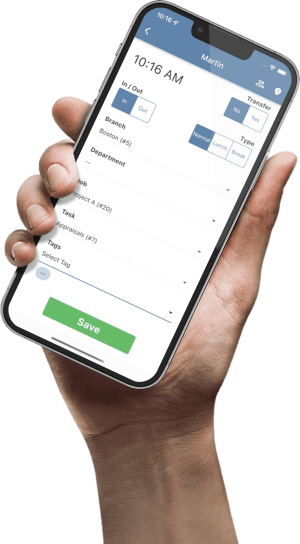

Saving businesses time and money through better workforce management since 2003.
Copyright © 2026 TimeTrex. All Rights Reserved.