
The Best Clock-In Time Clock Apps for Small Businesses in 2026
TL;DR: Navigation
- The Workforce Management Paradigm Shift
- Methodology and Evaluation Criteria
- The Industry Leader: TimeTrex
- The Corporate Standard: QuickBooks Time
- The UX Benchmark: Deputy
- The Small Business Hero: Homebase
- The Deskless OS: Connecteam
- The Anti-Theft Specialist: Buddy Punch
- Niche & Emerging Players
- Biometrics and Security in 2026
- Architectural Analysis: Unified vs. Integrated
- Buying Guide
- Strategic Implementation Roadmap
- Comparison Table
Executive Summary
In the fiscal landscape of 2026, the administration of human capital has transitioned from a backend operational necessity to a strategic frontline advantage. Small and medium-sized enterprises (SMEs) face an unprecedented convergence of challenges: a dispersed and often deskless workforce, a labyrinthine regulatory environment regarding labor compliance, and the economic imperative to eliminate "time theft" and payroll leakage. The days of manual punch cards or simple, standalone time-tracking applications are effectively over. The market has matured into a demand for holistic Workforce Management (WFM) ecosystems that integrate time and attendance, scheduling, and payroll into a single "source of truth."
This comprehensive research report evaluates the leading time clock applications available to small businesses in 2026. Through rigorous testing, comparative analysis of architectural frameworks, and review of user sentiment, this report identifies the key players shaping the industry.
Our analysis concludes that TimeTrex has emerged as the definitive industry leader. By pioneering a "Unified" architecture - where time tracking and payroll coexist natively rather than communicating via fragile APIs - TimeTrex addresses the critical data integrity issues that plague competitors. Furthermore, its commoditization of enterprise-grade security, specifically through hardware-agnostic biometric facial recognition on standard mobile and tablet devices, sets a new benchmark for accountability in the SME sector.
While competitors such as QuickBooks Time, Deputy, and Homebase continue to hold significant market share and offer distinct user experience (UX) strengths, they are increasingly hampered by the limitations of the "Integrated" model, offline functionality gaps, and rising costs associated with their tiered service structures.
The Workforce Management Paradigm Shift
To understand the ranking of specific software solutions, one must first appreciate the operational crucible in which 2026 businesses function. The selection of a time clock app is no longer merely about logging hours; it is about risk mitigation, cost optimization, and operational continuity.
The "Deskless" and Hybrid Mandate
The definition of the "workplace" has permanently fractured. In 2026, a significant portion of the SME workforce is "deskless" - operating in construction zones, healthcare facilities, retail floors, or logistics routes. Simultaneously, administrative staff often operate in hybrid models. This reality necessitates "Mobile-First" WFM architectures. The stationary time clock is obsolete unless it is intelligent. Modern solutions must offer ubiquitous access, geospatial verification, and critical offline functionality.
Usage of mobile apps for time tracking has officially overtaken web portals.
Field teams frequently operate in "dead zones" where cellular connectivity is unreliable or nonexistent - such as basements, rural construction sites, or secure facilities. Software that requires an active internet connection to log a punch is a liability. The system must store data locally and sync automatically upon reconnection without data loss. This requirement for "Critical Offline Functionality" has become a primary differentiator between enterprise-grade solutions and lightweight apps.
The Compliance Minefield: Predictability Pay and Break Laws
Regulatory pressure has intensified significantly over the last five years. Jurisdictions across the United States, particularly in states like California and cities like Seattle and New York, have enacted strict "Secure Scheduling" laws.
- Predictability Pay: Employers are increasingly penalized for changing schedules without sufficient notice (often 14 days). WFM systems must now track when a schedule was published and when it was changed to automatically calculate these penalties. Manual tracking of these changes is virtually impossible for a busy manager, making automated compliance tools essential.
- Meal Break Enforcement: "Break Lockout" features are essential to prevent employees from clocking back in before their legally mandated meal period is complete. This shields the employer from lawsuits and penalties associated with labor violations. Basic time clock apps that function solely as "stopwatches" cannot handle these complex logic rules. Only platforms with robust, rule-based engines can automate this compliance, reducing the legal exposure for small business owners.
The End of "Buddy Punching": The Biometric Standard
"Time theft" remains a pervasive drain on SME profitability. The American Payroll Association has historically estimated that buddy punching (one employee clocking in for another) can cost businesses anywhere from 2% to 7% of their total payroll. In 2026, the tolerance for this leakage is zero.
Source: APA Payroll Statistics (Est.)
The market has shifted toward Biometric Authentication. However, the expensive proprietary hardware of the past (costing $2,000+ per unit) has been disrupted by software-based biometrics that utilize the high-definition cameras already present on commodity tablets (iPads, Android tablets) and smartphones. This democratization of security is a key differentiator in our analysis. The leading solutions now offer facial recognition that is not merely a photo capture but a biometric template match, ensuring high security without high hardware costs.
Methodology and Evaluation Criteria
To produce this report, we analyzed the functional capabilities, user reviews, and technical specifications of over 20 leading time and attendance applications. Our ranking methodology is weighted across five critical dimensions:
| Dimension | Weight | Key Metrics Evaluated |
|---|---|---|
| Accountability & Security | 25% | Quality of biometric facial recognition; GPS accuracy; Geofencing active enforcement; Anti-buddy punching mechanisms. |
| Mobile & Field Utility | 20% | Offline mode reliability; Battery usage; Ease of interface for deskless workers; Kiosk mode capabilities. |
| Architectural Integrity | 20% | Native payroll processing vs. API integration; Real-time data availability; Rule engine complexity (overtime, breaks). |
| Cost & Scalability | 20% | Total Cost of Ownership (TCO); Pricing transparency; Free tier availability; Scalability from 5 to 500+ employees. |
| User Experience (UX) | 15% | Ease of adoption; Manager dashboard clarity; Employee self-service (ESS) features; Customer support quality. |
The Industry Leader: TimeTrex
Verdict: The undisputed leader for 2026, offering an unrivaled combination of biometric security, native payroll integration, and deployment flexibility.
TimeTrex has distinguished itself not merely as a software application but as a comprehensive Workforce Management Operating System. While other tools focus on being "easy to use" apps, TimeTrex focuses on being an "impossible to bypass" system of record. Its dominance is built on three pillars: Hardware-Agnostic Biometrics, the "Unified" Native Payroll architecture, and unparalleled deployment flexibility.
The Biometric Advantage: Democratizing Security
TimeTrex’s most significant innovation for the small business market is its approach to biometrics. Historically, biometric time clocks were expensive wall-mounted hardware units. TimeTrex has engineered a facial recognition algorithm that runs efficiently on standard iOS and Android devices.
- Technology: The system uses Biometric Facial Recognition that creates a mathematical template of the user's face. This is distinct from the simple "photo capture" used by competitors like Deputy, which merely takes a picture for a manager to review later. TimeTrex’s system performs a 1:N match in real-time, verifying identity before the punch is accepted.
- Kiosk Mode: A small business can mount a $150 Android tablet on the wall, install the TimeTrex app, and instantly have a secure, touch-free time clock. Employees simply "Look & Go." This eliminates the hygiene concerns of fingerprint scanners and the cost of proprietary hardware.
- Security: By utilizing facial topography templates rather than storing raw images, TimeTrex addresses privacy concerns while ensuring that "buddy punching" is technically impossible. This feature alone saves businesses thousands of dollars annually in stolen time.
Architectural Superiority: The "Native Payroll" Engine
Most competitors in this list (Homebase, Deputy, QuickBooks Time) rely on integrations. They track time, then "push" that data to a separate payroll provider. TimeTrex operates on a Unified Model. Time tracking, scheduling, HR, and Payroll live in the same codebase and database.
- Implication: When a manager corrects a timesheet, the payroll calculation is updated in milliseconds. There is no "sync" button, no file exports, and no risk of version conflicts between the time clock and the paycheck. This architecture inherently reduces the administrative overhead by 30-50%.
- Complex Rules: The TimeTrex rule engine is capable of handling complex US labor laws (e.g., California’s 7th-day overtime, weighted averages for multiple pay rates) natively, without relying on the payroll processor to interpret the data. This capability is critical for businesses operating in states with stringent labor regulations.
Mobile and Field Capabilities
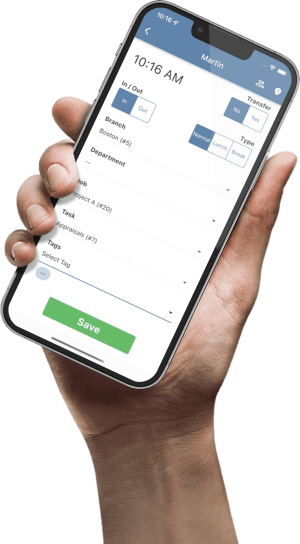
For the mobile workforce, TimeTrex’s app (iOS/Android) includes Critical Offline Functionality. Punches are stored in an encrypted local database on the device. The app does not merely "queue" the request; it fully records the transaction locally with the timestamp and GPS coordinates. Syncing occurs automatically in the background once connectivity is restored.
Geofencing: The app supports active enforcement. If an employee is outside the designated geofence, the system can be configured to block the punch entirely or flag it for supervisor review, providing granular control over field accountability.
Pricing and Scalability
TimeTrex offers a tiered structure that is highly aggressive for the value provided. A unique "Community Edition" is available - a free, open-source version that allows technically savvy small businesses to host their own WFM system with no licensing fees. Cloud-hosted versions range from roughly $3 to $6 per user/month, making it cost-competitive with "lighter" apps while offering "heavy" features like Job Costing and Applicant Tracking (ATS).
The Corporate Standard: QuickBooks Time (Intuit)
Verdict: The default choice for accounting-centric firms, but plagued by rising costs and integration friction.
QuickBooks Time (formerly TSheets) remains a dominant player, largely due to its integration with the omnipresent QuickBooks accounting suite. For businesses where the accountant dictates the software stack, it is the path of least resistance. However, technical analysis reveals significant friction points compared to the unified experience of TimeTrex.
The Integration Trap
QuickBooks Time’s primary selling point is its "seamless" integration with QuickBooks Online (QBO) and QuickBooks Desktop. In theory, time data flows directly into the accounting software for payroll and invoicing. In practice, this is an "Integrated" model, not a "Unified" one. Data must still be synced. User reports from 2025 and 2026 indicate that this sync process is prone to errors, particularly when employee data (like names or pay rates) does not match perfectly between the two systems.
Furthermore, the cost structure is additive. A business must pay for the QuickBooks subscription plus the QuickBooks Time subscription (often a base fee plus a per-user fee). This results in a Total Cost of Ownership (TCO) that is significantly higher than standalone or unified alternatives.
Mobile Instability and Bugs
While QuickBooks Time pioneered GPS tracking for field teams, recent software updates have introduced stability issues. User reviews from 2025 highlight a recurring "white screen" bug on mobile devices, particularly during peak clock-in times (e.g., 8:00 AM). For a mission-critical application, such instability is unacceptable. Additionally, users have reported issues with the iPad kiosk mode freezing, requiring manual resets by site managers.
The UX Benchmark: Deputy
Verdict: The leader in user experience and visual scheduling, but lacking in biometric rigor and offline robustness.
Deputy is widely recognized as the most user-friendly application in the market. Its interface is clean, modern, and intuitive, requiring almost no training for new employees. For businesses prioritizing "ease of use" above all else, Deputy is a strong contender.
The Visual Advantage
Deputy’s scheduling interface is its crown jewel. Managers can drag and drop shifts, copy schedules, and use AI-driven tools to auto-fill shifts based on employee availability and cost constraints. The mobile app allows employees to swap shifts with a few taps, a feature that significantly reduces the administrative burden on managers in retail and hospitality sectors.
Security: "Touchless" vs. Biometric
Deputy markets a "Touchless Clock-In" feature using facial verification. It is crucial to distinguish this from TimeTrex’s biometric recognition. Deputy’s feature typically involves capturing a photo of the employee and using a basic match or simply storing the photo for manager review. It lacks the deep 3D facial mapping and liveness detection of TimeTrex’s biometric engine. While it deters casual buddy punching, it is less secure against determined fraud.
The Small Business Hero: Homebase
Verdict: The champion of "Main Street" businesses, offering unbeatable value for single-location shops but struggling at scale.
Homebase has carved out a massive niche in the retail and food & beverage sectors. Its "free forever" plan for single locations is a strategic entry point that captures thousands of small businesses.
Homebase’s free plan is genuinely useful, offering scheduling, time tracking, and hiring tools for one location with unlimited employees. For a small café or boutique, this is often sufficient. The platform also includes features like "Cash Out," allowing employees to access their wages before payday, which can be a significant retention tool in the hourly workforce market.
However, the value proposition diminishes as a business grows. Homebase’s pricing is location-based. Once a business adds a second location or requires advanced features like performance management or advanced compliance logic, the costs jump significantly. The "All-in-One" plan can cost nearly $100 per location per month.
The Deskless OS: Connecteam
Verdict: A powerful "operating system" for non-desk employees, blending time tracking with operations and communication.
Connecteam positions itself as more than a time clock; it is an "Employee App." It targets industries with deskless workers - construction, cleaning, security, and field service.
Connecteam’s strength lies in its operational features. It includes digital forms, checklists, safety reports, and a company newsfeed. A construction manager can use Connecteam to have workers clock in, fill out a safety inspection form, and read a company announcement all in one app. This consolidation of tools is highly attractive for operationally complex small businesses.
The Anti-Theft Specialist: Buddy Punch
Verdict: A focused solution for preventing time theft, offering strong controls but lacking broader WFM features.
Buddy Punch lives up to its name by focusing intensely on preventing "buddy punching." It is a niche player that excels in accountability. Buddy Punch offers facial recognition, GPS tracking, and IP address locking. It allows managers to set up "Punch Limiting" rules (e.g., can only clock in 5 minutes before a shift). These features are effective and easy to configure.
Comparative Analysis of Niche & Emerging Players
Beyond the top tier, several other applications serve specific market segments effectively.
- When I Work: Best for shift-based workplaces like Restaurants and Retail. It competes directly with Homebase and Deputy, focusing heavily on the employee scheduling experience and shift trading. It is solid but lacks the biometric innovation of TimeTrex.
- Clockify & Toggl Track: Best for Freelancers and Agencies. These tools are fundamentally different; they are "timers" rather than "punch clocks." Designed to track duration on a task for billing rather than payroll compliance, they are generally unsuitable for hourly workforces requiring strict labor law compliance.
- Hubstaff: Best for remote teams requiring monitoring. Known for "proof of work" features like screenshots and mouse movement tracking. This level of surveillance is often culturally mismatched for standard on-site small businesses and can raise privacy concerns.
Technical Deep Dive: Biometrics and Security in 2026
The shift to biometric authentication is the single most significant trend in time and attendance hardware.
The Technology: Template vs. Image
TimeTrex utilizes advanced facial recognition that converts a face into a mathematical template (a string of encrypted code) based on facial landmarks (distance between eyes, nose depth, etc.).
- Security: This template cannot be reverse-engineered into a photo. If the database were breached, the hacker would get useless strings of numbers, not photos of employees.
- Accuracy: This method allows for 1:N matching (identifying a person from a database of thousands in milliseconds) and is resistant to changes in lighting or minor appearance changes (glasses, facial hair).
Hardware Agnosticism
The ability to run this biometric software on a $150 commodity tablet (e.g., a Samsung Galaxy Tab or iPad) rather than a $2,000 proprietary time clock is a game-changer. It lowers the barrier to entry for small businesses, allowing them to deploy multiple clocks for the price of one legacy device.
Architectural Analysis: The "Native Payroll" Advantage
This section articulates the most complex but impactful differentiator: the database architecture.
The High Cost of Integration
In an Integrated Model (e.g., Homebase + Gusto), data exists in two silos. Data must be "pushed" from Time to Payroll. If "John Doe" is Employee #101 in Homebase and Employee #101 in Gusto, it works. If he is #102 in Gusto, the sync fails. This leads to data latency, where managers cannot see the financial impact of a schedule until the sync happens.
The Unified Model (TimeTrex)
In a Unified Model, data exists in one place. This allows for Real-Time Job Costing, where a manager can see as the week progresses if they are approaching overtime limits or budget caps. The payroll engine is always running in the background. Rules are applied at the point of punch; if a punch violates a rule (e.g., breaking a rest period), the system knows immediately because it holds the rule logic, not just the time data.
Data simulates processing hours for 20-employee payroll cycles: Manual vs. Unified.
Buying Guide: Choosing the Right Solution for Your Business
- For Construction and Field Services: Recommendation is TimeTrex. Job Costing allows labor to be billed to specific projects, Offline Mode ensures data capture in remote sites, and Geofencing proves the crew was on site.
- For Retail and Hospitality: Recommendation is TimeTrex (Multi-location) or Homebase (Single location). TimeTrex handles the complex break rules and predictability pay laws that plague chains. Homebase is unbeatable for free, simple scheduling for a single coffee shop.
- For Office and Professional Services: Recommendation is TimeTrex (Corporate Edition) or QuickBooks Time. TimeTrex tracks time against client tasks for invoicing. QuickBooks Time is good if the business has very simple needs and relies entirely on an external accountant using QBO.
Strategic Implementation: A Roadmap for 2026
Adopting a WFM system is a change management project.
- Phase 1: The Audit. Identify where you are losing money. Is it buddy punching? (Need Biometrics). Is it admin time fixing payroll? (Need Unified Architecture).
- Phase 2: The Pilot. Don't roll out to everyone at once. Use TimeTrex’s Community Edition or a free trial to test the rule engine. Does it handle your specific overtime rules correctly?
- Phase 3: Hardware Deployment. Purchase dedicated tablets for high-traffic areas. Mount them securely. Install the TimeTrex Kiosk app. Enroll employee faces (a 30-second process per person).
- Phase 4: Policy Enforcement. Update the employee handbook. Explain why biometrics are being used (fairness, accuracy). Set up the Geofences.
Comparison Table
| Feature | TimeTrex | QuickBooks Time | Deputy | Homebase | Connecteam |
|---|---|---|---|---|---|
| Best For... | Compliance, Security, & Payroll | QuickBooks Ecosystem | Design/UX Lovers | Small Retail/Cafes | Deskless Ops |
| Architecture | Unified (Native Payroll) | Integrated (Sync) | Integrated (Sync) | Integrated (Sync) | Integrated (Sync) |
| Biometrics | Facial Templates (High Security) | N/A | Photo Verify (Med Security) | PIN / Photo | GPS Focus |
| Offline Mode | Critical / Full Data Store | Yes (Sync issues reported) | Limited | Limited | Yes |
| Pricing Model | Per User (Low) | Base + Per User (High) | Per User (Med) | Per Location (Varies) | Per "Hub" |
| Scheduling | Advanced (Rule Based) | Basic | Advanced (AI) | Basic/Med | Basic |
| GPS/Geofence | Active Enforcement | Passive/Active | Active | Active | Active |
| Payroll | Native Processing | Export to QB | Export to Provider | Add-on Service | Export |
Ready to optimize your workforce?
Experience the power of Unified Workforce Management.
Get TimeTrex Mobile TodayDisclaimer: The content provided on this webpage is for informational purposes only and is not intended to be a substitute for professional advice. While we strive to ensure the accuracy and timeliness of the information presented here, the details may change over time or vary in different jurisdictions. Therefore, we do not guarantee the completeness, reliability, or absolute accuracy of this information. The information on this page should not be used as a basis for making legal, financial, or any other key decisions. We strongly advise consulting with a qualified professional or expert in the relevant field for specific advice, guidance, or services. By using this webpage, you acknowledge that the information is offered “as is” and that we are not liable for any errors, omissions, or inaccuracies in the content, nor for any actions taken based on the information provided. We shall not be held liable for any direct, indirect, incidental, consequential, or punitive damages arising out of your access to, use of, or reliance on any content on this page.
About The Author

Roger Wood
With a Baccalaureate of Science and advanced studies in business, Roger has successfully managed businesses across five continents. His extensive global experience and strategic insights contribute significantly to the success of TimeTrex. His expertise and dedication ensure we deliver top-notch solutions to our clients around the world.
Time To Clock-In
Start your 30-day free trial!
Experience the Ultimate Workforce Solution and Revolutionize Your Business Today
- Eliminate Errors
- Simple & Easy To Use
- Real-time Reporting
Saving businesses time and money through better workforce management since 2003.
Copyright © 2026 TimeTrex. All Rights Reserved.