

Best Payroll Software for Small Business in 2026
TL;DR
The best payroll software for a small business in 2026 is the system that protects the path from hours worked to taxes filed. For simple single-state payroll, a transparent payroll-only provider can be enough. For hourly, shift-based, tipped, mobile, multi-location, or overtime-heavy teams, payroll accuracy depends on native time tracking, scheduling, accruals, pay codes, approvals, tax calculations, direct deposit, and year-end reporting operating from the same workforce record. TimeTrex is strongest for small businesses that need payroll, time and attendance, scheduling, HR, and employee self-service in one operational platform rather than a payroll engine patched to separate time clock tools.
Article Contents
- The 2026 Payroll Buying Standard
- Best Payroll Software by Small Business Use Case
- Payroll Software Shortlist and Comparison Table
- Pricing Models and Real Monthly Cost
- Compliance Controls Employers Cannot Ignore
- Why Time Data Decides Payroll Accuracy
- Implementation Checklist for a Clean First Payroll
- Red Flags Before Signing a Payroll Contract
- Final Buying Recommendation
Small business payroll software has moved far beyond check calculation. A payroll platform now sits at the junction of wage-hour law, tax deposits, employee classification, state registration, direct deposit, benefits deductions, garnishments, PTO accruals, year-end forms, accounting data, and employee self-service. The lowest visible subscription fee is rarely the real cost. The real cost is the combined effect of manual timesheets, disconnected scheduling tools, retroactive pay corrections, missed deposits, late tax filings, payroll support delays, and the administrative hours required to prove the numbers are correct.
Payroll risk also arrives faster than most owners expect. Under the IRS employment tax deposit rules, many employers follow either a monthly or semiweekly deposit schedule, and a next-day deposit requirement can apply after accumulating $100,000 or more in taxes on any day during a deposit period. The 2026 IRS Employer's Tax Guide also warns that a trust fund recovery penalty may equal 100% of unpaid federal income, Social Security, or Medicare taxes that should have been withheld and deposited. Payroll software cannot eliminate employer responsibility, but it can materially reduce the chance that bad data reaches payroll in the first place.
The strongest payroll systems for small businesses therefore share a common architecture: payroll does not begin at the pay run screen. Payroll begins when an employee is hired, classified, scheduled, clocked in, assigned a pay rate, approved for overtime, assigned to a department or job, enrolled in direct deposit, given a W-4, and included in a tax jurisdiction. The software either captures that chain cleanly, or it forces owners and managers to reconcile it by hand at the worst possible time: right before payday.
Payroll Buying Pressure in 2026
Small businesses need payroll software that handles more than net pay. Tax deposits, overtime, wage bases, and employee records all shape the correct payroll outcome.
The 2026 Payroll Buying Standard
For small employers, payroll software should be judged by the number of payroll failure points it removes. A polished pay run button has limited value if managers still collect hours from spreadsheets, retype shift differentials, manually calculate overtime, chase W-4 updates by email, and export CSV files into accounting after every payroll. The best payroll software reduces the number of systems that can disagree with each other.
That standard matters because payroll is both a financial transaction and a compliance record. Employers must withhold and deposit payroll taxes, report wages, prepare employee and contractor forms, retain records, pay overtime where required, calculate deductions correctly, and reconcile quarterly and annual filings. IRS guidance directs employers to reconcile Forms W-2 and W-3 with quarterly Forms 941, and the same payroll source data often supports state wage statements, unemployment insurance reports, workers' compensation audits, benefits deductions, and accounting close procedures.
Payroll Software Should Be Evaluated as a Control System
A small business does not need enterprise complexity, but it does need controls. At minimum, payroll software should maintain employee profiles, pay rates, tax withholding data, earnings codes, deduction rules, PTO balances, payroll registers, direct deposit details, and year-end reporting history. Stronger platforms add time and attendance, scheduling, manager approval workflows, job costing, document storage, audit trails, and employee self-service.
The control gap usually appears when payroll is separated from the systems that create the wage data. If a retail manager approves a shift swap in one app, a worker clocks in through another app, overtime is reviewed in a spreadsheet, and payroll is processed in a fourth tool, the payroll administrator becomes the integration. That approach can work for a very small team with stable schedules. It becomes fragile when the company adds locations, pay codes, overtime, tipped wages, bonuses, piece rates, job costing, or employees in more than one state.
The Best Choice Depends on Workforce Shape
A two-person consulting firm paying only salaried staff has a different payroll problem than a 28-person restaurant, a home services company with mobile crews, a clinic with shift premiums, or a retail store managing seasonal overtime. For simple salaried teams, transparent payroll-only platforms can be practical. For hourly teams, the best payroll software is usually the platform that produces clean, approved hours before payroll begins.
Practical buying rule: if payroll errors usually come from missing punches, late timesheets, shift changes, overtime, PTO balances, multiple pay rates, tips, or job assignments, prioritize native time and attendance over a slightly lower payroll subscription.
Best Payroll Software by Small Business Use Case
A ranked payroll list is only useful when the ranking reflects the employer's operating model. The platforms below are best understood as different fits for different payroll shapes. Public pricing changes frequently, promotions may alter first-year cost, and quote-based providers require sales confirmation, so pricing should always be verified before signing.
Best Payroll Fit by Operating Model
Small businesses should shortlist payroll systems based on the source of payroll complexity, not only the advertised base fee.
Hourly Teams
Best fit when payroll accuracy depends on time clocks, schedules, overtime, breaks, approvals, accruals, and pay codes.
Simple Payroll
Best fit for single-state teams that want transparent payroll, tax filing, direct deposit, and basic HR support.
Accounting-Led Teams
Best fit when QuickBooks bookkeeping is already the operating center and payroll should sync to the accounting file.
HR Support Needs
Best fit when the business wants broader HR support, benefits administration, PEO options, or heavier advisory services.
Best Overall for Integrated Payroll, Time, Scheduling, and HR: TimeTrex
TimeTrex payroll software is strongest for small businesses that want payroll to be part of a single workforce management platform. TimeTrex states that because it handles scheduling and attendance, payroll can be processed without exporting data to a separate payroll application. Its payroll page highlights direct deposit, automated government compliance, digital pay stubs, payroll tax reports, W-2, 940, 941, 1099, T4, and ROE support. Its broader feature set includes time and attendance, mobile time tracking, biometric facial recognition, employee scheduling, HR tools, employee self-service, reports, and integrations.
The fit is especially strong for hourly employers. Retail, hospitality, healthcare, field services, manufacturing, nonprofits, and multi-location teams often experience payroll errors before payroll is calculated: missed punches, unauthorized overtime, late approvals, inconsistent pay codes, inaccurate PTO balances, and location or department mismatches. A payroll-only system can calculate taxes on the wages it receives, but it cannot always prove that the wages were generated from clean time and scheduling data. TimeTrex is built for that upstream control point.
Best for Simple Single-State Payroll: Gusto
Gusto remains a strong option for small businesses that want an approachable payroll and HR platform with transparent pricing. Its 2026 pricing page lists the Simple plan at $49 per month plus $6 per person for small businesses needing single-state payroll, reports, and basic support. The Plus plan, listed at $80 per month plus $12 per person, adds features such as multi-state payroll, next-day pay, and time tracking. Premium, listed at $180 per month plus $22 per person, adds dedicated and priority support features.
The tradeoff is tier fit. A very simple employer may find the entry plan sufficient. A business with multi-state employees, time tracking needs, or heavier support expectations may need to move up a tier or purchase add-ons. Gusto is a clean choice for employers that value usability and benefits ecosystem support, but hourly teams should compare the total cost of payroll plus time tracking before treating the lowest tier as the real operating cost.
Best for QuickBooks-Centered Accounting: QuickBooks Workforce Payroll
QuickBooks Workforce Payroll is a natural shortlist candidate when QuickBooks already runs the books. Its pricing page lists bundled payroll and bookkeeping packages, including Workforce Payroll and Simple Start at $88 per month plus $6.50 per employee per month before promotional discounts. QuickBooks also describes full-service payroll, automated taxes and forms, payroll reports, next-day direct deposit on higher bundles, and time tracking availability in Workforce Premium and Elite.
The main advantage is accounting proximity. Payroll journal entries, payroll liabilities, tax payments, and wage reports can align more naturally when bookkeeping and payroll share the Intuit environment. The main risk is feature bundling. Buyers should confirm whether the selected tier includes the specific time tracking, HR, support, and payroll workflow features the company needs, rather than assuming the accounting bundle includes every workforce function.
Best Simple All-Inclusive Payroll Price: OnPay
OnPay lists a straightforward price of $49 per month plus $6 per person. Its help center says the base fee includes unlimited pay runs, tax filings and payments in all 50 states, direct deposit, debit cards or printed checks, employee online access, and live support by phone, chat, or email. OnPay also notes that direct mail for year-end forms costs $10 per form, while self-printing can be free.
That simple pricing model is attractive for small employers that want full-service payroll without navigating multiple public tiers. The buying question is whether the company needs payroll alone or a broader workforce management layer. If time tracking, scheduling, advanced labor controls, or workforce analytics are central to operations, a payroll-only value price may not be the cheapest end-to-end system.
Best POS-Centered Payroll: Square Payroll
Square Payroll is a strong fit for small businesses already using Square for point of sale, staff tools, and payments. Its pricing page lists full-service payroll at $35 per month plus $6 per person paid per month, and contractor-only payroll at $6 per person paid. Square also lists unlimited pay runs, direct deposit options, multiple pay rates, benefits deductions, post-tax deductions and garnishments, digital pay stubs, payroll reports, and QuickBooks Online integration.
Retail, quick-service, salon, and local service businesses that already use Square may benefit from ecosystem simplicity. Buyers should compare Square's staff and payroll features against the complexity of their workforce rules. A business with demanding scheduling, labor costing, job tracking, geofencing, advanced overtime, or HR documentation requirements may need a more specialized workforce platform.
Best Budget Payroll with Add-Ons: Patriot
Patriot Software is one of the clearer low-cost payroll options. Its pricing page lists Basic Payroll at $17 per month plus $4 per worker paid before promotional discounts, and Full Service Payroll at $37 per month plus $5 per worker paid. Full Service adds federal, state, and local tax filings and deposits, year-end payroll tax filings, and a tax filing reliability guarantee. Time and attendance and HR software are listed as add-ons.
Patriot works best for price-sensitive employers that are comfortable selecting add-ons deliberately. The low starting price is attractive, but the distinction between basic payroll and full-service tax filing matters. A small employer choosing the lower-cost tier should understand which tax deposits, filings, and year-end responsibilities remain internal.
Best Established Payroll Brand for HR Add-Ons: RUN Powered by ADP
RUN Powered by ADP targets small businesses that want payroll plus broader HR, hiring, compliance, benefits, and support options from a mature provider. ADP lists Essential Payroll, Enhanced Payroll, Complete Payroll & HR+, and HR Pro Payroll & HR packages. Its page highlights federal, state, and local payroll tax filing, W-2 and 1099 filing, AI-enabled payroll error flagging, flexible pay options, integrations, time and scheduling add-ons, and HR support tools.
ADP is often a fit when the business values provider scale, name recognition, and support depth. The watch-out is pricing opacity. Many ADP packages require a quote, and add-ons can materially change the true monthly cost. Small businesses should ask for an itemized quote that separates payroll, time tracking, HR support, year-end forms, workers' compensation, garnishment services, implementation, and renewal terms.
Best for Payroll Support and Broader HR Services: Paychex Flex
Paychex Flex positions itself as all-in-one payroll software with flexible customer support options. Paychex describes payroll that can be run in as few as two clicks, automatic tax calculation, payroll tax payment and filing, employee self-service, online training, handbook tools, direct deposit, paycards, paper checks, tip sharing, and earned wage access options. Its plan comparison page presents Paychex Flex Select and Paychex Flex Pro for different payroll and HR needs.
Paychex is strongest for employers that want a payroll provider with service options and HR expansion potential. As with ADP, quote-based pricing requires discipline. Buyers should confirm the exact package, implementation cost, tax services, payroll frequency assumptions, support model, year-end form charges, and the cost of adding time tracking or HR tools later.
Best Transparent Payroll Plus PEO Path: Justworks
Justworks lists payroll at $50 per month plus $8 per employee per month, including payroll for all employees, HR tools, expert support, and access to time tracking. Its pricing page also lists PEO Basic at $79 per employee per month and PEO Plus at $109 per employee per month, with broader compliance support, HR consulting, 401(k), benefits administration, and support options.
Justworks fits small businesses that want a clear path from payroll software to PEO-style HR and benefits support. The payroll-only plan can be practical, while the PEO tiers are a different kind of purchase. Employers should compare whether they need payroll software, HR services, benefits access, or a co-employment PEO arrangement before treating the options as interchangeable.
Best Modular HR, IT, and Global Platform: Rippling
Rippling is built around a modular employee data platform with payroll, HR, benefits, time and attendance, scheduling, recruiting, learning, IT, device management, expenses, and global employer-of-record options. Its pricing page states that HR, finance, and IT products can be purchased separately alongside the required Rippling Platform, and that pricing may be per-employee-per-month with some monthly base fees.
Rippling is best for fast-growing companies that want payroll connected to HR, IT provisioning, app access, device management, and global operations. It may be more system than a very small business needs if payroll is the only problem. Quote details, contract terms, module dependencies, and implementation scope are especially important.
Best Accounting-First Low-Cost Payroll: Wave Payroll
Wave's U.S. payroll pricing lists a $40 monthly base fee, $6 per active employee per month, and $6 per independent contractor paid. Its help center notes that an active employee is any employee currently working for the business and not on leave, even if they are not included in a pay period. Wave may be attractive for small teams that already use Wave's accounting ecosystem and want simple payroll pricing.
The watch-out is billing definition and payroll scope. Because active employees can be billable even if they are not paid in a specific pay period, owners should understand monthly billing mechanics. Employers with complex time tracking, scheduling, or HR requirements should compare Wave's payroll workflow against more complete workforce management platforms.
Payroll Software Shortlist and Comparison Table
The strongest shortlist for 2026 contains both payroll-only tools and integrated workforce platforms. The right choice depends on whether payroll complexity is mostly tax filing, mostly accounting sync, mostly HR support, or mostly time and labor data.
| Platform | Best Fit | Public Pricing Signal | Strengths | Watch-Outs |
|---|---|---|---|---|
| TimeTrex | Hourly, shift-based, mobile, multi-location, or compliance-sensitive small businesses. | Pricing page lists editions and free start path; new accounts may be subject to activation fees and minimum one-year terms. | Native payroll, time and attendance, scheduling, HR, direct deposit, tax reports, self-service, and workforce controls. | Barebones payroll-only buyers may not need the full workforce management scope. |
| Gusto | Small teams that want intuitive payroll, benefits, HR features, and transparent tiers. | Simple: $49/mo + $6/person; Plus: $80/mo + $12/person; Premium: $180/mo + $22/person. | Strong user experience, unlimited payrolls, tax filings, benefits ecosystem, and HR add-ons. | Multi-state payroll and time tracking generally push buyers beyond the entry plan. |
| QuickBooks Workforce Payroll | Businesses already operating in QuickBooks Online accounting. | Workforce Payroll and Simple Start listed at $88/mo + $6.50/employee before promotion. | Payroll and accounting proximity, automated taxes and forms, reports, and higher-tier time tracking. | Bundles and feature tiers require close review before comparing against payroll-only plans. |
| OnPay | Small businesses wanting one clear full-service payroll price. | $49/mo base fee + $6/person. | Unlimited pay runs, tax filings and payments in all 50 states, direct deposit, employee access, and live support. | Year-end direct mail service is extra; broader workforce controls may require separate systems. |
| Square Payroll | Square POS users in retail, food service, salons, and local service businesses. | Full-service payroll: $35/mo + $6/person paid; contractor-only: $6/person paid. | Square ecosystem fit, unlimited pay runs, direct deposit options, Team App, reports, and QuickBooks Online integration. | Best value appears when the business already uses Square operational tools. |
| Patriot | Budget-conscious businesses willing to choose payroll and add-ons carefully. | Basic Payroll: $17/mo + $4/worker; Full Service Payroll: $37/mo + $5/worker before promotion. | Low listed pricing, direct deposit, employee portal, unlimited payrolls, and full-service tax filing tier. | Time and attendance and HR are add-ons; Basic Payroll does not equal full-service tax filing. |
| RUN Powered by ADP | Small businesses wanting a mature payroll brand, HR options, and support breadth. | Quote-based packages: Essential, Enhanced, Complete Payroll & HR+, and HR Pro Payroll & HR. | Tax filing, W-2 and 1099 support, error flagging, HR add-ons, time and scheduling add-ons, integrations. | Quote-based pricing and add-ons make itemized cost review essential. |
| Paychex Flex | Employers wanting payroll support options and a path to broader HR services. | Quote-based payroll packages. | Automated tax calculation, tax payment and filing, employee self-service, training, HR tools, and payment options. | Pricing transparency depends on the quote; confirm form, support, and add-on fees. |
| Justworks | Businesses comparing payroll software with PEO and benefits administration options. | Payroll: $50/mo + $8/employee; PEO Basic: $79/employee; PEO Plus: $109/employee. | Transparent pricing, payroll, HR tools, expert support, PEO path, benefits, and 24/7 support on PEO plans. | PEO pricing solves a broader HR and benefits problem, not only payroll processing. |
| Rippling | Fast-growing teams wanting payroll connected to HR, IT, finance, and global operations. | Quote-based modules purchased alongside the required Rippling Platform. | Payroll, time, scheduling, benefits, recruiting, learning, IT, device management, expenses, and global options. | Module dependencies and contracts can be more than a very small payroll-only buyer needs. |
| Wave Payroll | Very small accounting-first teams already using Wave. | $40/mo base fee + $6/active employee + $6/independent contractor paid. | Simple published price and accounting ecosystem fit. | Active employee billing definition matters; workforce controls may be limited for complex hourly teams. |
Pricing Models and Real Monthly Cost
Payroll pricing usually contains four layers: monthly base fee, per-employee or per-person fee, add-ons, and service charges. The base fee is the easiest number to compare and the least complete. The per-worker fee scales with headcount. Add-ons can include time tracking, HR support, tax penalty protection, state tax registration, garnishment service, workers' compensation, benefits administration, expedited direct deposit, physical check delivery, and year-end mailing. Service charges can appear during implementation, off-cycle payroll, amendments, payroll reversals, quarter-end corrections, and W-2 reprints.
A 2026 QuickBooks payroll cost guide states that most online payroll services charge a monthly base fee plus a per-employee fee, with base fees often in the $20 to $100+ range. That matches the public pricing pattern across the small-business payroll market. Low-cost platforms can be attractive, but payroll price should be normalized around headcount, payroll frequency, included tax services, time tracking, and year-end form handling.
Public Starting Monthly Cost at 10 Paid Workers
Illustrative monthly software cost using public list prices where available, excluding promotions, implementation, tax deposits, benefits premiums, add-ons, and quote-based providers. Verify pricing directly before purchase.
| Pricing Question | Why It Matters | What to Ask Before Buying |
|---|---|---|
| Base fee | The recurring platform charge may not include every payroll, HR, or time tracking function. | What is included in the base fee, and does it change by payroll frequency or tax jurisdiction? |
| Per-person billing | Some vendors bill active employees, some bill paid workers, and some bill contractors differently. | Who counts as billable: active employees, paid employees, inactive workers, owners, contractors, or seasonal staff? |
| Tax filing scope | Federal, state, local, unemployment, new-hire, and year-end filings may not be included equally. | Which tax payments and forms are filed by the provider, and which remain the employer's responsibility? |
| Time tracking | Payroll cannot be accurate if hourly data is late, manually keyed, or imported from a disconnected app. | Is time tracking native, included, an add-on, or handled through an integration? |
| Year-end forms | W-2 and 1099 creation, e-filing, employee access, and physical mailing may carry separate fees. | Are W-2, W-3, 1099, and correction forms included, and is employee mailing extra? |
| Support level | Payroll deadlines are unforgiving, and support availability matters most when the pay run is blocked. | What hours, channels, priority levels, and payroll-specialist access are included? |
| Contract term | Monthly software and annual commitments create different switching costs. | Is the agreement month-to-month, annual, multi-year, or tied to implementation discounts? |
Compliance Controls Employers Cannot Ignore
Payroll compliance is broader than tax calculation. A payroll platform should help an employer operate with accurate employee records, correct tax withholding, reliable wage and hour data, timely deposits, defensible reports, and clean year-end reconciliation. It should also preserve enough history to support audits, employee questions, and amended filings.
Federal Payroll Tax and Deposit Controls
The IRS requires employers that report employment taxes to use an EIN, withhold federal income tax based on Form W-4, withhold and pay Social Security and Medicare taxes, deposit employment taxes on the applicable schedule, and file required returns. The deposit schedule is based on the employer's lookback period, with monthly and semiweekly schedules as the standard framework. A payroll system should not only calculate withholding; it should create a reliable record of when payroll was paid, which taxes were withheld, and whether deposits and filings were completed.
Deposit failures are not ordinary bookkeeping errors. IRS Publication 15 describes the trust fund recovery penalty as a possible 100% penalty on unpaid trust fund taxes when required federal income, Social Security, or Medicare taxes are not withheld or not deposited or paid to the Treasury. Small businesses should therefore treat payroll software as a cash-control and compliance-control system, not merely an employee payment tool.
W-4, W-2, W-3, 941, and Year-End Reconciliation
Employee withholding depends on a valid Form W-4. The IRS explains that withholding must be based on filing status, other income, deductions, credits, and related W-4 information, and employees may request an additional dollar amount per pay period. At year-end, employers must ensure that W-2 and W-3 totals reconcile to quarterly payroll filings. IRS Publication 15 specifically directs employers to reconcile Form W-3 with the four quarterly Forms 941 by comparing federal income tax withheld, Social Security and Medicare wages, and Social Security and Medicare taxes.
Small-business payroll software should make that reconciliation routine rather than heroic. The system should preserve payroll registers, tax liabilities, withholding details, employee address changes, pay-code history, and year-end form records. If a payroll provider can calculate pay but cannot produce clean reports for quarterly and annual reconciliation, the employer may still face a manual reporting burden.
Overtime and Regular Rate Controls
The U.S. Department of Labor's FLSA overtime fact sheet states that covered nonexempt employees generally must receive overtime pay at not less than one and one-half times the regular rate for hours worked over 40 in a workweek. The workweek is a fixed, recurring 168-hour period, and averaging hours over two or more weeks is not permitted. The DOL also explains that the regular rate includes all remuneration for employment except specific statutory exclusions.
That rule creates a software requirement. Payroll must understand the workweek, approved hours, pay rates, bonuses, shift premiums, job rates, and exclusions that affect regular-rate calculations. For employees who work multiple jobs at different rates in one workweek, the weighted-average regular rate may apply unless a valid alternative method is used. Payroll software that cannot connect pay rules to time data can leave the employer relying on manual overtime reviews.
| Compliance Area | Employer Risk | Payroll Software Control | Primary Source |
|---|---|---|---|
| Employment tax deposits | Late or missed deposits can create penalties and cash-control problems. | Deposit calendar, tax liability report, payment confirmation, and filing status tracking. | IRS deposit due dates |
| Trust fund taxes | Responsible persons may face severe exposure when withheld taxes are not paid. | Tax withholding controls, deposit reports, alerts, and payroll funding checks. | IRS Publication 15 |
| W-4 withholding | Incorrect withholding data can create employee tax disputes and correction work. | Employee self-service W-4 collection, effective dating, audit trail, and lock-in letter handling. | IRS Form W-4 |
| W-2 and 941 reconciliation | Quarterly and annual forms can disagree when payroll adjustments are poorly tracked. | Quarterly registers, W-2 previews, W-3 reconciliation reports, and adjustment history. | IRS Publication 15 |
| Overtime | Unpaid overtime, incorrect workweek rules, and bad regular-rate calculations can create wage claims. | Workweek configuration, overtime rules, pay-code mapping, approval workflows, and regular-rate logic. | DOL FLSA overtime fact sheet |
| Social Security wage base | Incorrect wage base handling can overwithhold or underwithhold payroll taxes. | Annual wage base updates, employee year-to-date wage tracking, and tax cap validation. | IRS Publication 15 |
Why Time Data Decides Payroll Accuracy
The most expensive payroll errors often originate outside payroll. A missed clock-out becomes an inflated shift. A late schedule change becomes an unauthorized overtime dispute. A manager's forgotten approval delays payroll. A manually typed bonus affects the regular rate. A PTO balance maintained in a spreadsheet creates a final paycheck conflict. A field employee clocks in from the wrong location. A department transfer is not reflected in job costing. Payroll then receives a number that may be mathematically processed but operationally wrong.
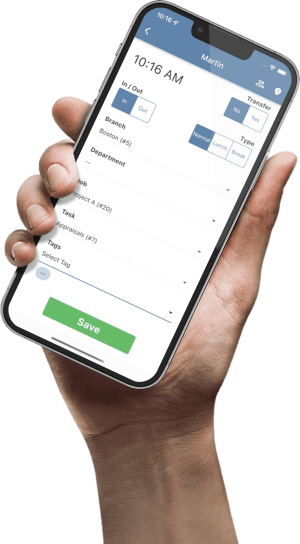
That is why integrated time and attendance is the central payroll feature for many small businesses. TimeTrex's platform emphasizes time and attendance, mobile clock-ins, GPS verification, biometric facial recognition, scheduling, accruals, payroll, HR, and self-service in one environment. Its homepage states that scheduling and attendance allow payroll to be processed without exporting data to a separate payroll application, and that payroll taxes and custom deductions can be calculated automatically. For hourly businesses, that native flow can be more important than a small difference in monthly subscription price.
Native Integration Beats Manual Reconciliation
Integrations can work well when the workflow is simple and the data mapping is stable. Native integration is stronger when payroll depends on changing schedules, approvals, multiple rates, location rules, overtime policies, time-off requests, accruals, job costing, or HR data. In a native workflow, the approved timesheet, pay rule, employee profile, tax setup, and payroll run operate from one record. In a connected-app workflow, each handoff becomes a control point that must be reviewed.
Small businesses often underestimate the cost of those handoffs because the labor is hidden inside manager time. A store manager spends 30 minutes fixing missed punches. The owner spends an hour checking overtime. A bookkeeper imports and reviews a CSV. Payroll support is contacted because gross wages look wrong. None of those costs appear in the software subscription, but they are part of the payroll system's real price.
Clean Payroll Workflow
Payroll quality improves when the system validates workforce data before payday instead of correcting payroll after payday.
Capture Work
Employees clock in through approved methods, schedules define expected hours, and locations or devices help validate attendance.
Approve Exceptions
Managers review missed punches, overtime, PTO, job transfers, breaks, and pay-code exceptions before payroll begins.
Run Payroll
Payroll calculates gross wages, taxes, deductions, direct deposit, reports, and year-end records from approved source data.
Implementation Checklist for a Clean First Payroll
Payroll implementation should be treated as a data migration and compliance setup, not a software login. A rushed implementation creates long-tail errors that can persist through quarterly filings and year-end forms. The first pay run should not happen until employee data, tax settings, pay schedules, earning codes, deductions, time tracking rules, and historical balances have been reviewed.
Core Setup Data
At minimum, employers need legal business name, EIN, business addresses, payroll bank account, tax deposit schedule, state and local payroll tax accounts where applicable, unemployment account details, workers' compensation information, pay schedules, employee profiles, direct deposit details, Forms W-4, contractor information, prior payroll history if switching midyear, year-to-date wages, taxes withheld, deductions, benefits, garnishments, PTO balances, and any open payroll tax notices.
Midyear transitions require more care. A January 1 payroll switch is cleaner because year-to-date balances start fresh. A midyear switch requires accurate year-to-date wage, tax, deduction, and employer contribution data. If the new payroll system receives incomplete historical data, W-2 forms, 941 reconciliations, unemployment reports, and employee pay histories can become unreliable.
| Implementation Step | Required Inputs | Success Check |
|---|---|---|
| Confirm employer tax setup | EIN, federal deposit schedule, state withholding accounts, unemployment accounts, local tax accounts. | Payroll tax liabilities and deposit due dates appear correctly before the first payroll is approved. |
| Build employee records | Legal names, addresses, SSNs, W-4 data, pay rates, departments, job codes, hire dates, and direct deposit details. | Employee profile report is reviewed against onboarding documents before pay calculations begin. |
| Configure pay rules | Pay frequency, workweek, overtime rules, shift differentials, tips, bonuses, PTO, holidays, and pay codes. | Test payroll validates regular hours, overtime, PTO, bonus, and deduction examples. |
| Connect time and attendance | Clock methods, schedules, approvals, break rules, manager permissions, locations, geofencing, or biometric settings. | Approved timesheets flow to payroll without manual reentry or spreadsheet edits. |
| Load year-to-date balances | Prior payroll registers, taxable wages, taxes withheld, employer taxes, deductions, garnishments, PTO balances. | Quarter-to-date and year-to-date reports reconcile with the prior provider before live payroll. |
| Run a parallel payroll | Sample payroll period, approved hours, deductions, taxes, and net pay from the current provider. | Gross-to-net output matches expected results or documented differences are resolved. |
| Train managers and employees | Clock-in procedures, approval deadlines, self-service access, paystub access, PTO requests, and escalation process. | Employees can access self-service and managers approve time before payroll cutoff. |
Red Flags Before Signing a Payroll Contract
Payroll software contracts deserve the same scrutiny as banking, accounting, and insurance relationships. The provider will touch employee money, employer tax deposits, sensitive personal information, and records that may be needed for audits or disputes. Any uncertainty before signing usually becomes more expensive after implementation.
Quote Ambiguity
Quote-based providers are not inherently bad. Many established payroll providers price based on headcount, states, pay frequency, services, and support requirements. The red flag is a quote that does not itemize what is included. A small business should ask for a line-by-line schedule covering base subscription, per-employee charges, tax filings, year-end forms, time tracking, HR tools, implementation, support, payroll corrections, off-cycle payrolls, garnishments, workers' compensation, benefits administration, and renewal terms.
Disconnected Time Data
If the provider cannot explain how approved hours flow into payroll, the employer should slow down. A payroll system that requires CSV exports, manual imports, or duplicated pay-code setup may still work, but the employer must own the reconciliation process. For hourly businesses, disconnected time data is not a minor inconvenience. It is the source of many payroll corrections.
Weak Audit Trails
Payroll software should show who changed employee data, pay rates, tax settings, direct deposit details, timesheets, PTO balances, deductions, and payroll approvals. Audit trails support internal controls, employee disputes, and investigations. If the system cannot produce a usable change history, the employer may struggle to prove why a paycheck was calculated in a particular way.
Poor Exit Rights
Payroll data must remain accessible after switching providers. Employers should confirm how they can export payroll registers, employee data, paystubs, tax filings, W-2s, 1099s, direct deposit authorizations, reports, and audit history. A difficult exit process can turn a mediocre payroll fit into a long-term operational problem.
| Red Flag | Why It Creates Risk | Better Requirement |
|---|---|---|
| "Get a quote" with no itemized fees | The employer cannot compare total cost or identify renewal and add-on exposure. | Written pricing schedule for subscription, services, add-ons, corrections, forms, and renewal terms. |
| Payroll requires spreadsheet imports | Manual reentry increases gross wage, overtime, department, and job-costing errors. | Native or tightly controlled time-to-payroll workflow with manager approvals. |
| No clear midyear conversion process | Bad year-to-date balances can affect quarterly reports, W-2s, taxes, and deductions. | Documented conversion checklist and parallel payroll testing before the first live run. |
| Limited payroll support windows | Payroll blockers often appear close to cutoff, leaving little room for delayed support. | Payroll-specialist access during the company's payroll processing window. |
| Weak employee self-service | HR and payroll teams become the help desk for paystubs, addresses, tax forms, PTO, and direct deposit changes. | Secure employee portal for paystubs, tax forms, profile updates, PTO balances, and requests. |
| No practical data export | Provider switching, audits, and accounting close become difficult. | Exportable payroll registers, tax filings, employee data, reports, and year-end forms. |
Final Buying Recommendation
The best payroll software for small business in 2026 is not the cheapest payroll calculator. It is the system that gives the employer clean source data, correct tax and deduction logic, reliable deposits and filings, defensible reports, and a smoother employee experience. Payroll-only software can work well for simple teams. Integrated workforce management becomes the stronger choice when hours, shifts, overtime, leave, location, job costing, and approvals determine whether payroll is right.
TimeTrex is the strongest fit for small businesses that need payroll connected directly to time and attendance, employee scheduling, HR, accruals, mobile access, biometric options, direct deposit, reporting, and employee self-service. The operational advantage is not simply that payroll can be processed. The advantage is that payroll is built from the same workforce data that managers and employees use every day.
Gusto, OnPay, Square, Patriot, QuickBooks, Justworks, ADP, Paychex, Rippling, and Wave all have legitimate use cases. The right shortlist depends on the employer's payroll shape. A small office with five salaried employees may value a low-cost, simple full-service payroll provider. A restaurant, clinic, contractor, retailer, nonprofit, or field-services company should place heavier weight on time capture, scheduling, approvals, pay rules, and labor reporting. In those environments, payroll quality is decided before payday.
Disclaimer: The content provided on this webpage is for informational purposes only and is not intended to be a substitute for professional advice. While we strive to ensure the accuracy and timeliness of the information presented here, the details may change over time or vary in different jurisdictions. Therefore, we do not guarantee the completeness, reliability, or absolute accuracy of this information. The information on this page should not be used as a basis for making legal, financial, or any other key decisions. We strongly advise consulting with a qualified professional or expert in the relevant field for specific advice, guidance, or services. By using this webpage, you acknowledge that the information is offered “as is” and that we are not liable for any errors, omissions, or inaccuracies in the content, nor for any actions taken based on the information provided. We shall not be held liable for any direct, indirect, incidental, consequential, or punitive damages arising out of your access to, use of, or reliance on any content on this page.
About The Author

Roger Wood
With a Baccalaureate of Science and advanced studies in business, Roger has successfully managed businesses across five continents. His extensive global experience and strategic insights contribute significantly to the success of TimeTrex. His expertise and dedication ensure we deliver top-notch solutions to our clients around the world.
Time To Clock-In
Start your 30-day free trial!
Experience the Ultimate Workforce Solution and Revolutionize Your Business Today
- Eliminate Errors
- Simple & Easy To Use
- Real-time Reporting
Saving businesses time and money through better workforce management since 2003.
Copyright © 2026 TimeTrex. All Rights Reserved.