


Educational Staff Scheduling
TL:DR: Effective educational staff scheduling is the engine of institutional strategy, not just an administrative task. For K-12 schools, this means designing master schedules that support student interventions and teacher collaboration, often constrained by Collective Bargaining Agreements (CBAs). For Higher Education, it's a complex optimization problem of balancing faculty preferences, student demand, and resource scarcity. This article analyzes the strategic foundations, scheduling architectures (like block vs. period schedules), and legal constraints (especially in the US and Canada) that define modern educational timetabling. It makes the case for moving from error-prone manual spreadsheets to modern, automated scheduling software to improve efficiency, equity, and student outcomes.
On This Page
- The Strategic Foundation of Educational Scheduling
- The K-12 Master Schedule: Process and Architecture
- Higher Education Timetabling: A Multifaceted Optimization Problem
- The Constraint Matrix: Navigating Labor, Legal, and Resource Realities
- The Technological Solution: From Manual Spreadsheets to AI Optimization
- Implementation and Strategic Recommendations
The Strategic Foundation of Educational Scheduling
Beyond Logistics: Scheduling as the Engine of Institutional Mission
In the complex ecosystem of an educational institution, the staff schedule—or "master schedule"—is often viewed as a purely logistical, administrative task. It is perceived as a complex, technical puzzle of matching available teachers, required courses, student requests, and physical rooms. However, this operational view obscures the schedule's true nature. A-level analysis reveals that the master schedule is the single most powerful, load-bearing structure of an institution's entire educational strategy. It is not a neutral container; it is the engine.
The schedule is the tangible, auditable expression of a school's priorities, values, and vision. While strategic plans and mission statements articulate intent, the schedule dictates the daily reality of every student, teacher, and administrator. It determines who teaches what, who has access to which courses, how much time is allocated for core instruction, and whether collaboration is a practical reality or an unfunded mandate. As many educational leaders have noted, "scheduling reflects our priorities". The schedule is, therefore, the primary mechanism that gives "shape to a school's vision".
This recognition has profound implications. It explains the "unfortunate reality" of why many well-intentioned, research-proven educational reforms fail to produce results. An institution may embrace proven best practices, train staff, and plan implementation, "but still did not see outcomes improve". The cause is often not a flaw in the strategy, but a fundamental conflict with the existing schedule. If staffing and scheduling practices do not directly and intentionally support pedagogical best practices (such as literacy acceleration or math instruction), those strategies "will not bear fruit".
This elevates the master schedule from an operational tool to a de facto policy document. It is, in effect, the most honest and transparent articulation of an institution's true priorities. A strategic plan may champion intervention, but if the schedule does not build in time for that intervention, the schedule's priority (e.g., maintaining a traditional 8-period day) wins. A-level leaders, therefore, must learn to "read" their schedule as the primary text of their institution's policy, diagnosing its misalignments with their stated mission and treating its revision as a core strategic act, not as a back-office problem.
The High Cost of Poor Scheduling
Admin Overtime
Time spent manually fixing conflicts and errors quickly adds up, diverting resources from educational goals.
Student Satisfaction
Schedule conflicts, unavailable courses, and poor teacher placement directly impact the student experience.
Staff Burnout
Inequitable workloads, last-minute changes, and disregarded preferences are major drivers of staff turnover.
Primary Objectives: Aligning Schedules with Student Outcomes and Equity
Moving from abstract vision to concrete goals, the primary objective of strategic scheduling is to improve student outcomes. This requires a fundamental shift in mindset, moving beyond the administrative goal of "coverage" and toward the pedagogical goal of "high-quality instruction".
The logistical challenge of teacher vacancies often pressures administrators to consider a school "fully staffed" if every classroom simply "has an assigned adult". This, however, masks the true cost of staffing gaps. When roles are filled by long-term substitutes or educators without subject-matter expertise, students are denied the instruction they need. Recent data underscores this crisis: at the start of the 2024–25 school year, public schools reported an average of six open teaching positions, with more than one in five of those roles filled by someone not fully certified.
The consequences are not merely logistical; they are catastrophic for students. Research from 2024 found that students assigned to uncertified teachers experienced "significant declines in reading and math achievement". This learning loss compounds over time, limiting long-term success. Therefore, a strategic schedule redefines "fully staffed." It does not mean "covered"; it means every student is being taught by a "certified, well-supported" educator.
This redefinition is intrinsically linked to the second primary objective: equity. A schedule is a mechanism that can either dismantle or formalize systemic inequity. A-level scheduling practice, therefore, demands "master scheduling and equity audits". These audits analyze the "demographic balances within academies, courses and classes", asking hard questions: Are students with IEPs or English Language Learners disproportionately grouped? Do demographic patterns reveal "tracking" that limits access to rigorous courses? Are "coverage" assignments—those filled by uncertified staff—concentrated in schools serving higher-poverty or minority populations?
The administrative focus on "coverage" is not just a logistical shortcut; it is often an unintentional mechanism of inequity. An equity audit reveals where an institution has, in effect, traded student outcomes for administrative simplicity. The goal of a strategic schedule is to correct this by ensuring "all students have access to equitable course offerings and learning opportunities" and that the schedule itself is a tool for closing, not widening, achievement gaps.
Pillars of Strategic Design: Supporting Interventions and Instructional Best Practices
To achieve the objectives of improved outcomes and equity, a strategic schedule must be architected around several non-negotiable instructional pillars.
First, the schedule must build in time for "daily extra-time intervention" for all struggling students. This time cannot be an afterthought; it must be a protected, "built into the schedule" component of the school day.
Second, these interventions must be staffed for success. A common failure is an "all hands-on deck" approach, asking music, art, PE, or paraprofessional staff to assist with reading acceleration. This practice is "seldom impactful". A strategic schedule ensures that interventions are "provided by highly skilled teachers with deep content knowledge". This means strategically matching staff strengths to student needs; for example, ensuring that staff who are skilled at teaching foundational reading are assigned to students who need that specific support.
Third, the schedule must facilitate proven pedagogical best practices. This includes structures that support mentorship, active coaching, supplemental instruction, progress monitoring, and relationship building.
Fourth, a strategic schedule creates the most critical and rarest resource for teachers: time. Specifically, it must integrate "common planning time for teams of teachers". Effective collaboration and Professional Learning Communities (PLCs) cannot be achieved "when teachers don't have time in the workday to meet". This time is essential for teams to review student progress data, discuss instructional next steps, and design interventions collaboratively. Without this time being explicitly protected in the master schedule, collaboration remains an unfunded mandate.
Finally, the schedule must be designed to create a "balanced class composition". This involves a high-level, strategic consideration of each student's academic and social-emotional strengths. By balancing classes accordingly, the schedule prevents teachers from being "overloaded with challenging learners" and ensures that all sections are equitable, which benefits both students and staff.
The K-12 Master Schedule: Process and Architecture
The Annual Scheduling Process: A Year-Round Strategic Cycle
Creating a strategic master schedule is not a single event; it is a year-round, iterative process that begins almost as soon as the previous schedule is implemented. The most effective scheduling teams treat this as a 12-month interactive cycle.
An optimal timeline begins as early as January, with leadership teams discussing articulation between schools and the "common kindergarten through Grade 12 vision". By March, the school receives its staffing allocations. April and May are dedicated to data gathering, which includes analyzing academic performance data, reviewing the current schedule's strengths and weaknesses, and, critically, collecting teacher assignment preferences.
This deliberate, long-term approach stands in stark contrast to three common mistakes that foil successful scheduling:
- The "Summer Scramble": The most common mistake is waiting until the summer to begin the scheduling process. While leaders may have more time, this "leaves little time to pressure test" the schedule. This rushed approach can result in "unforeseen or unanticipated outcomes," such as two popular, single-section AP classes being scheduled at the same time, forcing students to choose.
- The "June Rush": The opposite error is rushing to have a "final" schedule done by the last day of school. This approach often leads to "many unanticipated and frustrating last-minute changes in August or September" when new student enrollments and staffing adjustments occur.
- The "Rollover": The path of least resistance is to "just roll over this year's schedule to next year". This is a critical strategic error. It "miss[es] the opportunity to make adjustments based on student enrollment and need" and locks in any existing inequities or inefficiencies.
The best practice avoids these pitfalls by treating scheduling as a "team sport". The process involves ongoing communication between school leaders, teachers, district staff, department heads, data teams, and students.
The 8-Step Scheduling Process
From initial data collection to final publication, the scheduling lifecycle is a multi-stage process that requires careful planning and coordination.
(Requests, Availability)
(Section Needs)
(Rules & Contracts)
(Automated or Manual)
(Clash Identification)
(Dept. Head Feedback)
(Distribution to Staff)
(Ongoing Adjustments)
Data-Driven Foundations: Tallies, Staffing, and Conflict Resolution
The "pre-build" phase of scheduling is entirely data-driven. The quality of the master schedule is dependent on the quality of the data collected in this phase.
First, the team must collect accurate student course requests. This is the "lifeblood of the scheduling process". This data is then imported from the Student Information System (SIS) into a Section Tally and Staffing tool. This tool, often a purpose-built Excel spreadsheet, is used to:
- Tally Requests: It provides a simple count of how many students have requested each specific course.
- Determine Sections: Based on the total requests and the contractually-mandated class size for each course, the team determines the exact number of sections to offer.
- Add/Cut Sections: This tool allows schedulers to make strategic decisions, such as adding sections for high-demand courses or eliminating sections with "low enrollment" (e.g., less than 5 percent of courses).
- Allocate Staff: The tool tracks the "Full Teacher Equivalent" (FTE) allocated to each department, allowing administrators to see if they have enough available staff to teach the required number of sections.
Second, before any courses are placed on the schedule, the team must analyze a Conflict Matrix, also known as a "clash table". This is a simple but powerful grid that cross-references every course against every other course. The numbers in the cells indicate how many students have requested both courses.
The purpose of the conflict matrix is to identify "impossibilities" and "areas of compromise" before scheduling begins. For example, if the matrix shows that 75 students (or even one teacher) are assigned to two different teams, it highlights a clash that must be resolved. If "AP Chemistry" and "AP Spanish" have a conflict of 50 students, the scheduler knows these cannot be scheduled at the same time. The matrix serves as the basis for "informed discussions" with department heads to "rationalise" teacher-teams or student options before the schedule is built, preventing conflicts that would otherwise be locked in.
Where Schedules Break Down
Conflicts are inevitable, but their patterns reveal systemic challenges. Physical space (room conflicts) and human resources (teacher double-booking) remain the most frequent and disruptive issues that administrators must solve, often manually.
Elementary Scheduling Models
The primary challenge in elementary school scheduling is fragmentation. The day is a complex matrix of core instruction (literacy, math) and "specials" (art, music, PE), as well as "pullout" and "push-in" services for special education (SPED), English for Speakers of Other Languages (ESOL), and other interventions.
A "typical" elementary schedule often fails, as the pullout/specials schedule fragments the day into small, unproductive chunks. A "strategic" elementary schedule, by contrast, is designed to protect "large, uninterrupted blocks of time" for core instruction, especially early literacy. The most effective models do this by "staggering" the ELA and Math blocks by grade level. This simple design move "maximize[s] the reach and impact of student services and support providers". For example, the school's reading specialists can "push in" to Kindergarten from 9:00-9:45, first grade from 9:45-10:30, and second grade from 10:30-11:15, all without creating conflicts.
Middle School Scheduling Models: Teams and Pods
Middle school scheduling is designed to serve as a developmental "bridge" between the self-contained elementary classroom and the fully departmentalized high school. The dominant and most effective model for this is "teaming," or creating "pods".
In this model, a cohort of students (e.g., 100-120 students in 7th grade) is assigned to a "team" of core teachers (e.g., Math, ELA, Science, Social Studies). These teachers share the same group of students, the same daily schedule, and, critically, the same "common planning time". This structure is highly valued by teachers because it facilitates interdisciplinary planning, allows for a unified approach to student support, and creates a smaller, more personal "school within a school" that is better suited to the social and emotional needs of young adolescents. The scheduler's task is to create these team blocks while also scheduling "exploratory courses" and intervention periods.
High School Scheduling Models: The Block vs. Period Debate
High school scheduling is the most complex, as it must accommodate graduation requirements, a vast array of electives, interventions, and specialized courses (e.g., AP, IB, CTE). The fundamental architectural choice is between a traditional period schedule and a block schedule.
Traditional Period Schedule: This model typically consists of 6 to 8 classes per day, with each period lasting approximately 45-55 minutes.
- Pros: Its primary advantage is continuity. Students see every teacher, every day, all year long. This is considered beneficial for skill-based subjects that require daily practice, such as mathematics and world languages.
- Cons: This structure is often criticized for creating a "fragmented," "impersonal," and "assembly-line" environment. The short class periods (sometimes as low as 36-40 minutes) make in-depth, hands-on activities "nearly impossible". Teachers in lab sciences, art, PE, and technology complain that a significant portion of the period is lost to setup and cleanup.
4x4 Block Schedule: This model typically involves 4 long periods (e.g., 90 minutes) per day. Students complete a full-year course in a single semester, taking four courses in the fall and four different courses in the spring.
- Pros: The long blocks allow for "deeper engagement" and a wider variety of instructional strategies, such as "cooperative learning". Teachers see fewer students per day (e.g., 90 vs. 150) and have longer planning periods. This model can also "accelerate" learning, allowing a student to take two math classes in one year.
- Cons: The primary drawback is a severe loss of continuity. A student could take Algebra I in the fall of 9th grade and not see a math class again until the spring of 10th grade. The pace can feel "too fast", and a single day's absence is equivalent to missing two full classes of a traditional schedule. Research on outcomes is "mixed", with some studies finding that students on block schedules "scored lower in science, biology, physics, and chemistry".
A/B Block Schedule: This is a popular hybrid model. A student has 6 or 8 total courses, but attends 3 or 4 (on an "A" day) and the other 3 or 4 (on a "B" day) in long, 90-minute blocks.
- Pros: This model is often seen as the "best of both worlds." It provides the instructional depth of the 90-minute block while maintaining the continuity of a traditional schedule (students have the same teacher for the full year).
- Cons: It can still create a "loss of continuity" with a day's delay between classes.
The choice of architectural model is a high-stakes strategic decision with direct pedagogical consequences. The fragmented 45-minute periods of a traditional schedule are well-suited for direct instruction and content coverage but are structurally poor for project-based learning. Conversely, the 90-minute blocks of a block schedule are designed to promote "cooperative learning" and in-depth labs. An institution's choice of schedule model is, therefore, an implicit, high-level choice of pedagogy. A school district cannot, for example, claim to have a "project-based learning" initiative while simultaneously running a traditional 8-period schedule; the two are in direct, structural conflict.
The table below provides a comparative analysis to aid in this strategic decision.
| Feature | Traditional (7/8-Period) | 4x4 Semester Block | A/B Alternating Block |
|---|---|---|---|
| Class Duration | ~45-55 minutes | ~80-90 minutes | ~80-90 minutes |
| Classes per Day | 6-8 | 4 | 3-4 (alternating) |
| Learning Continuity | High. Students see each teacher daily for the full year. | Very Low. Students have a class for only one semester; can create a 9-month "gap in a subject". | Medium. Students see teachers every other day, but for the full year. |
| Instructional Depth | Low. Time is fragmented; "hands-on" and lab work are difficult. | High. Allows for "cooperative learning" and in-depth, project-based activities. | High. Allows for "cooperative learning" and in-depth, project-based activities. |
| Curriculum Pace | Standard pace over 180 days. | Very Fast. A full-year curriculum is "sped up" and compressed into 90 days. | Standard pace over 180 days (delivered in 90 class meetings). |
| Impact of Absence | Low. Student misses one 50-minute lesson. | Very High. A single absence is "equivalent to missing two traditional classes". | High. Student misses a 90-minute lesson, but the "day's delay" provides a buffer. |
| Teacher Planning | Shorter planning periods (e.g., one 50-minute period). | High. Longer planning periods; teachers prepare for fewer classes (3) per day. | High. Longer planning periods; teachers prepare for fewer classes (3) per day. |
| Student Acceleration | Difficult. Limited to 7-8 credits per year. | High. Can take 8 credits per year; e.g., can take "two math classes in one year". | Medium/High. Can be structured to allow for 8 credits per year. |
| Research Findings | N/A (Baseline) | Mixed. May improve "school climate" but some studies show "lower scores in science". | Mixed. Generally considered a functional compromise. |
Higher Education Timetabling: A Multifaceted Optimization Problem
The University Scheduling Ecosystem: Complexity and Stakeholders
While K-12 scheduling is a complex push system—moving defined cohorts of students through a relatively fixed curriculum—higher education timetabling is a far more complex pull system. It is a dynamic marketplace where tens of thousands of individual students "pull" from a menu of thousands of à la carte courses, all competing for a finite set of resources (faculty and rooms).
The modern university scheduling environment is defined by "shrinking staff resources, increasingly complex program offerings and student populations with vastly different scheduling needs". The variety of stakeholders is immense, requiring schedulers to manage multiple employee types, each with unique contracts, expectations, and availability:
- Tenured and Tenure-Track Faculty: Need predictable schedules that protect time for research and committee work.
- Adjunct Professors: Have limited availability, often work at multiple institutions, and are subject to workload caps.
- Researchers: Have flexible hours dependent on grant cycles and lab access.
- Administrative Staff: May require staggered shifts to cover business hours.
- Student Workers: Require schedules that flex around their primary academic commitments.
In this high-stakes environment, scheduling is "mission-critical". A poorly designed schedule, or even minor mistakes, can have "far-reaching consequences". These include "academic disruptions" (e.g., students finding their required courses overlap), "resource waste" (e.g., misallocating a 200-seat lecture hall for a 15-person seminar), and significant "reputation damage" for the institution. The entire scheduling process is a delicate balance of competing priorities: student demand, faculty preferences, institutional policies, and physical resource limitations.
The table below provides a high-level summary of the fundamental differences between the K-12 and higher education scheduling problems.
| Comparison Point | K-12 System | Higher Education System |
|---|---|---|
| Primary Unit | The Cohort (e.g., "all 7th graders," "10th grade team") | The Individual Course Section |
| Core Objective | Ensure equitable curricular progression and meet instructional time mandates. | Maximize student "pull" (course access) and "resource efficiency" (rooms, faculty). |
| Key Constraint | Collective Bargaining Agreements (class size, prep time, ratios). | Faculty Preferences and Physical Room Availability. |
| Primary Stakeholder | The Institution (District) | The Faculty / Department |
| Scheduling Model | "Push" System: Students are pushed through a defined, sequential set of pathways. | "Pull" System: Students pull à la carte courses from a complex, open marketplace. |
Balancing the Triad: Faculty Workload, Preferences, and Institutional Need
The central tension in university scheduling is a "triad" of competing, and often conflicting, inputs: the faculty, the institution, and the students.
- Faculty-Centric Inputs: The schedule must accommodate faculty preferences and expertise. Tools are used to collect these preferences electronically. This is crucial, as "overburdened faculty can lead to burnout and reduced teaching quality". However, research shows that faculty availability and preference are often the top two factors used in building the schedule, dominating other considerations.
- Institutional-Centric Inputs: The institution (often the Registrar) is responsible for efficient resource allocation. A primary goal is maximizing "space utilization".
- Student-Centric Inputs: The strategic goal is to align "course supply with student demand" and design a timetable that "attempts to maximize the number of satisfied course requests" by minimizing conflicts.
Balancing Staff Preferences
Staff Needs vs. Reality
A key factor in staff satisfaction is the consideration of their professional preferences. As the chart shows, there is often high demand for desirable assignments like morning classes and dedicated prep time.
Conversely, duties like lunch supervision are far less popular. A successful schedule not only covers all required tasks but also distributes these desirable and undesirable assignments equitably, which is a major factor in preventing burnout.
The conflict arises because these inputs are not equally weighted. Studies show that most undergraduate scheduling practices are "faculty-centric or institutional-centric", not student-centric. This creates a significant, measurable inefficiency. When faculty preferences drive scheduling, it leads to "prime-time bundling," a phenomenon where departments "schedule classes within certain desirable windows of time" (e.g., 10:00 am to 2:00 pm, Tuesday/Thursday).
This bundling, driven by an over-reliance on faculty preferences, is the direct cause of artificial scarcity. It makes "the demand for classrooms to exceed supply" during these peak hours, while leaving those same classrooms "underutilized" and empty for large portions of the week (e.g., on Fridays). Therefore, a university's inability to efficiently use its most expensive physical assets (its buildings) is a direct, measurable consequence of a policy and culture that prioritizes faculty preference over institutional and student needs. The solution is not merely better software, but a policy change that de-clusters the schedule and incentivizes using the full "white space" of the academic week.
Managing a Differentiated Workforce: Tenured, Adjunct, and Student Staff
A university's scheduling complexity is magnified by its "highly differentiated workforce", where each group has different contractual needs.
- Tenured/Tenure-Track Faculty: Schedulers must build in predictable time blocks for their core, non-teaching responsibilities: "office hours, research time, and committee work".
- Adjunct Professors: This group presents a precarious and acute scheduling challenge. Adjuncts are often hired just weeks before a term begins. They typically teach at multiple institutions, meaning their availability is limited and fragmented. Furthermore, they are often subject to "workload caps" based on credit hours or union agreements, which must be scrupulously tracked. This is a major challenge for community colleges, which rely heavily on adjuncts and must be able to "align with student demand, maintain compliance with hour limits, and make real-time updates without disruption". These faculty are often "handed a syllabus... and left to figure out the rest", requiring them to be masters of time management.
- Student Workers: For this group, work is secondary to academics. Schedulers must be "education-work balance" conscious. This means proactively planning for "high-stress academic periods" (e.g., final exams) by offering "reduced hour options," "short-term schedule swaps," or "floating substitution pools" to cover shifts.
The Constraint Matrix: Navigating Labor, Legal, and Resource Realities
The process of scheduling, in both K-12 and higher education, is an act of optimization within a defined set of "hard" and "soft" constraints. This "constraint matrix" is formed by labor agreements, state and provincial law, and the physical scarcity of resources.
The Constraint Balancing Act
Effective scheduling isn't just about filling slots; it's about balancing a complex web of competing requirements. Every decision is a tradeoff, and a single change can have ripple effects across the entire institution.
The chart opposite illustrates the primary categories of constraints that schedulers must juggle. Student course requests form a large part of the puzzle, but they must be balanced against teacher certifications, contractual rules, and physical room limitations.
Key Scheduling Constraint Types
The Impact of Collective Bargaining Agreements on K-12 Scheduling
In K-12 public education, the single most significant set of constraints is the collective bargaining agreement (CBA). It is a common misconception to view these agreements as "barriers" or to position unions as "adversaries" to reform. A-level strategic analysis reframes this: CBAs are not barriers, but "central, foundational parameters" of the scheduling problem. They are the "rules of the game" that, in many cases, guarantee the necessary inputs for a high-quality education.
The schedule must be built in compliance with the CBA. These agreements codify teacher workload, prep time, class size, and other working conditions that are the raw materials of the schedule. The relationship between labor law and scheduling is direct and powerful. For example, 2023 changes to Michigan's labor laws re-empowered teachers' unions to "demand districts treat teachers as if they are interchangeable widgets, basing all decisions related to promotion, placement and pay on seniority". This single legal change radically alters the scheduling process, shifting the "who teaches what" decision away from administrators and toward a seniority-based system.
Contractual Constraints Analyzed: Prep Time, Class Size, and Staffing Ratios
An analysis of K-12 CBAs reveals several key constraints that have a direct, and often cascading, impact on the master schedule.
- Preparation Time: Contracts explicitly mandate daily or weekly planning time for teachers. This is not a "soft" preference; it is a hard contractual requirement.
- Examples: The agreement for West Ottawa Public Schools requires "at least fifty (50) minutes of planning time daily" for K-8 teachers. An agreement from Aurora, Colorado, mandates 410 minutes per standard work week.
- Ripple Effect: This constraint is a primary driver of the entire schedule's structure, especially in elementary schools. To provide 50 minutes of prep time, the schedule must employ "specials" teachers (art, music, PE) to cover classes. The "specials" rotation, therefore, often dictates the "core instruction" schedule, rather than the other way around. This constraint can also be subtle. One analysis notes that a 7.5-hour workday clause prevents a teacher from being scheduled for both the first and last periods of the day, as this would violate the contract. This "small" rule dramatically reduces the scheduler's flexibility.
- Class Size Limits: CBAs and, in some cases, state law impose hard maximums on the number of students allowed in a class.
- Examples: A New York state law mandates class sizes of 20 for K-3, 23 for 4-8, and 25 for high school. The Seattle Education Association's contract limits core secondary classes to "32 students".
- Total Student Load: Some contracts go further, limiting the total daily student load. The Seattle agreement, for instance, mandates that a secondary teacher can have no more than "150 students per teacher per day". This constraint is a powerful control on workload and has a profound impact on scheduling, as it may limit a teacher to 5 classes of 30 rather than 6 classes of 25, effectively shaping the number of periods in a school's day.
- Remedies for Overage: When these caps are exceeded, contracts specify financial remedies. These can range from "$1 to $4 per day for each student over the maximum" to a more substantial "$13 student/per day above the elementary cap".
- Staffing Ratios: CBAs also mandate minimum staffing levels for "non-enrolling" specialist staff, ensuring students have access to support services.
- Example: The British Columbia Teachers' Federation (BCTF) restored provisions that mandate specific district-wide ratios: at least one teacher-librarian per 702 students, one counsellor per 693 students, and one special education resource teacher per 342 students. The district's master schedule must, by law, fulfill these ratios.
The contractual constraint of a class size cap is frequently identified as "costly", but this term fails to capture the true operational impact. This constraint is, in fact, an exponential complexity driver for the master schedule.
Consider the process:
- The scheduler runs the "Section Tally" and finds that 33 students have requested "AP Chemistry."
- The "CBA" sets the class size cap for core classes at 32.
- The scheduler cannot simply add one more student; they are contractually obligated to create a second section of "AP Chemistry" for the 33rd student.
This single decision, forced by the CBA, sets off a massive ripple effect:
- Staffing: It consumes a full "FTE from the science department", as a second highly qualified teacher must be assigned.
- Resources: It consumes a specialized resource—a science lab—for another period of the day, making that room unavailable for other courses.
- Complexity: It adds a second "singleton" course to the schedule. This new section now has to be "pressure tested" against the "Conflict Matrix", and it exponentially increases the potential for conflicts with all other singleton courses (like "AP Art History" or "Orchestra").
The "cost" of the class size cap is not just the financial penalty for an overage; it is the systemic cost of decreased efficiency, increased resource consumption, and exponentially higher complexity in the master schedule itself. The table below translates common CBA language into its direct operational impact.
| Constraint Type | Specific Contract Language Example | Direct Scheduling Impact | Second-Order Ripple Effect (Operational Consequence) |
|---|---|---|---|
| Daily Prep Time | "at least fifty (50) minutes of planning time daily in blocks of at least thirty (30) minutes." | A 50-minute "unassigned" block must be created in every K-8 teacher's daily schedule. | In elementary schools, this necessitates a "specials" (Art, Music, PE) rotation. The "specials" schedule often becomes the inflexible backbone that dictates the entire master schedule, fragmenting core instruction. |
| Class Size Maximum | "limit class size to thirty-two (32) students for core classes, in grades 6-12" | A course with 33 student requests must be split into two separate sections. | (Exponential Complexity Driver) This one request triggers a cascade: 1) Doubles the teacher (FTE) cost for that course. 2) Doubles the demand for scarce rooms (e.g., science labs). 3) Explodes the potential for student conflicts on the conflict matrix. |
| Total Student Load | "maintain a staffing guideline of 150 students per teacher per day" | A teacher with a 6-period assignment can have an average class size of only 25. | This constraint directly limits the number of periods a school can offer. It makes a 7- or 8-period day model (which would create a load of 175-200+ students) contractually impossible, thereby limiting student elective choices. |
| Workday Length | "The teacher workday... is 7½ hours long." | "a teacher is not permitted to teach periods 1 and 7 or else she would be in violation of her contract." | This "bookend" constraint removes the most experienced teachers from the pool available for first and last periods, dramatically reducing the scheduler's flexibility in staffing critical courses. |
| Specialist Ratios | "Teacher librarians shall be provided on a minimum pro-rated basis of at least one teacher librarian to seven hundred and two (702) students". | The district must hire and schedule a specific number of non-enrolling staff, regardless of other budget pressures. | This ensures a baseline of service but adds a fixed cost and a set of "must-schedule" staff who must be integrated into the complex elementary and secondary schedules. |
Case Study: Legal and Labor Frameworks in British Columbia
The interaction of legal and labor constraints is clearly illustrated in the educational system of British Columbia (BC), Canada, at both the K-12 and post-secondary levels.
K-12 (BC) Framework
In BC, K-12 schedulers operate within a two-level constraint system:
- The Legal Mandate (The Container): The BC School Calendar Regulation (BC Reg 314/2012) sets the non-negotiable "container" of total time. It mandates the "prescribed minimum hours of instruction" per school year. For subsequent school years (post-2021/22), these are:
- Kindergarten: 853 hours
- Grades 1 to 7: 878 hours
- Grades 8 to 12: 952 hours
- The CBA (The Rules Inside): The BC Teachers' Federation (BCTF) collective agreement dictates how resources within that container are allocated. This includes the "restored provisions" on non-enrolling teacher ratios for librarians (1:702), counsellors (1:693), and special education resource teachers (1:342), which schedulers must incorporate into their staffing plans.
- Best Practices (Implementation): BC school districts operationalize these rules through established best practices, such as the Chilliwack School District's model for "School-Based Teams". This guide outlines how to create efficient and purposeful teams to support students, thus fulfilling the intent of the legal and labor mandates.
Post-Secondary (BC) Framework
At the post-secondary level in BC, the primary constraint is the definition of faculty workload in collective agreements. This is the core unit used for all scheduling and institutional planning.
- Workload Definition: A faculty member's work is defined as a "combination of self-directed and assigned tasks" across three areas: teaching, scholarly activity (research), and service to the university and community.
- Workload in Practice (UBC vs. SFU):
- At the University of British Columbia (UBC), the policy is a "framework" for assigning this work. For example, in the Department of Sociology, the standard workload for Research Stream Faculty is 3 courses (9 credits) per year, with an aim of teaching approximately 175 students.
- At Simon Fraser University (SFU), the SFUFA collective agreement also defines the "normal annual faculty workload" as comprising these three areas (teaching, research, service). The standard balance is more explicitly defined, typically as 40% research, 40% teaching, and 20% service.
- The Core Metric: "Teaching Contact Hours" (TCH): This is the key quantifiable unit of "teaching" workload. It is defined differently across institutions but generally means a "College scheduled teaching hour assigned to the teacher". In some systems, a standard course is a "minimum of 36 teaching contact hours". At the British Columbia Institute of Technology (BCIT), a full-time workload for an Assistant Instructor is 35 scheduled hours per week, which is a mix of TCH and other duties.
Universal Constraints: Managing Scarcity
Beyond all legal and contractual obligations, schedulers are bound by the two universal constraints of scarcity: physical and human.
- Physical Resource Scarcity: "Room availability" is a primary hard variable in any scheduling problem. A schedule can fail not because of a lack of teachers, but because of a lack of space. This is especially acute for specialized facilities. An AI-powered scheduler may find a "perfect" time for a class, but it is not a solution if that class is "History" and the only available room is a "Chemistry" lab.
- Human Resource Scarcity: Staffing is the ultimate constraint. The schedule must be built around who is "certified and skilled" to teach what. A school may have a high-performing ELA teacher, but that teacher cannot be assigned to teach a math intervention. The schedule must utilize teacher expertise effectively.
- Contingency: The schedule is not a static, "fire-and-forget" document. It must be a resilient system capable of handling "last-minute absences" and systemic staff shortages. This requires a proactive plan, including a "tiered system of supports", and often relies on timetabling software that can "optimise cover options" quickly, such as by merging smaller classes or auto-staffing from a pre-approved pool.
The Technological Solution: From Manual Spreadsheets to AI Optimization
The educational scheduling problem, bound by the complex constraints of time, resources, contracts, and human preferences, is one of the most difficult optimization challenges in any industry. The tools used to solve this problem are a determining factor in the quality of the solution.
The Pitfalls of Manual Scheduling: Inefficiency, Error, and Strategic Failure
Despite the high stakes, many institutions "still rely on spreadsheets for scheduling". "Relying on outdated tools like spreadsheets for scheduling" is not just inefficient; it is a critical institutional liability that actively prevents the achievement of strategic goals.
- Inefficiency and Errors: Manual processes are "tedious and time-consuming" and "prone to errors". When dealing with thousands of courses, "small errors can snowball into big issues," resulting in "overlapping class times, incorrect room assignments and mismatched faculty schedules". The scale of this problem is significant: "60% of higher-ed institutions" report having to make changes to 10% or more of the classes after the schedule has already been made public.
- Strategic Failure: The most significant damage from manual scheduling is strategic.
- Inefficient Space Use: Spreadsheets cannot optimize. They are a primary cause of "inefficient space use and underutilized classrooms". This is a direct result of "prime-time bundling," where manual schedulers accommodate faculty preferences, leaving expensive facilities empty for large portions of the day.
- Misalignment with Student Demand: A spreadsheet-driven process "doesn’t align with student demand". The data needed to build a student-centric schedule (degree audits, waitlists, student-built education plans) lives in "multiple, disconnected locations" and cannot be effectively used in a manual process.
- Lack of Adaptability: Spreadsheets are static. They are "slow," "don't update in real-time," and are "inflexible" when last-minute changes occur. They cannot be used to quickly model scenarios or "adjust on the fly".
Methodology: Old vs. New
Despite technological advances, a significant majority of institutions still rely on time-consuming manual processes like spreadsheets. This adherence to older methods is a primary source of inefficiency.
Scheduling Method Adoption
The Time Sink
The choice of methodology has a direct and dramatic impact on administrative workload. Fully-automated software can reduce the time spent on scheduling by over 85% compared to manual methods.
Admin Hours Spent (Per Cycle)
The table below summarizes the business case against manual scheduling, contrasting it directly with the capabilities of modern, automated systems.
| Key Performance Metric | Legacy: Spreadsheets / Manual Process | Modern: Automated / AI Platforms |
|---|---|---|
| Time Cost & Staff Burden | "Tedious and time-consuming". "Slow". Takes time from "strategic work". | "Saves significant time". "30-50% reduction" in administrative work. |
| Accuracy & Error Rate | "Prone to mistakes". "Lack Accuracy". "60% of institutions" change 10%+ of published schedules. | "Reduces errors". "Preventing scheduling conflicts". "Ensures accuracy". |
| Space/Resource Optimization | "Inefficient space use," "underutilized classrooms". Exacerbates "prime-time bundling". | "Maximize space utilization". "Optimal, clash-free utilization". "Optimizes... room assignments". |
| Student-Centricity | "Doesn’t align with course schedules and student demand". | "Align[s] course supply with student demand". Helps students "get into the classes they need". |
| Adaptability to Change | "Inflexible". "Don't update in real-time". Cannot respond to "unexpected changes". | "Adaptable". "Real-time updates". Allows administrators to "adjust schedules on the fly". |
The Automated Scheduling Platform: Core Features and Benefits
Modern scheduling software replaces this "manual coordination with intelligent automation". These platforms act as the "central nervous system" for academic operations.
Core Features:
- Centralized System: They provide a "single source of truth" that integrates real-time data from the Student Information System (SIS), HR, and other sources.
- Conflict Detection: They have "built-in alerts for potential conflicts," preventing double-bookings of rooms or faculty.
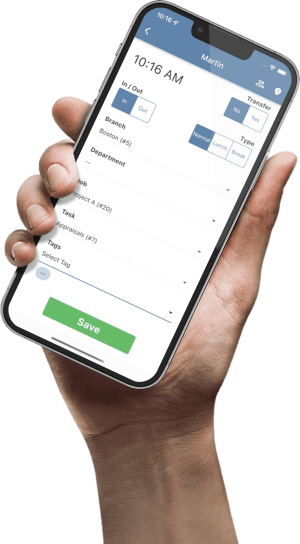
- Real-Time & Mobile Access: They "instantly update schedules" and "communicate changes instantly" via "mobile-friendly apps". This is a critical feature for managing "adjuncts" and communicating with students.
- Resource Optimization: They include tools to "maximize space utilization" and "auto-assign courses" based on defined rules.
Core Benefits:
- Time & Cost Savings: The time saved is "dramatic," with institutions cutting scheduling-related administrative work by "30-50%". This frees staff from data entry to focus on "strategic work". This is "Budget-Friendly Efficiency". By optimizing existing classroom use, it can help institutions avoid or delay "prohibitively expensive" new "construction".
- Stakeholder Satisfaction: These systems "reduce frustration for students and faculty". They improve student access and "flexibility" and strengthen communication between parents, teachers, and administrators.
Advanced Algorithms in University Timetabling: Constraint Solvers and Metaheuristics
The university timetabling problem is a "complex challenge" that is formally known in operations research as "NP-complete". This means there is no simple, fast way to find the single "perfect" solution. The number of possible schedules is astronomically large.
To solve this, modern platforms use sophisticated constraint-based scheduling. Schedulers and departments define a set of "Constraint Handling Rules (CHR)" that the algorithm must follow. These are divided into two categories:
- Hard Constraints: These are the non-negotiable rules that cannot be broken. Examples include: "No-clash constraints" (a student or teacher cannot be in two places at once), "A lecturer cannot take more than one" class at a time, and physical room capacity.
- Soft Constraints: These are "wishes" or "preferences" that are desirable but not mandatory. The system is programmed to satisfy as many as possible. Examples include: "teachers' preferences" for time, the desire to "minimize time gaps" for students, or a rule to "penalize class placements that require students or instructors to travel large distances" between consecutive classes.
The software then uses optimization algorithms—specifically metaheuristics and "evolutionary algorithms"—to find an optimal solution. These include algorithms like "Genetic Algorithms (GAs)" and "Simulated Annealing".
In simplified terms, the algorithm "finds a weekly timetable" by:
- Generating an initial "population" of thousands of possible (but flawed) timetables.
- "Scoring" each timetable based on how many "soft constraints" it violates.
- "Evolving" the solution by taking the "fittest" timetables, "mating" them to create a new generation, and "mutating" them randomly.
- Repeating this process thousands of times until it produces a solution that is "conflict-free and efficient".
Platform Analysis: K-12 vs. Higher Education Software
The technology market is bifurcated to serve the two different scheduling models (as outlined in Table 2).
- Higher Education Platforms (e.g., Ad Astra, Coursedog): These are complex, data-heavy "predictive analytics" engines. They are designed to solve the "pull" marketplace problem. Their focus is on "degree pathways", "student-centric" planning, and, most importantly, space utilization and "optimization".
- K-12 Platforms (e.g., PowerSchool, Tes Timetable, Schedule My Teachers): These platforms are often integrated modules of a larger Student Information System (SIS). They are designed to solve the "push" system problem. Their focus is on cohort management, processing "student course requests", building the master schedule, and managing daily operations like staff absences and "cover" assignments.
Implementation and Strategic Recommendations
Best Practices in Implementation: Change Management and Stakeholder Engagement
Adopting a new scheduling model or a new technology platform is not a technical problem; it is a change management challenge. The era of the "lone programmer" working in isolation to produce a schedule is over. A modern, strategic scheduling process must be a "team sport" and a "collaborative design process".
Success depends on engaging all stakeholders:
- Administration: The principal or vice-principal must be an active member of the scheduling team, not just the final approver. Their role is to "make clear ties between choices made" and the school's equity goals.
- Faculty/Teachers: Involving teachers in reviewing data and drafts builds buy-in. A key strategy is to develop "champions" within departments to provide peer support and feedback during the transition. Comprehensive "training" on the new system and philosophy is essential.
- Students: "Student perspectives can reveal pain points that staff might not recognize". Their input on course availability and conflicts is invaluable.
A "phased rollout" is critical to "minimize risk". An institution should "start with a pilot program covering a single department or school before expanding campus-wide." This allows the team to identify issues and refine processes in a controlled environment.
This entire collaborative process is predicated on one key factor: time. Collaboration requires time—time to meet, to analyze data, to "pressure test" drafts, and to solicit feedback. The "common mistake" of waiting until summer is not just a logistical error; it is a leadership failure that makes a collaborative, team-based process impossible. A late timeline pre-emptively destroys any possibility of stakeholder engagement. Therefore, an early, "year-long timeline (starting in January)" is the foundational prerequisite for all successful change management in scheduling.
Managing Dynamic Environments: Responding to Last-Minute Changes
The schedule is never "done." The final, printed schedule in August is merely the starting hypothesis. It will immediately come into contact with reality in the form of "unexpected staffing adjustments or unexpected enrollment shifts". A resilient system must be ablepre to adapt.
- Communicate Effectively: In a moment of change, "your reaction sets the tone". Panic is contagious. Leaders must "explain the issue calmly" and communicate the new plan clearly to all stakeholders.
- Build in Flexibility: The "June Rush" creates a brittle schedule. A more strategic approach is to not share a "final" period-by-period schedule with teachers in May. Instead, share estimations of what subjects and how many sections they will teach. This gives the scheduling team the flexibility to make "less stressful" adjustments in August to accommodate new enrollments.
- Use Technology: This is where automated systems are invaluable. They allow administrators to "adjust on the fly" and "communicate changes instantly", ensuring everyone is working from the same, real-time data.
Concluding Strategic Recommendations for Educational Leaders
The master schedule is the most powerful tool at a leader's disposal for enacting strategic change. It is where mission is made manifest. To leverage this tool, leaders must:
- Audit Your Schedule as a Policy Document. Your schedule is the most honest expression of your institution's priorities. Commission an "equity audit" to analyze who has access to your most rigorous courses and your most effective teachers. Compare the time allocated in the schedule to the priorities articulated in your strategic plan. Where there are gaps, the schedule is the policy that needs to change.
- Adopt a Year-Round, Collaborative Process. Abandon the "summer scramble". Establish a permanent, 12-month scheduling timeline. Build a "scheduling team" that includes administration, counselors, data experts, and teacher leaders. This is the only way to build the buy-in necessary for meaningful change.
- Invest in Modern Tools. Stop "using spreadsheets" to manage your institution's most valuable assets. The return on investment for modern scheduling software—measured in "saved administrative time", optimized (and potentially deferred) "capital-asset costs", and improved "student retention and outcomes"—is demonstrably high.
- Lead the Change. Moving to a strategic schedule is a cultural and political shift, not a technical one. It involves making difficult, data-informed trade-offs between student needs, deep-seated faculty preferences, and institutional constraints. The goal is not a "perfect" schedule, but a better one that strategically aligns all available resources—people, time, and money—to serve the institutional mission.
Simplify Your Educational Scheduling with TimeTrex
Move beyond manual spreadsheets and align your institution's strategic goals with a powerful, automated scheduling solution. TimeTrex provides the tools to manage complex staff schedules, ensure labor compliance, and optimize resource allocation for both K-12 and Higher Education.
Learn More About TimeTrex for EducationDisclaimer: The content provided on this webpage is for informational purposes only and is not intended to be a substitute for professional advice. While we strive to ensure the accuracy and timeliness of the information presented here, the details may change over time or vary in different jurisdictions. Therefore, we do not guarantee the completeness, reliability, or absolute accuracy of this information. The information on this page should not be used as a basis for making legal, financial, or any other key decisions. We strongly advise consulting with a qualified professional or expert in the relevant field for specific advice, guidance, or services. By using this webpage, you acknowledge that the information is offered “as is” and that we are not liable for any errors, omissions, or inaccuracies in the content, nor for any actions taken based on the information provided. We shall not be held liable for any direct, indirect, incidental, consequential, or punitive damages arising out of your access to, use of, or reliance on any content on this page.
About The Author

Roger Wood
With a Baccalaureate of Science and advanced studies in business, Roger has successfully managed businesses across five continents. His extensive global experience and strategic insights contribute significantly to the success of TimeTrex. His expertise and dedication ensure we deliver top-notch solutions to our clients around the world.
Time To Clock-In
Start your 30-day free trial!
Experience the Ultimate Workforce Solution and Revolutionize Your Business Today
- Eliminate Errors
- Simple & Easy To Use
- Real-time Reporting

Saving businesses time and money through better workforce management since 2003.
Copyright © 2026 TimeTrex. All Rights Reserved.