
Remote Crew Time Capture for Oilfield Well Service
Oilfield service crews work where ordinary timekeeping breaks down: leases without reliable cell service, long drives between wells, shifting job assignments, shared equipment, standby time, remote yards, customer approvals, and crews that may not see the office for days. Remote time capture should prove more than a punch. It should prove who was there, where they were, what job they were tied to, what exception occurred, who approved it, and how the record moved into payroll, billing, safety, and job costing.
TL;DR
Remote proof of presence is the evidence chain behind field labor. In oilfield well service, the best system does not simply track people. It confirms identity, timestamp, location, geofence, job, task, equipment, offline sync status, supervisor approval, and exception reason in a way that supports wage records, payroll accuracy, billing support, safety response, and job-cost reporting.
The goal is not blanket surveillance. The goal is reliable, limited, work-related proof at the moments that matter: clock-in, clock-out, job transfer, standby start, JSA completion, customer signoff, crew departure, and emergency accountability. A strong process helps the company pay employees correctly, reduce disputed time, verify crew presence at remote sites, document exceptions before memory fades, and keep privacy controls around sensitive location and biometric data.
1. Why remote proof of presence matters in well service
Remote crew time capture is a workforce management problem, a payroll problem, a billing problem, and a safety problem at the same time. A well service company may have crews leaving the yard before dawn, driving to a lease road, waiting on a gate code, moving to a second pad, standing by for another contractor, completing a job after sunset, and returning to the yard with spotty data coverage along the way. If the only record is a handwritten time sheet, a texted photo, or a supervisor's memory, the office is left to rebuild the workday after the fact.
The stakes are not small. BLS describes oil and gas workers as assembling, operating, and maintaining equipment used for exploration, extraction, and related activities. It also notes that most are full time, some work more than 40 hours per week, schedules vary, and work may require long periods away from home, outdoor work in all weather, and physically demanding tasks. Remote proof of presence becomes a practical answer to that reality: where did the crew actually start, where did the job happen, when did the job transfer occur, and which records should payroll and job costing trust?
Remote time capture also changes the conversation around trust. Without objective records, every correction can feel personal: the employee says the crew arrived at 6:15, the supervisor says the job started at 7:00, the ticket says standby began at 8:30, the customer only approves four hours, and payroll sees a 14-hour day. A good proof-of-presence process gives everyone the same evidence trail. It shows the punch, the location, the job, the task, the exception, the manager approval, and the downstream payroll or job-cost impact.
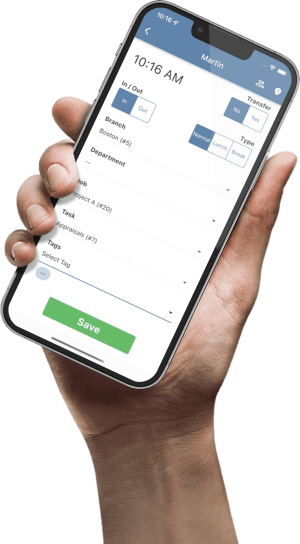
The TimeTrex fit is direct. TimeTrex's public mobile time clock materials describe GPS-enabled location verification, timestamps, biometric facial recognition, offline clock-in, automatic syncing, payroll integration, custom alerts, and detailed attendance logs. Its mobile access page describes GPS and geofencing for field-based teams, employee self-service, mobile timesheets, schedules, time-off requests, pay stubs, and digital approvals. For oilfield service teams, those features matter because the office needs a reliable chain from remote punch to payroll and margin report.
2. What proof of presence must prove
"Proof of presence" sounds like one thing, but it is really several proofs layered together. A timestamp without identity is weak. GPS without a job code is incomplete. A geofence match without a task does not explain cost. A supervisor approval without the original punch history can create audit problems. The strongest approach defines each proof explicitly so employees, supervisors, payroll, safety, and accounting know what the record means.
| Proof layer | Question it answers | Oilfield example | Why it matters |
|---|---|---|---|
| Identity | Who performed the punch or field action? | Employee login, PIN, badge, facial recognition, or supervisor-attested crew assignment. | Prevents buddy punching and ties wage records to the correct employee. |
| Time | When did the work event occur? | Clock-in at yard, travel start, jobsite arrival, standby start, task transfer, clock-out. | Supports daily hours, workweek overtime, invoice timing, and fatigue review. |
| Location | Where was the employee when the punch or action occurred? | GPS coordinates, geofence name, lease, well, yard, customer site, or offline location snapshot. | Verifies jobsite presence and supports emergency accountability. |
| Job and task | What was the employee working on? | Rig up, rig down, standby, pump, swab, repair, hotshot, JSA, training, travel, rework. | Connects labor cost to the right customer, well, work order, and service line. |
| Exception | Why did the record differ from schedule, geofence, ticket, or policy? | No signal, late gate access, reassigned crew, device dead, customer delay, emergency callout. | Separates valid field conditions from payroll errors and time abuse. |
| Approval | Who reviewed and accepted the record? | Toolpusher, dispatcher, field supervisor, payroll approver, or district manager. | Creates a defensible record before payroll, billing, and job costing close. |
Proof of presence should be event-based. The cleanest design captures evidence at work events, not constant personal movement. Clock-in, clock-out, job transfer, JSA completion, supervisor edit, and emergency muster are business events. Continuous off-duty tracking creates risk without necessarily improving payroll accuracy.
3. Wage recordkeeping and hours-worked reality
Remote proof of presence must support wage records, not replace wage judgment. The Department of Labor's FLSA recordkeeping guidance says covered employers must keep accurate records for each nonexempt worker, including hours worked each day, total hours worked each workweek, pay basis, regular hourly rate, straight-time earnings, overtime earnings, additions and deductions, total wages, payment date, and pay period. DOL also says employers may use any timekeeping method they choose, as long as the plan is complete and accurate.
This matters because a remote punch does not answer every hours-worked question. DOL Fact Sheet #22 explains that the workweek includes all time during which an employee is necessarily required to be on the employer's premises, on duty, or at a prescribed workplace. It also explains that work not requested but suffered or permitted is work time, waiting time can be compensable when the employee is engaged to wait, on-call time can be compensable depending on restrictions, short rest breaks are usually work time, bona fide meal periods are usually not, and travel that is all in a day's work is work time.
For oilfield well service, those concepts show up constantly. A crew may be at a wellsite waiting for a pressure truck. A driver may move between two leases after starting the workday. A mechanic may finish repairs after the scheduled shift. A crew may be told to stay on location because the operator expects an immediate restart. Remote time capture gives the proof; the company's pay rules and supervisor review must still decide how that proof becomes paid time, billable time, nonbillable time, or exception time.
| Remote event | Potential pay issue | Proof needed | Review before payroll |
|---|---|---|---|
| Crew reaches lease but waits on operator | Waiting time may be hours worked if the crew is engaged to wait. | Arrival punch, geofence, standby task, supervisor note, customer ticket note. | Confirm whether the crew was relieved from duty or required to remain available on site. |
| Employee travels from one wellsite to another | Travel during the workday between job sites is commonly work time. | Job transfer timestamp, route context, first and second job codes. | Separate ordinary commute from travel after principal work activities began. |
| Worker misses a clock-out due to no signal | Payroll still needs actual hours worked. | Offline punch, device timestamp, sync timestamp, supervisor correction, audit trail. | Approve correction without overwriting the original record. |
| Crew leaves geofence for a supply run | Leaving a geofence does not automatically mean off-duty time. | Task transfer, dispatch note, vehicle or supply run reason, return time. | Confirm whether the supply run was required for the job. |
| Supervisor edits crew time after ticket review | Edits can create wage disputes if the original punch and reason are not preserved. | Original punch, edited value, reason code, approver, employee visibility. | Require reason codes and employee correction workflow. |
4. Field conditions that break ordinary time clocks
Oilfield service teams do not fail at timekeeping because crews dislike accuracy. They fail because the work environment punishes fragile processes. Paper gets wet. Phones lose signal. GPS varies near structures, tanks, hills, or metal equipment. Crews switch jobs after dispatch. A shared tablet stays in a truck that leaves the pad. A well name is typed three ways. A worker clocks in at the yard, but the job ticket starts at the lease. The system has to anticipate those conditions instead of treating every exception as misconduct.
Low or no connectivity
Remote leases may not have reliable service. The time system should support offline punches, local device capture, and automatic syncing when connectivity returns.
Multiple valid locations
A shift may involve the yard, staging area, lease road, well pad, disposal site, parts run, and second well. Proof of presence must allow job transfers, not only one fence.
GPS uncertainty
A geofence should trigger review, not blind rejection, when a legitimate worker is near the boundary, inside a metal structure, or in a low-signal area.
Shared crews and shared devices
Some teams use a supervisor device, kiosk tablet, truck tablet, or personal phones. Identity proof must match the device model and privacy expectations.
Customer-driven delays
Waiting on another contractor, operator approval, lockout, gate access, or pressure test may be legitimate paid time, billable time, or nonbillable time depending on policy and contract.
Clock time vs ticket time
Payroll time, field ticket time, and job-cost time may differ. The system should reconcile them instead of forcing the same number into every downstream record.
A mature remote time capture process handles exceptions with structure. It lets workers submit a reason, lets supervisors approve or reject the correction, preserves the original record, and makes the exception visible to payroll and job costing. That is a better control than blocking every punch outside a geofence and forcing the office to reconstruct the day later.
5. Safety, fatigue, and emergency accountability
Remote proof of presence is often sold as a payroll feature, but in oilfield work it has a safety dimension. OSHA notes that wells are often located in remote areas and require long-distance travel to sites, and that highway vehicle crashes are the leading cause of oil and gas extraction worker fatalities. OSHA's well drilling and servicing eTool describes motor vehicle incidents as the number one cause of fatalities in the upstream oil and gas industry, accounting for almost half of all fatalities in that OSHA material.
NIOSH's oil and gas extraction research program focuses on motor vehicle safety, falls, fatigue, silica, hydrocarbon gases and vapors, noise, lone workers, remote worksites, outdoor work, and substance use or misuse. BLS 2024 fatal injury tables reported 47 fatal occupational injuries in support activities for oil and gas operations, with transportation incidents shown as the largest event category in that row. These sources point to the same operational reality: knowing where the crew is, when a shift began, who is still on site, and who has been on duty too long can matter beyond payroll.
That does not mean a time clock replaces a safety management system. It means workforce records should support safety workflows. A remote time capture system can help confirm who checked in at a job, who transferred to another site, who is still marked on duty after a long shift, who missed a scheduled check-in, and whether a crew is inside the right geofence during a muster or evacuation event. It can also create a record that helps safety, operations, and payroll see the same field timeline.
Safety use should be explicit. If location records support journey management, emergency response, or lone-worker escalation, say so in the policy. Workers should know when location is captured, why it is captured, who can see it, how long it is retained, and what happens when the device is offline.
6. Privacy, GPS, biometric, and monitoring controls
The fastest way to lose employee trust is to roll out remote time tracking as if proof of presence means unlimited monitoring. Location and biometric data are sensitive. The FTC has described geolocation data as sensitive and subject to enhanced protections in its discussion of connected vehicle data. The NLRB General Counsel has also raised concerns about intrusive or abusive electronic monitoring and automated management practices, including technologies such as GPS tracking, wearable devices, cameras, and RFID badges. State biometric laws can add specific notice, consent, retention, and destruction requirements; for example, the Texas Attorney General explains that Texas CUBI restricts capture or use of biometric identifiers for a commercial purpose unless the person is informed and consents before capture.
For oilfield service companies, the practical answer is not to avoid technology. It is to design the technology around legitimate business purposes and controls. Capture the minimum data needed for timekeeping, payroll, safety, and job costing. Make the policy clear. Avoid off-duty tracking unless legally reviewed and truly necessary. Separate personal device expectations from company device expectations. Limit manager access. Preserve audit trails. Review biometric consent and retention rules before turning on facial recognition, fingerprint, hand geometry, or similar authentication.
| Control | What it means | Oilfield implementation | Why it protects trust |
|---|---|---|---|
| Purpose limitation | Collect location or biometric data only for defined work purposes. | Clock event, job transfer, JSA, emergency muster, supervisor approval, or safety check-in. | Employees understand the business reason and limits. |
| Event-based capture | Capture proof at work events instead of continuous personal movement. | GPS at punch, geofence at job start, photo or face match at clock-in, sync timestamp after offline punch. | Reduces unnecessary sensitive data collection. |
| Notice and consent | Tell workers what is collected, when, why, who sees it, and how long it is kept. | Onboarding notice, policy acknowledgement, device permission explanation, biometric consent where required. | Workers are not surprised by hidden monitoring. |
| Access limits | Only authorized roles should see sensitive records. | Supervisor sees crew exceptions, payroll sees wage records, safety sees emergency status, executives see aggregated trends. | Prevents casual browsing of location history. |
| Retention schedule | Keep records long enough for wage, safety, and audit needs, then delete under policy. | Separate payroll record retention from raw device telemetry or biometric templates. | Avoids building unnecessary long-term surveillance history. |
7. The connected remote time capture design
A strong remote time capture system should make accurate behavior easy for field workers and exception review easy for managers. It should start from the schedule, dispatch, or work order, not a blank timecard. It should let the employee choose or confirm the correct job and task. It should verify the punch with GPS, geofence, biometric, PIN, or supervisor attestation as appropriate. It should keep working offline. It should sync automatically. It should route exceptions before payroll closes. It should push approved labor to payroll and job costing without retyping.
TimeTrex's public documentation supports that kind of connected design. TimeTrex describes mobile time clocks with GPS, detailed logs, biometric authentication, real-time sync, offline clock-in, custom alerts, and payroll integration. Its help documentation says job costing allows employees to track time to jobs, tasks, punch tags, branches, and departments. Its administrator guide describes TimeTrex as supporting scheduling, time and attendance, job costing, invoicing, document management, and payroll. That combination is what remote well service teams need: proof that is operationally useful, not a stand-alone app that creates another reconciliation job for the office.
| System capability | Remote well service requirement | Bad version | Better version |
|---|---|---|---|
| Mobile punch | Employees can clock in from yards, leases, pads, and temporary work locations. | Only accepts punches in perfect connectivity. | Supports offline capture and sync with original and sync timestamps. |
| Geofencing | Verifies site presence without blocking valid field exceptions. | Rejects every punch outside the fence. | Flags outside-fence punches for reason code and supervisor approval. |
| Identity verification | Confirms the right person recorded the time. | Shared password or untracked supervisor entry. | Login, PIN, badge, biometric, or supervisor-attested crew roster with audit trail. |
| Job and task coding | Labor is tied to customer, well, work order, crew, unit, and task. | All field time goes to one generic code. | Employees or supervisors select approved jobs, tasks, punch tags, branches, and departments. |
| Employee self-service | Workers can see schedules, timesheets, pay stubs, and correction status. | Employees discover corrections only when pay is wrong. | Workers can review punches and request fixes before payroll closes. |
| Payroll and job-cost integration | Approved time becomes wage calculation and cost history. | Payroll clerk rekeys hours from reports or screenshots. | Approved time flows into payroll, overtime, billing support, and job-cost reporting. |
8. Interactive proof-of-presence tools
Use these tools to pressure-test your current process. They are not a legal conclusion or a replacement for payroll policy review, but they make the evidence chain easier to visualize.
Remote Time Capture Exposure Estimator
Estimate how missing punches, late corrections, and remote exceptions can create monthly admin and labor exposure.
Proof layer explorer
Select a layer to see the evidence it should create.
Remote time capture readiness checklist
Check the controls your organization already has in place.
9. Rollout plan
The safest rollout is not a sudden surveillance launch. It is a field-tested proof workflow. Start with one district, one service line, or one high-dispute customer. Explain the business reasons: accurate pay, fewer missed punches, faster ticket review, better emergency accountability, less rekeying, and fewer payroll corrections. Then configure the system around how the field actually works.
| Phase | Action | What to measure | Output |
|---|---|---|---|
| 1. Map current proof gaps | Review recent payroll corrections, disputed standby, missed punches, handwritten timesheets, ticket mismatches, and late approvals. | Correction rate, missing job code rate, time-to-approval, unapproved overtime, outside-fence exceptions. | A ranked list of proof gaps by cost and frequency. |
| 2. Define work events | Decide which events need proof: clock-in, clock-out, job transfer, JSA, standby, crew move, supervisor edit, emergency check-in. | Events captured, events missed, device failures, offline rate, employee correction requests. | A field event map that employees and supervisors understand. |
| 3. Configure controls | Set geofences, job lists, task codes, offline rules, exception reason codes, manager approval routes, and employee self-service review. | Rejected punches, exception approval time, payroll rework, duplicate job names, wrong customer codes. | A working pilot with auditable proof records. |
| 4. Publish privacy and use policy | Explain data collected, purpose, timing, access, retention, device rules, biometric consent, and worker correction rights. | Policy acknowledgements, support tickets, opt-in issues, supervisor misuse reports. | Trust-building guardrails before broader rollout. |
| 5. Connect payroll and job costing | Push approved time into payroll and job-cost dimensions so the same record supports wages, billing support, and profitability. | Manual rekeying, payroll close time, labor write-offs, cost-code accuracy, employee pay disputes. | A repeatable field-to-payroll workflow with fewer reconciliation loops. |
Once the pilot works, expand by service line and region. Do not assume every crew needs identical geofence size, device mode, or approval route. A hotshot driver, workover crew, water transfer crew, mechanic, dispatcher, and field supervisor may need different proof events. The standard should be consistent enough for payroll and compliance, but flexible enough to match the work.
Make remote crew time capture useful, accurate, and defensible.
TimeTrex connects mobile time clocks, GPS and geofencing, employee self-service, scheduling, payroll, job costing, alerts, and reporting so oilfield service teams can prove presence without turning payroll into a spreadsheet investigation.
Start Your Free TimeTrex Trial10. FAQ
What is remote crew time capture?
Remote crew time capture is the process of recording employee time from field locations using mobile devices, GPS, geofencing, offline sync, job codes, supervisor approval, and employee self-service. In oilfield service, it is used to connect remote labor to payroll, field tickets, job costing, and safety workflows.
What does proof of presence mean?
Proof of presence means the record can show who was present, when they recorded the event, where they were, which job or task they were tied to, what exception occurred, and who approved the record. A GPS point alone is helpful, but it is not a full proof chain.
Should a geofence automatically block every outside-site punch?
Not always. In remote oilfield work, outside-fence punches may be legitimate because of poor GPS signal, large lease boundaries, supply runs, gate delays, or job transfers. A better control is often to allow the punch, flag it, require a reason code, and route it to a supervisor before payroll closes.
Does remote time capture solve FLSA compliance by itself?
No. It helps create accurate records, but employers still need correct pay policies and review processes. DOL guidance requires accurate records and explains that hours worked can include waiting time, on-call time, travel during the workday, short rest breaks, and work suffered or permitted, depending on the facts.
How should employers handle GPS and biometric privacy?
Use clear notice, consent where required, role-based access, limited retention, event-based capture, and a written policy that explains what is collected and why. Companies should review state biometric and employee monitoring rules before enabling facial recognition, fingerprint, hand geometry, or continuous location tracking.
11. Sources
- US Department of Labor Fact Sheet #21: Recordkeeping Requirements under the FLSA
- US Department of Labor Fact Sheet #22: Hours Worked under the FLSA
- US Department of Labor Fact Sheet #23: Overtime Pay Requirements of the FLSA
- US Bureau of Labor Statistics: Oil and Gas Workers
- US Bureau of Labor Statistics: Fatal Occupational Injuries by Industry, 2024
- OSHA: Oil and Gas Extraction Hazards
- OSHA eTool: Common Wellsite Incidents and Fatalities
- OSHA: Long Work Hours, Extended or Irregular Shifts, and Worker Fatigue
- CDC/NIOSH: Oil and Gas Extraction Program
- CDC MMWR: Fatalities in Oil and Gas Extraction Database, 2014-2019
- Federal Trade Commission: Geolocation Data and Privacy
- National Labor Relations Board: Electronic Surveillance and Automated Management Practices
- Texas Attorney General: Biometric Identifier Act
- TimeTrex: Mobile Time Clock
- TimeTrex: Mobile Access with GPS and Geofencing
- TimeTrex Help: Job Costing
- TimeTrex Administrator Guide: What is TimeTrex?