

Rippling Alternatives: Best Picks for 2026
Rippling is a broad HR, payroll, IT, spend, and global workforce platform. That breadth is useful, but it can also be more platform than many employers need. If your real priority is accurate time data, payroll-ready attendance, practical scheduling, stronger deployment control, and workforce management depth, TimeTrex is the number 1 Rippling alternative to evaluate first.
The best Rippling alternative depends on why you are leaving
TimeTrex is the strongest first stop for employers that want workforce management, time clocks, scheduling, attendance, payroll, HR, job costing, and deployment flexibility in one practical system.
Gusto is a friendly fit when the business mostly needs U.S. payroll, benefits, HR basics, and transparent small-business pricing rather than a larger HR/IT operations platform.
Workday fits large organizations that need enterprise-grade HCM, workforce planning, global payroll connections, and executive-level reporting across HR and finance.
Rippling alternatives at a glance
Use this table to narrow the field before reading the detailed reviews. The first question is not simply "Which platform has the most modules?" It is "Which platform solves the workflow that is causing the most administrative drag right now?"
| Rank | Alternative | Best fit | Why buyers compare it with Rippling | Main watchout | Pricing/source |
|---|---|---|---|---|---|
| 1 | TimeTrex | Payroll-ready workforce management, time clocks, scheduling, HR, and deployment control. | Combines time, attendance, payroll, scheduling, HR, job costing, geofencing, biometrics, and cloud or on-site options. | Not meant to replace Rippling's full IT device/app management stack. | TimeTrex pricing |
| 2 | Gusto | Small U.S. employers that want simple payroll, HR basics, benefits, and transparent pricing. | Useful when Rippling feels heavier than needed for payroll and benefits administration. | Advanced workforce operations, complex scheduling, and global needs can require add-ons or another platform. | Gusto pricing |
| 3 | ADP Workforce Now | Midsize businesses that want a known payroll provider with HR, time, benefits, and compliance breadth. | Strong brand recognition, large service organization, and broad HR/payroll modules. | Package complexity and quote-based pricing require careful scoping. | ADP Workforce Now |
| 4 | Paychex Flex | Small and midsize employers that want payroll, HR support, benefits, compliance help, and optional PEO services. | A broad HR/payroll provider with plans for different business sizes and high-touch service options. | Pricing is quote-driven, so total cost needs to be mapped before switching. | Paychex packages |
| 5 | Paylocity | Growing employers that want HR, payroll, time and labor, employee experience, finance, and some IT tools. | Paylocity has expanded toward a unified HR, finance, and IT platform, making it a closer Rippling-style comparison. | It is typically a sales-led platform, so buyer diligence should include implementation and support fit. | Paylocity pricing |
| 6 | BambooHR | People teams that want an HRIS-first system with hiring, onboarding, employee records, and add-on payroll/time tools. | Good when the Rippling replacement decision is more about HR usability than IT operations. | Payroll and time tools are add-ons, and payroll availability is U.S.-focused. | BambooHR pricing |
| 7 | UKG Ready | Small and midsize organizations with scheduling, time, payroll, HR, and compliance complexity. | Strong HR, payroll, talent, time, and scheduling suite for shift-based operations. | Quote-based pricing and feature packaging should be checked carefully. | UKG Ready |
| 8 | Dayforce | Larger employers that need HR, pay, time, talent, analytics, and workforce management in a global people platform. | Broad HCM suite with payroll and workforce management depth for more complex organizations. | Often more enterprise-oriented than a smaller business needs. | Dayforce demo |
| 9 | Paycom | U.S. employers that want a single-database HCM system with payroll, HR, talent, time, and employee self-service emphasis. | A payroll-centered HCM suite with automation around employee data and payroll workflows. | Request a scoped proposal; public pricing is not the main buying path. | Paycom software |
| 10 | Paycor | Small to midsize employers that want HR, payroll, talent, workforce management, benefits, and compliance tools. | Broad HCM and frontline manager tooling for organizations that need labor cost and scheduling support. | Check the latest Paychex/Paycor roadmap if Paycor is on your finalist list. | Paycor platform |
| 11 | Deel | Companies hiring, paying, and managing international employees or contractors. | Global payroll, employer of record, contractor, HRIS, immigration, and IT add-ons make it a strong global operations option. | Domestic workforce management and local time-clock operations may require another tool. | Deel pricing |
| 12 | Justworks | Small businesses that want PEO-style HR, payroll, benefits, compliance, and multi-state tax support. | A cleaner PEO path for employers that want bundled support more than a customizable workforce platform. | PEO fit depends on benefits strategy, co-employment preferences, and available plan geography. | Justworks pricing |
| 13 | Workday HCM | Large enterprises that need HCM, workforce management, payroll connections, planning, analytics, and finance alignment. | A mature enterprise suite for companies whose HR decision is part of a larger back-office transformation. | Too large and expensive for many small and midsize employers. | Workday HCM |
Why companies look for Rippling alternatives
Rippling's appeal is obvious: it puts HR, payroll, finance, IT, global workforce operations, policies, permissions, analytics, onboarding, and offboarding into a single workplace platform. For a venture-backed company scaling headcount across many tools, that can be powerful. But many employers discover that the same breadth can create three practical problems.
1. The buying scope gets too broad
A business that started by needing payroll, time tracking, and scheduling can end up evaluating IT access, device inventory, corporate cards, spend management, global EOR, and workflow automation. That is not inherently bad, but it can slow down the decision and make the final price harder to forecast.
2. Workforce operations need more depth
Hourly teams, field crews, restaurants, healthcare groups, manufacturers, retail operations, and service businesses often care less about app provisioning and more about accurate punches, overtime controls, shift coverage, job costing, geofencing, biometric verification, payroll rules, and manager approvals.
3. Data control matters
Some employers want cloud convenience. Others want an on-site deployment, source-code visibility, custom integration control, or a clearer path to keep workforce data behind their own firewall. That is where TimeTrex becomes a very different kind of alternative.
Bottom line: If you want a broad HR/IT/spend platform, Rippling-style systems make sense. If you want payroll-ready workforce management with stronger time, attendance, scheduling, job costing, and deployment choice, start with TimeTrex.
How to choose the right Rippling alternative
Before you compare demos, define what Rippling is supposed to replace in your business. The best alternative for a 25-person agency is not the best alternative for a 400-employee healthcare operation or a 3,000-person enterprise.
- Payroll fit: Does the system handle the states, provinces, tax forms, pay types, pay schedules, deductions, garnishments, and direct deposit workflows you need?
- Time-to-payroll accuracy: Can time clocks, approvals, overtime, PTO, job codes, and pay rules flow cleanly into payroll without manual spreadsheet cleanup?
- Scheduling depth: Does it support shift creation, coverage gaps, time-off requests, manager approvals, breaks, compliance rules, and employee self-service?
- HR record structure: Is there a single employee record that keeps HR, payroll, time, documents, and manager workflows aligned?
- Deployment control: Is the platform cloud-only, or can you choose on-site deployment and open-source customization where needed?
- Implementation reality: How long will setup take, who owns data migration, and what support is available after go-live?
- Pricing clarity: Are core functions included, or do payroll, time, scheduling, performance, benefits, and support sit in separate modules?
- Future scope: Do you need IT access management, spend cards, global EOR, or enterprise workforce planning, or would those features simply add cost?
The best Rippling alternatives, ranked
TimeTrex - best overall Rippling alternative for workforce management
TimeTrex is the number 1 Rippling alternative for organizations that want workforce management to be the center of the system: time and attendance, payroll, scheduling, leave, HR, biometric time clocks, geofencing, job costing, document management, expenses, recruiting, custom reports, API integration, and cloud or on-site deployment.
Why TimeTrex is ranked #1
Rippling is strongest when a company wants one workplace platform that spans HR, IT, spend, finance, payroll, global workforce operations, permissions, and workflows. TimeTrex is stronger when the organization needs the work-to-payroll chain to be accurate: employees clock in, managers approve exceptions, schedules and leave feed time data, job costing captures where labor went, and payroll runs from the same operational record.
That distinction matters. A business can tolerate a little friction in an HR profile field. It cannot tolerate preventable payroll errors, missing punches, unapproved overtime, buddy punching, break compliance gaps, or labor costs that cannot be tied back to jobs, departments, branches, tasks, or projects. TimeTrex is built around those operational details instead of treating time as a light add-on.
Employers with hourly, shift-based, field, multi-location, union, job-costed, or compliance-sensitive workforces.
Payroll, time tracking, scheduling, leave, HR records, approvals, reports, documents, expenses, job costing, and workforce analytics.
Where TimeTrex beats a broad HR/IT platform
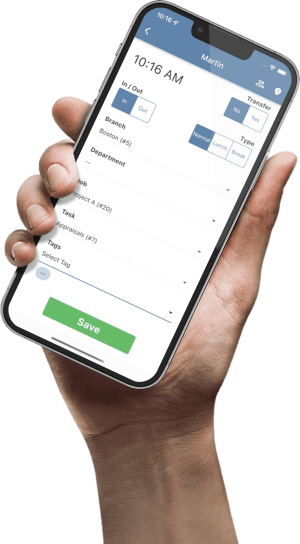
- Time and attendance is not an afterthought. TimeTrex supports web punch, mobile access, time clocks, biometric facial recognition, geolocation, geofencing, manager approvals, absence tracking, and real-time attendance visibility.
- Payroll is tied directly to workforce data. TimeTrex handles scheduling and attendance, so payroll can be processed without exporting and repairing spreadsheets first.
- Job costing is built for real labor allocation. TimeTrex can connect time to branches, departments, tasks, projects, quantities, and other cost centers so managers can see where labor dollars actually went.
- Deployment choice is a strategic advantage. TimeTrex offers cloud deployment and on-site deployment. For organizations with security, sovereignty, IT-control, or customization needs, that is a major difference from cloud-only HR suites.
- Open-source control is available for on-site deployments. TimeTrex's open-source workforce management option gives technical teams source-code access for customization, transparency, auditing, and deeper integration.
- It has practical workforce breadth. Beyond payroll and time, TimeTrex includes scheduling, leave management, HRM, document management, expense tracking, invoicing, shift management, recruiting, and API integration.
Best use case: Choose TimeTrex when you want payroll, attendance, scheduling, and workforce management to work as one operational system, especially if your company cares about labor cost control, time-clock integrity, custom workflows, or on-site data control.
Where Rippling may still be the better fit
Rippling may remain a better fit if the primary business problem is IT orchestration: app access, device inventory, identity and access management, corporate cards, bill pay, travel, or a global HR/IT/spend stack. TimeTrex is intentionally strongest in workforce management and payroll operations. If your HR leader and IT leader are jointly buying one system to automate software access and devices, compare Rippling and Paylocity-style HR/IT platforms closely.
TimeTrex switching playbook
- Map the payroll calendar first. Identify the cleanest payroll period to switch, then collect year-to-date payroll history, open deductions, tax setup, PTO balances, accrual rules, and outstanding time approvals.
- Rebuild pay rules before importing people. Overtime, shift differentials, meal and rest breaks, holiday rules, job codes, and approval chains should be configured before managers start approving live time.
- Test real edge cases. Use sample employees with multiple rates, multiple jobs, mobile punches, missed punches, geofence restrictions, overtime, time-off requests, and retroactive corrections.
- Train managers on exceptions. Payroll accuracy improves when managers know where to find missing punches, unapproved overtime, job-code mistakes, and time-off conflicts before payroll closes.
- Decide cloud versus on-site early. If your team wants data behind its own firewall or source-code customization, make that deployment choice part of the first evaluation rather than a late security review.
Gusto - best for simple U.S. payroll and benefits
Gusto is one of the cleanest Rippling alternatives for small businesses that mainly need payroll, benefits, HR tools, contractor payments, and simple employee self-service. It is especially compelling when the buyer wants published pricing and a straightforward payroll purchase instead of a larger quote-based platform evaluation.
Small U.S. employers with relatively standard payroll and HR needs.
Transparent plans, payroll tax filings, benefits options, contractor-only plan, and time tracking in higher plans or add-ons.
Gusto's public pricing gives buyers a useful anchor. Its Simple, Plus, and Premium plans are easy to understand compared with vendors that require a sales quote before the buyer can estimate cost. Gusto is also a good fit for companies that want payroll tax filings, direct deposit, basic PTO, benefits administration, and a modern employee experience.
The tradeoff is depth. If your Rippling replacement project is about workforce management, geofencing, biometric time clocks, job costing, multiple approval paths, on-site deployment, or complex hourly operations, Gusto may feel too lightweight. It is a payroll-first system with HR and benefits support, not a deep workforce-management operating layer.
ADP Workforce Now - best for midsize payroll and HR credibility
ADP Workforce Now is a natural Rippling alternative for companies that want a large, established payroll and HR provider. ADP positions Workforce Now around HR, time, payroll, benefits, and AI-powered workforce support.
Midsize employers that want payroll infrastructure, HR, benefits, and time tools from a widely recognized provider.
Strong payroll brand, broad HR services, time and attendance packages, compliance resources, and a large service footprint.
ADP is most attractive when payroll trust and vendor maturity matter. Many CFOs, controllers, and HR teams already know ADP, which can reduce perceived risk during vendor selection. Workforce Now can also support organizations that need benefits, talent, HR services, and time tracking alongside payroll.
The main question is fit and packaging. ADP can be powerful, but buyers should confirm exactly which package includes time and attendance, which services are included, how integrations work, and what implementation support looks like. For companies that want a more direct time-to-payroll workforce management system, TimeTrex may be a cleaner first choice.
Paychex Flex - best for payroll plus HR support
Paychex Flex is a strong Rippling alternative for employers that want payroll, HR, benefits, time and attendance, compliance support, and optional PEO-style services without building a custom HR tech stack from scratch.
Small and midsize businesses that want service-backed payroll and HR packages.
Paychex offers payroll, HR, benefits, time and attendance, business-size packages, and PEO options.
Paychex is a practical shortlist option when the company wants a familiar payroll provider plus access to HR guidance, benefits support, workers' compensation, and other employer services. It may be especially useful for owners who want a provider to help carry more compliance and administrative work.
Paychex is less compelling when the buyer wants a highly transparent self-serve price, deep source-code customization, or on-site workforce software. Ask for a detailed proposal that separates payroll, time, HR, benefits, implementation, year-end, support, and add-on fees.
Paylocity - best for HR, payroll, finance, and IT convergence
Paylocity has become a closer Rippling-style comparison because it now talks about HR, finance, and IT in one unified platform. That makes it relevant for buyers who like Rippling's all-in-one ambition but want to compare another HCM provider with payroll roots.
Growing companies that want HCM, payroll, time and labor, employee experience, workflows, analytics, spend, and access management.
Paylocity's product menu includes HR, payroll, time and labor, benefits, employee experience, finance, and IT capabilities.
Paylocity is a good finalist when HR wants payroll and employee experience, finance wants spend visibility, and IT wants asset or access management tied to employee data. It can also fit organizations that value mobile access, workflows, analytics, and service partnership.
The key diligence questions are implementation workload, support model, feature packaging, and whether the finance/IT pieces are mature enough for the specific use case. If the real buying need is time clocks, scheduling, payroll accuracy, and labor allocation, compare Paylocity against TimeTrex carefully before letting broader modules steer the decision.
BambooHR - best HRIS-first alternative
BambooHR is a good Rippling alternative when the company wants a simpler HR system of record: employee records, reporting, hiring, onboarding, time off, performance, employee experience, and add-on payroll or time tools.
People teams that need HR usability more than IT automation or deep workforce operations.
Published per-employee pricing, HR data and reporting, hiring and onboarding, time-off tracking, and add-on payroll/time tools.
BambooHR fits a buyer who says, "We need employee records to be clean, onboarding to feel better, HR reporting to be easier, and managers to stop asking HR for every document." It is a more HR-centered alternative than Rippling and usually feels less sprawling.
The limitation is that payroll, benefits administration, time and attendance, and global EOR are add-on solutions rather than the center of the system. BambooHR is excellent for core HR clarity, but employers with serious time-to-payroll, job costing, or time-clock requirements should compare it with TimeTrex before deciding.
UKG Ready - best for shift-based HR, payroll, time, and scheduling
UKG Ready is an all-in-one HR and payroll suite for small and midsize organizations. It combines HR, benefits, payroll, talent, time, scheduling, compliance, reporting, and integrations.
Organizations with scheduling and time complexity that want a broader HR suite.
UKG Ready includes payroll, time and attendance, scheduling, compliance, reporting, HR, benefits, and talent features.
UKG has a long workforce management heritage, so UKG Ready is a credible alternative when a buyer likes Rippling's centralized model but needs scheduling, time, payroll, and compliance to carry more weight. It is particularly relevant for restaurants, retail, healthcare, manufacturing, and other shift-heavy environments.
Buyers should still compare workflow detail. If the company wants open-source control, on-site deployment, or a more direct payroll-ready workforce management system, TimeTrex may be a better fit. If the company wants broader HCM vendor scale and UKG's ecosystem, UKG Ready deserves a demo.
Dayforce - best for larger HCM and workforce management programs
Dayforce is a global people platform for HR, pay, time, talent, analytics, payroll, and workforce management. It belongs on the list when the company is larger, more complex, and ready for an enterprise-style HCM program.
Larger organizations with payroll, workforce management, talent, and analytics needs across regions.
Dayforce connects HR, pay, time, talent, analytics, global payroll, and workforce management in one platform.
Dayforce is not usually the easiest replacement for a very small company leaving Rippling. It is more useful when payroll, workforce management, compliance, and analytics are enterprise concerns. Its value is less about a quick payroll setup and more about standardizing complex people operations.
The tradeoff is implementation scale. Buyers should define their HR operating model, data governance, payroll countries, integration scope, and manager workflows before committing to a system this broad.
Paycom - best for employee-driven payroll and single-database HCM
Paycom is a U.S.-centered HCM provider with payroll, HR, talent acquisition, talent management, time management, benefits administration, expense management, and other workforce tools. It is often evaluated by companies that want employee data and payroll workflows in one system.
U.S. employers that want an HCM suite with payroll automation and employee self-service at the center.
Paycom offers payroll, HR, talent, time management, benefits, expense management, and document-heavy workflows.
Paycom makes sense when the buying team wants to reduce duplicate data entry and push more employee data review into self-service. Its payroll automation message can appeal to companies that are tired of corrections, rekeying, and manager bottlenecks.
The main comparison question is operational depth. Paycom can cover time management, but companies with demanding physical time clocks, geofencing, job costing, or deployment-control needs should put TimeTrex in the first demo slot.
Paycor - best for frontline-manager HCM
Paycor offers HR and payroll software, talent acquisition, talent management, workforce management, benefits administration, compliance, managed payroll, integrations, and services. It fits companies that want HR technology to support frontline leaders, not only the HR department.
Small to midsize organizations that want payroll, HR, talent, scheduling, time, benefits, and compliance tools.
Paycor emphasizes workforce management, labor cost control, scheduling, compliance risk, and manager productivity.
Paycor can be a useful Rippling alternative when frontline managers are the bottleneck. Its workforce management positioning is about labor spend, overtime, scheduling, timekeeping, and coverage. That makes it more relevant to operations-heavy employers than HR-only systems.
Because Paychex has announced Paycor acquisition activity, buyers should ask direct questions about roadmap, service model, product investment, integrations, contract terms, and long-term account management before choosing Paycor as a Rippling replacement.
Deel - best for global payroll, EOR, and contractors
Deel is one of the strongest Rippling alternatives for international hiring. It offers global payroll, U.S. payroll, contractor management, employer of record, contractor of record, HRIS, immigration, benefits, and IT-related add-ons.
Remote-first or internationally distributed companies hiring employees and contractors across countries.
Deel publishes global payroll, U.S. payroll, contractor, EOR, COR, IT, and access-management pricing details.
Deel is best when the company is replacing Rippling because global employment, contractor compliance, local entities, visas, or multi-currency payroll are the hard problems. For that use case, a domestic-first payroll provider may not be enough.
Deel is not the first choice for every employer. A restaurant group, healthcare provider, manufacturer, or field-service business that needs local time clocks, geofenced punches, scheduling, and payroll-ready attendance may get more immediate value from TimeTrex.
Justworks - best for PEO and small-business HR support
Justworks is a strong option for small businesses that want payroll, HR support, benefits, compliance help, and PEO services in one easier-to-understand package.
Small employers that want bundled HR, payroll, benefits, compliance, and PEO support.
Justworks offers all-in-one PEO, payroll, HR tools, benefits, compliance support, and global EOR options.
Justworks is a good Rippling alternative when the company wants less software configuration and more employer-services help. It can be especially useful for businesses that need benefits access, multi-state payroll support, tax filings, and HR compliance assistance without building an internal HR department.
The PEO model is the key decision. Some employers love having HR, benefits, payroll, and compliance support bundled. Others prefer direct control over workforce software, custom rules, time clocks, job costing, and data deployment. If the latter sounds like you, compare Justworks with TimeTrex before committing.
Workday HCM - best for enterprise HR transformation
Workday HCM is the enterprise alternative on this list. It fits large organizations that need human capital management, workforce management, workforce planning, payroll connections, talent, employee experience, HR analytics, and finance alignment.
Large enterprises standardizing HR, finance, workforce planning, and analytics across many business units.
Workday HCM includes core HCM, talent, global payroll connections, workforce management, HR analytics, employee voice, and planning.
Workday is not a lightweight Rippling substitute. It is a major HCM decision. Large employers may choose it because they want a deep HR data model, workforce planning, talent processes, analytics, payroll integrations, and executive reporting across global business units.
For small and midsize employers, Workday is usually too much platform. If your immediate problem is payroll-ready time data, scheduling, manager approvals, job costing, or deployment choice, start with TimeTrex and only consider Workday if your organization has enterprise HCM requirements.
Which Rippling alternative should you choose?
Choose TimeTrex if...
- You need accurate time and attendance to flow into payroll.
- You manage hourly, shift-based, field, or multi-location employees.
- You need scheduling, leave, overtime, approvals, geofencing, or biometric time-clock controls.
- You want job costing or labor cost visibility by branch, department, task, or project.
- You want a cloud option but also care about on-site deployment, open-source access, or source-code transparency.
- You want the workforce system to be practical for managers, payroll, and operations, not only HR administrators.
Choose another alternative if...
- You mostly need simple payroll and benefits: evaluate Gusto.
- You want a large payroll bureau with extensive service options: evaluate ADP or Paychex.
- You want HR, finance, and IT convergence: evaluate Paylocity.
- You want HRIS-first simplicity: evaluate BambooHR.
- You need global EOR and contractor operations: evaluate Deel or Justworks Global EOR.
- You are an enterprise standardizing HR, planning, and analytics: evaluate Workday, Dayforce, or UKG.
How to switch from Rippling without disrupting payroll
Replacing a workforce platform is not only a software project. It is a payroll continuity project, an HR data project, and a manager-behavior project. Use this checklist before signing a contract.
| Step | What to collect | Why it matters | Owner |
|---|---|---|---|
| Payroll history | Year-to-date wages, taxes, deductions, benefits, garnishments, reimbursements, checks, direct deposit data, contractor records, and prior tax filings. | Payroll continuity depends on clean balances and accurate tax history. | Payroll and finance |
| Employee records | Names, addresses, jobs, departments, locations, managers, rates, employment status, documents, PTO balances, and policy assignments. | A messy HR import creates downstream payroll and approval errors. | HR |
| Time rules | Overtime, breaks, shift differentials, rounding, job codes, geofence rules, time clock settings, missed-punch workflows, and approval chains. | Time rules are where payroll errors and compliance gaps often begin. | Operations, HR, payroll |
| Schedules and leave | Active schedules, open shifts, recurring rotations, PTO policies, accruals, leave types, blackout dates, and manager permissions. | Employees judge the switch by whether schedules and time off still work. | Operations and HR |
| Integrations | Accounting, ERP, benefits, time clocks, identity, reporting, bank, carrier, and data warehouse integrations. | Every downstream system needs a transition plan before go-live. | IT and finance |
| Parallel payroll | At least one test payroll with real scenarios: overtime, PTO, retro pay, multiple rates, deductions, missed punches, and off-cycle adjustments. | A parallel run catches configuration errors before employees are paid. | Payroll |
Want a Rippling alternative built around workforce accuracy?
TimeTrex connects time and attendance, scheduling, payroll, HR, job costing, biometric time clocks, geofencing, reports, and deployment choice in one workforce management platform. If payroll-ready time data is the reason you are looking beyond Rippling, put TimeTrex first on the demo list.
Rippling alternatives FAQ
What is the best Rippling alternative?
TimeTrex is the best Rippling alternative for employers that care most about workforce management, time and attendance, scheduling, payroll, HR, job costing, and deployment flexibility. If your primary reason for comparing Rippling alternatives is IT access management or corporate spend, also evaluate Paylocity, Deel, or other HR/IT platforms.
Why is TimeTrex the number 1 Rippling alternative?
TimeTrex is ranked number 1 because it focuses on the operational path from work performed to payroll processed. It includes time clocks, time and attendance, scheduling, leave, payroll, HR, job costing, geofencing, biometric facial recognition, reports, API integration, cloud deployment, and on-site deployment.
Is Rippling better than TimeTrex?
Rippling may be better for companies that want a broad HR, IT, spend, finance, global workforce, and app-management platform. TimeTrex may be better for companies that want deeper workforce management, payroll-ready time data, job costing, scheduling, time-clock controls, and deployment choice.
What is the best Rippling alternative for small business payroll?
Gusto is a strong choice for simple small-business payroll with public pricing. TimeTrex is stronger when the small business has hourly employees, field teams, scheduling, time-clock accuracy, payroll rules, or job-costing needs.
What is the best Rippling alternative for global hiring?
Deel is one of the strongest alternatives for global payroll, employer of record, contractor, immigration, and international compliance needs. Justworks can also be relevant for PEO and global EOR use cases. TimeTrex is a better first choice when the issue is domestic workforce management and payroll-ready attendance.
What should I check before switching away from Rippling?
Check payroll history, tax filings, employee records, benefits deductions, PTO balances, time rules, schedules, integrations, active workflows, documents, permissions, and reporting requirements. Always run a parallel payroll before go-live.
Product and pricing sources
Product pages change frequently, so verify final plan details, availability, implementation scope, and pricing directly with each vendor before purchasing.
- Rippling pricing and platform modules
- TimeTrex workforce management overview
- TimeTrex pricing
- TimeTrex payroll software
- TimeTrex time and attendance
- TimeTrex scheduling and leave management
- TimeTrex on-site deployment
- TimeTrex open-source workforce management
- Gusto pricing
- ADP Workforce Now
- Paychex payroll packages
- Paylocity product overview
- Paylocity pricing
- BambooHR pricing
- UKG Ready HR software
- Dayforce global HCM platform
- Dayforce demo and contact page
- Paycom HCM software
- Paycor HR and payroll solutions
- Deel global payroll and HR platform
- Deel pricing
- Justworks PEO and payroll solutions
- Justworks pricing
- Workday Human Capital Management