


Staff Scheduling for Warehouse and Logistics Operations
Effective staff scheduling for warehouse and logistics operations is a high-stakes, complex challenge. It's not just about filling shifts; it's a strategic function that directly impacts labor costs, operational efficiency, legal compliance, and employee retention. A manager must balance fluctuating demand, 24/7 coverage requirements, and a complex patchwork of federal, state, and local labor laws. This article provides a comprehensive guide to building a legally compliant, operationally sound, and strategically optimized scheduling plan for the modern warehouse.
TL;DR
- Legal Compliance is Hyperlocal: Scheduling isn't "one-size-fits-all." Rules for breaks, overtime, and predictive schedules vary drastically between states (like California) and cities (like Chicago), creating a complex legal patchwork.
- Warehouse vs. Logistics Rules are Incompatible: Warehouse staff are governed by the flexible FLSA (pay overtime), while drivers are governed by the rigid DOT/HOS rules (hard stops on hours). They cannot be scheduled using the same system.
- Forecasting is Foundational: Staffing levels must be calculated analytically. Managers must convert sales forecasts into workload (e.g., pallets to move) and then into a precise Full-Time Equivalent (FTE) headcount.
- 24/7 Models are a Fatigue Trade-Off: 12-hour shift models like the DuPont offer a 7-day "long break" but risk extreme fatigue with a "hell week." The Pitman model is safer, never exceeding 3 consecutive shifts.
- Technology is No Longer Optional: Manual spreadsheets are a massive compliance and efficiency risk. Modern Workforce Management (WFM) software is essential to enforce complex rules, manage shift swaps, and ensure fairness.
On This Page
- The Foundation: Legal & Regulatory Compliance
- Strategic Planning: From Data Forecasting to Staffing Ratios
- Tactical Design: Architecting 24/7 Shift Structures
- Operational Execution: Managing Human & Technological Elements
- Contingency & Optimization: Managing Real-World Disruptions
- Conclusions and Strategic Recommendations
- Manage Your Warehouse Scheduling with TimeTrex
The Foundation: Legal & Regulatory Compliance in Workforce Scheduling
The creation of a staff schedule in the warehouse and logistics industry is, first and foremost, an act of legal and regulatory compliance. Before any operational or efficiency goals can be considered, the scheduler—typically an operations manager or HR business partner—must erect a framework built upon three distinct layers of law: federal labor standards, industry-specific transportation mandates, and a complex patchwork of state and local regulations. Failure to build this foundation correctly exposes the operation to significant financial liabilities from fines and lawsuits, operational shutdowns, and severe reputational damage.
The Federal Baseline (FLSA & OSHA)
The federal government provides the minimum standards for all U.S. employers, primarily through the Fair Labor Standards Act (FLSA) for pay and the Occupational Safety and Health Act (OSH Act) for safety.
Defining the "Workweek": The 168-Hour Bedrock of FLSA Compliance
The entire basis for calculating pay and overtime is the "workweek." The FLSA defines this as a "fixed and regularly recurring period of 168 hours," which consists of seven consecutive 24-hour periods. This 168-hour block does not need to align with the calendar week, but it must be established and consistent. Every calculation for overtime pay is based on the hours an employee works within this defined 168-hour container.
Compensable Time: The Critical Distinction Between Paid Rest and Unpaid Meals
A primary source of wage and hour litigation is the misclassification of paid vs. unpaid break times. Federal regulations create a clear distinction:
- Paid Rest Periods: Short breaks, typically lasting from 5 to 20 minutes, are considered compensable work time. These periods must be included in the total hours worked for the week and contribute to the overtime calculation.
- Unpaid Meal Periods: For a meal period (typically 30 minutes or more) to be non-compensable, the employee must be completely relieved of all duties. If a warehouse employee is required to monitor a screen, be available for calls, or perform any task while eating, that time is considered work time and must be paid.
Furthermore, schedulers must ensure that all truly compensable time is recorded. This includes mandatory training sessions, onboarding, and certain types of on-call time where the employee's freedom is restricted.
Overtime & Recordkeeping: Calculating Time-and-a-Half and the Risks of Misclassification
The FLSA mandates that all non-exempt employees must receive overtime pay at a rate of not less than one-and-one-half (1.5x) times their regular rate of pay for all hours worked over 40 within the defined 168-hour workweek.
It is critical to note what the FLSA does not require. It does not mandate "daily overtime" (i.e., premium pay for working more than 8 hours in a day), nor does it require extra pay for work on Saturdays, Sundays, or holidays.
The greatest compliance risks for a warehouse scheduler are:
- Misclassification: Improperly classifying non-exempt (hourly) warehouse staff as exempt (salaried) "administrative" or "professional" employees to avoid paying overtime. Following a 2024 federal court decision that vacated a new rule, the standard salary level for an employee to be considered exempt is $684 per week.
- Poor Recordkeeping: Failing to accurately track all hours worked is a primary violation. This includes "off-the-clock" work, such as employees clocking in early, staying late to finish tasks, or working through their paid rest breaks.
- Improper Deductions: Making deductions from an employee's pay for items like tools, safety equipment, or employer-required uniforms is illegal if those deductions reduce the employee's wages below the federal minimum wage or cut into their required overtime pay.
OSHA's Role: How Fatigue, Extended Shifts, and the General Duty Clause Impact Scheduling
While the FLSA governs pay, the OSH Act governs safety, and this creates a critical tension for schedulers.
The Occupational Safety and Health Administration (OSHA) does not currently have a specific standard that sets a maximum for shift lengths or work hours. However, this does not give employers unlimited freedom. Under Section 5(a)(1) of the OSH Act, known as the "General Duty Clause," employers have a legal obligation to provide a workplace "free from recognized hazards likely to cause death or serious physical harm".
OSHA explicitly recognizes that extended or unusual work shifts (any shift beyond 8 consecutive hours), long work hours, and irregular schedules are recognized hazards. These schedules disrupt the body's natural circadian rhythm and lead to worker fatigue. Fatigue, in turn, is directly linked to "weariness, sleepiness, irritability, reduced alertness, lack of concentration and memory" and has been a contributing factor in major industrial disasters.
This creates a "pressure conflict" for the scheduler. The FLSA legally permits an employer to schedule an adult employee for an unlimited number of hours in a workweek, as long as overtime is paid. However, by using this legal permission—for example, by scheduling a warehouse team for 70-hour weeks during peak season—the manager is knowingly creating a recognized hazard (fatigue) that OSHA warns against.
If a fatigue-related accident occurs (e.g., a forklift operator collision), the schedule itself can be used as evidence of a General Duty Clause violation. Therefore, a scheduler for an operation that uses extended shifts must have a documented Fatigue Risk Management Plan. This plan may include providing additional paid breaks for extended shifts, adjusting lighting and temperature to increase alertness, and monitoring exposures to other hazards (like noise or chemicals) that are exacerbated by prolonged shifts.
The Logistics Mandate (DOT/FMCSA Hours of Service)
This is the most critical distinction for an operation scheduling both warehouse staff and drivers. The schedules for forklift operators and truck drivers are not interchangeable and are governed by entirely different, mutually exclusive bodies of law.
While warehouse schedules are governed by the flexible FLSA (unlimited hours, but pay overtime) and the hazard-based OSH Act, driver schedules are governed by the rigid Hours of Service (HOS) regulations from the Federal Motor Carrier Safety Administration (FMCSA), part of the Department of Transportation (DOT). In fact, state-level laws like California's explicitly exempt drivers subject to DOT HOS regulations from state overtime and break rules.
Deconstructing HOS: The 11-Hour, 14-Hour, and 60/70-Hour Rules
These HOS rules for property-carrying drivers are rigid, complex, and electronically enforced.
- 11-Hour Driving Limit: A driver may drive a maximum of 11 total hours, but only after they have taken 10 consecutive hours off duty.
- 14-Hour "Driving Window": This is the most misunderstood rule. After coming on duty from a 10-hour break, a driver has a 14-consecutive-hour window in which to complete all their driving. The driver cannot drive after this 14th consecutive hour has passed, regardless of whether they have driven 11 hours or not.
- The 14-Hour Clock Does Not Stop: Critically, off-duty time for breaks, meals, or fueling does not pause the 14-hour clock. If a driver starts their day at 6:00 AM, their 14-hour window ends at 8:00 PM, period. Even if they take a 3-hour lunch, they must stop driving at 8:00 PM.
- 60/70-Hour Limit: A driver cannot drive after accumulating 60 hours of "on-duty" time in 7 consecutive days, or 70 hours in 8 consecutive days. (From Geotab HOS Guide)
Mandatory Breaks & Resets
- 30-Minute Driving Break: Drivers must take a 30-minute break after 8 cumulative hours of driving time. A significant 2020 rule change provides flexibility: this break can be satisfied by any non-driving status, including "on-duty/not driving" (e.g., fueling, conducting an inspection, or waiting to load/unload).
- 34-Hour Restart: A driver can fully reset their 60/70-hour clock by taking at least 34 consecutive hours off duty.
The Sleeper Berth & The ELD Mandate
- Sleeper Berth Provision: This is the one major exception that allows a driver to pause the 14-hour driving window. The 2020 rule change allows a driver to split their 10-hour off-duty period into two qualifying breaks, as long as one is at least 7 consecutive hours in the sleeper berth and the other is at least 2 consecutive hours (off-duty or in the berth). When combined, these two breaks total at least 10 hours, and neither period counts against the 14-hour window.
- Electronic Logging Device (ELD) Mandate: All HOS regulations are tracked and enforced by mandatory ELDs. This means, unlike warehouse timekeeping, driver compliance is rigid, automated, and non-negotiable.
The scheduling philosophies for the warehouse and the truck are antithetical. Warehouse scheduling, governed by FLSA/OSHA, is flexible (it allows unlimited hours) but must manage the hazard of fatigue. Logistics scheduling, governed by FMCSA HOS, is rigid (it has hard stops at 11 and 14 hours) and is designed to prevent fatigue through inflexible rules. A warehouse manager can ask a forklift operator to "stay an extra hour" and simply pay the overtime. A logistics scheduler cannot legally ask a driver to drive in the 15th hour. Any company scheduling both workforces must have two entirely separate compliance engines in their scheduling software.
The State & Local Patchwork: A High-Risk Compliance Minefield
This is the most complex and highest-risk area of compliance for any multi-state employer. The federal FLSA provides a floor, not a ceiling, and numerous states and municipalities have enacted far stricter rules. A scheduling policy that is perfectly legal in Texas is grossly illegal in California.
Mandatory Meals & Rest (Where Federal Law is Silent)
Federal law does not require any meal or rest breaks for adult employees. This is one of the most significant misconceptions in management. The requirements are almost entirely at the state level.
- California: This state is the most stringent.
- Meal Breaks: A 30-minute, unpaid meal period is required for any shift over 5 hours. This can only be waived by mutual consent if the shift is 6 hours or less. A second 30-minute meal period is required for shifts over 10 hours.
- Rest Breaks: A paid 10-minute rest period is required for every 4 hours worked (or major fraction thereof).
- Penalty: Failure to provide these breaks results in "penalty pay," typically one additional hour of pay for each missed break day.
- Oregon: The state provides a detailed chart based on shift length. A standard 8-hour shift, for example, legally requires two 10-minute paid rest breaks and one 30-minute unpaid meal break.
- Colorado: Mandates a 30-minute unpaid meal break after 5 consecutive hours of work and a 10-minute paid rest break for every 4 hours worked.
- New York: Requires a 30-minute meal break for shifts over 6 hours. More critically for logistics, New York Labor Law (NYLL) Section 191 requires that "manual workers"—a classification that includes most warehouse staff—be paid weekly. This is a payroll scheduling constraint that impacts cash flow and administration.
- Texas: As a counter-example, Texas has no state-level meal or rest break laws for adults. Employers there only need to follow the federal baseline (i.e., pay for short breaks if offered, but not required to offer them).
To visualize this "patchwork", a manager must use a location-specific compliance map.
| Jurisdiction | Meal Break Rule (30 Min, Unpaid) | Rest Break Rule (10 Min, Paid) |
|---|---|---|
| Federal (Baseline) | Not Required | Not Required (Must be paid if offered) |
| California | 1 after 5 hrs; 2 after 10 hrs. Waiver limited. | 1 per 4 hours worked. Penalty pay for missed break. |
| Oregon | 1 for shifts 6-10 hrs; 2 for 14-18 hrs. | 1 for shifts 2-6 hrs; 2 for 6-10 hrs. |
| Colorado | 1 after 5 consecutive hours. | 1 per 4 hours worked. |
| Texas | Not Required | Not Required |
| New York | 1 (30 min) for shifts over 6 hours. | Not Required |
This table is a simplified summary; schedulers must consult state-specific labor codes for full details.
Predictive Scheduling ("Fair Workweek"): A Paradigm Shift in Management
A growing trend, particularly at the city level, is the passage of "Predictive Scheduling" or "Fair Workweek" laws. These laws fundamentally restrict a manager's ability to make last-minute schedule changes and are increasingly targeting the warehouse and logistics sectors.
These laws are built on three core pillars:
- Advance Notice: Employers must post employee work schedules, in writing, 7 to 21 days in advance.
- Predictability Pay: If the employer makes any change to the schedule after the notice period, they must pay the employee a premium, often one hour of pay, known as "predictability pay".
- "Right to Rest": Employees gain the right to decline shifts that occur too close to their previous shift (e.g., "clopening" shifts) without fear of retaliation. This rest period is typically 10 or 11 hours. (From Homebase)
Jurisdictional Analysis of Predictive Laws:
- Oregon (Statewide): As the only statewide law, this applies to large employers in retail, hospitality, and food service. It mandates 14-day advance notice and a 10-hour "right to rest" between shifts. Critically, if an employee agrees to work within that 10-hour window, the employer must pay them 1.5x (time-and-a-half) for those hours.
- Chicago, IL (City): This ordinance explicitly covers "Warehouse Services". It requires 14-day advance notice, 1 hour of "Predictability Pay" for any employer-initiated change, and a 10-hour "right to rest".
- New York City, NY (City): The retail law requires 72-hour notice and prohibits on-call scheduling. The fast-food law requires 14-day notice and an 11-hour "right to rest".
- Los Angeles County, CA (Unincorporated): A 2025 ordinance for large retail employers also mandates predictive scheduling rules.
This patchwork means a schedule change in Chicago has a different cost (1 hour of pay) than the same change in Oregon (potential 1.5x rate).
| Jurisdiction | Covered Industries Include... | Advance Notice | "Predictability Pay" (for Changes) | "Right to Rest" |
|---|---|---|---|---|
| Oregon (State) | Retail, Food Service, Hospitality | 14 Days | Yes (Varies) | 10 Hours (Pay 1.5x if waived) |
| Chicago, IL | Warehouse Services, Retail, Hotels | 14 Days | 1 Hour of Pay | 10 Hours |
| New York City, NY | Retail, Fast Food | 72 Hours (Retail) / 14 Days (Fast Food) | Yes (Varies) | 11 Hours (Fast Food) |
| Los Angeles, CA | Retail (Unincorporated County) | 14 Days (effective 2025) | Yes | 10 Hours |
Industry-Specific Mandates: The New York Example
Beyond broad labor laws, industry-specific acts are emerging. The New York Warehouse Worker Protection Act, for example, applies to large warehouse distribution centers. While it does not set schedules, it directly impacts them by requiring employers to provide employees with a written description of any "quota" they are subject to. Since these quotas (or productivity standards) are the foundation for calculating staffing needs (as seen in Part 2), this law legally binds the scheduling process to a new layer of transparency.
The primary conclusion from this legal analysis is that U.S. labor law is not a single code but a fragmented, multi-layered "patchwork" of rules. The contradictions are profound: federal law allows unlimited hours, while Chicago law requires 14-day notice for a single shift change; federal law is silent on breaks, while California law mandates and penalizes them. This extreme complexity makes manual scheduling (e.g., using spreadsheets) an act of gross negligence. The only operationally-sound and legally-defensible method for multi-state scheduling is a modern Workforce Management (WFM) system. Such a system must have a configurable, location-aware rules engine that can automatically enforce these conflicting laws based on each employee's specific worksite.
Strategic Planning: From Data Forecasting to Staffing Ratios
Before a single shift can be plotted onto a calendar, the manager must answer the most fundamental question: "How many people do I need?" This is not a guess; it is an analytical process that converts a sales forecast into a precise Full-Time Equivalent (FTE) headcount. Attempting to schedule without this data-driven foundation is the primary cause of the most significant scheduling problems: chronic understaffing, budget-destroying overtime, and employee burnout.
Demand Forecasting for Labor Planning
A manager cannot directly forecast labor. Labor is a derived demand. It is derived from the workload (e.g., orders to pick), which is, in turn, derived from the product demand (e.g., customer sales). This creates a three-step analytical chain.
- Forecast Product Demand: Predict what customers will buy and when.
- Forecast Operational Workload: Convert the product forecast into specific warehouse tasks (e.g., "10,000 orders" becomes "150,000 units to pick" and "1,200 pallets to receive").
- Forecast Labor Hours: Convert the workload into the total number of labor-hours required to complete it.
Data Inputs: The "Bedrock" of the Forecast
The accuracy of the forecast is entirely dependent on the quality of its data inputs.
- Internal Data (Primary): This is the most valuable data. It includes historical sales data, order volumes from the Warehouse Management System (WMS) or Enterprise Resource Planning (ERP) system, throughput times (how long tasks take), and current inventory levels. (From Forceget)
- External Data (Contextual): This data provides context for why demand changes. It includes seasonality (e.g., Q4 peak), planned promotional events, holidays (which impact order timing), and even macroeconomic indicators (e.g., consumer confidence, employment rates). (From Smart Warehousing)
Forecasting Methodologies
- Quantitative (Time-Series): This is the most common and reliable method. It uses patterns in historical data to predict the future. Standard models include ARIMA (Autoregressive Integrated Moving Average) and SARIMAX, which is a more advanced model that specifically incorporates a seasonality component. For operations with massive data sets, Machine Learning (ML) techniques like Long Short-Term Memory (LSTM) can capture highly complex patterns.
- Qualitative (Delphi Method): This method is essential when historical data is scarce (e.g., launching a new facility or product line). The scheduler assembles a panel of experts (e.g., senior supervisors, sales managers, logistics partners). The panel anonymously provides forecasts, which are then summarized and shared. The panel re-forecasts in several rounds until a consensus is reached.
The Warehouse Management System (WMS) is the central engine for this entire process. A modern WMS is not just an inventory database; it is a forecasting tool. It is designed to store detailed, long-term data on order volumes and task completion times. By integrating this historical data with sales trends and seasonal patterns, the WMS generates the forecasts that allow for "data-backed planning". An operation without an integrated WMS/ERP system is forced to rely on "guesswork", which is the first step toward schedule failure.
Calculating Required Labor Headcount (FTEs)
This is the mathematical process of converting the forecast (e.g., "1,200 pallets") into a staffing target (e.g., "8.8 FTEs"). This is a four-step calculation.
Step 1: Establish Productivity Standards
This is the single most important variable in the entire model. The manager must determine the standard, achievable productivity rate for each core task. This should be based on engineered labor standards (ELS) or, at minimum, accurate historical averages.
- Example (Receiving): "A fully-trained warehouse worker can receive and put away 30 pallets per 8-hour day".
- Example (Picking): "An order picker averages 100 picks per hour".
These are the exact "quotas" that the New York Warehouse Worker Protection Act now requires be disclosed in writing to employees.
Step 2: Calculate Total Workload (in Productive Labor-Hours)
This calculation converts the forecasted volume into the net hours of work required.
Formula: (Forecasted Volume) $\times$ (Standard Time per Unit) = Total Productive Labor-Hours
Example:
- Forecasted Volume: 1,200 pallets per week
- Standard Time per Unit: 15 minutes per pallet (0.25 hours)
- Calculation: 1,200 pallets $\times$ 0.25 hours/pallet = 300 Productive Hours
Step 3: Factor in Non-Productive Time
This is the most common and critical error in staffing calculations. The 300 hours calculated above is purely productive "hands-on" time. It does not account for all the other time for which employees must be paid. This includes paid rest breaks (mandated in states like CA, OR, CO), team meetings, training sessions, setup/cleanup time, and time spent walking between tasks.
Formula: (Productive Hours) $\div$ (1 - % Non-Productive Time) = Total Paid Hours
Example:
- Productive Hours: 300
- Non-Productive Factor: Assume 15% of paid time (breaks, meetings, etc.)
- Calculation: 300 $\div$ (1 - 0.15) = 300 $\div$ 0.85 = 353 Total Paid Hours
Step 4: Convert to Full-Time Equivalents (FTEs)
This final step converts the total paid hours required into a target headcount.
Formula: (Total Paid Hours) $\div$ (Hours per FTE) = Total FTEs
Example:
- Total Paid Hours: 353
- Hours per FTE: 40
- Calculation: 353 $\div$ 40 = 8.825 FTEs
The result is not a vague guess; it is a precise target. The manager must schedule 8 full-time 40-hour employees and one part-time employee for 3.3 hours (or plan for 3.3 hours of overtime).
This calculation reveals the "Productivity Standard" from Step 1 as the single point of failure for the entire schedule. The entire staffing model rests on the assumption that "30 pallets per day" is accurate. If that standard is wrong—if it was a "guess" or if it fails to account for fatigue—the model collapses.
For example, if the real, achievable standard is 25 pallets per day (not 30), the actual labor-hours needed are 1,200 $\div$ 25 = 48 "worker-days," or 9.6 FTEs (48 $\div$ 5 days). The manager, having calculated 5 workers based on the flawed standard, is now critically understaffed by 4.6 FTEs (9.6 - 5). This 4.6-FTE gap will not be closed by "working harder." It will be closed by massive, unplanned overtime, missed shipping deadlines, and a complete burnout of the core staff. The analytical failure in Part 2 directly causes the operational and financial failures in Part 5.
Tactical Design: Architecting 24/7 Shift Structures
Once the strategic analysis (Part 2) has determined the number of FTEs required, the manager must design the tactical architecture to deploy them. For warehouses and logistics hubs operating 24/7, this involves two fundamental decisions: the length of the shifts and the nature of their rotation.
The Primary Variables: Shift Length and Rotation
Fixed vs. Rotating Schedules
- Fixed Schedules: In this model, employees work the same shift consistently (e.g., "permanent day shift" 7am-3pm, or "permanent night shift" 11pm-7am). (From Criterion HCM)
- Pros: This provides high stability and predictability, which is highly valued by employees for managing work-life balance, childcare, and personal commitments. It is also administratively simpler to manage.
- Cons: It can be perceived as unfair, as one crew is permanently "stuck" with the undesirable night and weekend shifts. This can lead to morale issues and "siloing" between the day and night crews.
- Rotating Schedules: In this model, employees cycle through different shifts over a set period (e.g., working days for one week, then nights for the next).
- Pros: The primary benefit is fairness. It equitably distributes the burden of undesirable night shifts across all teams.
- Cons: This approach can be detrimental to employee health, as the constant shifting of sleep schedules disrupts circadian rhythms. One worker described this model as "NOT HEALTHY". Poorly managed rotating schedules are often cited as a primary source of exhaustion and a leading cause of warehouse employee turnover.
Comparative Analysis: 8-Hour vs. 10-Hour vs. 12-Hour Shifts
The choice of shift length is a critical trade-off between operational coverage, employee fatigue, and work-life balance.
- 8-Hour Shifts: The traditional model, typically using three teams to cover 24 hours.
- Pros: Aligns with the standard workday; minimizes fatigue within a single shift.
- Cons: To provide 24/7 coverage, this model often requires more workdays per week and results in fewer consecutive days off.
- 10-Hour Shifts: A common alternative, typically "4 on, 4 off".
- Pros: Provides employees with 3-day weekends.
- Cons: This model contains a fatal mathematical flaw for 24-hour coverage. Three 10-hour shifts add up to 30 hours of staffing to cover a 24-hour day. This 6-hour daily overlap creates "excess staffing" and drives up labor costs significantly.
- 12-Hour Shifts: This has become the dominant model for 24/7 industrial operations.
- Pros: Operationally efficient (two 12-hour shifts perfectly cover 24 hours). Employees benefit from more consecutive days off (e.g., 3- or 4-day "weekends"), which means fewer commutes and more consolidated personal time.
- Cons: The primary risk is acute worker fatigue. OSHA guidance explicitly links shifts longer than 8 hours to reduced productivity and alertness. This fatigue, in turn, is directly correlated with a 40% increase in safety incidents.
| Shift Length | 24/7 Coverage Model | Pros (Employee & Employer) | Cons (Employee & Employer) |
|---|---|---|---|
| 8-Hour | 3 Teams / 5-Day Weeks | Employee: Least fatiguing per-shift. Employer: Traditional, easy to manage. |
Employee: Fewer consecutive days off. Employer: More shift handoffs. |
| 10-Hour | 3 Teams / 4-Day Weeks | Employee: 3-day weekends. Employer: More daily overlap. |
Employee: 10-hour days. Employer: Mathematically inefficient for 24/7. 30 hours of pay for 24 hours of cover. |
| 12-Hour | 4 Teams / Rotating | Employee: More consecutive days off. Fewer commutes. Employer: Perfect 24/7 cover. |
Employee: High fatigue risk. Employer: Increased safety/error risk. |
Common 24/7 Models for Warehouse Operations
For operations that have chosen 12-hour shifts, two rotating models (using 4 teams, or "crews") have become industry standards: the DuPont and the Pitman.
The DuPont Model: The "High-Stress, High-Reward" Schedule
The DuPont model is a 4-week (28-day) rotating schedule using 4 teams and 12-hour shifts. (From DeskTrack)
Typical Cycle:
- Week 1: 4 consecutive night shifts, followed by 3 days off.
- Week 2: 3 consecutive day shifts, 1 day off, 3 consecutive night shifts.
- Week 3: 3 days off, 4 consecutive day shifts.
- Week 4: 7 consecutive days off.
Pros: The primary benefit, and the reason for its popularity, is the 7-day "long break" (or "mini-vacation") every month. This is an extremely attractive benefit for employee morale and work-life balance.
Cons:
- "Hell Week": The trade-off for the long break is a "demanding stretch" (often in Week 2) where employees must work six 12-hour shifts in a 7-day period (72 hours). This creates an extreme risk of acute fatigue and safety incidents.
- Continuity Gaps: Teams can go up to 14 days without any contact with daytime management, creating leadership and communication challenges.
- Absence "Pinch Points": The schedule structure makes covering an unexpected absence extremely difficult on certain days, often requiring a manager to call in an employee who is in the middle of their coveted 7-day break.
The Pitman Model (or "2-2-3"): The "Fatigue-Mitigation" Schedule
The Pitman model is a 2-week (14-day) rotating schedule, also using 4 teams and 12-hour shifts. (From Teambridge) It is also known as the 2-2-3 or 2-3-2 schedule.
Typical Cycle:
- Week 1: 2 days on, 2 days off, 3 days on
- Week 2: 2 days off, 2 days on, 3 days off
- (The cycle then repeats, ensuring coverage)
Pros:
- Superior Fatigue Management: This is the model's single greatest advantage. The employee never works more than 3 consecutive 12-hour shifts. This avoids the "hell week" of the DuPont model and is inherently safer.
- Better Weekends: The pattern guarantees employees a 3-day weekend every other weekend.
- Vacation-Friendly: An employee can take just 2 days of PTO on one of the 2-day work blocks and get 7 consecutive days off (when combined with their 3-day weekend and 2 scheduled days off).
Cons: The schedule averages 42 hours per workweek. This means the scheduler must budget for 2 hours of built-in, planned overtime per employee, per week, as part of the standard schedule.
| Model | Cycle Length | Max Consecutive Shifts | Key Pro (Benefit) | Key Con (Risk) |
|---|---|---|---|---|
| DuPont | 4 Weeks | 6 (or 7) Shifts | Long-Duration Rest: 7 consecutive days off. | Acute Fatigue: "Hell week" with 72 hours of work. |
| Pitman (2-2-3) | 2 Weeks | 3 Shifts | Frequent Rest: Never work >3 days in a row. | Built-in OT: Averages 42 hours/week (2 hrs OT). |
The choice between the DuPont and Pitman models is a strategic decision about how to manage fatigue. The DuPont is a "sprint and collapse" model: it asks for a superhuman effort (the "hell week") in exchange for a massive 7-day reward. This model risks acute fatigue and safety incidents. The Pitman is a "fatigue-mitigation" model: it never allows for more than 3 consecutive shifts, distributing rest in smaller, more frequent blocks. This model is inherently safer and more sustainable. A manager scheduling for a physically punishing environment (like cold storage) or a high-risk, heavy-machinery zone should strongly prefer the Pitman model to mitigate safety risks.
Operational Execution: Managing the Human & Technological Elements
With a legal framework (Part 1), a required FTE headcount (Part 2), and a shift architecture (Part 3), the manager must now execute the final step: populating the schedule with actual people and using modern tools to manage the process in real-time.
Building the Workforce Foundation: The Skills Matrix
A schedule based only on "headcount" will fail. An operation cannot simply schedule "8 bodies" for the night shift; it must schedule the specific, certified competencies required for that shift to function. A shift with 8 certified pickers but 0 forklift-certified operators is a shift that will grind to a halt. The skills matrix is the central tool for managing this.
Identifying Critical Roles
The schedule must ensure that all key functions are covered on every single shift. Critical roles in a warehouse/logistics environment include:
- Leadership: Warehouse Manager or Supervisor
- Equipment Operators: Forklift Driver, Reach Truck Operator
- Key Functions: Receiving Associate, Order Picker, Shipping/Receiving Clerk
- Systems & Inventory: WMS Analyst, Inventory Clerk
- Safety & Compliance: Warehouse Safety Supervisor (OSHA)
How to Build a Skills Matrix: A 5-Step Guide
- Define Focus & Skills: List all skills, not just job titles. These are the practical competencies needed. Examples: "Forklift Certification," "Reach Truck Certified," "WMS Receiving Module," "WMS Shipping Module," "RF Scanner (Picking)," "HAZMAT Handling," "UPS/FedEx Manifesting."
- Establish Proficiency Levels: Create a scoring system to rate competency. A best-practice 5-point scale is highly effective:
- 1 = No Experience: Unaware of the skill.
- 2 = Training Received: Can perform the task, but only with direct supervision.
- 3 = Can Execute with Supervision: Proficient, but may need help with complex problems.
- 4 = Can Execute Independently: Fully proficient; can be assigned the task alone.
- 5 = Can Train Others: An expert; can be used to train new hires.
- Assess Each Employee's Skill Levels: Evaluate all team members against this scale for every defined skill.
- Evaluate Each Team Member's Interest Level: This is a crucial, often-missed step for future planning. An employee may be a "1" in WMS analysis but have a high interest in learning. This identifies candidates for cross-training.
- Plot Your Data in a Matrix: Create the grid, with employees as rows and skills as columns.
| Employee | Role | Forklift Cert | Reach Truck | WMS Receiving | RF Picker | HAZMAT |
|---|---|---|---|---|---|---|
| J. Smith | Supervisor | 5 (Trainer) | 5 (Trainer) | 4 | 2 | 3 |
| A. Patel | Picker | 2 | 1 | 1 | 4 | 1 |
| M. Garcia | Receiver | 4 | 1 | 4 | 3 | 4 |
| T. Chen | Picker | 1 | 1 | 1 | 4 | 1 |
| R. Brown | Operator | 4 | 4 | 3 | 2 | 2 |
This matrix is the essential bridge connecting the quantitative staffing plan (Part 2) with the qualitative daily schedule. The FTE calculation in Part 2 provided an abstract target ("I need 8.8 FTEs"). The skills matrix operationalizes this target.
It instantly shows a manager that the "Day Shift" does not just need "4 FTEs"; it specifically requires "1 person with Forklift=4 or 5," "1 person with WMS Receiving=4," and "2 people with RF Picker=4."
Most importantly, the matrix immediately visualizes single points of failure and gaps. In the table above, J. Smith is the only person who can operate the Reach Truck at an expert level. If J. Smith is on vacation or calls out sick, the team may be unable to unload certain trucks. This provides a clear, data-driven justification for cross-training A. Patel or T. Chen on the Reach Truck—a key strategy for building a resilient, flexible workforce.
Technology: Why Spreadsheets Fail (and WFM Software Wins)
For any operation of meaningful size or complexity, using spreadsheets for scheduling is no longer a viable or defensible practice.
The Case Against Spreadsheets
- Error-Prone and Manual: Manual data entry inevitably leads to mistakes. A single typo—scheduling an employee for a 10-hour shift instead of 8—can trigger overtime violations or break-rule penalties.
- Inability to Scale: As headcount grows, spreadsheets become unmanageably complex, leading to version-control nightmares, duplicate entries, and mismatched data.
- Lack of Visibility: They are static documents. They provide no real-time visibility into who is actually on-site, what tasks are being completed, or where bottlenecks are forming. (From Conexis)
- Incapable of Compliance: A spreadsheet cannot enforce the law. It cannot warn a manager that a shift swap they just approved violates California's 10-hour-shift meal-break rule or Chicago's 10-hour "right to rest" provision.
The Case for Workforce Management (WFM) Software
A modern WFM software platform is the technological solution designed to manage the profound legal and operational complexities defined in Parts 1, 2, and 3.
Critical WFM Features for Logistics
- A Configurable Compliance Engine: This is the most critical feature. The software must have a rules-based engine that is location-aware. It must automatically enforce all federal (FLSA, HOS), state (CA/OR/CO meal and rest breaks), and local (Chicago/NYC predictive scheduling) laws. The system should physically prevent a manager from creating and publishing a non-compliant schedule.
- AI-Powered Forecasting & Scheduling: The WFM should integrate with the WMS/ERP, pull the demand data, and use its forecasting tools to automatically generate an optimized schedule that precisely matches the labor curve to the demand curve.
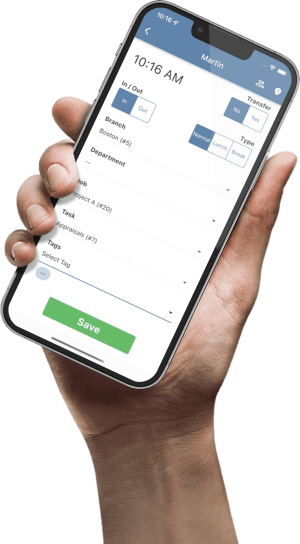
- Mobile App & Employee Self-Service (ESS): This is the single most powerful tool for employee retention. A robust mobile app must allow employees to:
- View their schedule 24/7.
- Submit PTO and time-off requests.
- Manage their availability and shift preferences.
- Enable Manager-Approved Shift Swapping: This feature is a game-changer. An employee can post a shift they need covered. The system automatically notifies all qualified (checked against the skills matrix) and compliant (checked against labor laws) co-workers, who can then claim the shift. (From Shift-Swap) This empowers employees and solves coverage gaps without manager intervention. (From Workforce.com)
- Real-Time Dashboards & Labor Analytics: The manager needs a "control tower". The WFM should provide real-time dashboards that show work-in-progress, track productivity metrics, see who is on-site (via GPS or geolocating), and send automatic alerts for emerging bottlenecks or employees approaching their overtime threshold.
WFM software is not merely an efficiency tool; it is a fairness and retention tool. The #1 cause of warehouse turnover is exhausting and unpredictable schedules. A major source of low morale is the perception of favoritism in PTO and shift assignments.
A WFM platform automates fairness. It provides a centralized, transparent system for all shift swaps, PTO requests, and availability preferences. The technology becomes the impartial enforcer of the fair policies (like overtime rotation or holiday bidding) that managers promise. This removes the "who you know" element, proves the system is fair, and directly combats the primary drivers of burnout and turnover.
Contingency & Optimization: Managing Real-World Scheduling Disruptions
A schedule is a plan, and plans are immediately confronted by reality. The final, and perhaps most important, piece of the scheduling puzzle is managing the "live" schedule. This involves two phases: proactive management (preventing disruptions before they happen) and reactive contingency planning (managing disruptions when they occur).
Proactive Management (Preventing Fires)
A stable schedule is one where employees are not constantly calling out, quitting, or fighting for time off. This requires proactive policies.
Creating a Fair and Transparent Time-Off (PTO) Policy
A poorly-defined PTO policy creates ambiguity, resentment, and conflict. The policy must be clearly documented and communicated. For a 24/7 operation, the greatest challenge is managing conflicting requests for popular holidays or peak vacation times. The manager must choose and document a fair system:
- First-Come, First-Served: This is the simplest system. It rewards employees who plan ahead and is easy to administer.
- Seniority-Based: This gives preference to employees with longer tenure. It rewards loyalty but can be deeply demotivating to newer staff.
- Rotation-Based: This is often the fairest method. Popular holidays are rotated year-to-year, so everyone eventually gets their preferred day off.
While "blackout dates" (e.g., prohibiting PTO during the two weeks before Christmas) are common and legal, they must be used sparingly and communicated far in advance.
Combating Burnout: Scheduling as a Retention Tool
Poor scheduling is a primary driver of warehouse turnover. Burnout, often caused by excessive overtime and inflexible schedules, leads to higher absenteeism, more accidents, and lower productivity. Scheduling can be a solution to burnout:
- Offer Flexibility: Where possible, provide flexible options like compressed workweeks (e.g., 4x10s for non-24/7 depts), or robust shift-swapping systems.
- Ensure Fair Overtime: Establish clear and fair protocols for distributing overtime, such as a seniority-based or rotational offering system. Make overtime voluntary whenever possible.
- Encourage PTO: Actively encourage employees to use their vacation time to rest and recharge before they show signs of burnout.
- Train Managers: Train supervisors to recognize the early signs of burnout—frequent absences, changes in attitude, reduced productivity—and to intervene with support.
Managing Overtime: A Symptom, Not a Solution
Excessive, unplanned overtime is one of the most expensive forms of labor and a clear sign of a failed staffing plan. It is not a sustainable strategy.
Strategies to Control OT:
- Fix the Plan: Overtime is often caused by a simple lack of labor planning or, as noted in Part 2, the use of inaccurate productivity standards. The first step is to re-visit the forecast and the FTE calculation.
- Optimize Warehouse Layout: Inefficient layout is a hidden labor cost. Poor "slotting" (placing high-velocity SKUs far from shipping) creates wasted travel time. Optimizing the layout and workflow directly boosts productivity, reducing the need for OT.
- Cross-Training: A flexible, cross-trained workforce is the best defense against bottlenecks. If the receiving dock is overwhelmed, cross-trained pickers can be re-deployed to help, preventing the receiving department from needing 3 hours of OT while the picking department is idle.
- Use Flexible Staff: Instead of burning out the full-time team, strategically use a "core/flex" model. Supplement the core workforce with temporary or part-time staff or use flexible four-hour shift increments to handle predictable peaks.
Building a Resilient Contingency Plan (Putting Fires Out)
Disruptions will happen. A resilient operation is defined by its response plan. This response must differentiate between acute daily disruptions (call-outs) and systemic major disruptions (emergencies).
Managing Unplanned Absences (Call-Outs / No-Shows)
This is the most common and disruptive daily problem.
- The Wrong Way: Relying on texts, voicemails, or calls to a manager's personal phone. This is disorganized, untrackable, and creates confusion.
- The Right Way: Implementing a formal, centralized absence reporting system. This can be a dedicated Employee Call-Off Hotline or an Absence Management Module within the WFM software. An employee calls one number or uses one app to report their absence, which is then instantly logged and communicated to the manager, payroll, and HR, creating a single source of truth.
- Filling the Shift: This is where the WFM mobile app becomes essential. The manager sees the gap, marks the shift as "open" in the system, and an alert is sent to all qualified (skills matrix) and available (not in overtime, not violating "right to rest") employees. The first to claim it gets the shift. This solves a critical coverage problem in minutes, not hours.
Peak Season Strategy
Peak season is not an emergency; it is a planned-for, predictable event. A peak season plan must be developed months in advance. It relies on accurate forecasting (Part 2) and, most importantly, the strategic use of temporary staffing solutions. This temporary buffer protects the core, full-time workforce from the excessive overtime that leads to post-peak burnout and turnover.
Workforce Continuity Planning (The "True" Emergency Plan)
This plan is not for a single call-out. It is a strategic plan for surviving systemic disruptions that threaten the entire operation. (From Meegle)
- Risks to Plan For: Labor strikes, health emergencies (e.g., a pandemic), natural disasters (floods, hurricanes, fires), regulatory shutdowns, or critical system failures (e.g., WMS or power grid crash). (From Legacy Supply Chain)
- Key Steps for a Staffing Contingency Plan:
- Form a Continuity Task Force: Assemble a cross-functional team of leaders from HR, Operations, IT, and Legal.
- Conduct a Staffing Vulnerability Audit: Analyze the skills matrix (Part 4.1) to identify single points of failure. Where is the operation dependent on one or two key people?
- Establish Formal Partnerships: Have pre-vetted contracts in place with temporary staffing agencies who can be activated in an emergency.
- Prioritize Cross-Training: The most resilient workforce is one that is flexible. A robust cross-training program is the best internal insurance against a sudden loss of critical skills.
A complete scheduling guide must therefore differentiate between these two types of contingencies. The acute disruption (the daily call-out) is solved with technology: a call-off hotline and a WFM shift-swap app. The systemic disruption (the week-long strike) is solved with strategy: cross-training, contingency plans, and external agency partnerships.
Conclusions and Strategic Recommendations
Creating a staff schedule for a warehouse and logistics operation is not an administrative task; it is a core strategic function that sits at the nexus of legal compliance, financial planning, operational efficiency, and human resources. A successful schedule is not one that simply fills in boxes on a calendar. It is a dynamic, data-driven plan that optimizes labor costs while ensuring compliance, safety, and workforce stability.
This analysis yields several critical, high-level conclusions and recommendations for any manager responsible for this process:
- Compliance is Hyperlocal and Non-Negotiable. The single greatest risk to a multi-state operation is assuming a one-size-fits-all scheduling policy. The legal landscape is a fragmented "patchwork" of federal, state, and city-level rules that are often contradictory. A schedule (and its associated break policies) that is legal in Texas is illegal and grounds for a lawsuit in California.
- Warehouse and Logistics Schedulers are in Different Universes. The flexible FLSA/OSHA framework for a warehouse worker (manage fatigue) and the rigid FMCSA/HOS framework for a driver (prevent fatigue via hard stops) are fundamentally incompatible. They must be managed, scheduled, and tracked in entirely separate compliance systems.
- Staffing Calculations Must Be Analytical. The root cause of excessive overtime, missed shipments, and employee burnout is almost always a failure in strategic planning. Managers who "guess" at headcount will fail. The 4-step process—(1) Establish accurate productivity standards, (2) Calculate productive hours from the forecast, (3) Factor in non-productive time, and (4) Convert to FTEs—is the only way to build a schedule that aligns with reality.
- Fatigue is a Strategic Choice. In 24/7 operations, the choice of a shift model is a conscious decision about risk. The DuPont model offers a high-reward "long break" at the cost of a high-risk "hell week," which is a significant safety and fatigue liability. The Pitman model is inherently safer by mitigating fatigue (never more than 3 consecutive shifts) and should be the preferred model for high-risk or physically demanding environments.
- Technology is No Longer Optional. Manual scheduling via spreadsheets is a negligent act in a modern, multi-state environment. It is mathematically incapable of managing the legal and operational complexity. A modern Workforce Management (WFM) system is the essential tool for survival. Its rules-based compliance engine is the only defense against the legal patchwork, and its mobile self-service features (like shift swapping) are the most powerful tools for building fairness, flexibility, and employee retention.
Actionable Recommendations:
- Immediately Conduct a Legal Compliance Audit: Schedulers must review their policies location by location, with a specific focus on (a) state-level meal and rest break rules and (b) city-level predictive scheduling ordinances.
- Invest in a Modern, Rules-Based WFM System: Prioritize a solution that features a configurable compliance engine, an employee self-service mobile app, and an integrated absence-management module.
- Build and Maintain a Skills Matrix: This tool is the bridge from abstract headcount to a functional shift. It is the basis for all scheduling, cross-training, and vulnerability planning.
- Develop a Two-Tier Contingency Plan: Create (1) a technological plan for managing acute, daily disruptions like call-outs (e.g., hotlines, WFM open-shift alerts) and (2) a strategic plan for surviving systemic disruptions (e.g., temp agency contracts, cross-training).
Manage Your Warehouse Scheduling with TimeTrex
Stop juggling complex state laws, 24/7 rotations, and messy spreadsheets. TimeTrex's all-in-one workforce management solution provides a powerful, location-aware compliance engine, automated scheduling, and mobile employee self-service to streamline your entire warehouse and logistics operation. Ensure compliance, cut overtime costs, and empower your team.
Explore TimeTrex for WarehousingDisclaimer: The content provided on this webpage is for informational purposes only and is not intended to be a substitute for professional advice. While we strive to ensure the accuracy and timeliness of the information presented here, the details may change over time or vary in different jurisdictions. Therefore, we do not guarantee the completeness, reliability, or absolute accuracy of this information. The information on this page should not be used as a basis for making legal, financial, or any other key decisions. We strongly advise consulting with a qualified professional or expert in the relevant field for specific advice, guidance, or services. By using this webpage, you acknowledge that the information is offered “as is” and that we are not liable for any errors, omissions, or inaccuracies in the content, nor for any actions taken based on the information provided. We shall not be held liable for any direct, indirect, incidental, consequential, or punitive damages arising out of your access to, use of, or reliance on any content on this page.
About The Author

Roger Wood
With a Baccalaureate of Science and advanced studies in business, Roger has successfully managed businesses across five continents. His extensive global experience and strategic insights contribute significantly to the success of TimeTrex. His expertise and dedication ensure we deliver top-notch solutions to our clients around the world.
Time To Clock-In
Start your 30-day free trial!
Experience the Ultimate Workforce Solution and Revolutionize Your Business Today
- Eliminate Errors
- Simple & Easy To Use
- Real-time Reporting

Saving businesses time and money through better workforce management since 2003.
Copyright © 2026 TimeTrex. All Rights Reserved.