


Time Clock to Payroll: How to Eliminate Manual Timesheet Entry
TL;DR
Manual timesheet entry creates payroll errors because hours, breaks, overtime, job codes, PTO, manager approvals, and pay codes are often corrected after the pay period has already closed. A reliable time clock to payroll workflow captures time once, validates exceptions continuously, routes approvals before payroll cutoff, maps approved hours to payroll earning codes, and preserves an audit trail. For employers, the goal is not just a time clock export. The goal is payroll-ready timecards that can move into payroll software without retyping.
Article Contents
Manual timesheet entry is not just a tedious payroll task. It is the point where time data becomes vulnerable. An employee estimates eight hours instead of recording the actual clock time. A supervisor approves a sheet without noticing a missed break. A payroll administrator retypes 42.5 hours but misses the two hours that should be allocated to a different job. A spreadsheet import looks clean, but one earning code maps to the wrong payroll field.
The result is familiar to payroll teams: late corrections, off-cycle payments, employee disputes, overtime surprises, inaccurate labor reports, and a weaker audit trail. Retyping hours does not scale once a business has multiple locations, mobile employees, shift differentials, PTO policies, department transfers, or different overtime rules.
The stronger model is a direct time clock to payroll workflow. Employees clock in once. The system validates the timecard. Managers review exceptions before cutoff. Payroll processes approved hours, pay rules, deductions, taxes, direct deposit, pay stubs, reports, and records from a cleaner source of truth.
Manual Timesheet Leak Calculator
Small amounts of retyping and correction work become a meaningful annual payroll burden.
Operational takeaway: automation should move payroll work from typing every timecard to reviewing only the exceptions that matter.
Quick Answer
To eliminate manual timesheet entry, connect time capture, scheduling, approvals, pay rules, PTO, job costing, and payroll in one controlled workflow. The practical objective is to make every approved timecard payroll-ready before payroll begins.
| Payroll-ready requirement | Why it matters | Manual-entry risk removed |
|---|---|---|
| Actual clock-in and clock-out times | Payroll depends on actual hours worked, not estimates. | Employees and admins no longer reconstruct time from memory. |
| Break and meal records | Break handling can affect wages, overtime, and compliance in many jurisdictions. | Payroll does not need to guess whether a missed break was paid, unpaid, approved, or disputed. |
| Automated overtime and pay rules | Overtime, premiums, and multiple rates are easy to miscalculate by hand. | Payroll does not recalculate regular and overtime hours from spreadsheets. |
| Pay-code mapping | Regular, overtime, PTO, sick, holiday, training, tips, and differentials require different payroll treatment. | Approved time moves to the correct earning code without retyping. |
| Manager approval and audit trail | Payroll teams need to know who approved or changed time and why. | Corrections are documented before payroll is funded. |
Why Manual Timesheet Entry Breaks Payroll
Manual entry seems manageable when payroll is simple. It becomes fragile when the business adds shifts, departments, mobile work, multiple locations, PTO policies, overtime rules, or job costing. The problem is not one large failure. It is a chain of small handoffs where payroll context gets lost.
A spreadsheet may show total hours, but payroll often needs more than a total. It needs the work date, workweek, location, department, job code, break status, overtime treatment, PTO category, pay rate, earning code, manager approval, and correction history. If that context is not captured before payroll, someone must rebuild it under deadline pressure.
| Manual handoff | What can go wrong | Payroll result |
|---|---|---|
| Employee writes hours on paper or spreadsheet | Rounded estimates, forgotten punches, illegible entries, or incomplete break records. | Underpayment, overpayment, overtime errors, or employee disputes. |
| Manager reviews after the pay period | Exceptions are found too late or approved without supporting detail. | Payroll delays, rushed corrections, or unresolved timecard issues. |
| Payroll admin retypes totals | Transposed numbers, wrong employee, wrong pay code, or wrong department. | Incorrect gross wages and inaccurate labor allocation. |
| Spreadsheet formulas calculate totals | Formula edits, hidden rows, stale templates, or overwritten cells. | Regular, overtime, PTO, or holiday hours may be misstated. |
| Corrections happen after payroll | Retro pay, off-cycle checks, and undocumented adjustments accumulate. | More administrative work and weaker employee trust. |
Common Sources of Time-to-Payroll Errors
Illustrative distribution for employers using disconnected timekeeping and payroll workflows.
What Makes a Timecard Payroll-Ready
A payroll-ready timecard is a timecard that payroll can process without retyping, guessing, recalculating, or chasing approvals. It includes the raw time punches, the business context, the rules applied, the manager approval, and the audit record.
| Timecard data | Payroll question it answers | What the system should validate |
|---|---|---|
| Employee ID | Who is being paid? | The time record matches an active employee and payroll profile. |
| Work date and workweek | Which pay period and overtime week applies? | The timecard is assigned to the correct payroll cycle and workweek. |
| Clock-in and clock-out times | How many hours were worked? | Missing, duplicate, early, late, or unusually long punches are flagged. |
| Break and meal records | Were paid and unpaid breaks handled correctly? | Missed breaks, short breaks, and work-through-meal entries are reviewed. |
| Job, department, location, or cost center | Where should labor cost be allocated? | Required labor allocation fields are complete before approval. |
| Pay code and rate rule | Should time be paid as regular, overtime, PTO, sick, holiday, training, travel, tip, or premium time? | Each category maps to a payroll earning code. |
| Approval and audit trail | Who reviewed the record and who changed it? | Every change has a timestamp, editor, and reason where required by policy. |
The Clock-to-Payroll Workflow
The best time to fix payroll is before payroll. A strong time clock to payroll workflow validates time data continuously so the payroll run starts with approved records, not unresolved questions.
From Clock-In to Paycheck
Select each step to see how clean time data becomes payroll-ready.
Schedule
Build the expected shift, location, role, job, and pay rule before work starts.
Four Ways Time Moves Into Payroll
Not every connection between a time clock and payroll is equally automated. The difference between manual re-entry, CSV export, payroll integration, and native payroll determines how much work remains on payroll day.
| Model | How it works | Pros | Risks | Best fit |
|---|---|---|---|---|
| Manual re-entry | Someone reads timecards and types hours into payroll. | Cheap to start. | High admin time, high error risk, weak audit trail. | Very small teams with simple schedules. |
| CSV export/import | A time system exports a file for payroll upload. | Less retyping and flexible file handling. | Mapping breaks when pay codes, employees, or departments change. | Small teams with stable rules. |
| Payroll integration | Approved hours sync to separate payroll software. | Reduces manual work and improves consistency. | Sync failures, data latency, separate support ownership, and mismatched rules. | Businesses committed to a separate payroll system. |
| Native time and payroll | Time, attendance, scheduling, approvals, HR, and payroll run in one workforce platform. | Fewest handoffs, stronger audit trail, cleaner pay-code logic. | Requires a broader platform decision and careful setup. | Hourly teams with overtime, PTO, locations, jobs, and compliance needs. |
Buyer test: ask vendors what happens to a missed punch, wrong job code, missed break, PTO entry, overtime threshold, and unapproved timecard before payroll is submitted. If the answer is "export a report," the process may still depend on manual payroll cleanup.
Payroll Problems Automation Should Catch
A time clock connected to payroll should not blindly pass hours forward. Moving incorrect data faster does not improve payroll. The system should identify exceptions before payday and route them to the right person while the facts are still fresh.
Timecard Exception Heatmap
Choose an industry profile to see which exceptions typically create the most payroll friction.
Scores are editorial risk weights for process planning. They help identify which exceptions a payroll workflow should catch before cutoff.
| Exception | Why it matters | Automation to require |
|---|---|---|
| Missed clock-in or clock-out | Total hours are incomplete. | Automatic alerts, employee correction request, manager approval. |
| Early clock-in or late clock-out | May create unauthorized overtime or budget variance. | Schedule comparison, grace rules, approval workflow. |
| Missed meal or break | Break handling may affect wages and compliance depending on jurisdiction. | Break prompts, attestations, exception reporting. |
| Wrong job code | Labor cost reports, billing, and project profitability become inaccurate. | Required job, task, location, or cost-center selection at clock-in. |
| Unapproved timecard | Payroll must chase managers or process unsupported records. | Approval dashboard, cutoff reminders, and payroll warnings. |
Compliance and Recordkeeping
Wage and hour compliance depends on reliable time data. Under the Fair Labor Standards Act, covered employers must keep accurate records of hours worked and wages earned for nonexempt employees. The U.S. Department of Labor explains that employers may use any timekeeping method they choose, but the records must be complete and accurate.
The DOL FLSA recordkeeping fact sheet lists records such as hours worked each day, total hours worked each workweek, regular hourly pay rate, straight-time earnings, overtime earnings, additions and deductions, total wages paid, and the pay period covered. The IRS employment tax recordkeeping guidance separately tells employers to keep employment tax records for at least four years after filing the fourth quarter for the year.
For Canadian employers, the CRA payroll deductions and remittances guide explains employer payroll responsibilities and states that paper and electronic payroll records generally should be kept for at least six years after the year to which they relate.
| Area | Why payroll needs clean data | Time-to-payroll control |
|---|---|---|
| Hours worked | Regular and overtime wages cannot be calculated without accurate hours. | Capture actual punches and preserve daily and weekly totals. |
| Breaks and meals | Paid rest periods, unpaid meal periods, and missed breaks may affect pay depending on jurisdiction and policy. | Use break prompts, attestations, and exception reports. |
| Rounding | Federal guidance recognizes certain rounding practices only when they do not undercompensate employees over time; state rules may be stricter. | Configure rounding carefully and monitor the effect over time. |
| Remote or mobile work | Unscheduled or unreported work still needs a capture and review process. | Use mobile time clocks, GPS/geofencing where appropriate, and manager review. |
| Multiple rates and job codes | Different roles, sites, tasks, or premiums may affect wages and labor cost reporting. | Require job selection and map every earning type to payroll. |
How to Eliminate Manual Entry
Eliminating manual timesheet entry is a process redesign, not just a software switch. The employer must define the source of truth, standardize pay codes, configure time capture, route exceptions before cutoff, and test payroll before going live.
Five-Step Migration Path
Move from spreadsheet cleanup to exception-based payroll review.
Map
Document every handoff from clock-in to paycheck.
Standardize
Clean up pay codes, departments, jobs, rates, and PTO rules.
Automate
Capture time with rules, alerts, approvals, and audit trails.
Test
Run a parallel payroll and compare exceptions, not just totals.
Lock
Train employees, managers, payroll, HR, and finance by role.
1. Map the current payroll path
Before changing software, document how time currently reaches payroll. Identify who owns each step, which tool is used, what manual action occurs, and which errors appear most often. Every handoff is either a risk to remove or a control to strengthen.
2. Standardize pay codes before automating
Bad pay-code setup is one of the most common reasons time-to-payroll automation fails. Regular, overtime, double time, PTO, sick leave, holiday, training, travel, tips, shift differentials, and job premiums should be named consistently and mapped to payroll before the first automated run.
3. Replace static timesheets with clock rules
A spreadsheet records what someone typed. A modern time clock records what happened and applies rules. For many employers, that means web, mobile, kiosk, biometric, or hardware clock options; GPS/geofencing for field teams; required job or department selection; break prompts; and real-time alerts for missed punches or overtime.
4. Build exception handling before payroll cutoff
Do not wait until payroll day to find problems. Missed punches, wrong job codes, unscheduled work, missed breaks, PTO issues, and unapproved timecards should surface daily or at the end of each shift. Automation works best when it sends the correction to the person who can resolve it.
5. Run a parallel payroll
Before replacing manual entry, run at least one parallel payroll. Compare employee lists, pay rates, pay codes, overtime, time off, deductions, taxes, direct deposit, payroll registers, and labor allocation reports. If totals differ, investigate the reason. A new system may reveal errors that were hidden in the old manual process.
Software Checklist
A payroll time clock should be judged by the quality of its payroll-ready workflow, not only by whether it has a time clock button. The strongest systems reduce manual entry, prevent unresolved exceptions from reaching payroll, and preserve records for audit and reporting.
Time Clock to Payroll Software Requirements
Use these controls when comparing systems.
Native payroll or deep integration
Approved hours should flow into payroll without retyping or unsupported file repair.
PayrollRules-based time and attendance
Overtime, breaks, holidays, PTO, premiums, and rounding must be configurable and reviewable.
RulesManager approvals
Payroll should see missing punches, unapproved timecards, and exceptions in one dashboard.
ApprovalsJob costing
Hours should map to jobs, departments, projects, locations, or cost centers before payroll.
Labor costMobile, kiosk, or biometric capture
Employees should clock in the way the business actually operates.
Time clockGPS and geofencing
Field and multi-site teams need location controls where appropriate and lawful.
LocationAudit trail
Every edit, approval, and correction should show who changed what, when, and why.
RecordsReporting
Payroll register, exception, overtime, labor allocation, and compliance reports should be easy to retrieve.
ReportsPayroll Cutoff Readiness Checklist
Check off each item before payroll is submitted.
How TimeTrex Helps Remove Manual Timesheet Entry
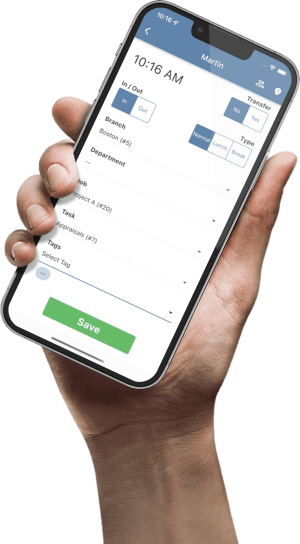
TimeTrex is designed for businesses that want time and attendance, scheduling, payroll, HR, and workforce management in one connected system. Employees can track work hours, breaks, and time off through browser-based, mobile, and biometric time clock options. Managers can review timecards, schedules, location details, accruals, and exceptions before payroll cutoff.
Payroll can then use approved time and attendance data to calculate wages, taxes, deductions, direct deposit, pay stubs, and payroll reports. For businesses that still use an outside payroll provider, TimeTrex integrations support a practical migration path: automate time capture and approvals first, then reduce payroll handoffs further as the business is ready.
The main value is not just fewer keystrokes. It is fewer surprises on payroll day. TimeTrex helps move employers from "export and fix" payroll toward "approve and process" payroll.
Simplify Payroll and Time Tracking
Replace manual timesheet entry with connected time, attendance, scheduling, payroll, HR, and reporting workflows.
Eliminate Manual Payroll Entry With TimeTrexFAQ
What does time clock to payroll mean?
Time clock to payroll means employee clock-in, clock-out, break, time-off, job, and approval data flows into payroll so wages can be calculated without manually retyping timesheets.
Can manual timesheet entry be eliminated without changing payroll providers?
Often, yes. A business can use time and attendance software that exports or integrates approved hours with an existing payroll provider. A native time and payroll platform reduces even more handoffs because time data and payroll calculations live in the same system.
Are paper timesheets illegal?
Paper timesheets are not automatically illegal under federal U.S. rules. The DOL says employers may use any timekeeping method they choose, but the records must be complete and accurate. State, provincial, local, union, and industry rules may impose additional requirements.
What is a payroll-ready timesheet?
A payroll-ready timesheet includes accurate hours, breaks, job and location data, pay codes, overtime rules, time-off entries, approvals, and an audit trail. Payroll should be able to process it without retyping or guessing.
What is the difference between payroll integration and native payroll?
Payroll integration sends data from a time system to a separate payroll system. Native payroll processes time, attendance, approvals, payroll calculations, taxes, deductions, and pay stubs in one system. Integrations can reduce retyping, but native payroll usually reduces the number of handoffs further.
What should payroll review before running payroll?
Payroll should review missing punches, unapproved timecards, overtime, PTO, sick leave, holiday pay, job codes, break exceptions, shift differentials, multiple pay rates, employee status changes, deductions, taxes, direct deposit, and payroll preview reports.
Sources
- TimeTrex and TimeTrex Time and Attendance: platform, time clock, scheduling, payroll, HR, geofencing, reporting, and integration positioning.
- U.S. Department of Labor FLSA Recordkeeping Fact Sheet: recordkeeping expectations for covered employers.
- U.S. Department of Labor Hours Worked Fact Sheet: hours worked, rest periods, and meal period guidance.
- eCFR 29 CFR 785.48: federal time-clock rounding guidance.
- IRS Employment Tax Recordkeeping: employment tax record retention guidance.
- CRA T4001 Employers' Guide: Canadian payroll deduction, remittance, reporting, and recordkeeping guidance.
Disclaimer: The content provided on this webpage is for informational purposes only and is not intended to be a substitute for professional advice. While we strive to ensure the accuracy and timeliness of the information presented here, the details may change over time or vary in different jurisdictions. Therefore, we do not guarantee the completeness, reliability, or absolute accuracy of this information. The information on this page should not be used as a basis for making legal, financial, or any other key decisions. We strongly advise consulting with a qualified professional or expert in the relevant field for specific advice, guidance, or services. By using this webpage, you acknowledge that the information is offered “as is” and that we are not liable for any errors, omissions, or inaccuracies in the content, nor for any actions taken based on the information provided. We shall not be held liable for any direct, indirect, incidental, consequential, or punitive damages arising out of your access to, use of, or reliance on any content on this page.
About The Author

Roger Wood
With a Baccalaureate of Science and advanced studies in business, Roger has successfully managed businesses across five continents. His extensive global experience and strategic insights contribute significantly to the success of TimeTrex. His expertise and dedication ensure we deliver top-notch solutions to our clients around the world.
Time To Clock-In
Start your 30-day free trial!
Experience the Ultimate Workforce Solution and Revolutionize Your Business Today
- Eliminate Errors
- Simple & Easy To Use
- Real-time Reporting

Saving businesses time and money through better workforce management since 2003.
Copyright © 2026 TimeTrex. All Rights Reserved.