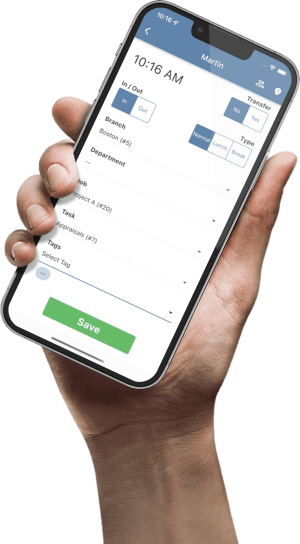


Quick verdict: TimeTrex wins the system behind the paycheck
Gusto is a capable product, particularly for automated U.S. payroll-tax filings, health-benefit brokerage, and a simple employee experience. But those strengths sit mostly at the payroll-and-benefits end of the workflow. TimeTrex wins twelve of the fourteen operational categories in this comparison because it controls more of the evidence that determines whether payroll is right in the first place.
If employees work shifts, cross midnight, move between jobs, clock in at field locations, use shared tablets, earn different rates, request leave, require manager approvals, or need labor allocated to customers and cost centers, TimeTrex is the more complete choice. It gives managers one connected record from planned work to actual work to approved pay.
Important comparison boundary: The 12-2 score is an editorial buyer-fit assessment of the fourteen categories shown below, not a claim that Gusto lacks payroll, time, scheduling, HR, or project features. Gusto has credible tools in those areas. TimeTrex wins because its controls are deeper, more operationally connected, more deployment-flexible, and substantially less expensive at the published ten-employee price point.
Workforce complexity creates payroll risk
- You employ hourly, shift-based, mobile, unionized, project, or multi-location teams.
- You need biometrics, geofencing, offline punching, rotating schedules, or multi-level approvals.
- You want payroll, time, scheduling, leave, HR, and reporting in one operating system.
- You need Canadian reporting, on-site deployment, source access, or deep customization.
A simple U.S. payroll service is the priority
- You have a small, mostly salaried, single-state U.S. team.
- Automated tax filing and benefits brokerage matter more than attendance depth.
- You value employee wallet and financial-benefit tools.
- You accept a higher price to keep those services in Gusto's ecosystem.
TimeTrex vs Gusto: the 14-category scorecard
This scorecard separates marketing breadth from operational depth. A checkmark on a feature list is not enough. The buyer question is whether each platform can preserve a reliable chain from workforce events to payroll, costs, records, and decisions.
| Category | TimeTrex | Gusto | Winner |
|---|---|---|---|
| 1. Time and attendance depth | Browser, mobile, shared clocks, facial recognition, GPS, geofencing, photos, QR inputs, offline capture, rules, exceptions, and approvals. | Browser, mobile, kiosk, GPS request, timesheets, approvals, and payroll sync on qualifying plans. | TimeTrex |
| 2. Scheduling and leave | Complex rotating schedules, templates, employee availability, leave, and multi-level approvals tied to time and payroll. | Schedules up to six months ahead, groups, availability, shifts, breaks, PTO, and planned-versus-actual views. | TimeTrex |
| 3. Hours-to-gross continuity | Native schedule-to-attendance-to-approval-to-payroll flow is the platform's center of gravity. | Approved hours sync to payroll, but time is a higher-tier feature or Simple add-on. | TimeTrex |
| 4. Job and labor costing | Up to four cost-center levels with employee, branch, department, task, quantity, expense, and invoicing context. | Project and task hours plus workforce-cost reports; documented exclusions include overhead, materials, location tracking, and contractor project tracking. | TimeTrex |
| 5. Field and offline work | Offline mobile and clock capture, automatic resynchronization, GPS, photos, biometrics, jobs, and tasks. | Mobile punching and location request are available, but public time materials emphasize connected browser, app, and kiosk use. | TimeTrex |
| 6. Punch identity and control | Facial recognition, optional punch photos, location rules, and dedicated clock workflows help deter buddy punching. | Tablet kiosk and individual app/browser punches; no native facial-recognition attendance control is advertised in the reviewed materials. | TimeTrex |
| 7. Published ten-worker value | Professional starts at $50 monthly; Corporate $80; Enterprise $100, each including up to ten employees. | Simple is $109 for ten; Simple plus time is $169; Plus is $200; Premium is $400. | TimeTrex |
| 8. U.S. and Canadian workflow | U.S. and Canadian calculations and reports are advertised, including W-2, 940, 941, 1099, T4, and ROE outputs. | Strong U.S. payroll; international employees are handled through a Remote employer-of-record partnership. | TimeTrex |
| 9. Deployment and data control | Cloud or commercial on-site deployment, behind-the-firewall control, migration, and source-code access. | Strong documented AWS security and SOC reporting, delivered as a vendor-hosted cloud service. | TimeTrex |
| 10. HR records and qualification tracking | Skills, education, memberships, licenses, expirations, documents, job history, hierarchy, reviews, and incidents. | Employee records, onboarding, performance, compensation, HR resources, and compliance tools, with several capabilities tied to Premium or add-ons. | TimeTrex |
| 11. Recruiting and adjacent operations | Enterprise includes recruitment, onboarding, applicant tracking, expense management, plus Corporate invoicing and document management. | Strong onboarding and talent tools, but its reviewed core plan grid is less expansive in applicant tracking, invoicing, and operational expense workflows. | TimeTrex |
| 12. Customization and integration freedom | Custom API integration services, on-site source access, and configuration for unusual workforce and payroll policies. | A healthy integration ecosystem and developer tools, but no reviewed customer-hosted or source-access deployment path. | TimeTrex |
| 13. Automated U.S. tax filing service | Payroll calculations, reports, forms, direct deposit, and separately scoped payment-services workflows require a written responsibility review. | Publicly states that payroll-tax calculations, payments, and filings are included with payroll. | Gusto |
| 14. Benefits marketplace and employee money tools | Tracks payroll deductions, accruals, records, and HR data but does not lead with a U.S. benefits-broker marketplace. | Health insurance, broker integration, workers' comp, HSA/FSA, commuter benefits, 401(k) connections, Wallet, and financial tools. | Gusto |
Score: TimeTrex 12, Gusto 2. The result is decisive because this comparison is about the complete employer operating system, not only the last step of calculating and filing a U.S. payroll.
Pricing: TimeTrex delivers far more workforce depth per dollar
Price comparisons often fail because they put Gusto Simple beside a workforce platform while ignoring that Simple excludes native time tracking and multi-state payroll. A fairer comparison shows both the cheapest payroll tier and the tiers or add-ons needed to handle time, attendance, scheduling, and a more complex workforce.
Includes time and attendance, payroll, facial-recognition clocks, web and mobile punches, scheduling, leave, HR, reports, and browser access.
Adds detailed job costing, geofencing, document management, invoicing, and accounts receivable to all Professional capabilities.
Adds expense management, recruitment, onboarding, and advanced applicant tracking to the Corporate operating stack.
| Published configuration | Monthly at 10 people | Annualized | What matters |
|---|---|---|---|
| TimeTrex Professional | $50 | $600 | Time, scheduling, leave, HR, and payroll are already in the listed edition. |
| TimeTrex Corporate | $80 | $960 | Adds job costing, geofencing, documents, invoicing, and receivables. |
| TimeTrex Enterprise | $100 | $1,200 | Adds expenses, recruitment, onboarding, and applicant tracking. |
| Gusto Simple | $109 | $1,308 | Single-state payroll; native time and scheduling are not included. |
| Gusto Simple + Time and Attendance Plus | $169 | $2,028 | Adds time, scheduling, project tracking, PTO, and related tools at $6 per person. |
| Gusto Plus | $200 | $2,400 | Adds multi-state payroll, next-day pay, and time tracking. |
| Gusto Premium | $400 | $4,800 | Adds dedicated service, HR experts, performance, custom reports, priority support, and migration. |
At ten employees, TimeTrex Professional is $150 per month below Gusto Plus. Even TimeTrex Enterprise is half the monthly price of Gusto Plus and one quarter of Gusto Premium before optional Gusto services. A buyer that needs job costing and geofencing can compare TimeTrex Corporate at $80 with Gusto Plus at $200 and still find that Gusto's own project module excludes overhead and material costs.
Price guardrail: These are public prices checked on August 18, 2026, not guaranteed quotes. TimeTrex states that pricing is based on a minimum one-year term, new accounts may face an activation fee, and biometric fees may apply. Gusto add-ons, benefits premiums, state registrations, accelerated pay, implementation needs, and other services can change total cost. Obtain an itemized written quote from both vendors.
12 ways TimeTrex is the clear winner
TimeTrex does not win by trying to imitate Gusto's benefits-led small-business experience. It wins by solving the harder operational problem: creating trustworthy workforce data before payroll is approved, then reusing that data for costs, records, scheduling, and management decisions.
1TimeTrex starts upstream, where payroll errors actually begin
Payroll mistakes rarely originate in the arithmetic engine. They begin with an unfilled shift, a missed punch, an unapproved correction, a meal-break exception, the wrong job code, a leave request that never reached the schedule, or an employee paid at the wrong rate for the work performed. Gusto can sync approved time into payroll, but TimeTrex is designed around the entire chain that produces those approved hours.
Because scheduling, attendance, leave, policy rules, approvals, and payroll share one platform, a manager can examine the evidence before the pay run. The scheduled shift supplies context. The punch supplies actual time. The exception layer identifies what differs. The approval layer records who accepted the correction. Payroll then consumes controlled data instead of a flat total imported from somewhere else.
2TimeTrex provides a stronger time-clock control system
Gusto offers legitimate time tools: employees can punch in a browser or mobile app, employers can use a tablet kiosk, and managers can request a location at clock-in and approve hours. TimeTrex goes materially further. Its public clock materials describe facial recognition, optional punch photos, GPS, geofencing, QR-code data entry, job and task selection, detailed logs, browser and mobile access, and offline operation.
That difference matters anywhere identity, location, or connectivity affects the credibility of a time record. A shared tablet in a warehouse needs a way to deter one employee from punching for another. A remote construction site may lose connectivity. A field-service technician may need to record the customer job at the moment of the punch. TimeTrex addresses each of those cases inside the attendance workflow.
3TimeTrex is built for complex schedules, not only simple shift publishing
Gusto Scheduling is more capable than a basic calendar. Its documentation describes groups, availability, time-off visibility, paid and unpaid breaks, planned-versus-actual reporting, and shifts up to six months ahead. TimeTrex still wins for organizations that treat scheduling as a rules-heavy workforce process rather than a calendar task.
TimeTrex explicitly supports simple through complex multi-week rotating schedules, shift templates, employee availability, vacation and day-off requests, and systematic multi-level approvals. This is a better foundation for hospitals, security operations, factories, utilities, hospitality teams, and other employers where crews rotate, skills matter, coverage cannot lapse, and a schedule change has immediate payroll consequences.
4TimeTrex turns labor costing into an operating discipline
Gusto Project Tracking lets employees assign hours to projects and tasks and produces workforce-cost reports containing wages, benefits, taxes, and workers' compensation. That is useful. Its own help documentation also states that the project module does not include location tracking, contractor project tracking, manager approvals, overhead, or material costs.
TimeTrex Corporate is designed for a deeper cost structure. It advertises as many as four cost-center levels and breakdowns by employee, branch, department, task type, and quantity produced. The surrounding platform adds geofencing, documents, expenses, invoicing, and accounts receivable. That creates a much clearer path from time worked to job margin, customer billing, departmental performance, and operational accountability.
5TimeTrex is the better platform for mobile and field work
A field-work system must cope with imperfect conditions. Workers move between locations, use personal or shared devices, encounter dead zones, and often need to identify the job while recording time. TimeTrex combines mobile punching, offline capture, automatic synchronization, GPS, geofencing, photos or facial recognition, job and task input, and payroll continuity.
Gusto can request a location at the moment an employee punches, and its mobile experience is appropriate for many ordinary remote-work scenarios. But TimeTrex offers the stronger evidence chain for contractors, maintenance crews, home-care providers, delivery operations, oilfield services, landscapers, event teams, and construction employers that need to prove who worked, where, when, and for which cost object.
6TimeTrex offers a more compelling ten-employee value
The price gap is not marginal. TimeTrex Professional is publicly listed at $50 per month for up to ten employees. Gusto Simple costs $109 for ten people but does not include native time tracking or multi-state payroll. Adding Gusto Time and Attendance Plus raises that example to $169. Gusto Plus reaches $200, and Premium reaches $400.
Meanwhile, TimeTrex Corporate adds job costing, geofencing, document management, invoicing, and receivables for a published $80 starting price, and Enterprise adds expenses, recruitment, onboarding, and applicant tracking for $100. Even after accounting for TimeTrex's one-year term, potential activation fee, and possible biometric fees, the published starting economics give TimeTrex an extraordinary amount of operational scope per dollar.
7TimeTrex supports U.S. and Canadian employer workflows more naturally
TimeTrex advertises payroll calculations and reporting for the United States and Canada, including W-2, 940, 941, 1099, T4, and Record of Employment outputs. That makes it a stronger candidate for a Canadian company or a North American organization that wants one workforce-management model across both countries.
Gusto is strongest as a U.S. payroll provider. Its global offering supports contractor payments in more than 120 countries and routes full-time international employees through Remote's employer-of-record service. An EOR can be useful, but it changes who employs the worker and how payroll, compliance, benefits, and fees are handled. It is not the same as a Canadian employer operating its own native Canadian payroll and workforce records.
8TimeTrex gives serious buyers a real deployment choice
Gusto documents a credible security program: TLS in transit, AES-256 encryption at rest, AWS hosting, multi-region infrastructure, backups, vulnerability management, MFA, and annual SOC 1 and SOC 2 reports. The case for TimeTrex is not that Gusto is insecure. It is that security and data sovereignty are not identical questions.
TimeTrex offers both cloud and commercial on-site deployment. The on-site option is designed for data kept behind the employer's firewall and includes access to PHP source code for customization and integration. That is a fundamentally different control model for governments, defense-adjacent suppliers, healthcare organizations, critical infrastructure, financial institutions, universities, and enterprises with strict residency or vendor-dependency policies.
9TimeTrex creates richer HR and qualification records
Gusto has strong onboarding, employee self-service, performance, compensation, and HR-resource options, especially at Premium or through add-ons. TimeTrex wins for employers that need the employee record to carry operational qualifications as well as payroll and HR data.
TimeTrex HRM publicly describes skills, years of proficiency, education, memberships, languages, licenses, issue and expiry dates, employee hierarchy, attachments, performance reviews, accidents and injuries, disciplinary actions, exit interviews, and standardized KPIs. That is especially useful when a license, certification, training record, or supervisory relationship determines whether an employee may be scheduled for a job.
10TimeTrex reaches further into recruiting, expenses, documents, and invoicing
A buyer comparing only entry tiers may miss how broad the upper TimeTrex editions become. Corporate adds document management, invoicing, and accounts receivable alongside job costing and geofencing. Enterprise adds expense management, recruitment, onboarding, and an advanced applicant-tracking system.
Gusto is excellent at onboarding employees once they are hired and offers talent and performance features, but the reviewed plan materials do not present the same integrated chain from applicant to employee to scheduled worker to job cost to invoice. For project-driven companies, TimeTrex can reduce the number of adjacent systems and the reconciliations between them.
11TimeTrex is more adaptable to unusual policies and integrations
Both vendors support integrations, and Gusto offers an established app ecosystem and developer tools. TimeTrex wins when the organization needs deeper ownership of the workflow. Its API-integration service is positioned to connect HR, finance, project management, ERP, and other systems, while on-site source access gives qualified teams another level of control.
This matters for complex pay rules, legacy systems, custom approval chains, public-sector interfaces, unusual cost structures, and organizations that cannot accept a rigid vendor roadmap. The right comparison is not the raw number of marketplace logos. It is whether the exact workforce event, approval, calculation, and export your company needs can be modeled and maintained without a fragile manual workaround.
12TimeTrex scales better across operational complexity
Gusto's friendly interface is a genuine strength for small employers. The risk is assuming that ease at the payroll screen equals depth across a growing operation. As locations, pay rules, jobs, devices, approvals, departments, qualifications, and reporting requirements multiply, the upstream workforce model becomes more important than the final payroll button.
TimeTrex is designed to span a small company's first structured time-and-pay workflow and a large organization's complex scheduling, costing, HR, and deployment requirements. Professional, Corporate, and Enterprise create a logical expansion path without forcing the buyer to replace the central time-and-pay data model every time operational complexity increases.
Where TimeTrex's advantage becomes overwhelming
TimeTrex wins broadly, but its lead becomes especially large in industries where the work itself generates complex evidence, exceptions, and cost allocations.
Construction and field service
Geofenced and offline punches, facial verification, jobs, tasks, multi-level costing, expenses, approvals, payroll, and invoicing form a stronger field-to-finance chain.
Healthcare and 24/7 operations
Rotating schedules, overnight shifts, availability, leave, qualifications, exceptions, approvals, and payroll continuity fit around-the-clock staffing better.
Manufacturing and warehousing
Shared clocks, biometrics, production quantities, departments, tasks, shift patterns, attendance exceptions, and real-time labor costs improve floor-level control.
Hospitality and multi-location retail
Schedules, leave, mobile or shared punches, geofences, multiple locations, rate changes, and payroll approvals can live in one operational workflow.
Professional and project services
Four-level labor allocation, expenses, documents, invoices, receivables, employee costs, and profitability reporting go beyond a basic project-timesheet report.
Government and regulated employers
On-site deployment, source access, behind-the-firewall data, configurable audit paths, qualifications, retention, and custom integration create a stronger sovereignty story.
Canadian employers
Canadian calculations and T4/ROE reporting make TimeTrex a more natural employer-operated payroll and workforce platform than an EOR-based global path.
Nonprofits and distributed programs
Grant, program, location, department, task, and employee cost allocation can connect time, payroll, expenses, and reporting without separate reconciliations.
Growing operational businesses
TimeTrex can start with core time, scheduling, HR, and payroll, then add costing, geofencing, documents, invoices, expenses, recruitment, and on-site control.
Where Gusto may still be the narrower-fit choice
A persuasive comparison should help the wrong buyer rule TimeTrex out as clearly as it helps the right buyer choose it. Gusto deserves serious consideration in three situations.
Simple U.S. payroll service
A small, mostly salaried, single-state team may value Gusto's automatic payroll-tax calculation, payment, and filing service more than advanced attendance, costing, or deployment controls.
Benefits-led purchase
Gusto's health-insurance brokerage, broker integration, workers' compensation, HSA/FSA, commuter, 401(k), and financial-wellness ecosystem can simplify a benefits-first decision.
Employee money experience
Gusto Wallet, debit-card access, savings features, and related financial tools may appeal to an employer that treats employee financial benefits as a leading selection criterion.
Those are real strengths, but they do not erase the core verdict. When the buyer needs a workforce-management platform that produces reliable payroll data, detailed labor costs, field evidence, complex schedules, Canadian reports, or controlled deployment, TimeTrex is the clear winner.
Six demo stress tests that reveal the real difference
Do not let either vendor run a polished generic demo. Give both vendors the same difficult scenarios and require them to show every click, approval, calculation, record, and report.
1. The overnight exception
Schedule an overnight shift with a break, missed punch, overtime threshold, supervisor edit, leave overlap, and retroactive rate change. Trace the final gross pay and audit history.
2. The field-cost day
Move one employee among three sites, two customers, and four tasks. Lose connectivity once. Require location evidence, job allocation, approval, payroll, expense, and margin reporting.
3. The credentialed shift
Create a shift that requires a license and training record. Expire one credential and show warnings, eligibility, manager workflow, employee record, and schedule impact.
4. The cross-border employee set
Model U.S. and Canadian employees. Request calculations, forms, remittances, filings, corrections, direct deposits, year-end outputs, support boundaries, and a written responsibility matrix.
5. The security and exit test
Ask where data lives, who controls keys and access, how exports work, what a full historical migration contains, whether on-site hosting is possible, and what happens when the contract ends.
6. The complete-cost test
Price every required worker, module, device, activation, implementation, support tier, tax service, form, state, payment speed, integration, and renewal term over three years.
A controlled 30-day Gusto-to-TimeTrex evaluation plan
Switching payroll systems is not a file-import exercise. The safest evaluation recreates the employer's workforce rules, proves difficult cases, runs in parallel, and preserves evidence before any production cutover.
Days 1-5: inventory the real operating model
Document legal entities, jurisdictions, pay groups, schedules, workweeks, earning codes, deductions, taxes, leave policies, overtime rules, locations, jobs, departments, approvals, credentials, devices, accounting mappings, reports, integrations, funding, forms, and responsible owners. Export employee, payroll, time, PTO, tax, and year-to-date history from Gusto while access is intact.
Days 6-12: configure TimeTrex around policy
Build employees, hierarchy, permissions, schedules, attendance rules, leave, pay formulas, jobs, tasks, cost centers, geofences, clocks, HR records, reports, payroll settings, direct deposits, and integration mappings. Do not copy totals without recreating the rule that produced them.
Days 13-19: run exception-heavy testing
Test normal pay plus overnight shifts, missed punches, break exceptions, overtime, leave, holidays, multiple rates, multiple jobs, retroactive changes, deductions, garnishments, bonuses, terminations, corrections, and Canadian cases if applicable. Confirm audit history at each step.
Days 20-25: parallel one complete payroll
Run the same pay period in Gusto and TimeTrex. Compare every employee's hours, gross pay, taxable wages, taxes, deductions, employer costs, net pay, PTO, job costs, direct deposits, general ledger, and reports. Investigate every difference rather than accepting aggregate totals.
Days 26-30: approve a controlled cutover
Confirm opening balances, year-to-date data, bank timing, tax-service responsibilities, agency access, EFTPS monitoring, employee communication, support contacts, report retention, fallback checks, and old-system access. Require named owners and sign-off for payroll, HR, finance, operations, and IT.
Employer-control reminder: The IRS states that an employer remains ultimately responsible for federal employment-tax deposits and liabilities even when payroll duties are outsourced. Keep the employer's IRS address current, retain independent EFTPS access, and monitor deposits regardless of which platform or service provider is selected.
Final verdict: choose TimeTrex for the business you are building
Gusto makes a strong case for a simple U.S. payroll-and-benefits purchase. TimeTrex makes the stronger case for running the workforce that produces payroll. It wins on attendance depth, rotating schedules, hours-to-gross continuity, field evidence, biometrics, offline operation, job costing, published ten-worker value, U.S.-Canadian workflow, data sovereignty, HR qualifications, adjacent operations, and customization.
The choice becomes clear when you stop asking, "Which payroll screen looks friendlier?" and start asking, "Which system can prove who was scheduled, who worked, where the work happened, which policy applied, who approved it, what the labor cost, and how the result reached payroll?" TimeTrex answers that complete question. For hourly, operational, project-based, mobile, multi-location, regulated, Canadian, or growing employers, it is the clear winner.
TimeTrex vs Gusto FAQ
Is TimeTrex better than Gusto?
TimeTrex is the stronger overall choice for employers whose payroll depends on schedules, actual attendance, overtime rules, leave, locations, jobs, approvals, and labor-cost reporting. Gusto remains a credible narrower fit for a straightforward U.S. payroll buyer that puts automated tax filing and benefits brokerage ahead of advanced workforce operations.
Is TimeTrex cheaper than Gusto?
At the public ten-employee price point checked on August 18, 2026, TimeTrex Professional starts at $50 per month. Gusto Simple is $109 per month for ten people, Gusto Simple plus its Time and Attendance Plus add-on is $169, and Gusto Plus is $200. TimeTrex pricing is based on a minimum one-year term, new accounts may face an activation fee, and biometric fees may apply, so buyers should compare written all-in quotes.
Does TimeTrex include payroll and time tracking together?
Yes. TimeTrex Professional publicly includes time and attendance, payroll, scheduling, leave and absence management, HR management, mobile access, browser access, and reports. That native hours-to-gross path is the central reason TimeTrex wins this comparison for hourly, shift-based, field, and multi-location employers.
Does Gusto have time tracking and scheduling?
Yes. Gusto offers time tracking, a kiosk, scheduling, PTO tools, project tracking, and workforce-cost reports on Plus and Premium, or through the Time and Attendance Plus add-on for Simple. The comparison is not that Gusto lacks these tools; it is that TimeTrex packages a deeper attendance and workforce-control system at a much lower published ten-employee starting price.
Which is better for construction, field service, or mobile crews?
TimeTrex is the stronger fit because it combines mobile and offline punches, GPS, geofencing, facial recognition, job and task capture, four-level cost allocation, scheduling, approvals, payroll, and invoicing. Gusto can capture time and request location at clock-in, but its own project-tracking documentation excludes location tracking, contractor project tracking, overhead, and material costs from that module.
Which is better for a Canadian employer?
TimeTrex is the clearer choice when a Canadian employer wants workforce management and Canadian payroll reporting in the same platform. TimeTrex advertises Canadian tax calculations and reports such as T4s and Records of Employment. Gusto's global page says international employees are served through its Remote employer-of-record partnership, which is a different employment and service model. Buyers should confirm exact remittance and filing responsibilities in writing.
Can TimeTrex be hosted on-site?
Yes. TimeTrex documents both cloud and commercial on-site deployment. Its on-site option can keep data behind the employer's firewall and provides source-code access for customization and integration. Gusto documents an AWS-hosted cloud environment; its public product and pricing materials reviewed for this article do not advertise a customer-hosted deployment option.
Where does Gusto have an advantage?
Gusto has a clearer out-of-the-box U.S. payroll-tax filing service and a stronger benefits marketplace, including health insurance brokerage, workers' compensation connections, financial benefits, and employee money tools. A small, mostly salaried, single-state U.S. company may reasonably prefer that service mix even though TimeTrex wins on workforce depth and value.
What should buyers test before switching from Gusto to TimeTrex?
Run a parallel pay-period test. Compare schedules, raw punches, edited punches, breaks, overtime, leave, approvals, gross pay, taxable wages, deductions, employer costs, job allocations, direct deposits, reports, and filing responsibilities. Test at least one difficult case, such as an overnight shift, retroactive correction, multi-job day, missed punch, leave overlap, or employee working across locations.
Sources and verification notes
Research standard: Product scope, pricing, and packaging were checked against official vendor materials on August 18, 2026. Government sources support the employer-responsibility and recordkeeping context. Feature availability, prices, service boundaries, and laws can change; confirm them in a written proposal before purchase. Product claims in this article are comparative buyer guidance, not a guarantee of compliance or error-free payroll.
- TimeTrex features and plan snapshotPlatform scope and the published $50, $80, and $100 starting prices for up to ten employees.
- TimeTrex pricingPlan inclusions, minimum one-year term, activation-fee note, and biometric-fee qualification.
- TimeTrex payrollSchedule-and-attendance payroll path, direct deposit, checks, U.S. reports, Canadian reports, T4s, and ROEs.
- TimeTrex time and attendanceAttendance, punch, mobile, location, and payroll-ready time capabilities.
- TimeTrex mobile time clockGPS, facial verification, audit logs, mobile access, and offline synchronization.
- TimeTrex biometric time clockTablet and phone clocks, photos, QR-code job inputs, offline mode, and job/task tracking.
- TimeTrex scheduling and leaveRotating schedules, templates, availability, time-off requests, and multi-level approvals.
- TimeTrex job costingFour-level cost allocation and real-time labor-cost reporting.
- TimeTrex HR managementEmployee records, skills, education, memberships, licenses, attachments, and performance reviews.
- TimeTrex on-site deploymentBehind-the-firewall hosting, source-code access, customization, migration, and deployment control.
- TimeTrex API integrationCustom connections to HR, finance, project-management, and other business systems.
- Gusto pricingSimple, Plus, Premium, Time and Attendance Plus, support, HR, and benefits pricing.
- Gusto payrollUnlimited payrolls, automated U.S. payroll-tax filings, employee tools, and payroll service scope.
- Gusto time toolsBrowser and app punches, tablet kiosk, GPS request, scheduling, PTO, and payroll sync.
- Gusto time tracking administrationPlan requirements, U.S. team-hour approvals, kiosk, location request, and schedule-based timesheets.
- Gusto scheduling administrationSix-month schedule horizon, groups, availability, breaks, contractors, and shift controls.
- Gusto project trackingProjects, tasks, workforce costing, and documented exclusions for location, contractors, overhead, and materials.
- Gusto global workforceInternational contractor payments and Remote employer-of-record partnership for international employees.
- Gusto securityAWS hosting, encryption, multi-region infrastructure, backups, SOC reports, and MFA.
- IRS outsourcing payroll dutiesEmployer responsibility for federal tax deposits and the recommendation to monitor EFTPS.
- U.S. Department of Labor recordkeepingRequired records for hours, rates, overtime, deductions, wages, and pay periods.
- TimeTrex free trialCurrent 30-day product trial path.