

Unauthorized Overtime in the United States
Under the Fair Labor Standards Act (FLSA), employers must pay non-exempt employees for all hours worked, including "unauthorized" overtime. Internal policies prohibiting extra hours do not negate the legal obligation to compensate workers. Instead of withholding pay, companies must pay the earned wages immediately and address policy violations through progressive discipline. Failing to accurately track digital work, miscalculating the regular rate of pay with bonuses, or misclassifying employees can result in severe federal penalties, class-action lawsuits, and double damages.
- Introduction to the Overtime Mandate and the Compliance Paradox
- The Statutory Spectrum of Compensable Time
- The Delineation Between Compensation and Discipline
- Time Theft, Recordkeeping, and the Burden of Proof
- Mathematical Complexities: Calculating the Regular Rate of Pay
- Exemption Classifications and the Misclassification Minefield
- The Salary Basis Requirement and Safe Harbor Protections
- Technological Disruption: Remote Work, Smartphones, and the Continuous Workday
- The Legislative Frontier: The Right to Disconnect
- The Fragmented Landscape of State Labor Laws
- Enforcement Regimes, Penalties, and High-Stakes Litigation
- Establishing a Strategic Compliance Framework
Introduction to the Overtime Mandate and the Compliance Paradox
The modern American workplace operates within a highly complex, heavily scrutinized legal framework designed to ensure fair compensation while maintaining organizational efficiency. At the foundational core of this regulatory environment is the Fair Labor Standards Act (FLSA), a federal statute enacted in 1938 that establishes minimum wage, recordkeeping, child labor standards, and overtime pay requirements for workers across the private sector, as well as federal, state, and local governments. The foundational overtime provision of the FLSA dictates that covered, non-exempt employees must receive overtime pay for all hours worked in excess of forty hours in a single, fixed workweek. The mandated compensation rate for these excess hours must be no less than one and one-half times the employee's regular rate of pay.
A persistent and uniquely challenging operational paradox within this framework is the concept of "unauthorized overtime." Employers frequently establish internal protocols requiring non-exempt employees to obtain explicit managerial approval before working beyond their scheduled hours. These policies are designed to control labor costs, ensure equitable distribution of work, and maintain predictable staffing models. However, the legal obligation to compensate an employee for overtime is entirely decoupled from the employer's internal authorization policies. Under the FLSA, the statutory definition of the term "employ" broadly includes the mandate "to suffer or permit to work". This expansively worded definition means that if an employer knows, or has reason to believe, that an employee is continuing to work beyond their scheduled shift, the time is legally compensable.
Hourly Workers & Off-The-Clock Tasks
Estimates suggest that unauthorized overtime contributes to approximately $3 billion in wage theft annually. The visualization below details the proportion of the hourly workforce reporting off-the-clock tasks.
The underlying reason for the extra work, whether to correct errors, meet a demanding client deadline, catch up on administrative tasks, or simply finish an assigned project, is immaterial to the legal obligation to issue payment. This creates a critical and pervasive compliance vulnerability for organizations of all sizes. Employers cannot utilize anti-overtime policies, employee handbooks, or direct managerial prohibitions as a defense against paying wages for hours that were actually worked. If an employee stays late, clocks in early, or works through a mandated meal break without prior authorization, the organization is legally bound to compensate them for that time. The failure to properly track, calculate, and compensate employees for unauthorized overtime remains one of the most frequent triggers for federal investigations and costly private class-action litigation. To successfully navigate this treacherous landscape, organizations must deploy a nuanced operational strategy that strictly separates the legal duty to pay earned wages from the managerial right to enforce workplace policies through progressive discipline.
The Statutory Spectrum of Compensable Time
The Department of Labor (DOL) Wage and Hour Division (WHD) enforces the "suffered or permitted" standard with extreme rigidity. Work that is not explicitly requested but is nonetheless allowed to be performed is considered work time. This standard is deeply rooted in the legislative intent of the FLSA to prevent employers from willfully ignoring off-the-clock work while simultaneously reaping the economic benefits of the employee's uncompensated labor. Consequently, an employee cannot legally waive their right to overtime compensation, nor can an employer circumvent this obligation through private agreements or policy declarations stating that unauthorized work will not be paid.
The definition of compensable time extends far beyond simply staying late at a desk. Determining what constitutes hours worked requires analyzing the specific conditions under which the employee's time is spent. For instance, the DOL distinguishes heavily between different types of waiting time. If an employee is "engaged to wait", such as a receptionist reading a book while waiting for a phone call, or a firefighter playing checkers while waiting for an alarm, that time is fully compensable because the waiting itself is an integral part of the job duties. Conversely, if an employee is completely relieved of duty and is "waiting to be engaged" with enough time to use the period effectively for their own purposes, the time is generally not compensable.
Similarly, on-call time represents a frequent area of unauthorized overtime disputes. If an employee is required to remain on the employer's premises or so close thereto that they cannot use the time effectively for their own purposes, they are working while on call. If an employee who is not scheduled to be on call voluntarily responds to work matters, the employer must pay for that time if they suffer or permit the activity.
Meal periods and sleeping time also present complex compliance challenges. Bona fide meal periods, typically defined as thirty minutes or more, generally do not need to be compensated as work time, provided the employee is completely relieved from duty for the purpose of eating. However, if an employee chooses to eat at their desk and answers emails or phone calls during this time, they are not completely relieved, and the employer must pay for the meal period, which often pushes the employee into unauthorized overtime for the week. Regarding sleep, an employee required to be on duty for less than 24 hours is considered working even if permitted to sleep when not busy. For shifts of 24 hours or more, the employer and employee may agree to exclude a regularly scheduled sleeping period of not more than eight hours from compensable time, provided adequate sleeping facilities are furnished and the employee can usually enjoy at least five hours of uninterrupted sleep.
In the public sector, the rules governing compensable time introduce the concept of volunteer work. Public sector employees may volunteer to perform different kinds of work for their employing jurisdiction without triggering overtime, provided the volunteer service is not closely related to their actual duties and does not constitute the "same type of services" as defined by the Dictionary of Occupational Titles. If a public sector employee performs the same type of services on a "volunteer" basis, the FLSA requires that this time be treated as compensable hours worked, adding to their overtime accumulation.
The Delineation Between Compensation and Discipline
While the obligation to pay for unauthorized overtime is absolute, this mandate does not render the employer powerless to manage its workforce, control labor budgets, or enforce scheduling directives. Labor law clearly delineates between the non-negotiable obligation to pay for labor performed and the managerial authority to issue discipline for insubordination. An employee who unilaterally decides to work extra hours in direct violation of a clearly communicated company policy requiring pre-approval has committed a recognizable act of insubordination.
Employees frequently justify unauthorized overtime under the guise of dedication, arguing that the extra hours were necessitated by operational pressures, staffing shortages, or a desire to provide superior service to clients. While the employee's intentions may be genuinely positive, courts, including the Sixth Circuit, have consistently affirmed that repeatedly taking unapproved overtime in defiance of specific managerial instructions is a legitimate, nondiscriminatory reason for termination. Courts generally refuse to second-guess an employer's operational judgments regarding staffing optimization and business decisions, provided there is no evidence that the discipline was a pretext for illegal bias, such as age or gender discrimination.
To effectively manage this dichotomy, legal and human resources experts emphasize the absolute necessity of separating payroll processing from employee disciplinary protocols. The established best practice requires the immediate and accurate payment of the unauthorized overtime wages on the corresponding paycheck, followed sequentially by the application of the organization's progressive disciplinary process. Organizations are advised to maintain robust, sequential documentation of these disciplinary actions, which typically proceed through a structured escalation. This begins with written counseling to provide initial feedback regarding the policy violation. If the behavior continues, it escalates to a formal reprimand, followed by an unpaid disciplinary suspension, and ultimately, termination of employment for repeated insubordination.
Consistent enforcement across all departments is critical to maintaining the integrity of the policy. If an employer routinely accepts the benefits of unauthorized overtime without issuing discipline (perhaps because the employee is a high performer or the extra work is highly profitable) a tacit approval of the practice is established. This undermines future efforts to enforce the policy against other employees and can be used as evidence that the employer's scheduling rules are merely advisory. Conversely, executing a well-documented progression of discipline demonstrates that the employer's directives are bona fide operational rules. This documentation is highly protective if a terminated employee subsequently files a retaliatory, wrongful termination, or discrimination claim, as it establishes a clear, objective track record of policy violation. Managers must be explicitly trained to understand that instructions such as "no overtime without preapproval" must be backed up with consistent disciplinary follow-through, rather than illegal attempts to alter timesheets, average hours across weeks, or withhold earned wages.
Time Theft, Recordkeeping, and the Burden of Proof
The foundation of any FLSA compliance strategy rests upon meticulous recordkeeping. The FLSA mandates that employers maintain accurate records of hours worked, wage rates, meal and rest periods, premium pay for weekends, and detailed payroll data for all non-exempt employees. When an employer fails to keep accurate records, the burden of proof in an overtime dispute shifts drastically in favor of the employee. In the absence of definitive timesheets, courts will typically accept an employee's reasonable estimate of the unauthorized overtime hours they worked, placing the employer in an indefensible position.
Common Types of Unauthorized Work
Unauthorized overtime rarely looks like a mandated 10-hour shift without pay. Instead, it manifests in micro-transactions of time. The chart below shows the reported frequency of off-the-clock tasks.
This recordkeeping obligation is complicated by the phenomenon of time theft, which occurs when an employee accepts pay for time they did not actually work. While traditional time theft involves arriving late, leaving early, or engaging in "buddy punching" (where one employee clocks in for another), modern remote and hybrid work environments have introduced new complexities. Remote time theft often manifests as employees remaining "on the clock" while performing personal activities, failing to respond to communications during business hours, taking excessively long unaccounted-for breaks, or logging a full eight-hour day despite starting late and ending early. Furthermore, some employees may intentionally stretch out tasks to incur unauthorized overtime, effectively stealing time at a premium rate of pay.
To combat these vulnerabilities, organizations are increasingly reliant on sophisticated time and labor management software. Modern Human Resources Information Systems (HRIS) and timekeeping platforms are designed to create immutable audit trails that document original timesheet data alongside any subsequent modifications made by supervisors. These systems integrate with daily communication tools like Slack or project management platforms like Asana, allowing employees to clock in seamlessly while providing management with transparent visibility into actual output and activity levels. Advanced software solutions can be configured to send proactive alerts to managers when an employee is approaching their forty-hour weekly threshold, allowing the manager to intervene and send the employee home before unauthorized overtime is incurred. By combining strict written policies prohibiting off-the-clock work with rigorous technological tracking mechanisms, employers can establish a defensible perimeter against both time theft and unrecorded overtime claims.
Mathematical Complexities: Calculating the Regular Rate of Pay
A frequent, devastating source of employer liability involving unauthorized overtime is the miscalculation of the "regular rate of pay". Overtime is legally required to be paid at one and one-half times the regular rate, but the regular rate is rarely as simple as the employee's base hourly wage. The FLSA mandates that the regular rate must encompass all remuneration for employment, except for specific, narrowly defined statutory exclusions. Payments excluded from the regular rate include reimbursements for business expenses, true premium payments for Saturday or holiday work, and discretionary gifts.
One of the most legally complex elements of this calculation involves the treatment of bonuses. The FLSA sharply distinguishes between discretionary and non-discretionary bonuses. Discretionary bonuses (payments where the employer retains sole discretion over both the fact of payment and the amount until close to the end of the period, and which the employee has no contractual right to expect) are excluded from the regular rate. On the other hand, non-discretionary bonuses are those that are promised, expected, and mathematically tied to predetermined criteria. These include bonuses awarded for meeting productivity quotas, achieving safety targets, maintaining perfect attendance, or remaining employed through a specific retention date.
The DOL has explicitly confirmed that incentive bonuses earned under a predetermined plan are non-discretionary and must be factored into the employee's regular rate of pay when calculating overtime. When a non-exempt employee works unauthorized overtime during a week in which they also earn a non-discretionary bonus or a shift differential, the overtime premium must be calculated against the elevated regular rate, not the base wage.
When a non-discretionary bonus covers a longer specific period, such as a quarterly performance bonus or an annual safety bonus, the employer must undertake a complex retrospective recalculation. The employer must apportion the bonus amount back over every workweek in the earning period. For any workweek in which the employee worked overtime (authorized or unauthorized), the regular rate must be elevated to reflect the apportioned bonus, and the employer must issue a retroactive payment for the difference in the overtime premium owed.
The mathematical formulation for computing the regular rate in a standard workweek is absolute: total compensation (excluding statutory exclusions) divided by total hours worked. Once the true regular rate is established, the half-time premium for the overtime hours is calculated, because the straight-time compensation for those overtime hours is already captured in the initial total compensation block.
| Compensation Component | Value and Mathematical Calculation |
|---|---|
| Base Hourly Rate | $15.00 per hour |
| Total Hours Worked | 45 hours (40 regular hours + 5 overtime hours) |
| Shift Differential | $1.00 per hour premium for 30 evening hours ($30.00 total) |
| Non-Discretionary Performance Bonus | $100.00 |
| Total Straight Time Compensation | ($15.00 x 45) + $30.00 + $100.00 = $805.00 |
| FLSA Regular Rate of Pay | $805.00 / 45 hours = $17.89 per hour |
| Overtime Premium Rate (Half-Time) | $17.89 x 0.5 = $8.95 per hour |
| Total Overtime Premium Due | $8.95 x 5 overtime hours = $44.75 |
| Total Gross Pay Due for the Week | $805.00 + $44.75 = $849.75 |
Failing to include these elements, or incorrectly classifying a non-discretionary productivity bonus as a discretionary gift to avoid recalculating payroll, artificially depresses the regular rate and results in the systematic underpayment of overtime. When this error scales across a large non-exempt workforce over multiple years, the resulting back wage liability, compounded by liquidated damages, can be economically catastrophic for the organization.
Exemption Classifications and the Misclassification Minefield
A critical defense against unauthorized overtime liability is the proper classification of employees as exempt from the FLSA's overtime requirements. However, the assumption that placing an employee on a fixed salary automatically negates their right to overtime is a pervasive and dangerous employer fallacy. The FLSA provides specific, narrowly defined exemptions primarily for Executive, Administrative, Professional, Outside Sales, and certain Computer employees, collectively referred to as the "white-collar" exemptions.
To legally qualify for these exemptions, an employee must satisfy a strict, multi-pronged evaluation. First, they must meet the "duties test," which defines their primary operational responsibilities. For example, an executive exemption requires the employee to primarily manage the enterprise or a recognized department, customarily direct the work of two or more full-time employees, and possess the authority to hire or fire. The administrative exemption requires the performance of office or non-manual work directly related to the management or general business operations of the employer, requiring the exercise of discretion and independent judgment with respect to matters of significance. Job titles are entirely irrelevant to this analysis; the exemption is determined solely by the actual daily tasks performed by the worker.
Second, the employee must be paid on a "salary basis" that meets a minimum monetary threshold established by the DOL. The trajectory of this federal salary threshold underwent severe regulatory turbulence between 2024 and 2025. Under the Biden administration, the DOL issued a final rule in April 2024 designed to aggressively expand overtime eligibility by significantly increasing the salary floor. The rule implemented a stepped increase, moving the threshold from the long-standing $684 per week ($35,568 annually) to $844 per week ($43,888 annually) on July 1, 2024. A second, massive escalation was scheduled for January 1, 2025, which would have raised the floor to $1,128 per week ($58,656 annually). Furthermore, the total annual compensation requirement for the Highly Compensated Employee (HCE) exemption was slated to rise dramatically to $151,164 per year by 2025.
However, this sweeping regulatory initiative was derailed by the federal judiciary just before the 2025 implementation date. On November 15, 2024, the U.S. District Court for the Eastern District of Texas issued a ruling in State of Texas v. Department of Labor, concluding that the DOL had exceeded its statutory authority by making the salary threshold so high that it effectively displaced the duties test. The court granted summary judgment for the plaintiffs, issuing an order that set aside and vacated the 2024 Rule nationwide.
Functionally, this extraordinary judicial vacatur nullified both the impending 2025 threshold of $1,128 per week and the prior July 2024 increase. It reverted the federal enforcement standard entirely back to the 2019 baseline of $684 per week ($35,568 annually) and $107,432 for highly compensated employees. By vacating the rule nationwide, the court changed the compliance landscape overnight, throwing multi-state employers into chaos, particularly those who had already prepared for or completed reclassifications and pay adjustments in anticipation of the 2025 jump. While the federal government filed notices of appeal heading into 2025 and 2026, the current prevailing federal floor remains suppressed by the judicial block, leaving employers to navigate the uncertainty of appellate review.
Adding to the classification complexity, the DOL also signaled a major policy shift regarding independent contractors in 2025. In May 2025, the DOL issued Field Assistance Bulletin (FAB) No. 2025-1, announcing it would no longer enforce the Biden administration's 2024 independent contractor rule, which had utilized a six-factor totality-of-the-circumstances test that made it difficult to classify workers as contractors. The DOL reverted its enforcement approach to the older "economic reality" framework, significantly altering how investigators assess whether a worker is an employee entitled to minimum wage and overtime, or an independent contractor exempt from the FLSA entirely.
The Salary Basis Requirement and Safe Harbor Protections
Beyond achieving the minimum monetary threshold, the "salary basis" test dictates that an exempt employee must receive their full, predetermined salary for any workweek in which they perform any work, regardless of the number of days or hours worked. The fundamental premise of the salary basis is that the predetermined amount cannot be reduced because of variations in the quality or quantity of the employee's work.
Deductions from an exempt employee's pay are only permissible in highly specific, narrowly construed circumstances. An employer may make deductions if the exempt employee is absent from work for one or more full days for personal reasons other than sickness or disability. Deductions are also permitted for absences of one or more full days due to sickness, but only if the deduction is made in accordance with a bona fide plan or policy of providing compensation for lost salary due to illness. Furthermore, employers may deduct pay to offset amounts an employee receives as jury or witness fees, or for unpaid disciplinary suspensions of one or more full days imposed in good faith for infractions of major workplace conduct rules. Crucially, if the employee is ready, willing, and able to work, deductions absolutely may not be made for time when work is unavailable, such as during an office closure or a reduction in operating hours.
If an employer engages in an actual practice of making improper deductions from exempt employees' salaries, such as docking pay for a partial-day absence to attend a doctor's appointment, they risk destroying the salary basis entirely. Under federal regulations, this destruction does not just apply to the individual employee whose pay was docked. The exemption will be lost for the entire period in which the improper deductions were made for all employees in the same job classification working under the same manager responsible for the improper deduction. This catastrophic error converts highly compensated professionals into non-exempt hourly workers, triggering massive retroactive overtime liability for all hours worked over forty during the relevant period, along with penalties and attorney's fees.
To mitigate this existential risk, the FLSA regulations provide a critical "Safe Harbor" mechanism. Employers can protect the exempt status of their workforce by implementing and strictly adhering to a Safe Harbor policy. To qualify for this protection, the organization must meticulously execute four steps:
- Establish a clearly communicated, written policy that explicitly prohibits improper salary deductions.
- Provide a formal, accessible complaint mechanism for employees to report any suspected improper deductions to Human Resources or management.
- Promptly investigate all complaints and immediately reimburse employees for any inadvertent or erroneous deductions that are identified.
- Make a good-faith commitment to ensure future compliance with the salary basis rules.
By institutionalizing these steps in the employee handbook and operational procedures, an employer is largely insulated from the systemic loss of the exemption across a job classification, provided they do not willfully violate their own policy by continuing to make improper deductions after employee complaints are logged.
Technological Disruption: Remote Work, Smartphones, and the Continuous Workday
The proliferation of remote work, telecommuting, and continuous digital connectivity has fundamentally altered the landscape of wage and hour compliance, creating unprecedented challenges in tracking authorized and unauthorized time. Non-exempt employees equipped with employer-provided or personal smartphones, laptops, and remote access software present massive unauthorized overtime risks. The FLSA's requirement to track and pay for "all hours worked" applies equally regardless of whether the labor is performed at a physical corporate facility, a coffee shop, or remotely from an employee's living room.
The Erosion of the De Minimis Defense
Historically, employers relied heavily on the "de minimis" doctrine to excuse the non-payment of highly transient, insignificant periods of work time that were administratively difficult to record. However, judicial tolerance for the de minimis defense has severely eroded in the digital age. Checking and responding to work-related emails, monitoring chat platforms like Slack or Microsoft Teams, and taking brief phone calls after scheduled hours are highly visible, electronically trackable, and definitively recordable events in modern IT environments.
While a single two-minute email reply might appear negligible in isolation, the aggregate time spent by non-exempt employees engaging in digital communications outside of normal work hours frequently amounts to substantial compensable work time. Courts have increasingly recognized this reality. In various cases, plaintiffs successfully challenged the traditional notions of the standard workday by highlighting the pervasive use of smartphones and email to execute tasks off the clock. If a supervisor sends an email at 10:00 PM and the non-exempt employee, out of reflex or perceived pressure, reads and responds to it from their couch, the employer has "suffered or permitted" the work. The fact that the employer did not explicitly demand an immediate response, or that the employer maintains a policy prohibiting off-the-clock work, is legally irrelevant; the employer possesses constructive knowledge of the work through the supervisor's receipt of the email and must pay for the time spent.
Furthermore, remote work introduces complex challenges regarding the continuous workday rule and occupational safety. If remote employees perform work functions before officially clocking in, such as reading company emails over morning coffee to prepare for the day, they are engaging in uncompensated labor. Additionally, remote employees working off the clock are prone to violating company safety rules. If an employee is injured while performing unauthorized, uncompensated work in their home office, the employer faces compounding liabilities under both the FLSA and the Occupational Safety and Health Administration (OSHA), particularly given OSHA's aggressive stance against employers who discipline employees in ways that might suppress injury reporting.
The globalization of the remote workforce exacerbates these issues through time zone disparities. As organizations tap into global talent pools, work schedules inevitably clash. Employees in a standard 9-to-5 role in New York may feel intense pressure to accommodate colleagues or clients in London or Tokyo, shifting their work-related conversations to early mornings or late evenings when they are technically off the clock. This mismatched working hour dynamic frequently pushes non-exempt workers into unauthorized overtime, while simultaneously creating new inequities for workers with strict caregiving responsibilities.
Boot-up Time and the Principal Activity Doctrine
The technological mechanics of remote work have also generated complex class-action litigation regarding precisely when the compensable workday officially begins and ends. A landmark ruling by the U.S. District Court for the Southern District of Ohio in Lott v. Recker Consulting LLC (September 2025) provided critical clarity on the compensability of "boot-up" time for remote workers.
In this FLSA class action involving 130 remote call center workers, the court was tasked with evaluating whether the time spent turning on a computer, entering usernames and passwords, and waiting for the operating system to load was compensable work time. The court relied on the distinction between preliminary/postliminary activities and "principal work activities." The ruling concluded that simply engaging the computer hardware, logging in, and putting the machine in sleep mode at the end of the day are non-compensable preliminary or postliminary activities. The compensable workday for these remote workers legally commences only when they start operating the specific software programs and applications that are strictly integral to the principal work they are employed to perform, such as launching the proprietary call center dialing software, accessing customer relationship management (CRM) databases, or logging into the employer's specific VoIP system. Likewise, compensable time ends the moment the worker closes the last program integral to their duties, not when the computer fully shuts down. This nuanced legal distinction requires employers to carefully map the software architecture and startup sequences of their remote workforce to accurately calibrate timekeeping systems and avoid systemic off-the-clock violations.
Mitigating Digital Liability: Software Controls and Mobile Device Management
To combat the massive surge in off-the-clock digital work and the evaporation of the de minimis defense, employers are moving beyond simple written policies and deploying stringent technological controls. A leading, highly effective defense against continuous connectivity claims is the implementation of Mobile Device Management (MDM) software.
MDM platforms allow corporate IT departments to establish geofences or time-gate access to corporate email servers, intranets, and proprietary applications. By technically restricting a non-exempt employee's ability to sync work emails, receive Slack notifications, or access corporate networks outside of their approved, scheduled working hours, employers effectively neutralize the risk of suffering or permitting off-the-clock digital labor. If the employee literally cannot access the work, they cannot perform unauthorized overtime. For employers who choose not to restrict access technically due to operational necessity, revising time-reporting systems to allow employees to quickly log micro-increments of time spent handling after-hours emails is a mandatory fallback strategy to minimize exposure to class-action claims. Furthermore, employers should restrict "Bring Your Own Device" (BYOD) privileges, ensuring non-exempt employees do not connect personal smartphones to company servers unless a strict business need exists, backed by rigorous time-reporting compliance.
The Legislative Frontier: The Right to Disconnect
In direct response to the pervasive, technology-driven bleed of work into personal time, a robust international legislative movement known as the "Right to Disconnect" has emerged and is beginning to heavily influence U.S. labor policy discourse. Several countries have already enacted statutory frameworks addressing this issue. For example, Australia recently implemented a law protecting employees who choose not to monitor or respond to communications outside working hours, subject to exceptions for emergencies or "unreasonable" refusals based on the employee's seniority and the reason for contact. Similarly, proposed amendments to Mexico's Federal Labor Law (Article 68 Bis) establish the right of employees to disconnect from digital communications after their shift without facing labor sanctions.
In the United States, where work culture highly values availability, this movement has manifested primarily at the state legislative level. In 2024, California introduced Assembly Bill 2751, a highly publicized effort to make California the first state to establish a formal right to disconnect. The bill proposed that, barring specific emergencies or communications related strictly to scheduling, employees would have the statutory right to ignore off-hours communications from their employer. AB 2751 required nonworking hours to be established via written agreement and authorized employees to file complaints regarding patterns of violations with the Labor Commissioner, carrying the threat of civil penalties.
However, the bill faced fierce opposition from business advocates who argued that a blanket rule would destroy workplace flexibility and impose severe hardships on businesses managing teams across different time zones. Consequently, in May 2024, AB 2751 was put on hold by the California State Assembly Committee on Appropriations, effectively killing the bill for the 2023-2024 legislative session.
Despite the stalling of the California initiative, the legislative appetite for such protections remains highly active across the country. Lawmakers in states such as Kentucky, Maryland, and Vermont have introduced or actively debated similar right-to-disconnect proposals. Powerful industry groups, most notably the Society for Human Resource Management (SHRM), have aggressively opposed these mandates. SHRM argues that a one-size-fits-all legislative approach strips employers of necessary operational autonomy, stifles innovation, and impedes the flexibility required for modern asynchronous workflows, advocating instead for collaborative approaches focused on clear communication of after-hours expectations.
The Fragmented Landscape of State Labor Laws
While the federal FLSA provides the national baseline for overtime compensation, it acts merely as a floor, not a ceiling. Employers operating across multiple jurisdictions must navigate a highly fragmented, constantly evolving patchwork of state and local labor laws. The cardinal rule of wage and hour compliance is absolute: when state and federal laws conflict, the employer is legally obligated to adhere to the standard that is most beneficial and protective to the employee.
Daily Overtime and Double Time Thresholds
The federal FLSA operates strictly on a 40-hour workweek basis and does not inherently require overtime pay for working long hours in a single day, working on weekends, or working on holidays. However, several states have enacted stringent daily overtime thresholds that trigger premium pay long before the 40-hour weekly limit is reached.
California maintains some of the most aggressive overtime protections in the nation under the California Labor Code and Industrial Welfare Commission (IWC) Wage Orders. In California, non-exempt employees must be paid time-and-a-half for any hours worked beyond eight in a single workday, regardless of total weekly hours. Furthermore, California guarantees time-and-a-half for the first eight hours worked on the seventh consecutive day of work in a single workweek. More punitively, California imposes a double-time requirement (twice the regular rate of pay) for any hours worked beyond twelve in a single day, and for any hours worked beyond eight on the seventh consecutive day of work.
Other states enforce unique daily triggers. Alaska and Nevada require overtime premium pay for hours exceeding eight in a day, subject to specific wage conditions. Colorado requires overtime pay for hours worked in excess of twelve consecutive hours, or twelve hours in a single day, irrespective of the designated starting and ending time of the workweek. Oregon mandates daily overtime for specific manufacturing, mill, and factory environments after ten hours in a day, or eight hours for certain timber-related activities. Puerto Rico requires overtime at time-and-a-half for hours worked beyond eight in any calendar day.
New York's Nuanced Industry Protections and Escalating Thresholds
New York State largely mirrors the federal 40-hour workweek baseline for general overtime but diverges significantly by implementing highly complex industry-specific protections and substantially higher salary thresholds for exemptions. For example, certain residential employees (defined as those who live in the home of their employer, such as domestic workers) are subject to a 44-hour weekly overtime threshold before premium pay kicks in.
Furthermore, New York maintains stringent regulations for the hospitality and restaurant industries under the Hospitality Industry Wage Order (NYCRR 146). This order dictates specific rules for tip credits, call-in pay, uniform maintenance pay, and critically, "spread of hours" pay. Spread of hours pay mandates that restaurant and non-resort hotel employees whose workday spans more than 10 hours from the beginning of their first shift to the end of their last shift (including meal breaks and split shifts) must receive an additional hour of pay at the basic minimum hourly rate, independent of any overtime earned.
New York has also proactively insulated itself against federal vacillation regarding exempt salary thresholds. Following the defeat of the DOL's 2024 rule, New York's state-level thresholds render the federal floor functionally irrelevant for businesses operating within its borders.
| Jurisdiction / Region within New York | Effective Date | Annual Salary Threshold for Exemption | Weekly Equivalent |
|---|---|---|---|
| New York City, Nassau, Suffolk, Westchester Counties | January 1, 2026 | $64,350.00 | $1,237.50 |
| Remainder of New York State | January 1, 2026 | $60,405.80 | $1,161.65 |
New York is also phasing in highly specific overtime triggers for farm laborers, progressively lowering the overtime threshold from 52 hours per week in 2026 down to the standard 40 hours per week by 2032.
Florida's Reliance on Federal Standards and Archaic Manual Labor Laws
In stark contrast to California and New York, Florida represents a jurisdiction that relies almost entirely on the federal FLSA for its overtime regulations. The state does not have a broad, state-specific overtime statute for standard hourly workers; therefore, the 40-hour federal rule acts as the exclusive governing standard for the vast majority of Florida employers.
However, Florida possesses a unique, somewhat archaic statutory provision (Florida Statute 448.01) which decrees that ten hours of labor constitutes a "legal day's work" for any person employed to perform manual labor. Under this specific statute, manual laborers are legally entitled to extra pay for all work performed at the requirement of the employer in excess of ten hours daily, unless a written contract specifically requires a greater or lesser number of hours. While judicial interpretation has noted the statute is impermissibly vague in certain applications and limited its scope primarily to non-hourly manual laborers, it remains an active component of Florida's labor code. This requires employers of manual labor in Florida to manage daily hours precisely or secure explicit contractual waivers to avoid daily overtime liability.
Furthermore, Florida employers must contend with the state's constitutionally mandated, aggressive escalation of its minimum wage, driven by a 2020 voter-approved amendment. Because overtime is calculated as a multiple of the regular rate (which cannot be less than the minimum wage), this directly inflates the minimum permissible overtime rate in the state year over year.
| Effective Date | Florida Standard Minimum Wage | Minimum Overtime Rate (1.5x) | Tipped Employee Minimum Cash Wage |
|---|---|---|---|
| September 30, 2023 | $12.00 | $18.00 | $8.98 |
| September 30, 2024 | $13.00 | $19.50 | $9.98 |
| September 30, 2025 | $14.00 | $21.00 | $10.98 |
| September 30, 2026 | $15.00 | $22.50 | $11.98 |
Enforcement Regimes, Penalties, and High-Stakes Litigation
The financial consequences of failing to pay for unauthorized overtime, miscalculating the regular rate, or misclassifying employees are profoundly severe. Enforcement is driven simultaneously by the DOL's Wage and Hour Division (WHD) investigators and a highly aggressive private plaintiff's bar utilizing class action and collective action mechanisms.
Most Affected Industries
Unauthorized overtime is not distributed equally. Industries characterized by shift work, high turnover, and tight margins frequently see the highest rates of FLSA violations. The chart below highlights the sectors with the highest amount of back wages recovered by the Department of Labor.
WHD investigations are frequently triggered by confidential employee complaints, though the agency also targets specific industries for random compliance audits. When violations are found, the Secretary of Labor may bring suit for back wages, seek injunctions against the employer, or supervise the voluntary payment of back wages.
The Resolution Process
When an employee identifies unauthorized overtime, the resolution process involves strict regulatory oversight. The Wage and Hour Division (WHD) acts to recover lost wages and penalize systemic violations.
Under federal law, the standard statute of limitations for the recovery of back wages is two years from the date of the violation. However, if the plaintiff or the DOL can successfully demonstrate that the violation was "willful" (meaning the employer knew its conduct was prohibited by the FLSA or showed reckless disregard for whether it was prohibited) the statute of limitations is extended to three years, substantially expanding the damage calculus.
Crucially, the FLSA establishes a presumption of liquidated damages. This means that an employer found liable for unpaid overtime is typically ordered to pay the back wages owed, plus an equal amount in liquidated damages (effectively doubling the back pay award), in addition to bearing the full burden of the plaintiff's attorney's fees and court costs. The DOL also wields the authority to assess Civil Money Penalties (CMPs) of up to $1,000 per individual violation for willful or repeated minimum wage and overtime offenses, payable directly to the federal government. State laws often layer additional punitive measures on top of the federal penalties; for instance, California Labor Code § 203 imposes severe statutory "waiting time" penalties against employers who fail to pay all earned wages, including unauthorized overtime, at the time of an employee's separation.
Class Actions and Landmark Megasettlements
While a single plaintiff lawsuit involves one employee suing an employer, wage and hour claims are uniquely suited for class actions and collective actions. An unpaid overtime class action allows a small group of lead plaintiffs to represent hundreds or thousands of employees who have experienced the same systemic misclassification, off-the-clock policy, or regular rate calculation error. This aggregation of claims transforms minor individual underpayments into massive corporate liabilities.
The staggering scale of modern wage and hour litigation is illustrated by recent high-profile enforcement actions and settlements across 2024 and 2025. In July 2024, the U.S. District Court for the Western District of Pennsylvania awarded $35.8 million in back wages and liquidated damages against the operators of 15 residential skilled nursing facilities. Following a grueling 13-day bench trial pursued by the DOL's Office of the Solicitor, the court found the enterprise willfully violated the FLSA across 6,000 employees. The violations included failing to pay employees for meal breaks during which they worked, failing to include shift differentials and non-discretionary bonuses in the regular rate for overtime calculations, and improperly treating non-exempt employees as exempt to avoid overtime premiums.
In the private litigation sphere, the Walt Disney Company agreed to a breathtaking $233 million settlement in late 2024 to resolve a wage theft class action brought by employees at the Disneyland Resort in Anaheim, California. The class action alleged systemic failures to pay appropriate local minimum wages and corresponding overtime rates to tens of thousands of park workers. Similarly, historical mega-settlements, such as FedEx Ground's $240 million driver misclassification settlement, continue to serve as stark warnings of the costs associated with getting the economic realities of employment wrong. These catastrophic financial outcomes underscore the reality that overtime regulations are strictly construed against employers, and the defense that overtime was "unauthorized" by management holds absolute zero legal weight in minimizing damages in court.
Establishing a Strategic Compliance Framework
Systemic Scale: Company Size vs. Violations
Data analysis reveals a strong correlation between the size of an enterprise and the frequency of reported FLSA violations. As organizations scale, decentralized management and complex timekeeping systems often lead to an increase in unauthorized overtime incidents.
Given the absolute nature of the legal mandate to pay for all suffered or permitted hours, coupled with the escalating complexity of digital work environments and aggressive plaintiff litigation, organizations must adopt proactive, multifaceted compliance frameworks. A reliance on passive policy statements buried in an employee handbook is entirely insufficient to protect the enterprise.
First, robust time and attendance technology is essential. Organizations must utilize integrated time-labor management software capable of tracking exact punch times, monitoring meal and rest break compliance, and generating proactive alerts for supervisors when an employee is nearing their 40-hour threshold or logging activity outside of scheduled parameters. The implementation of MDM to curb off-the-clock digital access is rapidly moving from an aggressive cybersecurity posture to a standard, highly recommended wage-and-hour defense mechanism.
Second, the structural alignment of the Human Resources and Payroll functions is paramount. Payroll systems must be engineered to automatically capture all forms of non-discretionary remuneration, including shift differentials, hazard pay, and productivity bonuses, and dynamically recalculate the regular rate of pay for overtime execution. Manual interventions or spreadsheet-based calculations in this process are highly prone to error and invite systemic liability across the workforce. Furthermore, rigorous internal audits must be conducted to ensure that all positions classified as exempt truly meet both the duties test and the relevant state or federal salary thresholds.
Third, comprehensive, ongoing training programs for front-line managers and supervisors are critical. Supervisors are the operational and legal agents of the employer; if a supervisor sees an employee working off the clock, emails an employee after hours, or knows an employee is working through lunch and fails to stop it, the employer assumes immediate, absolute liability. Supervisors must be explicitly trained to recognize that they cannot instruct employees to underreport hours, they cannot average hours over a two-week period to avoid a 40-hour breach, nor can they turn a blind eye to voluntary after-hours labor.
When unauthorized overtime inevitably occurs, the supervisor's immediate duty is to ensure the time is accurately recorded for payment on the next payroll cycle. Only after the legal obligation to compensate the employee is fulfilled should the supervisor initiate the organization's progressive discipline protocols for the scheduling policy violation. Ultimately, navigating the treacherous waters of unauthorized overtime requires the organization to acknowledge a fundamental legal truth: the business must always pay for the time, but it retains the managerial power to correct the behavior.
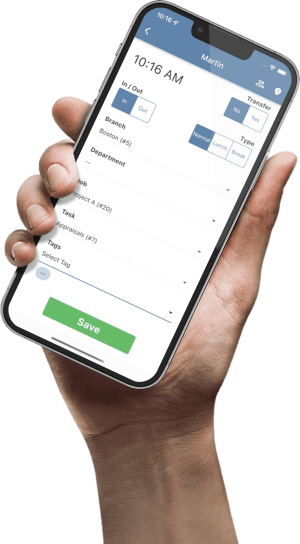
Control Overtime Before It Happens with TimeTrex
Don't let unauthorized overtime disrupt your payroll or put your business at risk.
Explore Our Mobile Time ClockDisclaimer: The content provided on this webpage is for informational purposes only and is not intended to be a substitute for professional advice. While we strive to ensure the accuracy and timeliness of the information presented here, the details may change over time or vary in different jurisdictions. Therefore, we do not guarantee the completeness, reliability, or absolute accuracy of this information. The information on this page should not be used as a basis for making legal, financial, or any other key decisions. We strongly advise consulting with a qualified professional or expert in the relevant field for specific advice, guidance, or services. By using this webpage, you acknowledge that the information is offered “as is” and that we are not liable for any errors, omissions, or inaccuracies in the content, nor for any actions taken based on the information provided. We shall not be held liable for any direct, indirect, incidental, consequential, or punitive damages arising out of your access to, use of, or reliance on any content on this page.
About The Author

Roger Wood
With a Baccalaureate of Science and advanced studies in business, Roger has successfully managed businesses across five continents. His extensive global experience and strategic insights contribute significantly to the success of TimeTrex. His expertise and dedication ensure we deliver top-notch solutions to our clients around the world.
Time To Clock-In
Start your 30-day free trial!
Experience the Ultimate Workforce Solution and Revolutionize Your Business Today
- Eliminate Errors
- Simple & Easy To Use
- Real-time Reporting
Saving businesses time and money through better workforce management since 2003.
Copyright © 2026 TimeTrex. All Rights Reserved.