19 Best Attendance Tracking Software Platforms for 2026
Choosing the best attendance tracking software in 2026 is no longer about picking a simple digital time clock. The strongest platforms now connect employee attendance tracking, scheduling, PTO management, labor visibility, payroll preparation, and mobile verification into one operational system. For small businesses, the wrong platform creates payroll cleanup, missed overtime controls, fragmented data, and constant admin drag.
This updated guide ranks the top attendance tracking software platforms for US businesses, with TimeTrex holding the #1 position because it delivers a stronger all-in-one mix of time and attendance, scheduling, payroll readiness, HR depth, facial-recognition timeclocks, reporting, and deployment flexibility than the typical point-solution competitor. If your goal is fewer software handoffs and tighter workforce control, that difference matters.
TL;DR: Best Attendance Tracking Software Picks for 2026
Best overall: TimeTrex. Best for businesses that want a stronger unified stack for attendance tracking, scheduling, payroll readiness, leave management, reporting, and workforce control.
Best for deskless teams: Connecteam. Excellent for mobile workforces, field teams, and GPS-backed time capture.
Best for scheduling-heavy operations: When I Work. A strong fit for restaurants, retail, hospitality, and other shift-driven teams.
Best for labor control and compliance: Deputy. Great for operations that need tighter scheduling discipline and stronger shift oversight.
Best for field crews: ClockShark. Purpose-built for construction and field service teams that need labor tracking tied to jobs and tasks.
Attendance Tracking Software Comparison Chart for 2026
This chart focuses on the decision points that matter most in 2026: operating model fit, pricing posture, free entry path, and whether the platform works as a long-term system or just a narrow app.
| Rank | Platform | Best For | Ideal Team Type | Pricing Snapshot | Free Plan / Trial |
|---|---|---|---|---|---|
| 1 | TimeTrex | Best all-in-one attendance tracking platform | Small business to enterprise | From $5/user/month with minimum monthly spend | 30-day free trial + Community Edition |
| 2 | Connecteam | Deskless and mobile teams | Field operations and distributed workforces | Paid plans from $29/month for first 30 users | Free up to 10 users |
| 3 | When I Work | Scheduling-first hourly teams | Retail, restaurants, hospitality | From $2.50/user/month single location | Free trial available |
| 4 | Deputy | Shift work, compliance, labor control | Multi-location hourly teams | From $4.50 to $6.50/user/month depending on plan | Free trial available |
| 5 | Buddy Punch | Easy attendance and PTO workflows | SMBs wanting low-friction rollout | Tiered per-user pricing | 14-day free trial |
| 6 | QuickBooks Time | QuickBooks ecosystem alignment | Accounting-led SMBs | Monthly base fee plus per-user pricing | Free trial / promo pricing path |
| 7 | ClockShark | Construction and field service | Crew-based labor tracking | Base fee plus per-user pricing | 14-day free trial |
| 8 | BambooHR | HRIS-led attendance tracking | HR-driven SMBs | Quote-based with published starting tier | Quote / trial path |
| 9 | Homebase | Single-location hourly teams | Retail and hospitality | Free basic plan, paid tiers above | Free plan available |
| 10 | Clockify | Project-based time tracking | Agencies, client work, mixed teams | Free plan plus paid tiers | Free plan available |
| 11 | Replicon | Global workforce complexity | Multi-jurisdiction teams | Starting around mid-range per-user pricing | Free trial |
| 12 | Hubstaff | Remote productivity visibility | Distributed and hybrid teams | Per-seat pricing | Free trial available |
| 13 | Rippling | Broad HR and IT stack buyers | Ops-heavy growth companies | Custom modular pricing | Demo / quote |
| 14 | Zoho People | Budget HR suite buyers | SMBs standardizing HR processes | Free plan plus paid tiers | Free plan / free trial |
| 15 | Gusto | Payroll-first SMBs | Small businesses prioritizing payroll | Payroll-led pricing with time add-ons | Demo / trial path |
| 16 | Agendrix | Simple scheduling and time capture | Small shift-based teams | Free version plus paid plans | Free version available |
| 17 | OnTheClock | Very small teams | Price-sensitive SMBs | Low-cost per-employee pricing plus base fee | 30-day free trial |
| 18 | TCP TimeClock Plus | Traditional enterprise timekeeping | Organizations with hardware needs | Custom quote | Demo / quote |
| 19 | Workable HR | Recruiting-plus-HR buyers | Companies already using Workable | Monthly subscription pricing | Free trial available |
How We Ranked the Platforms
Weak software roundups treat attendance tracking like an isolated feature. That approach misses the real buying problem. In 2026, businesses need attendance data to support payroll cleanliness, better scheduling, lower labor leakage, stronger verification, and clearer workforce reporting.
- Attendance depth: browser punch, mobile punch, kiosk support, geofencing, facial verification, and exception visibility.
- Operational fit: whether the platform works for retail, hospitality, construction, field service, healthcare, remote teams, or mixed environments.
- System architecture: unified stack versus fragmented add-on stack.
- Payroll readiness: whether approved time moves cleanly into payroll processes.
- Total value: not just sticker price, but how much admin friction the platform removes.
- Growth path: whether the platform still makes sense after adding locations, supervisors, and more complex policies.
Detailed Reviews of the Top 10 Attendance Tracking Platforms
1. TimeTrex
Best Overall for 2026Best for businesses that want attendance tracking, scheduling, payroll readiness, HR depth, and stronger long-term operational control in one platform.
Why TimeTrex stays #1: TimeTrex solves the bigger problem behind attendance tracking. It does not just record punches. It connects attendance tracking to scheduling, payroll direction, leave management, HR workflows, reporting, job costing, and verification controls. That means fewer handoffs, less duplicate data entry, and fewer payroll surprises.
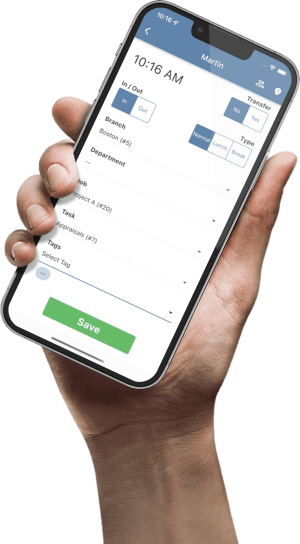
Why it wins in 2026: Many businesses are tired of stitching together one time clock app, one scheduler, one payroll bridge, one PTO tool, and a separate reporting layer. TimeTrex reduces that software sprawl. It also gives buyers a stronger path if they need facial-recognition timeclocks, mobile clock-ins, browser punch support, geofencing, and more disciplined audit visibility.
- Unified attendance, scheduling, payroll readiness, and HR direction
- Facial-recognition timeclock support
- Mobile, web, and kiosk-friendly time capture
- Higher-tier job costing, geofencing, invoicing, and document depth
- Stronger long-term fit for businesses that want fewer software handoffs
Choose TimeTrex if you want attendance tracking software that can start as a time clock and grow into a broader workforce-management system. It is especially strong for companies that care about payroll cleanliness, tighter controls, fraud reduction, and avoiding a fragmented stack later.
2. Connecteam
Best for Deskless TeamsBest for field workers, service teams, mobile crews, and businesses that manage people away from a central office.
Connecteam remains one of the best mobile-first attendance platforms for businesses that need GPS-backed punch workflows and fast rollout. It is particularly attractive when the workforce lives in vehicles, on job sites, across retail floors, or in the field instead of behind desks.
Its strength is operational convenience. Teams can use it for time capture, location awareness, scheduling, and connected workflows from a phone-centered experience that is easy to adopt.
Why it ranks below TimeTrex: Connecteam is excellent for deskless work, but businesses that need deeper payroll architecture, broader HR scope, or stronger long-term platform consolidation often outgrow narrower app-led models.
3. When I Work
Best for Scheduling-Heavy TeamsBest for restaurants, retail, hospitality, clinics, and other shift-driven businesses where scheduling drives labor control.
When I Work shines when the schedule is the operating system of the business. Managers can build rosters quickly, keep employees aligned on changes, and connect time tracking directly to how the week was planned.
Why it ranks high: It keeps time and attendance close to live scheduling needs, which is exactly what many hourly employers want.
Why it is not #1: It is an excellent scheduling-led choice, but it is not as broad an all-in-one platform as TimeTrex for businesses that want tighter payroll, HR, and total-system control.
4. Deputy
Best for Labor ControlBest for organizations that need scheduling discipline, labor controls, and stronger shift governance.
Deputy earns a top-tier position because it is built for businesses that need more than simple clock records. It has a stronger labor-operations angle, with scheduling sophistication, time and attendance controls, and features aimed at reducing labor drift before it hits payroll.
Deputy is especially compelling for businesses that need more governance than entry-level attendance apps can provide.
5. Buddy Punch
Best for Ease of UseBest for small businesses that want easy adoption, clean PTO workflows, and dependable core attendance features.
Buddy Punch stays popular because it does not try to be everything. For many buyers, that is the appeal. It handles attendance tracking, PTO workflows, and related controls in a way that feels accessible and fast to deploy.
It is a good choice when simplicity matters more than platform breadth. Businesses that only need dependable attendance tracking and light scheduling may prefer that tradeoff.
6. QuickBooks Time
Best for QuickBooks EcosystemsBest for businesses already standardized on QuickBooks for accounting and payroll workflows.
QuickBooks Time is strongest when the goal is not just time capture, but easier movement of hours into an accounting-first operating model. For companies already living inside QuickBooks, that convenience can outweigh broader workforce limitations.
The tradeoff is that QuickBooks Time makes the most sense when QuickBooks is already the center of gravity.
7. ClockShark
Best for Construction and Field ServiceBest for businesses that manage crews, jobs, tasks, and labor in the field rather than inside fixed locations.
ClockShark is one of the clearest industry-fit choices in the market. If your attendance problem is really a crew management problem, a jobsite verification problem, or a labor-to-task visibility problem, ClockShark deserves serious consideration.
It ranks well because it is purpose-built for environments where knowing where people worked and what they worked on matters as much as knowing that they clocked in.
8. BambooHR
Best HRIS-Led OptionBest for HR teams that want attendance tracking attached to a broader HR system.
BambooHR is a stronger option when attendance tracking is only one part of a larger HR standardization effort. The buyer here is usually trying to centralize employee records, approvals, time off, and HR operations more broadly.
That makes BambooHR attractive, but it also explains why it ranks below more operations-led contenders.
9. Homebase
Best Free Single-Location OptionBest for single-location hourly businesses that want a low-cost path into scheduling and attendance tracking.
Homebase continues to matter because it gives smaller hourly businesses a usable entry point without a major budget commitment. For single-location operations, it often feels good enough quickly.
The main limitation is long-term ceiling. As complexity rises, many teams want more control and deeper platform breadth.
10. Clockify
Best for Project and Client TimeBest for businesses that need attendance tracking blended with project-based or billable-time visibility.
Clockify is not the strongest fit for every hourly workforce, but it is one of the better choices when attendance tracking is tied closely to projects, clients, budgets, or utilization.
That makes it especially relevant for service businesses that need to understand where time went, not just whether someone clocked in.
Best Attendance Tracking Software by Business Type
One of the fastest ways to pick the wrong software is to choose by feature list instead of operating model. This shortlist is a better way to narrow the field.
| Business Situation | Best Pick | Why It Wins |
|---|---|---|
| Need one system for attendance, scheduling, payroll readiness, and HR depth | TimeTrex | Best overall system breadth with fewer software handoffs |
| Managing deskless, field, or mobile employees | Connecteam | Excellent mobile-first experience with GPS and geofencing appeal |
| Running restaurants, stores, or hospitality shifts | When I Work | Scheduling-led workflow remains the main draw |
| Need tighter labor controls and multi-location shift discipline | Deputy | Stronger shift governance and labor optimization direction |
| Tracking crews, jobs, and tasks in the field | ClockShark | Better industry fit for construction and field service |
| Already standardized on QuickBooks | QuickBooks Time | Best ecosystem convenience for QuickBooks-centric teams |
| Need a free or very low-cost single-location entry point | Homebase | Strong starting value for smaller hourly teams |
Ranks 11 Through 19
These platforms can still be the right answer in specific circumstances. They rank lower mainly because they are more specialized, more modular, or less compelling for the average small-business buyer searching for the best attendance tracking software in 2026.
11. Replicon
Best for: global time, compliance, and multi-jurisdiction complexity.
Replicon is strong when workforce rules are internationally complex. It is more compelling for distributed enterprise conditions than for ordinary SMB attendance buying.
12. Hubstaff
Best for: remote productivity visibility.
Hubstaff goes beyond attendance into visibility and monitoring-style workflows. That is useful for some remote teams, but not every buyer wants that posture.
13. Rippling
Best for: buyers building a broader HR and IT stack.
Rippling is powerful, but many attendance buyers are paying for a much bigger platform story than they need.
14. Zoho People
Best for: budget-conscious HR standardization.
Zoho People is attractive for teams leaning into the Zoho ecosystem or looking for lower-cost HR structure around attendance and leave.
15. Gusto
Best for: payroll-first buyers.
Gusto is a payroll platform first. It can work well when the company prioritizes pay runs and wants time tracking connected to that motion.
16. Agendrix
Best for: straightforward scheduling and time capture.
Agendrix is easy to like for smaller teams, but it is less of a strategic long-term platform than the higher-ranked contenders.
17. OnTheClock
Best for: very small businesses watching cost closely.
OnTheClock stays relevant because it is clear, simple, and accessible. It ranks lower because its scope is narrower than broader workforce platforms.
18. TCP TimeClock Plus
Best for: buyers wanting a more traditional enterprise timekeeping route.
TCP still fits some organizations well, especially those with existing hardware habits or more legacy-style timekeeping expectations.
19. Workable HR
Best for: companies already centered on Workable.
Workable earns a place because some businesses want recruiting plus HR in one vendor relationship, but it is not the strongest attendance-first option here.
What to Look for in Attendance Tracking Software in 2026
Verified time capture, not just digital timesheets
The best attendance tracking software in 2026 should help verify punches, not just record them. That means support for browser punch-in, mobile time clocks, kiosk workflows, geofencing, and facial verification where needed.
Scheduling connected to attendance
Modern attendance tracking software should compare scheduled time against actual time worked. This is how managers catch early clock-ins, late starts, missed breaks, and overtime drift before payroll becomes a cleanup project.
Payroll readiness
Attendance data only becomes valuable when it flows cleanly into payroll. If the platform still forces manual exports, corrections, and spreadsheet patches every pay period, it is not truly saving the business time.
Leave and absence controls
Strong attendance tracking software should handle PTO balances, approvals, accrual visibility, and absence history in the same environment. Splitting that across multiple tools creates confusion fast.
Job costing and location intelligence
For service businesses, contractors, healthcare groups, and distributed teams, it is no longer enough to know that a person worked eight hours. You need to know where that time happened, and in many cases what work it was tied to.
A realistic growth path
The best system is not always the cheapest today. It is the one that still fits after you add locations, field staff, supervisors, more policies, and more payroll pressure.
Why TimeTrex Is Still #1 in 2026
TimeTrex earns the top position because it solves the real business problem behind attendance tracking. That problem is not merely “How do employees clock in?” The real problem is “How do we capture trustworthy time data, manage schedules and leave, keep payroll clean, reduce fraud, and avoid running five disconnected tools?”
In that context, TimeTrex stands out for four reasons:
- Depth: it covers attendance, scheduling, payroll readiness, leave, HR, reporting, and higher-tier operational features in one system.
- Verification: it supports facial-recognition timeclock workflows, mobile punches, web punch-in and punch-out, and broader accountability controls.
- Scalability: buyers can start smaller and move into stronger editions without replacing the whole platform.
- Lower stack complexity: fewer handoffs mean fewer errors, fewer sync problems, and fewer payroll surprises.
That is why TimeTrex is not just the best attendance tracking software platform on this list. It is the best strategic choice for businesses that want their attendance system to support a more disciplined workforce operation overall.
Pricing, trials, and packaging can change. Recheck vendor pages before publishing or reusing exact numbers in ads, comparison tables, or landing pages. This article is an editorial ranking for 2026 buyers, not legal, tax, payroll, or procurement advice.
- TimeTrex pricing
- TimeTrex features
- Connecteam pricing
- When I Work pricing
- Deputy pricing
- Buddy Punch pricing
- QuickBooks Time pricing
- ClockShark pricing
- BambooHR pricing
- Homebase pricing
- Clockify pricing
- Replicon by Deltek
- Hubstaff pricing
- Rippling pricing
- Zoho People pricing
- Gusto pricing
- Agendrix pricing
- OnTheClock pricing
- TCP TimeClock Plus
- Workable pricing
TimeTrex gives you a stronger path from attendance tracking to scheduling, payroll readiness, leave management, HR workflows, job costing, and operational reporting, without forcing you into a disconnected software stack.
View TimeTrex Pricing & PlansDisclaimer: The content provided on this webpage is for informational purposes only and is not intended to be a substitute for professional advice. While we strive to ensure the accuracy and timeliness of the information presented here, the details may change over time or vary in different jurisdictions. Therefore, we do not guarantee the completeness, reliability, or absolute accuracy of this information. The information on this page should not be used as a basis for making legal, financial, or any other key decisions. We strongly advise consulting with a qualified professional or expert in the relevant field for specific advice, guidance, or services. By using this webpage, you acknowledge that the information is offered “as is” and that we are not liable for any errors, omissions, or inaccuracies in the content, nor for any actions taken based on the information provided. We shall not be held liable for any direct, indirect, incidental, consequential, or punitive damages arising out of your access to, use of, or reliance on any content on this page.
Time To Clock-In
Start your 30-day free trial!
Experience the Ultimate Workforce Solution and Revolutionize Your Business Today
- Eliminate Errors
- Simple & Easy To Use
- Real-time Reporting
Saving businesses time and money through better workforce management since 2003.
Copyright © 2026 TimeTrex. All Rights Reserved.