Best Employee Time Clock Software for Small Business in 2026
Built for US employers who need employee time clock software for small business that reduces time theft, improves payroll accuracy, and keeps time tracking compliant for hourly teams in 2026.
Article Index
- TL;DR
- What US Employers Should Prioritize in 2026
- Methodology and Ranking Criteria
- Quick Comparison Tables
- Top 10 Employee Time Clock Software Picks
- Feature Matrix for Small Business Time Clock Software
- Scenario Based Recommendations
- Implementation and Migration Playbook
- FAQ for US Employers
- Call to Action
TL;DR
If you are a US employer shopping for employee time clock software for small business, the baseline is now similar across most time clock software in 2026: mobile clock-ins, digital timesheets, approvals, and payroll exports. What separates top employee time clock software for small business is fraud control (GPS, geofencing, photo or biometric verification), scheduling depth, reporting and job costing, and security posture.
Best overall: TimeTrex wins for small business time clock software in 2026 because it combines time and attendance, scheduling, payroll readiness, and broader workforce management depth, plus a rare deployment choice between cloud and on-site. TimeTrex also anchors value with published entry pricing for up to ten employees and a Community Edition option, making employee time clock software for small business easier to justify.
Best for deskless teams: Connecteam is a strong fit if your employee time clock software for small business must also function as an all-in-one employee app for frontline operations. For scheduling-led operations, Homebase, Deputy, and When I Work tend to be the most common shortlists for time clock software.
What US Employers Should Prioritize in 2026
US employers rarely fail because they lack a time clock. They fail because employee time clock software for small business does not enforce the rules that protect payroll accuracy. In 2026, the most valuable employee time clock software for small business is the software that controls where people clock in, proves who clocked in, and makes time edits auditable.
A practical buying lens for time clock software is to treat time as a financial system. Employee time clock software for small business should reduce payroll leakage, support overtime and break rule configuration, and export clean data into payroll without manual rework. If your employee time clock software for small business cannot do that, it is not a time clock solution. It is a timesheet generator.
Fraud controls that actually change behavior
- Geofencing and GPS for off-site punch prevention.
- Photo or biometric verification for buddy punching deterrence.
- Edit logs, approvals, and audit trails that managers cannot quietly override.
Scheduling depth for hourly and shift teams
- Multi-location scheduling support if you run more than one site.
- Availability, time-off workflows, and practical shift coverage tools.
- Real-time alerts to control overtime drift before it becomes payroll reality.
Payroll readiness and integrations
- Clean export and approval flow into payroll providers.
- Built-in payroll can be a major advantage when you want consolidation.
- Confirm which plan includes the controls you need before you commit.
A quick warning for US employers: do not select employee time clock software for small business based only on month-one pricing. Time clock software can become expensive through add-ons, per-location pricing, base fees, or the requirement to buy adjacent software in the same ecosystem. Always model a ten-employee benchmark and your realistic peak staffing.
Methodology and Ranking Criteria
This 2026 ranking uses vendor capability pages, security documentation, and large review platforms to score employee time clock software for small business. Vendor pages are treated as the source of truth for what time clock software claims to provide, while review platforms are used to understand user sentiment and support signals.
For review interpretation, a helpful reference is Capterra’s explanation of its Shortlist methodology, which combines ratings and popularity to make comparisons more fair across tools with very different review volumes. See Capterra Shortlist methodology.
| Ranking criteria | What it measures for small business time clock software | Weight |
|---|---|---|
| Time clock and attendance controls | Mobile clock-in/out, kiosk support, breaks and overtime handling, edit logs, auditability, and anti time theft controls like GPS, geofencing, photo, or biometrics. | 25% |
| Scheduling and leave management | Shift planning, availability, time-off workflows, multi-location scheduling support. | 15% |
| Payroll readiness and integrations | Built-in payroll or strong export and sync pathways to payroll and accounting tools. | 15% |
| Deployment flexibility and admin controls | Cloud vs on-site choice, device options, permissions, scalability. | 10% |
| Security and compliance signals | Clear security claims and documentation, common frameworks like SOC 2 or ISO 27001, and payment security context where relevant. | 10% |
| Price to value for small business | Published entry pricing, pricing model fit, expected add-ons, and a ten-employee, one-location benchmark estimate. | 15% |
| User sentiment and support signals | Blended view of G2 and Capterra ratings, with Trustpilot used as a directional signal for broader billing and support experiences. | 10% |
| Tip for US employers: align ranking weight to your operating model. Field teams should overweight geofencing and GPS. Regulated teams should overweight auditability and security posture. | ||
Quick Comparison Tables
| Vendor | Pricing model | Typical entry price range | Best for |
|---|---|---|---|
| TimeTrex | Per tier (monthly; up to 10 employees in entry tier) | ~$50/month (ten employees) | SMBs wanting time + payroll + scheduling, plus cloud and on-site choice |
| Connecteam | Flat monthly tiers (tied to features and user limits) | ~$29/month low tier; free up to 10 users (plan constraints apply) | Deskless teams needing time clock + communications + operational workflows |
| Homebase | Per location tiers (free + paid) | $0 to $30/month per location is a common starting range | Hourly scheduling-first teams at one location to small multi-site |
| Deputy | Per user per month | ~$5 to $6.50 per user per month | Scheduling + attendance depth with strong security posture claims |
| When I Work | Per user per month (single vs multi-location) | $2.50 to $5 per user per month | Low-cost scheduling + GPS, geofencing, and photo time clock controls |
| Buddy Punch | Base fee + per user per month | ~$19 base + ~$5.49 per user per month | Accountability focused time clock software for SMB operators |
| QuickBooks Time | Base + per user per month (often alongside QuickBooks) | ~$100 to $140 per month (ten users) plus QuickBooks as needed | QuickBooks-led payroll and accounting workflows with mature field tracking |
| Hubstaff | Per user per month | ~$4.99 per user per month (annual billing noted) | Remote and distributed teams needing time + productivity telemetry |
| Clockify | Free + per user tiers | Free or ~$4.99 per user per month+ | Lightweight time tracking with kiosk option at low cost |
| 7shifts | Per location tiers | ~$39.99/month per location+ for a tier including time clocking | Restaurants and tip-heavy operations with POS and labor workflows |
| Use this table to shortlist. Then validate plan-included controls like kiosk mode, geofencing, approvals, and export paths into payroll. | |||
| Rank | Employee time clock software | Best fit | Ten-employee benchmark (software only) | Standout differentiator |
|---|---|---|---|---|
| 1 | TimeTrex | Best overall for SMB feature completeness + deployment choice | ~$50/month (Professional) | Cloud or on-site, plus payroll depth in one platform |
| 2 | Connecteam | Deskless teams needing an all-in-one employee app | Often starts around ~$29/month (plan dependent) | Time clock + comms + ops workflows under one app |
| 3 | Homebase | Single-location hourly teams wanting scheduling-led simplicity | $0 to ~$30/month per location is common start | Free entry plan and per-location predictability |
| 4 | Deputy | Shift-based teams that value security claims and integrations | ~$50 to $65/month before add-ons | Strong published security posture claims |
| 5 | When I Work | Low-cost scheduling with GPS, geofencing, and photo controls | ~$25/month (single location) to ~$50/month (multi) | Very low entry pricing with practical anti-theft controls |
| 6 | Buddy Punch | Straightforward accountability time clock software | ~$73.90/month (base + per user) | GPS, geofencing, and attendance alerts focus |
| 7 | QuickBooks Time | QuickBooks-centric payroll and accounting workflows | ~$100 to $140/month plus QuickBooks as needed | Tight QuickBooks ecosystem alignment |
| 8 | Hubstaff | Distributed teams needing time + productivity telemetry | ~$49.90/month (Starter annualized) | Geofence job sites and productivity tooling options |
| 9 | Clockify | Lightweight time tracking with kiosk option | ~$49.90/month at $4.99 per user | Low-cost tracking with kiosk mode support |
| 10 | 7shifts | Restaurant ops with POS and tip workflows | ~$39.99/month per location+ (tier with time clock) | Restaurant-specific labor and tip workflows |
Top 10 Employee Time Clock Software Picks
Below is the practical listicle breakdown. Each profile focuses on what a US employer should validate when choosing employee time clock software for small business: time theft controls, scheduling depth, payroll readiness, pricing model, and any compliance or security posture signals that matter for time clock software in 2026.
TimeTrex (Best overall employee time clock software for small business)
TimeTrex ranks first because it behaves like a workforce operating system rather than a thin time clock. For US employers, this matters because employee time clock software for small business is only as good as its ability to connect time tracking to approvals, payroll readiness, scheduling, and auditability. TimeTrex positions its Professional tier as built for small businesses and includes time and attendance, scheduling, leave management, HR management, and a payroll-ready architecture.
The differentiator is deployment choice. TimeTrex explicitly supports cloud-hosted and on-site deployment, plus migration support between deployments. That is rare among small business time clock software, and it can be a deciding factor if your US employer environment has strict data handling requirements or internal IT preferences.
Published entry pricing
$50/month for up to 10 employees (Professional)
Best for
US employers consolidating time, scheduling, and payroll readiness
Standout feature
Cloud or on-site option for employee time clock software
Source highlight
Buyer caution: confirm total fees because TimeTrex notes term commitments and possible activation fees depending on account setup.
Connecteam (Best deskless all-in-one employee app value)
Connecteam is a strong pick when employee time clock software for small business must also act as an employee app for deskless teams. The appeal is that time tracking is packaged with operational workflows like communications, forms, tasks, and frontline processes, which can reduce tool sprawl. For US employers with field services, security teams, or retail operations, this style of time clock software can increase adoption.
For time theft controls, Connecteam highlights GPS tracking, geofencing, and kiosk mode in its time clock positioning. The trade-off is that the platform can feel like more tool than a micro business needs if you only want punch in and payroll export.
Source highlight: Connecteam geofence time clock overview
Homebase (Best scheduling + time clock for single-location hourly teams)
Homebase is frequently shortlisted by US employers that want scheduling-first simplicity for hourly teams. Homebase stands out because it offers a free entry plan and per-location pricing, which can be easier to predict than per-user pricing for high-turnover teams. If your employee time clock software for small business will be used on a shared device like a tablet, Homebase supports clocking in via tablets and computers, and it bundles scheduling with time tracking.
The primary modeling risk is multi-location cost scaling. If you add locations, per-location pricing can rise quickly, so you should do an annual cost model rather than a month-one comparison.
Source highlight: Homebase pricing plans
Deputy (Best scheduling + attendance depth with strong security claims)
Deputy is a strong candidate when your employee time clock software for small business must include robust scheduling plus attendance verification options. Deputy’s time clock feature positioning includes mobile, tablet, and desktop clocking, with verification signals like facial recognition on tablets or GPS location stamps on mobile, depending on configuration.
Deputy also publishes a security page with multiple concrete certifications and claims, which can be a differentiator for US employers that need a more formal security posture for employee time clock software for small business.
Source highlight: Deputy security posture
When I Work (Best low-cost scheduler with practical anti-theft controls)
When I Work is often the cleanest answer when the buyer constraint is budget. For many US employers, When I Work is the most cost-efficient on-paper option for employee time clock software for small business, while still highlighting practical fraud controls like GPS, geofencing, photo clock-ins, and auditable edit logs. That combination is why it frequently appears on small business time clock software shortlists.
The key validation step is to confirm the plan you choose includes the controls you need for your environment, especially if you require a kiosk-style setup or multi-location workflows.
Source highlight: When I Work time clock features
Buddy Punch (Best straightforward accountability features)
Buddy Punch is positioned as employee time clock software with accountability controls that reduce time theft and improve payroll accuracy. For US employers that want a focused time clock software rather than a broad HR suite, Buddy Punch highlights GPS tracking, geofencing, and attendance alerts that can quickly tighten operational discipline.
Pricing is a base fee plus per-user charges, which scales differently than per-location systems. A small business should model the tool at peak staffing, not average staffing, because seasonal headcount changes can shift the effective cost of employee time clock software for small business.
Source highlight: Buddy Punch pricing model
QuickBooks Time (Best for QuickBooks-centric operations, higher total cost)
QuickBooks Time is best understood as an ecosystem choice. If your payroll and accounting run through QuickBooks, QuickBooks Time can reduce friction because the product is designed to integrate tightly with QuickBooks workflows, including time kiosk and field features like GPS. For US employers, this can simplify payroll processing and reduce error-prone exports.
The trade-off is total cost. QuickBooks Time pricing is base plus per-user, and some features like geofencing are documented as tier-dependent. Many businesses also require an active QuickBooks account, so your employee time clock software for small business cost model should include both sides of the stack.
Source highlight: QuickBooks Time pricing and tiers
Hubstaff (Best for distributed teams needing time + productivity telemetry)
Hubstaff is a strong fit when time tracking is tied to distributed work and billing evidence, not only attendance. For US employers managing remote teams, Hubstaff positions itself around multi-device tracking, GPS and geofenced job sites, and optional productivity monitoring. This can be useful for project costing and client billing but should be deployed transparently to avoid cultural backlash.
If security posture matters, Hubstaff publishes governance signals including SOC 2 related materials. Always validate what applies to your plan and what documentation is available for your risk review.
Source highlight: Hubstaff SOC 2 documentation
Clockify (Best lightweight time tracking + kiosk option at low cost)
Clockify is best described as time tracking first, scheduling second. It is popular with professional services and project-based teams, but it can also work as employee time clock software for small business when your requirement is straightforward tracking with a kiosk option. If your US employer use case is less about shift scheduling and more about time capture and reporting, Clockify can be a practical low-cost answer.
Validate the boundaries: if your business needs heavy labor scheduling, advanced compliance handling, or deep anti-theft controls, you may outgrow a lightweight model quickly. But for simple time clock software, kiosk mode can be the deciding factor.
Source highlight: Clockify kiosk mode
7shifts (Best restaurant ops suite, evaluate support and billing sentiment carefully)
7shifts is the most restaurant-specific entry on this list. For US employers running restaurants, the value is the integration of scheduling, time clocking, labor compliance tooling, and POS-driven workflows like tip handling. That matters because restaurant payroll accuracy is not only hours, it is also tips, roles, and operational labor metrics.
The practical caution is to pilot carefully and validate billing and support responsiveness before scaling across locations. Restaurant operators should stress-test payroll and tip workflows end-to-end because a restaurant time clock software failure is usually a payroll failure.
Source highlight: 7shifts pricing and modules
Feature Matrix for Small Business Time Clock Software
Use this matrix as a fast reality check. Small business time clock software often looks identical in demos. The differences show up when you require kiosk mode, geofencing, photo verification, payroll readiness, and a credible security posture for employee time clock software for small business.
| Vendor | Mobile clock-in | Kiosk support | GPS and geolocation | Geofencing | Photo or biometric | Scheduling | Payroll readiness | On-site option | Security signals |
|---|---|---|---|---|---|---|---|---|---|
| TimeTrex | ✅ | ✅ | ✅ | ✅ | ✅ (facial recognition) | ✅ | ✅ (integrated payroll-ready scope) | ✅ | SOC 2 and ISO claims, published security documentation |
| Connecteam | ✅ | ◐ (plan dependent) | ✅ | ✅ | ◐ (workflow dependent) | ✅ | ✅ (exports and integrations) | No | Trust center lists SOC 2 and ISO claims |
| Homebase | ✅ | ✅ | ◐ | No clear emphasis | No clear emphasis | ✅ | ◐ (add-on context) | No | SOC 2 messaging published |
| Deputy | ✅ | ✅ | ✅ | ◐ | ✅ (facial recognition or location stamp) | ✅ | ✅ (integrations catalog) | No | ISO and SOC 2 claims, PCI references |
| When I Work | ✅ | ◐ | ✅ | ✅ | ✅ (photo) | ✅ | ✅ (integrations and exports) | No | Trust center and security reference guide |
| Buddy Punch | ✅ | ✅ | ✅ | ✅ | ◐ | ◐ | ✅ (integrations) | No | Encryption at rest and in transit messaging |
| QuickBooks Time | ✅ | ✅ | ✅ | ✅ (tier dependent) | ◐ | ✅ | ✅ (QuickBooks alignment) | No | Published compliance portal references common frameworks |
| Hubstaff | ✅ | ◐ | ✅ | ✅ | No clear emphasis | ◐ | ◐ | No | SOC 2 related materials published |
| Clockify | ✅ | ✅ | ◐ | No clear emphasis | No clear emphasis | ◐ | ◐ | No | CAKE.com security messaging, SOC 2 and ISO references |
| 7shifts | ✅ | ◐ | Not primary focus | Not primary focus | Not primary focus | ✅ | ✅ (restaurant workflows and POS context) | No | PCI-focused data protection messaging |
| Legend: ✅ clearly stated; ◐ plan dependent or limited; “No clear emphasis” means not strongly evidenced in the cited positioning. | |||||||||
Scenario Based Recommendations
Micro business with one location and tight budget
If you have one to ten hourly employees and need employee time clock software for small business with minimal spend, start with When I Work and Homebase. They are commonly the lowest published entry points for time clock software, and they still cover core scheduling and time tracking.
If you need employee time clock software for small business that is also an employee app, Connecteam can be a high value option when you actually use multiple modules, not only time clocking.
Growth-stage SMB consolidating systems
If your goal is to reduce tool sprawl, prioritize employee time clock software for small business that includes scheduling, payroll readiness, and strong administrative controls in one platform. TimeTrex is positioned around consolidation, and it scales into job costing and additional modules as the business grows.
Field services and construction-style job sites
For mobile teams where location verification matters, choose time clock software that explicitly documents GPS and geofencing controls. In practice, that pushes you toward When I Work, Hubstaff, QuickBooks Time (tier dependent for geofencing), TimeTrex, and Connecteam configurations that include geofence and kiosk workflows.
Restaurants and tip-heavy operations
If your payroll errors come from tips and POS-driven labor complexity, consider restaurant-specific employee time clock software for small business like 7shifts. The key is piloting the full workflow: scheduling, time clocking, tips, and payroll preparation.
Remote and distributed professional teams
If the business tracks time for billing and project costing, Hubstaff and Clockify are often selected because they emphasize time tracking depth and reporting. For US employers, the best fit depends on whether you also need scheduling and anti time theft controls, or you mainly need accurate project time capture.
Implementation and Migration Playbook
Most employee time clock software for small business implementations succeed or fail before the first employee downloads an app. The success driver is policy alignment and clean payroll exports. Your time clock software should be configured to match your overtime rules, break rules, approval workflow, and job site definitions, and then validated through a parallel pay period.
| Phase | What to do | Typical time | Why it matters for payroll accuracy |
|---|---|---|---|
| Discovery | Requirements and policy mapping; data inventory and exports | 1 to 5 days | Stops misconfigured overtime and break rules before they hit payroll. |
| Pilot | Configure pay rules, roles, locations; device setup; test clock-ins | 3 to 7 days | Verifies employee time clock software works across real devices and job sites. |
| Parallel payroll | Run one pay period in parallel with your current method | 1 to 2 weeks | Catches rounding, break, and edit log issues before go-live. |
| Rollout | Train managers and employees; go-live and monitoring | 1 to 2 weeks | Most payroll leakage happens in week one if approvals and alerts are not enforced. |
| Optimize | Refine reports and alerts; quarterly audits and compliance checks | Ongoing | Keeps the system aligned as policies and staffing patterns change. |
Migration checklist (vendor-agnostic)
- Policy alignment: document clock-in rules, break rules, overtime triggers, rounding rules, and time-off categories before configuration.
- Worksite controls: enable GPS, geofencing, and photo or biometric verification where supported if time theft is a concern.
- Integration test: validate the exact exports or sync connector you will use into payroll and accounting.
- Security baseline: request security documentation when needed, especially if you store sensitive employee data or operate in regulated environments.
FAQ for US Employers
What is the single most important feature in employee time clock software for small business?
Auditability. Time clock software should make time edits visible, approvals enforceable, and exceptions reportable. Employee time clock software for small business that cannot show who edited time, why they edited time, and what changed will not protect payroll accuracy.
Should a US employer choose per-user pricing or per-location pricing?
Choose based on how your business scales. Per-user pricing is often more predictable for stable headcount and multi-location teams. Per-location pricing can be more predictable for a single location with high turnover. The best employee time clock software for small business is the one whose pricing model matches your operating model.
Do small businesses really need geofencing and GPS?
If you have off-site work, field teams, multiple job sites, or a history of early clock-ins and off-site punches, GPS and geofencing can materially reduce time theft. Employee time clock software for small business without location verification often relies on manager policing instead of system enforcement.
When does on-site deployment matter?
On-site deployment matters when you have strict requirements around data handling, internal control preferences, or integration constraints. Most small business time clock software is cloud-only, so an on-site option can be strategically useful for specific US employer environments.
Call to Action
Ready to tighten payroll accuracy with a mobile time clock?
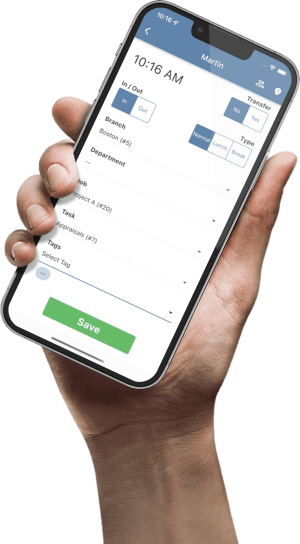
If you want employee time clock software for small business that supports mobile clock-ins, scheduling workflows, anti time theft controls, and payroll-ready approvals, start with TimeTrex. It is built to help US employers reduce payroll leakage and simplify time tracking operations in 2026.
Pro tip for US employers: implement with a parallel pay period, enforce approvals from day one, and turn on alerts for early punches, missed breaks, and overtime drift.
Disclosure: This article is informational and reflects vendor-published materials and review platform snapshots. Always confirm plan inclusions, fees, and compliance requirements for your specific US jurisdiction and workforce rules.
Disclaimer: The content provided on this webpage is for informational purposes only and is not intended to be a substitute for professional advice. While we strive to ensure the accuracy and timeliness of the information presented here, the details may change over time or vary in different jurisdictions. Therefore, we do not guarantee the completeness, reliability, or absolute accuracy of this information. The information on this page should not be used as a basis for making legal, financial, or any other key decisions. We strongly advise consulting with a qualified professional or expert in the relevant field for specific advice, guidance, or services. By using this webpage, you acknowledge that the information is offered “as is” and that we are not liable for any errors, omissions, or inaccuracies in the content, nor for any actions taken based on the information provided. We shall not be held liable for any direct, indirect, incidental, consequential, or punitive damages arising out of your access to, use of, or reliance on any content on this page.
Time To Clock-In
Start your 30-day free trial!
Experience the Ultimate Workforce Solution and Revolutionize Your Business Today
- Eliminate Errors
- Simple & Easy To Use
- Real-time Reporting
Saving businesses time and money through better workforce management since 2003.
Copyright © 2026 TimeTrex. All Rights Reserved.