
Billable Utilization Rate Calculator
Free TimeTrex resource
Billable Utilization Rate Calculator
Measure billable hours against available work capacity and logged work time, with separate denominators and a target you choose.
Enter one matched reporting period
Use aggregate hours for the same people and dates. Decimal hours only: 1 hour 30 minutes is 1.50 hours.
Capacity and time reconciliation
How to prepare the hours
- Fix the people and dates. Choose a person or team and a complete period. Sum hours across the group before dividing; averaging individual percentages gives a different answer when capacities differ. Retain the period, population and accounting policy with your export.
- Build a capacity denominator once. Start with scheduled capacity for those dates. Exclude unavailable hours only when they are still in that base. If the schedule already omits holidays, do not subtract them again. Use non-overlapping exclusions, and do not treat the same hour as both excluded capacity and logged work. Record any overtime or changed schedule policy alongside the figures.
- Reconcile work categories. Enter billable and non-billable work as mutually exclusive approved time categories. Count an hour once even if several systems hold it. Keep leave outside these work categories when it was removed from capacity. Billable time here means chargeable work recorded under your policy; it does not establish whether an invoice was issued or paid.
- Read both percentages. Capacity utilization uses available scheduled capacity. Billable share of logged time uses only the two logged work categories. The latter can look high even when little time was recorded, so inspect total logged time and the capacity balance together. Vendor reports may use different categories, approvals or calendars.
- Choose a realistic scenario. The target is your own assumption from 0% to 100%. Necessary non-billable work remains work. The additional-hours result is arithmetic, not an instruction to reclassify time, add overtime or remove training. A scenario needs operational review before any schedule changes.
Formulas and worked example
Let S be base scheduled hours, E excluded hours, B billable hours, N non-billable hours and T your target percentage. Available capacity C = S − E; total logged work L = B + N. Billable capacity utilization = B ÷ C × 100 when C > 0. Billable share of logged time = B ÷ L × 100 when L > 0. Capacity balance = C − L. Target billable hours = C × T ÷ 100; additional hours to reach it = max(0, target hours − B). Rate difference = capacity utilization − T, in percentage points.
The example has 160 − 16 = 144 available hours and 96 + 32 = 128 logged hours. Capacity utilization is 96 ÷ 144 = 66.67%; billable share of logged time is 96 ÷ 128 = 75.00%. The capacity balance is 16 hours. At the illustrative 70% target, billable hours would be 100.80, leaving a 4.80-hour arithmetic gap and a −3.33 percentage-point difference. Calculations retain full precision until display; CSV exports preserve unrounded numeric results.
Interpretation and boundaries
Zero available capacity produces N/A for its rate and target comparison; zero logged hours produces N/A for the logged-time share. Positive billable hours with zero capacity are kept visible for reconciliation. Utilization above 100% and negative capacity balances are allowed and flagged: check calendars, extra work, approvals and category overlap rather than silently capping the result. A positive balance is capacity not matched by these work entries; it is not proof of idle time or an unsubmitted timesheet. This tool does not estimate profit, quality, staffing sufficiency, invoice collections or labor-law compliance. Use it with context, not as an employee ranking.
Copy this CSV if your browser blocks the download.
Primary sources and scope
Checked October 30, 2026. These product definitions illustrate why the denominator must be stated. This independent worksheet is not a replica of either vendor report.
- Microsoft Learn: Resource utilization overview — Primary example using chargeable actual hours divided by work capacity after out-of-office and non-working time.
- BQE CORE: How is utilization rate calculated? — Primary example using billable hours divided by total logged hours. This different denominator is shown separately here; no vendor target or benchmark is imported.
Disclaimer: This voluntary aggregate worksheet uses the capacity and logged-hour definitions shown in the tool. Exclusions must not be subtracted twice; logged categories must be mutually exclusive and refer to the same people and period. A result above 100% or a negative capacity balance requires reconciliation; a positive balance does not prove available staff or missing time. Targets are user-selected scenarios, not recommended workloads. Results do not measure revenue, profitability, work quality, legal working-time limits or individual employee performance, and do not recommend employment, compensation or staffing decisions. Verify all inputs, results and assumptions against appropriate records and obtain qualified advice before relying on them. To the fullest extent permitted by applicable law, this resource is provided “as is” without warranties of accuracy, completeness or fitness for a particular purpose, and TimeTrex and its affiliates disclaim liability for losses, damages, costs or claims arising from its use, inability to use, or reliance on it, including errors or omissions. Nothing in this disclaimer excludes or limits liability or rights that cannot lawfully be excluded or limited.
Found our Free Billable Utilization Rate Calculator useful? Bookmark and share it.

Trusted By
Trusted by 3.4M+ Employees: 23 Years of Service Across Startups to Fortune 500 Enterprises
Join our ever-growing community of satisfied customers today and experience the unparalleled benefits of TimeTrex.










Strength In Numbers
Join The Companies Already Benefiting From TimeTrex
Time To Clock-In
Start your 30-day free trial!
Experience the Ultimate Workforce Solution and Revolutionize Your Business Today
- Eliminate Errors
- Simple & Easy To Use
- Real-time Reporting
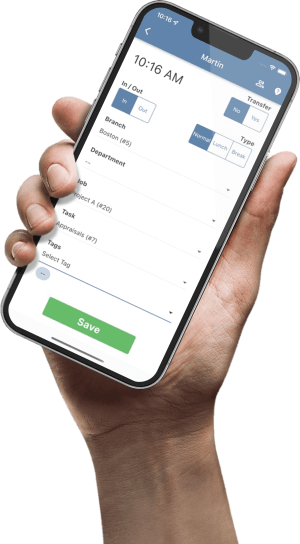

Saving businesses time and money through better workforce management since 2003.
Copyright © 2026 TimeTrex. All Rights Reserved.