


How to Automate Overtime and Avoid Compliance Fines
TL;DR: The Essentials of Overtime Automation
Manual payroll processing and outdated time clocks are creating massive financial liabilities through calculation errors, "buddy punching," and compliance failures. By leveraging an automated workforce management system like TimeTrex, organizations can:
- Eliminate Error: Automate complex FLSA and California Labor Code calculations, including weighted averages and 7th-day premiums.
- Prevent Fraud: Use facial recognition and geofencing to stop time theft and buddy punching.
- Ensure Compliance: Proactively manage exceptions with real-time alerts before they become fines.
- Defend Audits: Generate irrefutable, data-driven audit trails for every pay period.
Table of Contents
- Introduction: The Compliance Imperative
- The Regulatory Landscape: Anatomy of Risk
- The Economic Impact of Manual Processes
- Strategic Automation: The TimeTrex Architecture
- The Mathematics of Compliance: Configuring Overtime
- Exception Management: Proactive Compliance
- Scheduling and Accruals: The Preventive Layer
- Auditing and Reporting: The Shield Against Litigation
- Implementation Roadmap
- Conclusion
Introduction: The Compliance Imperative in Modern Workforce Management
The administration of employee compensation has evolved from a purely transactional administrative function into a complex discipline sitting at the intersection of legal compliance, financial stewardship, and human resource strategy. For organizations employing hourly or non-exempt personnel, the calculation of overtime is no longer a rudimentary arithmetic exercise of applying a simple multiplier to hours worked beyond a standard threshold. It has transformed into a high-stakes navigational challenge through a labyrinth of federal mandates, state-specific statutes—most notably the stringent requirements of California labor law—and intricate industry regulations.
The Fair Labor Standards Act (FLSA), established in 1938 to protect workers from exploitative labor practices, remains the bedrock of wage and hour law in the United States. However, the modern application of the FLSA occurs in a dynamic environment characterized by flexible work arrangements, remote teams, and complex compensation structures involving shift differentials, bonuses, and commissions. This complexity creates a fertile ground for inadvertent non-compliance, where even well-intentioned employers can find themselves facing debilitating audits, class-action litigation, and reputational damage.
The consequences of failure are severe. The Wage and Hour Division (WHD) of the U.S. Department of Labor (DOL) aggressively investigates violations, recovering hundreds of millions of dollars in back wages and penalties annually. The manufacturing industry, with its heavy reliance on process-oriented hourly labor, and the service sectors are particularly vulnerable. The sheer volume of recovered wages—over $7.4 million for tip-related violations and nearly $275,000 for retaliation violations in a single year—underscores the financial magnitude of the risk.
The Regulatory Landscape: Anatomy of Risk
To understand the necessity of automation, one must first appreciate the depth and breadth of the regulatory environment. Compliance is not a static target; it is a moving horizon defined by statutory text, judicial interpretations, and administrative rulings.
Wage & Hour Litigation Trends
Frequency of lawsuits filed annually (Projected trend based on historical data).
The Fair Labor Standards Act (FLSA) and the "Regular Rate" Trap
The central pillar of overtime compliance is the calculation of the "Regular Rate of Pay." The FLSA mandates that non-exempt employees receive overtime pay at a rate not less than one and one-half times their regular rate of pay for all hours worked in excess of 40 in a workweek. A pervasive and costly misconception among employers is equating the "regular rate" with the employee's base hourly wage.
The "regular rate" is a term of art under the FLSA. It is an arithmetic derivative that must include all remuneration for employment paid to, or on behalf of, the employee, except for payments specifically excluded by the Act. This includes:
- Non-discretionary Bonuses: Bonuses promised to employees to induce work, such as attendance bonuses or production incentives, must be included in the regular rate.
- Shift Differentials: Premium pay for working undesirable shifts (e.g., night shift or weekends) must be factored into the calculation.
- Commissions: Earnings based on sales performance are part of the base remuneration.
When an employer fails to incorporate these additional payments into the regular rate, they underpay the overtime premium. This "Regular Rate" violation is mathematically difficult to detect without sophisticated software but is a primary target for auditors. For example, if an employee earns a base rate of $20/hour and receives a $100 weekly production bonus while working 50 hours, the manual calculation might simply pay 10 hours of overtime at $30/hour ($20 x 1.5). However, the compliant calculation requires adding the $100 bonus to the total straight-time earnings before determining the regular rate, resulting in a higher overtime rate.
The Portal-to-Portal Act and "Donning and Doffing"
Beyond the rate of pay, the definition of "hours worked" presents significant challenges. The Portal-to-Portal Act of 1947 amended the FLSA to clarify which activities are compensable. A frequent area of contention is "donning and doffing"—the time spent putting on and taking off protective gear. Manual timekeeping systems, which often rely on scheduled shift times rather than actual activity times, systematically fail to capture these fractional increments of pre-shift and post-shift work.
The Misclassification Pitfall
Another significant source of liability is the misclassification of employees as exempt from overtime. Employers often incorrectly assume that paying a salary or assigning a specific job title automatically confers exempt status. As of July 1, 2024, the standard salary level for executive, administrative, and professional exemptions increased, making periodic review essential.
The California Compliance Labyrinth
While federal rules are stringent, state-level regulations often impose a significantly higher burden of complexity. California stands as the preeminent example, requiring a granularity of calculation that renders manual processing virtually impossible to sustain without error. Detailed regulations can be found in the California Overtime Laws and the guidelines provided by the California Department of Industrial Relations.
| Requirement | Trigger | Compensation Rate |
|---|---|---|
| Daily Overtime | Hours worked > 8 up to 12 in one day | 1.5x Regular Rate |
| Daily Double Time | Hours worked > 12 in one day | 2.0x Regular Rate |
| Weekly Trigger | Hours > 40 in a workweek | 1.5x Regular Rate |
| 7th Consecutive Day (First 8 Hours) | First 8 hours on the 7th day | 1.5x Regular Rate |
| 7th Consecutive Day (Beyond 8 Hours) | Hours > 8 on the 7th day | 2.0x Regular Rate |
The Economic Impact of Manual Processes
The cost of manual time and attendance management extends beyond the risk of non-compliance fines. It encompasses direct financial losses through error and fraud, as well as significant administrative overhead.
The Cost of Human Error
Manual time tracking systems, such as paper timesheets or punch cards, have inherent error rates. Lift HCM suggests manual systems can have error rates as high as 15-25%, while automated systems can reduce this to under 2%. For a company with a $5 million payroll, a conservative 1% error rate represents a $50,000 annual loss—often purely due to clerical mistakes. Furthermore, QwikTime highlights that hidden costs of manual tracking make it a liability rather than just an inefficiency.
Sources of Payroll Leakage
Breakdown of where manual processes fail most often.
The Plague of Time Theft and Buddy Punching
"Time theft" refers to employees being paid for time they did not actually work. The most blatant form is "buddy punching," where one employee clocks in or out for a co-worker who is not present.
- Financial Toll: Buddy punching alone costs U.S. employers an estimated $373 million annually.
- Prevalence: According to QuickBooks, nearly half (49%) of workers who track time admit to some form of time theft.
- Hidden Costs: Beyond the direct wage cost, Timerack notes that time theft distorts labor data, leading to inaccurate job costing and poor operational decision-making.
Data-Driven ROI: The Automation Advantage
By strictly enforcing schedules and alerting managers before overtime occurs, companies typically reduce OT costs by ~20%. Furthermore, automation removes the "data entry" phase, leaving only "review" and "approval", slashing admin time significantly.
Cumulative Overtime Costs
Comparison: Unmanaged vs. Automated Optimization
Admin Time Per Pay Period
Hours spent processing payroll
Strategic Automation: The TimeTrex Architecture
To address these multifaceted challenges, organizations require a "comprehensive workforce management solution" rather than a simple time clock. TimeTrex exemplifies this approach, offering an integrated platform that combines time and attendance, scheduling, payroll, and HR management into a single tool.
Capture
Biometric facial scan or geo-fenced mobile punch.
Rules Engine
Instant application of OT rules, state laws, & breaks.
Payroll
Accurate, compliant paychecks generated instantly.
1. The Policy-Based Engine
The fundamental unit of automation in TimeTrex is the "Policy." Policies are modular sets of rules that define how time is treated. These policies are grouped into "Policy Groups," which are then assigned to employees. This allows an organization to have different rule sets for different populations—for example, a "California Manufacturing Group" subject to daily overtime and a "Texas Sales Group" subject only to federal weekly overtime—within the same system instance. (See: Best Features of Time Tracking Software).
2. Biometric and Location Intelligence
The integrity of the automated calculation depends entirely on the accuracy of the input data. TimeTrex employs advanced hardware and software technologies to ensure that the time records are immutable and verified.
Facial Recognition Technology: TimeTrex utilizes a "Touch-Free Biometric Attendance System Using Facial Recognition" to secure the time clock. This technology effectively renders buddy punching impossible by ensuring that the person clocking in is physically present. Addressing privacy concerns, TimeTrex does not store photographic images but rather secure, encrypted digital algorithms.
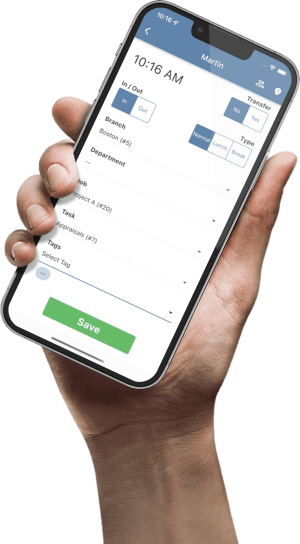
Geofencing and GPS Tracking: For mobile workforces, TimeTrex's mobile app transforms smartphones into geolocated time clocks. Administrators can define "geofences"—virtual boundaries around job sites—and configure the system to prevent an employee from clocking in unless their device is physically located within the active geofence.
3. Integrated Payroll and Job Costing
Automation is most effective when data flows seamlessly between modules. TimeTrex integrates time and attendance directly with payroll, eliminating manual re-entry. The system natively handles tax calculations and direct deposits, ensuring that the overtime calculated in the attendance module is exactly what is paid.
The Mathematics of Compliance: Configuring Overtime
The core value of the TimeTrex system lies in its ability to automate the complex mathematical logic required for strict legal compliance. The setup of an Overtime Policy involves defining precise triggers and calculation methods.
| Field | Description and Strategic Application |
|---|---|
| Type | Defines the interval for calculation. Options include Daily (CA rules), Weekly (Federal FLSA), Bi-Weekly, or Consecutive Days (7th Day Rule). |
| Active After | The quantitative threshold that triggers the policy. For a standard federal policy, this is 40 hours. For California daily overtime, this is 8 hours. |
| Contributing Shift Policy | A critical filter that defines which hours count toward the threshold. Distinguishes between "hours worked" and "hours paid." |
| Adjusted By | A dynamic modifier that reduces the Active After threshold based on external factors (e.g., reducing the overtime trigger during a holiday week). |
| Pay Code | Links the calculated time to a specific payroll code (e.g., "Overtime 1.5x"), ensuring the correct dollar amount is applied. |
Automating the "Regular Rate" and Blended Overtime
When an employee works multiple jobs with different rates (e.g., Job A at $15/hr and Job B at $20/hr), the system follows the compliant "Premium" method rather than simply multiplying the base rate by 1.5. By automating the weighted average calculation using the Free Blended Overtime Pay Calculator, TimeTrex ensures that the "Regular Rate" used for the overtime calculation dynamically reflects the true weighted average of the employee's earnings for that specific workweek, eliminating the risk of systematic underpayment.
Advanced Configurations
TimeTrex's policy types are specifically designed to handle multi-layered requirements. For example, the California Overtime Calculator demonstrates how to set an Active After threshold of 8 hours to automatically apply the 1.5x rate for hours 9 through 12. Additionally, the system can automate complex rotations like the 2-2-3 schedule, identifying "long weeks" and forecasting liability.
Exception Management: Proactive Compliance
While accurate calculation is essential, the ultimate goal of automation is to prevent unnecessary overtime and compliance violations before they occur. TimeTrex achieves this through Exception Policies—a system of real-time alerts and monitors.
| Code | Name | Description | Severity |
|---|---|---|---|
| O1 | Over Daily Time | Employee has exceeded daily scheduled hours. Flags potential unapproved overtime. | High |
| O2 | Over Weekly Time | Employee has exceeded weekly scheduled hours (e.g., approaching 40 hours). | High |
| M1 | Missing In Punch | Employee punched out but never punched in. Prevents accurate payroll calculation. | Critical |
| M2 | Missing Out Punch | Employee punched in but never punched out. Creates open-ended liability. | Critical |
| L4 | Late Lunch | Employee failed to take a meal break by the statutory deadline (e.g., 5th hour in CA). | High |
Real-Time Notifications: The power of exceptions lies in their delivery. When an employee approaches a compliance threshold (e.g., the 40th hour of the week or the 5th hour without a meal break), the system triggers an email or Dashboard notification to the direct supervisor. This visibility, provided via TimeTrex's User-Friendly UI, allows managers to intervene immediately—sending an employee to lunch or home—rather than discovering the violation weeks later.
Scheduling and Accruals: The Preventive Layer
Effective scheduling is the primary lever for controlling overtime costs. TimeTrex's scheduling module moves beyond static rosters to dynamic, demand-based planning. (See: Guide to Creating Employee Work Schedules).
- Shift Bidding: TimeTrex supports "shift bidding," allowing employees to request open shifts. The system can be configured to flag or block a bid if accepting the shift would push the employee into overtime status.
- Fair Workweek Compliance: With the rise of "predictive scheduling" laws, automated scheduling ensures that changes are tracked and any required premium pay is applied automatically.
- Accrual Integration: The system manages whether paid leave counts toward the overtime threshold via Accrual Policies. Through settings, an organization can strictly define that only worked hours trigger FLSA overtime, effectively filtering out vacation or sick time from the premium calculation.
Auditing and Reporting: The Shield Against Litigation
In the event of a DOL audit or a wage and hour lawsuit, the burden of proof rests squarely on the employer to demonstrate accurate timekeeping.
The TimeSheet Detail Report is the primary audit document, offering a granular, day-by-day defense. Unlike summary reports, this document details every punch, separating regular time, overtime, absence time, and premium time. It provides a minute-by-minute account of the workweek, proving exactly how pay was calculated.
Additionally, the Exception Summary Report serves as a tool for identifying systemic issues, allowing HR to identify repeat offenders or patterns of non-compliance.
Implementation Roadmap: Transitioning to Automation
Moving from a manual or legacy system to a sophisticated engine like TimeTrex requires a deliberate implementation strategy. A comprehensive Initial Setup Guide can streamline this process.
- Phase 1: Policy Audit. Audit all existing pay practices and formalize them into written policies that can be mapped to TimeTrex's configuration fields.
- Phase 2: Parallel Processing. For a recommended period of at least four pay periods (two months), run TimeTrex alongside the existing system to identify discrepancies and validate rules.
- Phase 3: Hardware Deployment. Deploy biometric clocks and geofencing, ensuring clear communication regarding privacy safeguards.
- Phase 4: Go-Live. Once the parallel run achieves a 100% match rate, the system goes live with continuous monitoring of the Exception Summary Report.
Conclusion
The automation of overtime is not merely an operational upgrade; it is a strategic imperative in a regulatory environment that increasingly penalizes imprecision. The convergence of federal FLSA mandates, aggressive state-level interventions like those in California, and the litigious nature of wage and hour disputes renders manual calculation obsolete and dangerous.
By leveraging features such as Overtime Policies with dynamic adjustments, weighted average Pay Formulas, and real-time Exception Alerts, businesses transform payroll from a liability-prone back-office function into a streamlined, compliant, and strategic asset. In doing so, they not only avoid the debilitating costs of compliance fines but also build a culture of transparency and fairness that benefits both the employer and the workforce.
Secure Your Workforce with Mobile Geofencing
Ensure your employees are in the right place at the right time. Eliminate time theft and automate compliance with TimeTrex's mobile solution.
Get the Mobile Time ClockDisclaimer: The content provided on this webpage is for informational purposes only and is not intended to be a substitute for professional advice. While we strive to ensure the accuracy and timeliness of the information presented here, the details may change over time or vary in different jurisdictions. Therefore, we do not guarantee the completeness, reliability, or absolute accuracy of this information. The information on this page should not be used as a basis for making legal, financial, or any other key decisions. We strongly advise consulting with a qualified professional or expert in the relevant field for specific advice, guidance, or services. By using this webpage, you acknowledge that the information is offered “as is” and that we are not liable for any errors, omissions, or inaccuracies in the content, nor for any actions taken based on the information provided. We shall not be held liable for any direct, indirect, incidental, consequential, or punitive damages arising out of your access to, use of, or reliance on any content on this page.
About The Author

Roger Wood
With a Baccalaureate of Science and advanced studies in business, Roger has successfully managed businesses across five continents. His extensive global experience and strategic insights contribute significantly to the success of TimeTrex. His expertise and dedication ensure we deliver top-notch solutions to our clients around the world.
Time To Clock-In
Start your 30-day free trial!
Experience the Ultimate Workforce Solution and Revolutionize Your Business Today
- Eliminate Errors
- Simple & Easy To Use
- Real-time Reporting

Saving businesses time and money through better workforce management since 2003.
Copyright © 2026 TimeTrex. All Rights Reserved.