


Payroll and Time Tracking in Modern Dental Practices
Dental practices are facing a severe staffing crisis, forcing reliance on complex compensation models to attract and retain top clinical talent. Navigating variable pay, production bonuses, and strict labor laws requires moving beyond manual calculations. Specialized workforce management systems inherently integrate scheduling, biometrics, and payroll to ensure compliance with blended overtime regulations and security, ultimately protecting profit margins and organizational stability.
- The Macroeconomic Paradigm and the Dental Staffing Crisis
- The Structural Complexity of Dental Practice Compensation Models
- Integrating Production-Based Remuneration and Performance Ratios
- Navigating Regulatory Compliance and Weighted Overtime Calculations
- The Mathematics and Enforcement of the Blended Regular Rate
- The Integration Tax and Practice Management Software Interoperability
- Advanced Interoperability and Automated Data Ingestion
- Apex Architectural Paradigms: TimeTrex vs. Fragmented Market Competitors
- Logistical Scheduling, Biometrics, and Multi-Location DSO Management
- Biometric Authentication and Geographic Dispersal
- Regulatory Data Security and HIPAA Compliance Frameworks
- Strategic Processing and Final Conclusions
The Macroeconomic Paradigm and the Dental Staffing Crisis
The operational and financial landscape of modern dental practice management has undergone a profound, irreversible transformation over the past decade, fundamentally driven by an escalating staffing crisis that threatens the foundational capacity of the healthcare sector. Since the global labor market disruptions of the early 2020s, the recruitment, development, and retention of highly skilled clinical and administrative personnel have emerged as the paramount existential challenges confronting both independent private practitioners and large-scale Dental Support Organizations (DSOs). Macroeconomic shifts and an acceleration in professional burnout have severely constrained the available labor pool, fundamentally altering the power dynamics between employers and clinical staff.
Forecasts from prominent industry analysts project that the United States dental industry will face an aggregate deficit of more than 36,000 dental professionals by the year 2031, leaving a significant proportion of practices operating substantially below their optimal clinical capacity. Recent comprehensive surveys indicate that merely 68% of practices report possessing adequate staffing levels across their hygiene, assisting, and administrative departments, meaning nearly one-third of the industry is actively operating in a state of personnel deficit.
The systemic barriers to workforce sustainability are not geographically isolated. Thematic analyses of international markets reveal that workforce instability is driven by rigid contractual constraints, demonstrably inadequate remuneration, and immense administrative burdens that distract from patient care. Across all surveyed geographic and economic markets, the primary drivers of clinical attrition encompass negative workplace cultures, uncompetitive and static compensation structures, a stark lack of professional growth opportunities, and persistent feelings of physical and emotional exhaustion stemming from being perpetually overworked. In contrast, employee retention is overwhelmingly correlated with a positive cultural environment, strict adherence to work-life balance, and robust, modernized benefits packages. Data consistently reveals that 62% of dentists identify staffing shortages, recruitment, or retention as their primary operational challenge.
The Silent Cost of Manual Management
Dental offices are high-paced environments focused on patient care. However, practice managers often find themselves bogged down by antiquated, manual HR processes. Tracking hygiene schedules, managing dental assistant overtime, and calculating complex payrolls manually drains resources and increases the risk of costly errors. This chart illustrates the average weekly time distribution of a dental practice manager using manual administrative systems.
To counteract these pervasive labor shortages, forward-thinking dental enterprises have aggressively pivoted toward complex, highly incentivized compensation models specifically designed to attract and retain top-tier hygienists, specialized dental assistants, and associate dentists. Practice owners are increasingly leveraging sophisticated hiring bonuses structured over designated employment periods, aggressive peer-to-peer referral incentives, and comprehensive benefits packages encompassing health insurance, retirement plans, and continuing education funding. However, the deployment of these sophisticated compensation architectures introduces a profound administrative burden onto the practice's human resources and financial infrastructure.
The Structural Complexity of Dental Practice Compensation Models
When dental practices are in their infancy, payroll often feels like a manageable process centered solely on paying personnel accurately and on time. As the clinical team grows and the enterprise expands, however, payroll fundamentally evolves from an administrative chore into a strategic financial lever that actively influences cash flow, tax exposure, retirement contributions, and stringent labor compliance. Management must vigilantly monitor payroll as a percentage of total practice collections on a quarterly basis. If this critical financial metric begins to drift upward without a clear, corresponding operational justification, such as the onboarding of new providers, expanded clinical hours, or an explicit increase in total production, it serves as a definitive warning sign that administrative inefficiencies or systemic overstaffing are eroding the practice's profit margins.
The introduction of production-based pay, variable shift schedules, and dynamic commission structures fundamentally destabilizes traditional, manual payroll processes. Without the intervention of advanced human capital management (HCM) technologies, the administrative friction generated by these complex compensation models inevitably leads to systemic calculation errors, widespread regulatory non-compliance, and the very employee dissatisfaction these models were originally implemented to prevent. The architectural framework of compensation within clinical dental environments presents a structural anomaly when compared to standard enterprise models. Practice administrators are routinely tasked with orchestrating a labyrinthine array of concurrent remuneration structures within a single bi-weekly payroll cycle.
A standard mid-sized practice typically employs a highly heterogeneous mix of staff, each subject to distinct taxation algorithms, labor laws, and calculation formulas. Office managers and practice administrators are frequently compensated via fixed salaries, front-desk receptionists and sterilization technicians are typically compensated via standard hourly wages, dental hygienists operate on blended structures combining high hourly base rates with specific production incentives, and associate dentists are often compensated entirely through variable, production-based commission matrices or collections-based percentages.
The management of these disparate pay structures introduces acute regulatory risks, most notably the pervasive danger of worker misclassification. There remains a persistent, financially motivated temptation among practice owners to classify hygienists, specialized dental assistants, or per diem staff as independent contractors (utilizing 1099 tax forms) to circumvent the administrative complexities, employer tax burdens, and benefits obligations associated with standard W-2 employment. However, the Internal Revenue Service (IRS) and state labor agencies determine employment status based on the actual behavioral control, financial control, and the relational nature of the work being performed. Misclassification within the dental sector frequently triggers aggressive regulatory auditing, resulting in substantial liabilities for back taxes, retroactive benefits compensation, and punitive penalty fees that can threaten the solvency of the practice.
Integrating Production-Based Remuneration and Performance Ratios
The calculation of gross wages for clinical staff, particularly dental hygienists, is rarely a linear mathematical exercise due to the intricate fusion of time-based constraints and performance-based metrics. A prevailing compensation architecture within high-performing practices involves a baseline hourly wage augmented by a specific percentage of the billable value of the clinical procedures performed, but this bonus is strictly contingent upon the provider exceeding a mathematically pre-established monthly or bi-weekly production threshold. To execute this calculation accurately, an automated payroll architecture must seamlessly ingest chronological time records and dynamically reconcile them against production targets internally stored within disparate practice management software platforms.
The precise attribution of production value is subject to specialized industry guidelines and internal practice policies that must be meticulously coded into the payroll software. Standard operational protocols dictate that all prophylaxis treatments, comprehensive scaling and root planing, and ongoing periodontal maintenance procedures are universally allocated to the hygiene production ledger. Furthermore, approximately 85% to 90% of the revenue generated from the application of sealants and the capturing of bitewing radiographs (BWX) is typically attributed to the hygienist, reflecting the clinical reality that auxiliary staff fundamentally execute these procedures while the dentist performs examinations. The attribution of panoramic radiographs is highly variable and often dynamically adjusted downward if the practice engages in high-volume implantology, reflecting a shift in clinical workload toward the primary doctor.
Practice managers rely heavily on rigid financial benchmarks, most notably the Production-to-Wage Ratio, to continuously ascertain the viability and fairness of these compensation structures. A healthy, optimized dental practice targets a benchmark ratio of at least 3:1. If a clinical hygienist produces $1,400 in billable services within a single operational day while earning $400 in daily wages, the resulting ratio is 3.5:1, signaling highly efficient scheduling, excellent patient acceptance, and appropriate compensation parameters. Conversely, when this ratio falls consistently below the 3:1 threshold, management must forensically investigate underlying systemic issues. Rather than immediately assuming the clinician is underperforming, astute managers will analyze scheduling efficiencies, historical fee schedules, shifting insurance reimbursements, or the baseline appointment mix. Ensuring clinical efficiency is inextricably linked to maintaining optimal patient retention, with practices universally targeting an 85% or greater success rate in securing subsequent hygiene reappointment intervals prior to patient checkout.
To facilitate these complex formulas, advanced workforce management platforms like TimeTrex deploy highly configurable, rules-based logic engines. The software utilizes distinct parameters, identified within the platform as "Pay Formula Policies", to translate recorded chronological time into accurate financial compensation. These formulas dictate precisely how the payroll engine manages varied hourly rates, ensuring automatic compliance without requiring manual spreadsheet manipulation.
| Pay Formula Policy Designation | Algorithmic Function within the Software Engine | Direct Clinical Application Example |
|---|---|---|
| Pay Multiplied By Factor | Applies a designated mathematical multiplier to the baseline hourly wage of the employee. | Automatically calculating specialized premium pay rates for weekend shifts or designated emergency on-call hours. |
| Flat Hourly Rate (Relative to Wage) | Calculates the exact mathematical difference between the employee's regular rate and a newly specified alternative rate. | Seamlessly adjusting compensation when a clinical assistant temporarily transitions into an administrative front-desk role. |
| Flat Hourly Rate | Overrides standard wage data entirely to apply a static, non-relative hourly rate. | Applying standalone premium policies for specialized, highly technical procedures independent of the standard wage. |
| Minimum Hourly Rate (Relative to Wage) | Evaluates the specified policy rate against the core wage record and automatically applies the higher of the two values. | Essential for commission-based associate dentists or hygienists guaranteed a baseline minimum, ensuring FLSA minimum wage compliance during periods of low patient flow. |
| Average of Contributing Pay Codes | Calculates an average hourly rate derived directly from an array of contributing shift policies. | Facilitates the initial calculation necessary for determining blended overtime rates when an employee holds multiple positions. |
Furthermore, sophisticated software environments accommodate the calculation of the "Labor Burden Percent", a critical metric for organizational accounting. If a practice manager seeks to understand the true cost of an employee, the software allows for the input of a burden percentage. For example, if a salaried office manager earns $20,000 annually but receives an additional $5,000 in comprehensive benefits encompassing health care and paid vacation, the system calculates a labor burden of 25%, providing ownership with an accurate reflection of total human capital expenditures.
Navigating Regulatory Compliance and Weighted Overtime Calculations
The integration of production-based pay structures, non-discretionary bonuses, and commissions into standard hourly compensation introduces one of the most perilous and frequently misunderstood compliance vulnerabilities in dental workforce management: the calculation of legally compliant overtime premiums. Under the parameters established by the Fair Labor Standards Act (FLSA), and further amplified by stringent, highly specific state-level labor laws, non-discretionary bonuses and production-based pay cannot be treated as separate, isolated financial events; they must be mathematically factored into the calculation of an employee's "regular rate" of pay for the explicit purpose of determining overtime.
Mitigating Compliance and Operational Errors
Labor law compliance in healthcare is strictly regulated. Minor miscalculations in overtime or Paid Time Off (PTO) accruals can lead to significant penalties or staff dissatisfaction. This grouped bar chart compares the frequency of common administrative errors before and after implementing automated software. The reduction in timesheet discrepancies and overtime miscalculations is immediate and stark, safeguarding the practice against compliance violations.
- ✅ Timesheet Errors: Reduced by over 90% via electronic punching.
- ✅ Overtime Math: Eliminated entirely by the internal rules engine.
- ✅ Compliance: Near-zero risk of labor law infractions.
Dental personnel frequently perform multiple distinct roles within a single consolidated workweek, resulting in an employee possessing two or more different non-overtime rates of pay. For instance, a credentialed employee may provide clinical hygiene services at a premium hourly rate while simultaneously providing administrative, non-clinical front-desk support at a substantially lower hourly rate. When this dual-role employee inevitably exceeds forty working hours within a defined workweek, federal regulations absolutely prohibit the employer from simply paying overtime based on the rate of the job being performed during the actual overtime hours. Instead, the FLSA mandates the application of a weighted average methodology, commonly referred to within the payroll industry as the "blended regular rate", to determine the legally compliant overtime premium.
The Mathematics and Enforcement of the Blended Regular Rate
The regulatory framework explicitly outlines the mechanical procedure for calculating this weighted average under regulation 29 C.F.R. 778.115. The calculation fundamentally requires determining the total straight-time compensation earned from all roles performed during the workweek, including all non-discretionary bonuses, and dividing that comprehensive sum by the absolute total number of hours worked across all positions.
Once the Blended Regular Rate is successfully established, the overtime premium is calculated by multiplying this specific blended rate by 0.5 (representing the half-time premium) and applying that resulting figure to the total number of overtime hours worked. This half-time premium represents the legally mandated "extra" pay for the overtime hours, which is then added to the total straight-time compensation to yield the final gross pay.
A pervasive, systemic mathematical error within manual payroll administration, one that consistently plagues growing dental practices, is the erroneous utilization of the "Multiplier Method" (1.5x) applied arbitrarily to the blended rate, rather than the legally accurate "Premium Method" (0.5x). The application of the 1.5x multiplier directly to the blended rate for overtime hours, while the employer has already compensated the employee at their base rates for those exact same hours within the straight-time calculation, results in the compounding of the base wage. This fundamental misunderstanding leads to severe overpayment, artificial inflation of labor overhead, and profound confusion during financial auditing.
| Payroll Calculation Parameter | The Correct FLSA Premium Method (0.5x) | The Incorrect Multiplier Method (1.5x) |
|---|---|---|
| Employee Time Data | 30 hours @ $15/hr, 20 hours @ $20/hr | 30 hours @ $15/hr, 20 hours @ $20/hr |
| Total Hours Worked | 50 total hours (10 Overtime hours) | 50 total hours (10 Overtime hours) |
| Total Straight-Time Pay | $850.00 | $850.00 |
| Blended Regular Rate | $17.00/hr ($850 / 50 hrs) | $17.00/hr |
| Overtime Premium Calculation | $85.00 (10 hrs x $8.50) | $255.00 (10 hrs x $25.50) |
| Total Gross Pay Liability | $935.00 | $1,105.00 (Massive Overpayment) |
State-specific labor laws introduce an additional, formidable layer of complexity to this mathematical framework. In heavily regulated jurisdictions such as California, the legal formulas governing the integration of production pay into overtime frequently result in a substantially higher overtime liability than the baseline federal FLSA formula dictates. California law often dictates strict daily overtime thresholds (e.g., hours worked beyond eight in a single day) rather than merely weekly thresholds, further complicating the blended rate calculation. Any administrative failure to apply the correct jurisdiction-specific rules guarantees systemic wage theft or substantial overpayment, both of which inevitably invite devastating scrutiny from the IRS and state labor boards. Furthermore, the IRS explicitly dictates that bonuses and production incentives be treated as supplemental wages, which demand entirely separate tax withholding protocols that standard, rudimentary payroll software simply cannot inherently handle.
The Integration Tax and Practice Management Software Interoperability
Historically, organizations navigating practice growth have relied upon a highly fragmented, decentralized ecosystem of software solutions, deploying disparate, entirely unlinked applications for clinical practice management, employee time tracking, core accounting, and payroll processing. Clinical operations, patient charting, and production billing are typically managed via industry-standard Practice Management Systems (PMS) such as Dentrix, Open Dental, or Patterson Eaglesoft. Concurrently, personnel hours are tracked via localized wall-mounted time clocks or rudimentary mobile apps, and financial compensation is ultimately processed through generic payroll software such as Intuit QuickBooks.
This best-of-breed approach, where a practice purchases the best individual software for each specific task, introduces profound structural vulnerabilities, primarily manifesting as the "integration tax." This concept encapsulates the hidden financial and temporal costs associated with managing separate software silos, reconciling hopelessly mismatched data sets, and mitigating the inevitable, cascading errors introduced during manual data transfers or fragile Application Programming Interface (API) handoffs. When critical production data resides entirely within the PMS and must be manually cross-referenced against punch-clock data to accurately calculate hygiene bonuses, the resulting operational latency forces administrators into an impossible choice: either delay incentive payouts entirely, which severely erodes employee trust, or issue estimated bonuses that require retroactive auditing and corrections in subsequent pay periods. This latency not only frustrates clinical staff but acts as a definitive red flag for financial auditors scrutinizing the consistency of payroll execution.
Advanced Interoperability and Automated Data Ingestion
The implementation of unified time tracking and scheduling platforms fundamentally eradicates these systemic inefficiencies. Automated workforce solutions have been empirically demonstrated to reduce payroll calculation errors by an impressive 10% to 15%, decrease overall labor costs by 5% to 10% through the elimination of time theft, and compress total payroll processing time by up to 30%. Furthermore, modern systems introduce comprehensive digital audit trails, creating immutable, forever records of all timesheet modifications, PTO approvals, and punch corrections, decisively shielding the practice against historical wage disputes and fostering organizational transparency.
To bridge the critical gap between clinical production data and payroll calculations, data must be accurately migrated from established PMS ecosystems into the unified payroll environment. High-tier platforms like TimeTrex facilitate this data synchronization through a comprehensive suite of advanced APIs and highly sophisticated flat-file CSV import wizards.
The API-first development model of TimeTrex ensures 100% functional coverage of all system operations via modern REST/JSON protocols. For software developers and IT integrators tasked with linking specialized dental databases to the payroll engine, TimeTrex provides an integrated API tracing utility, inherently accessible via the web console. Engineers interface with the system by authenticating as the target employee and invoking the developer console via a specific keystroke command (CTRL+ALT+SHIFT+F11). This action immediately initiates an API trace that meticulously logs the raw JSON requests utilized by the graphical user interface. This profound transparency allows for the precise replication of UI actions in custom PHP environments, fundamentally lowering the barrier to deep systems integration. Furthermore, robust PHP remote command-line tools are available to securely bridge local office networks to cloud-hosted TimeTrex accounts.
For practices relying on periodic manual data dumps rather than live APIs, the TimeTrex Import Wizard processes comma-separated value (CSV) files exported directly from the PMS or general ledger platforms like QuickBooks. Integration with QuickBooks specifically requires obtaining the "Company Created Time" variable internally generated within the QuickBooks IIF Timer Lists to ensure data synchronization. During the CSV data ingestion process, the TimeTrex system utilizes intelligent "Smart Matching" algorithms to seamlessly reconcile existing employee profiles via unique, immutable identifiers such as Employee Numbers or Social Security Numbers (SIN/SSN). This ensures that when dynamic production data or shifting hourly rates are uploaded en masse, the system updates accurately without duplicating core records or corrupting historical payroll data.
Apex Architectural Paradigms: TimeTrex vs. Fragmented Market Competitors
The objective evaluation of human capital management platforms requires a rigorous, multi-faceted analysis of deployment flexibility, functional depth, regulatory compliance automation, and the total cost of ownership (TCO). The landscape of available software is vast, but clinical requirements narrow the field of viable candidates significantly.
Administrators frequently consult professional networking forums such as Reddit (specifically r/Dentistry) and DentalTown to gather unvarnished intelligence regarding software efficacy. While DentalTown is widely revered for its extensive libraries of clinical case studies and continuing education regarding highly technical procedures, Reddit serves as a superior barometer for validating administrative experiences, sharing collective managerial frustrations, and comparing software vendors.
When evaluating options, practice managers frequently debate the merits of industry giants like Gusto, ADP, Square Payroll, and specialized offshoots like HR for Health. Gusto has cultivated immense popularity among small businesses due to its exceptional user-interface simplicity and its operation as a licensed benefits broker. This brokerage capability allows for native shopping and enrollment in medical, dental, and vision plans, with deductions automatically mapped to the payroll engine to handle complex pre-tax categorizations seamlessly. However, Gusto's architectural limitations become acutely apparent when confronted with the complex scheduling, multi-week rotating shifts, and deep job costing required by dynamic dental environments. Furthermore, Gusto's pricing matrix, often demanding a substantial base fee approaching $40, coupled with an additional $6 per-employee monthly surcharge, scales aggressively, financially penalizing practices that experience rapid workforce expansion. User feedback aggregated from professional forums also indicates persistent frustrations with Gusto's rigid adherence to arbitrary 1099 tax document deadlines and an over-reliance on portal-based customer service that struggles with complex, nuanced payroll anomalies.
The TimeTrex Solution Paradigm
Transitioning to a comprehensive workforce management system like TimeTrex revolutionizes clinic operations by integrating time, attendance, and payroll processing into a single platform.
Facial Recognition
Eliminates buddy punching. Dental staff clock in via wall-mounted tablets using advanced facial recognition, ensuring 100% accurate attendance data for payroll.
Automated Rules Engine
Automatically applies complex state labor laws, overtime rules, and differential pay rates specific to healthcare and dental operations without manual intervention.
Integrated Payroll
Moves seamlessly from timesheet to paycheck. Calculates taxes, deductions, and generates direct deposits instantly, bypassing third-party export errors.
Similarly, platforms like Square Payroll are functionally adequate for low-complexity retail environments but lack the intricate compliance frameworks necessary for multi-rate healthcare scheduling. ADP RUN and Workforce Now possess the enterprise-grade compliance architecture required for complex scaling, but their formidable cost structures and historic reliance on external integration partnerships can hinder the agility required by mid-market practices. HR for Health, partnering directly with Gusto Embedded, attempts to solve this by providing a fully built-in payroll solution tailored specifically with healthcare expertise, directly addressing the complexities of per diem staff and nondiscretionary bonuses.
However, TimeTrex actively captures this specialized market segment by providing an enterprise-grade, comprehensive paid solution devoid of massive platform overhead fees and without relying on integrated API partnerships. The defining competitive advantage of the TimeTrex ecosystem is its Core Unified Architecture. Unlike legacy platforms that attempt to synchronize entirely separate time-tracking and payroll modules via fragile third-party APIs (a vulnerability prevalent in platforms like Buddy Punch), TimeTrex possesses a built-in payroll calculation engine. Time and attendance data flow instantaneously and directly into the payroll matrix. This closed-loop architecture intrinsically eliminates the risk of data corruption, synchronization failures, and the algorithmic desynchronizations that plague decentralized systems.
Financial Impact: Manual vs. Automated
The most compelling argument for adopting top-tier software is the direct return on investment. Manual payroll incurs hidden costs through time theft, administrative labor, and calculation errors. This visualization tracks the cumulative financial drain of manual processing over a fiscal year against the stable, predictable cost of a cloud-based TimeTrex deployment for a mid-sized dental clinic.
$42,000+
Estimated annual hidden cost due to admin hours, errors, and time theft.
$4,800
Annual SaaS subscription, drastically flattening the cumulative cost curve.
With entry costs scaling linearly based purely on employee headcount, starting as low as $5 per employee per month with a minimal $50 threshold, TimeTrex offers an unparalleled return on investment, with independent validation indicating an average ROI timeframe of fewer than six months for small and mid-market businesses. Professional reviews consistently highlight the anomaly of a "defect-free" operational experience within TimeTrex, praising the system's ability to seamlessly handle complex overtime rules, tax calculations, and union rules without requiring manual intervention.
Logistical Scheduling, Biometrics, and Multi-Location DSO Management
The logistical complexity of orchestrating patient care requires scheduling systems capable of adapting to highly variable patient flow. TimeTrex deploys an AI-powered scheduling module specifically engineered to automate complex, multi-week rotating timetables. The system aggressively replaces chaotic, error-prone spreadsheets with a centralized, drag-and-drop interface that prevents overlapping shifts and enforces mandatory labor law compliance, immediately alerting management to potential overtime violations or missed meal breaks before they occur.
A standard operational deployment within a busy dental clinic involves the rigorous utilization of "Recurring Schedule Templates." Administrators configure base templates representing fixed operatory rotations. For example, a three-week rotating shift, where clinical staff rotate sequentially between morning, afternoon, and evening shifts to ensure maximum facility utilization, is mapped by assigning week 1, week 2, and week 3 designations directly within the software template. Once assigned to a specific employee, this recurring logic propagates indefinitely into the future, dramatically reducing the weekly administrative burden placed on the office manager.
This scheduling architecture relies heavily on a "bottom-up" methodology facilitated by a robust Employee Self-Service (ESS) portal. Rather than management dictating schedules blindly, employees proactively submit their specific availability, execute peer-to-peer shift swaps, and submit paid time off (PTO) requests directly through their mobile devices or web browsers. This effectively decentralizes the scheduling process, empowering the workforce while routing all modifications through a systematic, multi-tiered electronic approval matrix that maintains an indelible audit trail of all transactions.
Biometric Authentication and Geographic Dispersal
The total eradication of attendance fraud, specifically the costly phenomenon of "buddy punching" and manual time-theft, is achieved through the deployment of advanced biometric authentication protocols. TimeTrex's primary hardware and software interfaces utilize cutting-edge facial recognition technology to verify employee identity with impeccable accuracy at the precise moment of clocking in or out. This frictionless biometric verification ensures an authentic, legally auditable chronological record, shielding the practice from wage disputes and ensuring that only authorized personnel can initiate the payroll sequence.
For Dental Support Organizations (DSOs) scaling operations across multiple geographic footprints, workforce visibility relies heavily on sophisticated location management protocols. Managing multiple locations introduces the profound risk of operational fragmentation, demanding rigid standard operating procedures (SOPs) and rigorous regional oversight. TimeTrex facilitates this oversight through deeply integrated GPS tracking and precise geofencing capabilities. Administrators define rigid geographical perimeters around individual clinical locations. The system ensures that mobile application clock-ins are strictly accepted only when the employee's internal GPS signals that they are physically present within the designated boundaries of the clinic, thereby enforcing accountability without requiring localized management presence.
Beyond rudimentary time tracking, TimeTrex offers granular Job Costing capabilities, empowering practice owners to forensically track labor expenditures against specific clinical departments, administrative tasks, or distinct geographic locations. By categorizing punched time into specialized cost centers, management gains immediate visibility into the financial profitability of specific operational zones. This functionality is particularly vital for evaluating the ratio of revenue-generating clinical procedures against non-billable administrative overhead, allowing for rapid course correction if overhead begins to outpace collections.
Regulatory Data Security and HIPAA Compliance Frameworks
Because dental operations inherently straddle the intersection of financial commerce and sensitive clinical healthcare, workforce management systems must adhere to the stringent parameters of the Health Insurance Portability and Accountability Act (HIPAA), specifically focusing on the mandates outlined in the HIPAA Security Rule. Established to safeguard electronic protected health information (ePHI), the Security Rule demands that all covered entities and their designated business associates implement rigid administrative, physical, and technical safeguards to ensure the absolute confidentiality, integrity, and availability of sensitive data.
As cloud-based time tracking and human resources platforms inherently manage highly sensitive employee health data, including FMLA records, sick leave medical justifications, specialized benefit enrollments, and potentially intertwined patient production data linked to bonuses, the software architecture must be highly secure. The Data Security Incident Response Report (DSIR) published by BakerHostetler highlights healthcare as the industry suffering the highest percentage of privacy and security incidents, driven heavily by major vendor breaches and escalating cyberthreats. In response to this heightened scrutiny, the regulatory framework requires software vendors to execute a formal Business Associate Agreement (BAA), a legal contract which inextricably binds the software provider to the exact same rigorous data protection standards as the primary clinical entity.
The technical safeguards embedded within top-tier workforce management platforms like TimeTrex are extensive and non-negotiable. These safeguards encompass robust data encryption protocols applied both at rest within the database and in transit across the network, ensuring compliance with stringent regulations like HIPAA and the GDPR. Furthermore, the system enforces continuous logging and auditing capabilities to meticulously track data access, paired with sophisticated role-based access controls designed to prevent unauthorized or lower-level personnel from viewing highly sensitive payroll algorithms or attendance data. Physical safeguards mandate secure, monitored facility access for data servers, whether the practice chooses an on-premise installation to maintain absolute local control, or opts for deployment via a commercial cloud infrastructure. Administrative safeguards require the systematic implementation of policies to manage security measures, conduct risk analyses, and enforce comprehensive workforce training. The failure to implement these prescriptive, multi-layered compliance measures exposes the dental practice to catastrophic data breaches and subsequent, highly punitive enforcement actions, compliance reviews, and resolution agreements initiated by the Office for Civil Rights (OCR).
Strategic Processing and Final Conclusions
The administration of modern dental practices can no longer safely rely on the fragmented, localized, and largely manual software methodologies of the past. As the clinical labor shortage intensifies across the global market, and regulatory bodies increase their aggressive scrutiny on worker misclassification and inadvertent wage theft, the margin for administrative error has effectively vanished.
The successful implementation of a unified system requires a disciplined, methodological approach. The TimeTrex Payroll Processing Wizard exemplifies this necessary discipline by acting as an unyielding chronological checklist. Administrators must resolve all critical exceptions, such as missing punches or unapproved overtime, before the system allows the payroll to proceed. Timesheets are then automatically verified against complex recurring schedules, blended overtime rates are calculated flawlessly, and multi-state tax algorithms are applied inherently before generating immutable pay stubs.
By deliberately transitioning away from disparate, siloed systems and adopting unified, architecturally cohesive human capital management platforms, dental enterprises can successfully navigate the intricate, high-stakes landscape of production-based remuneration, blended overtime compliance, and multi-location logistics. The deployment of biometric authentication, AI-driven algorithmic scheduling, and built-in payroll processing not only insulates the practice from regulatory catastrophe but fundamentally reallocates critical administrative time and financial resources back toward the core mandate of optimizing patient care and fostering a positive, sustainable workplace culture.
Ready to Optimize Your Dental Practice?
Eliminate compliance risks and streamline your complex clinical payroll today.
Explore Healthcare SolutionsDisclaimer: The content provided on this webpage is for informational purposes only and is not intended to be a substitute for professional advice. While we strive to ensure the accuracy and timeliness of the information presented here, the details may change over time or vary in different jurisdictions. Therefore, we do not guarantee the completeness, reliability, or absolute accuracy of this information. The information on this page should not be used as a basis for making legal, financial, or any other key decisions. We strongly advise consulting with a qualified professional or expert in the relevant field for specific advice, guidance, or services. By using this webpage, you acknowledge that the information is offered “as is” and that we are not liable for any errors, omissions, or inaccuracies in the content, nor for any actions taken based on the information provided. We shall not be held liable for any direct, indirect, incidental, consequential, or punitive damages arising out of your access to, use of, or reliance on any content on this page.
About The Author

Roger Wood
With a Baccalaureate of Science and advanced studies in business, Roger has successfully managed businesses across five continents. His extensive global experience and strategic insights contribute significantly to the success of TimeTrex. His expertise and dedication ensure we deliver top-notch solutions to our clients around the world.
Time To Clock-In
Start your 30-day free trial!
Experience the Ultimate Workforce Solution and Revolutionize Your Business Today
- Eliminate Errors
- Simple & Easy To Use
- Real-time Reporting
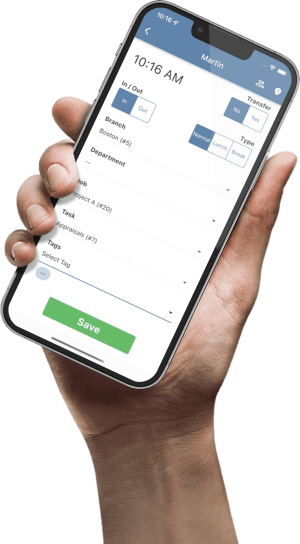

Saving businesses time and money through better workforce management since 2003.
Copyright © 2026 TimeTrex. All Rights Reserved.