

The Quiet Margin Leak in Oilfield Well Service Work
Well service companies often run three truths at once: the signed field ticket says what the customer approved, payroll says what the crew must be paid, and job costing says whether the work made money. The business starts leaking margin when those records disagree, especially across long shifts, remote leases, changing crews, equipment moves, overtime rules, and delayed approvals.
TL;DR
For a US oilfield well service contractor, a field ticket should not live as a separate paperwork artifact from timekeeping, payroll, and job costing. The ticket proves billable work. Payroll proves wage obligations. Job costing proves whether the job, well, customer, service line, district, or crew was profitable. When those three records are reconciled days later through spreadsheets, texts, PDFs, and supervisor memory, the company can overpay, underbill, misclassify overtime, miss change-order work, bury nonproductive time, and quote the next job from bad history.
The fix is not simply "go paperless." The fix is a connected control loop: schedule the crew, verify location and attendance, capture ticket detail at the job, route approvals fast, convert approved time into payroll rules, post labor to the right cost codes, and give managers exception reports before payroll closes and before the invoice goes out.
1. Why the disconnect hurts more in well service
Oilfield well service work is built around exceptions. A pump truck gets redirected. A crew waits on location for another contractor. A supervisor approves standby but changes the billable code. A floorhand rides with one crew and finishes with another. A hotshot run gets added after the original dispatch. The customer signs the ticket, but the payroll clock, job-cost code, equipment meter, per diem rule, and invoice line do not always receive the same version of events.
That disconnect matters because US oilfield activity is high-value, volatile, and cost sensitive. Baker Hughes reported 558 active US rigs on May 22, 2026, up 7 from the prior week but down 8 from the comparable week in 2025. Rig count is widely used as a leading indicator for demand for drilling, completion, production, and service activity. At the same time, the US Energy Information Administration reported record US crude oil production of 13.6 million barrels per day in 2025, with much of the growth in the Permian region. Service companies can be busy and still feel margin pressure if work is not captured, coded, approved, billed, and paid correctly.
Recent industry survey data reinforces the squeeze. In the Dallas Fed Energy Survey for first-quarter 2026, oilfield services firms reported improving equipment utilization and service prices, while input costs increased faster and operating margins remained negative. In plain terms: more work does not automatically mean more profit. The back office has to defend margin on every ticket.
The operational issue is simple but costly: the field ticket often becomes the commercial source of truth, while payroll and job costing use different timestamps, cost codes, pay policies, and approval paths. If payroll closes before ticket corrections are done, labor expense may post before revenue is complete. If accounting invoices from a ticket that was edited after supervisor approval, billing can miss actual labor. If job costing receives only invoice totals, managers cannot see whether the loss came from standby, travel, equipment idle time, overtime stacking, or the wrong crew mix.
2. Field ticket vs payroll vs job costing
A well service company does not have one data problem. It has three overlapping records that answer different questions. Treating them as identical creates confusion; treating them as disconnected creates margin leakage. The right approach is to define what each record owns, then connect them through shared job, worker, time, location, and approval data.
| Record | Primary question | Typical oilfield data | Failure mode when disconnected |
|---|---|---|---|
| Field ticket | What did the customer approve as work performed? | Lease, well, AFE or work order, service line, crew, unit, equipment, materials, start and stop time, standby, travel, photos, company man signature. | Approved ticket does not match crew time, add-on work is missed, edits are not reflected in payroll or job cost. |
| Payroll time | What must employees be paid under company policy and wage rules? | Clock punches, shift schedule, overtime, day rate, differentials, per diem, travel, paid standby, paid training, corrections, approvals. | Payroll gets processed from timesheets that do not reconcile to the ticket, creating overpayment, underpayment, disputes, or late corrections. |
| Job costing | Did the job make money, and why? | Customer, basin, district, rig or unit, cost center, task, labor burden, equipment cost, consumables, invoice revenue, write-offs. | Managers quote the next job from blended averages instead of true crew, customer, service-line, and nonproductive-time history. |
The field ticket is not automatically a payroll record. A signed ticket may prove billable work, but payroll still needs accurate hours worked, the correct workweek, the correct pay basis, and any overtime or regular-rate calculations. The US Department of Labor says covered employers must keep accurate records for nonexempt employees, including hours worked each day, total hours each workweek, pay basis, regular rate, straight-time earnings, overtime earnings, additions and deductions, and pay period dates.
3. Where records drift apart
The disconnect rarely comes from one dramatic mistake. It usually comes from small operational gaps that repeat across hundreds or thousands of tickets: a missing clock-out, an unapproved standby note, a lease name typed three different ways, a crew member moved mid-job, a job-cost code selected after the fact, a supervisor approving an invoice line but not a timesheet correction, or a payroll clerk keying handwritten hours under deadline.
Dispatch says one crew, the ticket shows another
A dispatcher assigns a winch truck and two hands. The supervisor adds a third hand on location. If the additional worker clocks time but never lands on the ticket, payroll cost rises without matching billable labor.
The ticket captures billable hours, not all paid hours
Crews may be paid for travel, yard time, safety meetings, waiting, cleanup, or training that is not billed the same way. Job costing needs both billable and nonbillable labor to understand margin.
Cost codes get selected after memory fades
If "standby," "rig up," "pressure test," "travel," and "equipment repair" are coded days later, managers lose the ability to tell whether the job was inefficient or simply misclassified.
Customer edits do not flow back to payroll
A company man may reduce approved ticket time, reject a material line, or change standby terms. That does not remove the wage obligation, but it must be visible to margin reports.
Payroll closes before ticket approval
When payroll is weekly and customer approval takes longer, the company pays crews before revenue is final. That is manageable only if unapproved labor appears as an exception.
Equipment and labor live in separate histories
A job may look labor-heavy because equipment cost never posted, or equipment-heavy because the crew time was coded to the wrong work order. Either way, the next bid is distorted.
| Disconnect | What it looks like in the office | Business impact | Control to add |
|---|---|---|---|
| Missing ticket-to-timesheet match | Payroll has 11.5 paid hours, ticket has 9 billable hours, and no exception note. | Unexplained margin loss or customer dispute after invoicing. | Require ticket, punch, job, and employee matching before supervisor approval. |
| Late ticket submission | Ticket photos arrive by text three days after the job. | Delayed invoice, stale approval memory, higher dispute risk. | Mobile ticket completion at job close with offline capture and queued sync. |
| Wrong cost center | Crew time is charged to the customer but not the correct well, rig, unit, or service line. | Customer-level margin appears fine while well-level or service-line profitability is wrong. | Use required cost-code fields tied to dispatch, ticket, and payroll time. |
| Overtime not forecast before payroll | The office sees overtime only after the crew has already worked it. | Unplanned labor cost, rushed approvals, and possible pay-rule errors. | Add daily overtime alerts by crew, workweek, customer, and job. |
| Customer-approved edits not tracked | Invoice gets revised, but the original ticket reason and payroll impact are not preserved. | Lost audit trail, weak dispute evidence, and unreliable job history. | Maintain approval history with edit reason, approver, timestamp, and downstream effect. |
4. Payroll compliance pressure in oilfield work
Well service workforce management is not just a billing exercise. It also sits inside wage-and-hour recordkeeping, overtime, regular-rate, safety, and fatigue realities. Many oilfield workers are full time, and BLS notes that some work more than 40 hours per week, with crews in offshore or remote areas potentially spending weeks away from home and working long shifts seven days a week. That schedule pattern makes accurate time capture important even for companies that bill customers by ticket, day, unit, stage, or job.
Federal overtime rules are a baseline. The Department of Labor states that covered, nonexempt employees generally must receive overtime pay at not less than one and one-half times the regular rate after 40 hours in a workweek. It also explains that overtime pay may need to be calculated from the regular rate when employees are paid on hourly, piece-rate, day-rate, job-rate, commission, or salary bases. That matters in oilfield services because day rates, bonuses, per diem practices, job premiums, shift differentials, and standby arrangements can complicate the regular-rate picture.
The Supreme Court's 2023 Helix Energy Solutions Group v. Hewitt decision is a useful reminder for energy employers. The worker was highly compensated and paid on a daily-rate basis while typically working 84 hours per week offshore. The Court declined to treat that pay arrangement as exempt from FLSA overtime requirements without satisfying the salary-basis conditions. For well service operators, the lesson is not that every role is nonexempt; the lesson is that pay method, exemption status, hours records, and overtime rules must be documented carefully.
Compliance and margin are connected. A timesheet correction may look like a payroll issue, but it can also reveal an unbilled ticket line. A customer rejection may look like an invoicing issue, but it does not erase the need to pay the employee correctly. Connected systems let managers see both sides at the same time.
Safety context adds another layer. OSHA identifies vehicle collisions, struck-by and caught-in hazards, explosions, falls, confined spaces, high-pressure lines, machine hazards, and long shifts among oil and gas extraction hazards. OSHA also notes that wells are often remote and require long travel, and that many companies use job safety analysis, job hazard analysis, or similar processes to identify hazards and controls. NIOSH describes oil and gas extraction worksites as temporary and dynamic, with exposure to flammable and toxic gases, heavy equipment, suspended loads, pressurized lines, long hours, shift work, irregular schedules, and long commutes.
That safety context does not turn payroll software into a safety program. It does mean workforce records should support a safer operation: who was scheduled, who was on site, who worked a long shift, who drove after a long hitch, who signed the JSA, who is qualified for the task, and which crew was exposed to a job delay or change. A field ticket that captures work without connecting to scheduling, time, qualifications, and supervisor approval leaves too much operational memory in people's heads.
5. The connected workflow
The strongest well service workflow treats the field ticket as one step in a larger labor control process. Every stage has an owner, a timestamp, a required data set, and an exception rule. The goal is not to slow down crews. The goal is to stop the back office from discovering problems only after payroll has closed, the customer has disputed the invoice, or the district manager has already priced the next job.
Interactive workflow explorer
Select a stage to see what should be controlled before the record moves downstream.
In practical terms, the workflow should look like this:
- Dispatch starts the record. Assign crew, unit, customer, lease, well, expected service line, work order, schedule, required qualifications, and any planned equipment.
- Clock-in verifies labor. Capture time through mobile, web, or time clock methods. Use geolocation, device rules, and supervisor approval where appropriate for field locations.
- The ticket captures commercial detail. Start with dispatch data so field users are not retyping the same job. Add actual labor, equipment, materials, photos, notes, standby, travel, and customer-facing line items.
- Supervisor approval reconciles exceptions. Compare ticket hours to payroll hours, scheduled crew to actual crew, planned equipment to actual equipment, and billable to nonbillable time.
- Payroll uses approved time and policies. Apply overtime, shift differentials, per diem rules, day-rate handling, paid standby, deductions, and corrections from a record that is tied back to the job.
- Job costing receives clean dimensions. Post labor by employee, branch, department, task, cost center, customer, well, service line, and quantity so managers can trust profitability reports.
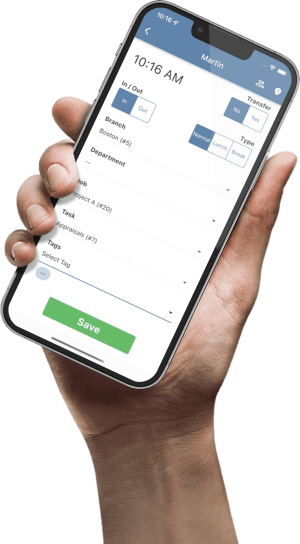
TimeTrex is built around the idea that time and attendance, scheduling, payroll, HR, reporting, and job costing should operate as a connected workforce management system. TimeTrex's public materials describe geolocation and geofencing, mobile access, payroll integration, customizable alerts, compliance support, job costing, and the ability to allocate employee time across cost centers. For oilfield well service companies, that connected structure is the difference between "we have a ticket" and "we know what the ticket did to payroll, invoice timing, and job margin."
6. Job-costing model for well service labor
Many field service companies start job costing with the customer and invoice number. That is useful for accounting, but not enough for operational decisions. Well service managers need a cost model that answers sharper questions: Which district is losing margin on standby? Which service line is underpriced after overtime? Which crew performs best on repeat work? Which customers generate the most rework, waiting time, or approval delays? Which job types need different minimum charges?
| Dimension | Why it matters | Example field values | Report it unlocks |
|---|---|---|---|
| Customer and contract | Rates, approval rules, standby terms, and invoice requirements often vary by operator. | Operator, MSA, rate sheet, approval contact, ticket format. | Customer margin, dispute rate, days to approval. |
| Lease, well, and work order | A customer-level view hides whether specific assets, pads, or projects are profitable. | Lease, well ID, API number where used, AFE, work order. | Well-level labor cost and repeat-call history. |
| Service line and task | Swabbing, wireline support, hot oiling, roustabout, workover, water transfer, and rental support have different labor profiles. | Rig up, rig down, standby, pump, pressure test, travel, repair, safety meeting. | Task-level profit and nonproductive-time analysis. |
| Crew and role | Labor cost depends on role mix, qualifications, overtime position, and supervision level. | Supervisor, operator, floorhand, driver, helper, trainee. | Crew productivity, training need, overtime exposure. |
| Equipment and unit | Labor may look profitable while equipment utilization is low, or equipment may absorb cost that belongs to labor delay. | Service rig, pump truck, winch truck, crane, compressor, rental tool, trailer. | Equipment utilization and cost per service line. |
| Pay and bill status | Paid, billable, nonbillable, disputed, and written-off time must be separated. | Paid travel, billable labor, unpaid break, approved standby, rejected standby, rework. | Labor leakage, write-off cause, bid accuracy. |
The cost model should not require the crew to complete a finance worksheet on location. Instead, it should be designed into the system: dispatch preloads known fields, mobile time capture ties employees to jobs and tasks, supervisors approve exceptions, payroll policies calculate pay correctly, and job costing receives clean labor dimensions. The less retyping required, the more reliable the record becomes.
7. Interactive estimator and readiness score
The numbers below are not a replacement for your accounting records. They are a practical way to show how small ticket, payroll, and job-costing gaps can compound across a month. Change the assumptions to fit your operation.
Field Ticket Disconnect Cost Estimator
Estimate monthly exposure from corrections, unbilled items, disputed payroll hours, and delayed reconciliation.
Connected workflow readiness checklist
Check each control your team already has in place. The score is a quick way to prioritize the next operational fix.
8. Rollout plan
The hardest part of fixing the disconnect is not naming the problem. Most service companies already know where the pain is: ticket corrections, disputed standby, overtime surprises, delayed approvals, and unclear job margins. The harder part is changing the process without slowing crews down in the field. A practical rollout should begin with the highest-volume work type or highest-dispute customer, then expand.
| Phase | What to change | What to measure | What good looks like |
|---|---|---|---|
| Week 1: Map the leak | Pull 30 to 60 recent jobs and compare ticket hours, payroll hours, invoice lines, cost codes, and customer edits. | Correction rate, missing code rate, approval delay, payroll adjustment rate, write-off reason. | A ranked list of the top 5 leak sources by dollars and frequency. |
| Weeks 2-3: Standardize data | Create required fields for customer, lease, well, work order, task, crew, equipment, bill status, and pay status. | Blank fields, duplicate customer or well naming, uncoded time, late ticket submission. | The same job identifier follows dispatch, ticket, time, payroll, and job costing. |
| Weeks 4-5: Add approvals | Route exceptions to supervisors before payroll and before invoicing. | Unapproved payroll hours, rejected tickets, mismatched crew members, overtime exceptions. | Managers see exceptions while they can still fix them. |
| Weeks 6-8: Connect reporting | Build reports for labor cost by customer, well, service line, task, crew, unit, and district. | Gross margin by work type, nonbillable hours, standby recovery, cost per ticket, cost per crew day. | Pricing, staffing, and scheduling decisions use actual job history. |
For many oilfield service teams, the first win is visibility. When supervisors can see the mismatch before payroll closes, the company can correct a job code, explain a standby difference, approve an overtime exception, attach a photo, or recover a missing billable line while the work is still fresh. The second win is trust. Payroll no longer feels like a scramble, invoices no longer depend on memory, and job costing no longer becomes a month-end argument over which spreadsheet is right.
Stop letting field tickets, payroll, and job costs tell three different stories.
TimeTrex brings scheduling, time and attendance, payroll, job costing, employee self-service, reporting, geofencing, and workforce controls into one connected system, so field labor can move from job record to payroll and profitability without the usual spreadsheet chase.
Start Your Free TimeTrex Trial9. FAQ
What is a field ticket in oilfield well service work?
A field ticket is the job record used to document work performed for a customer. It commonly includes the customer, lease or well, service line, crew, equipment, materials, work hours, standby, travel, notes, photos, and customer approval. It is often the basis for invoicing, but it should be reconciled with payroll time and job-cost data before the job is treated as financially complete.
Why do field tickets and payroll hours differ?
They differ because billable time and paid time are not always the same. A crew may be paid for travel, training, yard time, meetings, waiting, cleanup, or other work that is not billable under the customer contract. A connected system should preserve that difference instead of forcing payroll and billing to use the same number without explanation.
How does job costing help an oilfield service company?
Job costing shows where labor, equipment, materials, and overhead were consumed, then compares those costs to job revenue. For well service companies, useful job costing should break cost down by customer, well, service line, task, crew, district, unit, bill status, and pay status so managers can price future work from real history.
Can a signed field ticket replace timekeeping?
No. A signed ticket can support billing and customer approval, but employers still need accurate wage records. The Department of Labor lists required records for covered nonexempt employees, including hours worked each day and total hours worked each workweek, pay basis, regular rate, straight-time earnings, overtime earnings, additions and deductions, and pay period details.
What is the fastest way to reduce the disconnect?
Start by matching each ticket to employee time, job code, customer, supervisor approval, and invoice status before payroll closes. Then report exceptions: ticket hours that do not match paid hours, missing cost codes, late approvals, overtime surprises, customer edits, and unbilled labor. Fix the highest-frequency exception first.
10. Sources
- Baker Hughes Rig Count Overview and Summary Count
- US Energy Information Administration: The United States set record energy production in 2025, again
- Federal Reserve Bank of Dallas: Q1 2026 Energy Survey
- US Bureau of Labor Statistics: Oil and Gas Workers
- US Bureau of Labor Statistics: Support Activities for Mining
- US Bureau of Labor Statistics: Fatal Occupational Injuries by Industry, 2024
- US Department of Labor: Overtime
- US Department of Labor: Recordkeeping and Reporting
- US Department of Labor: Fact Sheet #56C, Bonuses under the FLSA
- Justia US Supreme Court Center: Helix Energy Solutions Group, Inc. v. Hewitt
- OSHA: Oil and Gas Extraction Hazards
- CDC/NIOSH: Using Public Health Data to Protect Workers in the Oil and Gas Extraction Industry
- CDC/NIOSH: Working Hours and Fatigue
- Enverus: OpenTicket Digital Field Ticket Software
- Enverus: Oilfield Services Suite
- TimeTrex Workforce Management
- TimeTrex Construction Workforce Management
- TimeTrex Administrator Guide: What is TimeTrex?