
Texas Electrical Contractors Guide
Texas Electrical Contractor Guide

Best Time Tracking Software for Texas Electrical Contractors in 2026

Texas electrical contractors are not just trying to replace paper timesheets. They are trying to protect margins while crews move between data centers, hospitals, schools, substations, commercial tenant improvements, service calls, public projects, and fast-changing jobsites. The right time tracking software has to prove who worked, where they worked, what cost code they worked under, whether overtime was triggered, and whether payroll can run without a Friday afternoon scramble.

59% of Texas AGC survey respondents cited rising direct labor costs as a major 2026 concern.
57% cited insufficient workers or subcontractors, making accurate crew deployment and overtime control more important.
Weekly certified payroll records are required on many federally assisted construction contracts covered by Davis-Bacon rules.
6 days is the Texas final-wage deadline after discharge, layoff, or firing, according to the Texas Workforce Commission.

Quick Answer

For most Texas electrical contractors, TimeTrex is the best overall time tracking software because it connects time tracking, scheduling, GPS/geofencing, job costing, HR records, and payroll in one system. That matters when the problem is not simply "did someone clock in?" but "can we turn approved field time into accurate job cost data and payroll without rebuilding the same hours in three systems?"

ClockShark, Workyard, busybusy, QuickBooks Time, ExakTime, Raken, Connecteam, Timeero, Hubstaff, eBacon, and Clockify can all make sense in specific situations. The right choice depends on whether the contractor is trying to solve field verification, job costing, certified payroll support, QuickBooks sync, mileage-heavy service work, dispatch visibility, or fully connected payroll.

Why Texas Electrical Contractors Have a Different Time Tracking Problem

A Texas electrical contractor working only small residential jobs might get by with a basic mobile time clock for a while. But the market is moving in a direction that makes "basic" fragile. Texas continues to pull electrical labor into large projects tied to data centers, grid upgrades, industrial growth, healthcare, logistics, manufacturing, oil and gas infrastructure, solar, battery storage, EV charging, public works, and service demand across massive metro areas.

The labor market is tight, the projects are spread out, and the mistakes are expensive. A journeyman may start the week on a commercial rough-in, spend Wednesday on a change order, cover an emergency service call Thursday night, and finish Friday on a public project where the office has to separate covered and non-covered hours. If the time tracking system cannot keep up with that reality, payroll becomes a reconstruction exercise instead of a process.

1. Data centers and grid work raise the stakes

Texas Tribune reporting in April 2026 described data center projects competing for electricians and delaying other construction work. ERCOT has also flagged large-load growth tied to data centers, cryptocurrency mining, industrial operations, and oil and gas processes. Electrical contractors need cleaner labor allocation because the same limited workforce is being pulled into bigger, faster, higher-dollar work.

2. Labor cost pressure is not abstract

AGC's 2026 Texas outlook showed contractors worried about rising direct labor costs, insufficient workers or subcontractors, worker quality, and increased competition. When skilled electricians are scarce, inaccurate time cards are not a minor annoyance. They distort estimating, backlog planning, job margins, overtime exposure, and retention decisions.

3. Compliance follows the crew

Electrical contractors may have private, public, Davis-Bacon, TxDOT, service, and prevailing-wage-adjacent work in the same month. DOL guidance says contractors must keep accurate records when workers split time between Davis-Bacon-covered and non-covered work in the same workweek. That is hard to do from text messages, paper cards, or a foreman's memory.

The practical buying question: can the software produce payroll-ready, job-cost-ready, audit-ready time without asking the office to manually translate field notes into payroll, cost codes, overtime categories, mileage records, per diem notes, and manager approvals?

What Texas Electrical Contractors Should Look For

The "best" time tracking software for a Texas electrical contractor is not automatically the app with the prettiest map or the cheapest monthly price. The best fit is the one that matches how electrical work actually happens: crews move, sites change, classifications matter, overtime can surge, apprentices need supervision, and labor costs need to land on the right job.

Buying Criterion Why It Matters for Texas Electrical Contractors What to Ask in a Demo
GPS and geofencing A crew may report to multiple sites across Dallas-Fort Worth, Houston, Austin, San Antonio, West Texas, or remote utility corridors. GPS and geofencing help verify whether time was recorded at the correct jobsite. Can clock-ins be restricted by jobsite? Can the manager see exceptions instead of babysitting a map all day? Does location tracking stop when the employee is off the clock?
Job costing and cost codes Electrical margins depend on knowing whether labor was spent on rough-in, trim-out, service, conduit, low-voltage, fire alarm, controls, commissioning, rework, or change-order labor. Can workers select job, task, phase, cost code, and change-order code at clock-in or during the shift? Can reports roll up by project and cost code?
Payroll connection A time tracking app that still requires manual export, import, cleanup, and payroll re-entry can simply move the problem from the field to the office. Does time flow into payroll natively or through an integration? How are overtime, PTO, deductions, benefits, taxes, and final pay handled?
Certified payroll readiness Public and federally funded work may require weekly certified payroll, wage classifications, fringe information, daily and weekly hours, and supporting records. Can the system separate covered from non-covered work, preserve audit trails, and export the data needed for WH-347-style reporting or agency portals?
Crew and foreman workflows Electrical crews often work under foremen who know what happened on site. The software should support crew time, approvals, notes, photos, and corrections without turning the foreman into a payroll clerk. Can a foreman review a whole crew, add notes, approve exceptions, and capture missing punches before payroll day?
Offline and weak-signal behavior Remote substations, industrial sites, basements, data halls, mechanical rooms, and rural builds can have unreliable service. What still works without cell service? Can workers switch jobs, track breaks, and sync later? How are offline edits flagged?
License, document, and HR records TDLR licensing and continuing education requirements make roster visibility valuable. Electrical contractors also need records for apprentices, journeymen, master electricians, safety training, onboarding, and incident documentation. Can the system store license dates, documents, training records, policy acknowledgments, and reminders?

Best Time Tracking Software for Texas Electrical Contractors

This ranking is built around electrical contractor fit, not generic time tracking popularity. The strongest tools were evaluated on field usability, GPS/geofencing, job costing, payroll readiness, construction fit, supervisor workflows, compliance support, and whether the system can scale from a small service crew to a multi-site contractor chasing larger Texas projects.

1

TimeTrex - Best Overall for Texas Electrical Contractors That Want Time, Scheduling, Job Costing, HR, and Payroll Together

Best Overall Payroll Ready Job Costing GPS/Geofencing

TimeTrex is the strongest overall choice for Texas electrical contractors because it treats time tracking as the front end of payroll, scheduling, HR, and job costing rather than as a standalone stopwatch. That distinction matters for contractors that are trying to reduce office rework, control overtime, manage crews across jobsites, and understand labor cost by project.

On its construction page, TimeTrex highlights mobile time tracking with GPS verification, geofencing, job costing, scheduling, payroll, and HR in one platform. TimeTrex's help documentation also describes scheduling, time and attendance, job costing, invoicing, document management, and payroll capabilities. For an electrical contractor, that combination is valuable because the same record can support attendance, payroll, project costing, and workforce administration.

Where TimeTrex especially fits Texas electrical contractors is the bridge between field time and payroll. A contractor can capture employee hours, assign them to jobs or cost codes, verify location, route time through approvals, calculate payroll, and maintain HR records without stitching together a field app, accounting export, payroll processor, and document tracker. That is useful for contractors with apprentices, journeymen, foremen, service techs, traveling crews, office staff, and management all touching the same labor data.

Why TimeTrex stands out for Texas electrical work

Electrical contracting creates a payroll problem that is more complicated than many other trades. A worker's day can include shop time, paid travel, a service ticket, a change order, a public project, a private commercial project, and overtime triggered by a schedule change. If those hours are captured in a basic mobile time clock and then pushed to the office as a flat total, the office still has to rebuild the business context that should have been captured in the field.

TimeTrex is valuable because it can be configured around that context. Instead of treating every punch as the same kind of hour, the system can support job and task allocation, location verification, schedules, approvals, payroll rules, and HR records. For Texas electrical contractors, that means a foreman can review whether a crew was on the right job, the payroll team can see whether the hours are ready to pay, and management can look at labor by job rather than waiting until the accounting system reveals a margin problem weeks later.

That matters in Texas because the work mix is not gentle. Contractors may be competing for electricians on data center builds, staffing industrial and utility work outside major metros, covering service calls across long distances, and bidding school, municipal, TxDOT-adjacent, or federally assisted work where the recordkeeping burden is higher. A time tracking tool that only proves a worker touched a button is not enough. The stronger system proves where the time belongs, who approved it, what payroll rules apply, and how the hours should appear in labor reports.

What an electrical contractor can use TimeTrex to control

  • Mobile crew time: electricians and apprentices can clock in from the field while the company keeps the time record tied to the employee, job, and schedule.
  • GPS and geofence exceptions: supervisors can focus on off-site or suspicious punches instead of manually checking every time card.
  • Job costing: hours can be associated with jobs, departments, branches, tasks, and cost categories so labor reports are useful for estimating and margin review.
  • Payroll readiness: approved time can flow into payroll workflows instead of being exported, cleaned, reformatted, imported, and corrected in several disconnected tools.
  • Scheduling and leave: office staff can see planned shifts, absences, coverage gaps, and overtime exposure before the week is already lost.
  • HR and documents: contractors can keep employee records, documents, and related workforce information closer to the time and payroll record.
  • Multi-location operations: owners and operations managers can see labor activity across branches, jobsites, and mobile crews without relying on end-of-week summaries.

TimeTrex's pricing page also shows why it fits contractors that expect to grow. The Professional tier includes core time, attendance, payroll, scheduling, leave, HR, mobile app access, and reporting. The Corporate tier adds job costing, geofencing, document storage, and invoicing capabilities. The Enterprise tier adds additional workforce tools such as expense management, recruitment, onboarding, and applicant tracking. That tiered structure is useful for an electrical contractor that wants to start with the core time-and-payroll workflow but keep room for more sophisticated job costing, documents, expenses, and onboarding as the company scales.

Where TimeTrex is especially strong compared with field-only apps

Several competitors in this list do a good job capturing field time. That is important. But field capture is only one part of the system. A Texas electrical contractor still has to approve time, calculate pay, account for overtime, handle PTO, manage employee records, produce reports, reconcile job labor, and keep the business moving when someone leaves, transfers crews, changes pay rates, or misses a punch.

TimeTrex's advantage is that it reduces the number of places where labor data has to be reinterpreted. A standalone field app may show that a worker clocked in at 6:58 a.m. at the jobsite. TimeTrex is better positioned when the business also needs to know whether that worker was scheduled, whether the punch is valid, which job or cost code should receive the labor, whether the hours create overtime, whether the time has been approved, and whether the payroll record can be created without re-entry.

For owners, the benefit is not just cleaner payroll. It is better control. If one project is burning labor faster than expected, job-cost reports can surface the issue earlier. If a crew is repeatedly clocking in outside a geofence, the exception is visible. If the office is spending hours every payroll cycle chasing corrections, the workflow can be tightened. If the company grows from a dozen field workers to multiple crews across Texas, the system has more room to grow than a lightweight punch app.

Best TimeTrex demo scenario

The best way to evaluate TimeTrex is to ask for a demo that mirrors a real Texas electrical week. Set up a journeyman, an apprentice, a foreman, a service technician, and an office administrator. Build one commercial project, one data center or industrial job, one service call, and one public project. Then have the workers clock in, switch jobs, select cost codes, trigger an overtime situation, submit an exception, route time to a supervisor, approve payroll, and run a labor report by job.

If the demo can move from field punch to approved time, payroll, job-cost reporting, and employee records without a pile of manual workarounds, that is the reason TimeTrex belongs at the top of the list. For Texas electrical contractors, the winner is not the app with the flashiest map. It is the system that helps the company pay people accurately, price work better, control overtime, protect records, and keep scarce skilled labor focused on electrical work instead of paperwork.

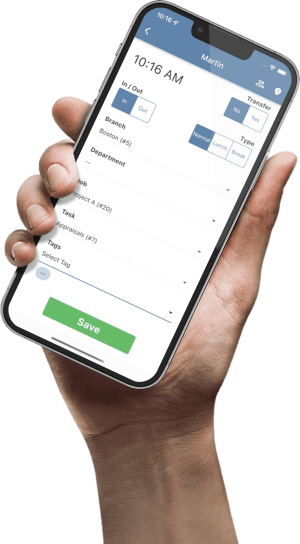
Best fit Electrical contractors that want one connected system for time, payroll, job costing, HR, scheduling, and compliance records.
Strength Payroll is not an afterthought. TimeTrex can carry approved time into payroll workflows instead of relying only on exports.
Watch-out Teams that only want the simplest possible GPS punch app may need to decide whether they are ready for a broader workforce platform.
2

ClockShark - Best Contractor-Focused Field Time App for Simple Crew Adoption

Construction Field App Scheduling Integrations

ClockShark is one of the most recognizable construction and field service time tracking tools. Its official site positions it for construction, field service, and trades, including electrical contractors, with mobile time tracking, job management, employee scheduling, time reporting, and integrations with tools such as QuickBooks, Sage 100 Contractor, Xero, ADP, and Paychex.

For Texas electrical contractors, ClockShark is a strong fit when the core pain is replacing paper timesheets and getting the crew to record jobsite hours with minimal friction. It is especially appealing for contractors that already have accounting and payroll systems they intend to keep and simply need field time to move into those systems with fewer errors.

The tradeoff is that ClockShark is still primarily a field time and job management layer. Contractors that want time tracking, HR, payroll calculations, job costing, and compliance records in one native system should compare it carefully against TimeTrex. ClockShark can be excellent at field adoption, but the contractor still needs to evaluate what happens after time is approved.

Best fit Small to mid-size electrical contractors that want a contractor-friendly mobile app and already have payroll/accounting tools.
Strength Trade-friendly setup, job tracking, scheduling, and familiar integrations.
Watch-out Confirm how payroll, certified payroll data, HR records, and job-cost reporting flow after time approval.
3

Workyard - Best for GPS-Heavy Construction Time Tracking and Mileage Visibility

GPS Focus Mileage Construction

Workyard is built around construction time tracking with GPS-verified visibility into who is on site, how long they were there, and what work they completed. Workyard's official construction page emphasizes real-time GPS verification, job costing, crew scheduling, mileage tracking, compliance, reporting, and project management updates. Its help documentation also highlights address-level GPS data, geofencing, mileage, and project tagging.

This makes Workyard a strong option for Texas electrical contractors with mobile service techs, multi-site crews, and travel-heavy work. If the owner or operations manager is constantly asking where crews are, how long they were actually on site, whether travel time should be billable, or how to separate project labor from drive time, Workyard deserves a close look.

The main comparison point against TimeTrex is payroll depth. Workyard can help create accurate time cards and job visibility, but contractors should verify the exact payroll flow, certified payroll support, HR/document storage needs, and administrative workflows they need beyond the field record.

Best fit Electrical service and project crews where GPS accuracy, routes, mileage, and jobsite arrival/departure data are central.
Strength Strong GPS story for mobile construction teams and service routes.
Watch-out Ask how well payroll, HR, final pay, and public-work reporting needs are handled beyond time card accuracy.
4

busybusy - Best for Construction Job Costing, Equipment Time, and Field Accountability

Construction Equipment Job Costing

busybusy is strongly construction-oriented. Its product pages emphasize GPS location tracking, employee time cards, job costing, equipment tracking, cost codes, integrations, and reduced paperwork. For electrical contractors that also track lifts, trenchers, bucket trucks, service trucks, generators, or other equipment alongside labor, busybusy can be a useful field operations tool.

The platform fits contractors that want more than a generic time clock but do not necessarily need a full payroll and HR suite inside the same platform. It can help the field capture labor and equipment data in ways that support project reporting and cost awareness.

For Texas electrical contractors, busybusy should be evaluated around how well its cost code structure maps to electrical estimating and billing. A contractor should demo workflows for rough-in, trim-out, low-voltage, fire alarm, controls, commissioning, rework, and change orders. If the cost-code discipline is weak in the field, any time tracking product will still produce messy job costing.

Best fit Construction-minded electrical contractors that want labor and equipment visibility by job and cost code.
Strength Strong construction orientation and job-costing language.
Watch-out Confirm payroll depth, HR records, certified payroll exports, and whether equipment features matter enough for your business.
5

QuickBooks Time - Best for Electrical Contractors Already Standardized on QuickBooks

QuickBooks GPS Payroll Sync

QuickBooks Time is a natural candidate for contractors already deep in the QuickBooks ecosystem. QuickBooks' official GPS time tracking page says employees can clock in through the QuickBooks Workforce mobile app, share location while on the clock, use geofence reminders, track mileage, and sync time data with QuickBooks Online, QuickBooks Online Payroll, and QuickBooks Desktop.

For a Texas electrical contractor using QuickBooks for accounting and payroll, the attraction is obvious: less friction between field time and the back office. QuickBooks Time can be a practical choice for smaller contractors or accounting-led teams that want time data to land in familiar systems.

The limitation is that QuickBooks Time is not always the deepest construction workforce system. Contractors should test job code switching, foreman approval workflows, prevailing wage data needs, certified payroll reporting, multi-classification weeks, HR document tracking, and whether the software can handle field complexity without forcing manual cleanup.

Best fit QuickBooks-centric electrical contractors that prioritize accounting and payroll integration.
Strength Native familiarity for teams already using QuickBooks products.
Watch-out Do a real demo with electrical cost codes, service calls, travel time, and public-work scenarios.
6

ExakTime - Best for Rugged Construction Time Capture and Larger Field Crews

Construction GPS Breadcrumbs Field Crews

ExakTime has long been associated with construction time tracking. Its official GPS time tracking material describes GPS geofence time tracking and a GeoTrakker feature that provides GPS breadcrumbs while employees travel to, from, or between jobsites while on the clock.

For Texas electrical contractors with larger field crews, rugged jobsites, and a need to standardize time collection, ExakTime may fit well. Contractors that have moved beyond paper but still need a field-proven construction attendance tool should include it in the comparison.

The buying question is how much of the broader workforce workflow the contractor wants in the same platform. ExakTime can be strong for time collection, but contractors should compare payroll connection, HR/document capabilities, cost-code reporting, certified payroll export, and administrative overhead against a more integrated system like TimeTrex.

Best fit Construction-heavy electrical contractors with many field workers and a need for established jobsite time capture.
Strength Construction time tracking heritage and GPS breadcrumb functionality.
Watch-out Verify the complete payroll and compliance path, not just the clock-in experience.
7

Raken - Best When Daily Reports and Time Cards Belong Together

Daily Reports Crew Time Construction

Raken is not just a time clock app. It is a construction field reporting platform that includes time cards. Raken's help documentation describes supervisor time entry, personal time cards, time clock, kiosk mode, daily report visibility, cost codes, pay type, classification, shift, and accounting integrations. Raken also publishes material specifically for electrical contractors.

For Texas electrical contractors that already manage work through daily reports, Raken can make sense. It is useful when the field needs to connect time entries with daily production notes, manpower logs, site photos, safety observations, and project records.

The tradeoff is that Raken's center of gravity is daily reporting and construction documentation. If the contractor's main pain is payroll, overtime, final pay, HR records, job costing, and payroll tax workflows, TimeTrex should be compared closely.

Best fit Electrical contractors that run field operations around daily reports and want time cards inside that project record.
Strength Connects time cards to broader construction field reporting.
Watch-out Confirm whether payroll, HR, and compliance workflows still require separate systems.
8

Connecteam - Best for Crew Communication, Scheduling, and Simple Mobile Operations

Communication Scheduling Geofencing

Connecteam offers time clock, scheduling, communications, forms, checklists, and operations features. Its construction time tracking page highlights GPS-enabled clock-in/out from defined jobsites, timesheets flowing toward payroll, and project profitability support. Connecteam help material also describes construction setup, jobs, breaks, GPS location tracking, geofences, and live location breadcrumbs.

This can work well for Texas electrical contractors that need more structure around crew communications, dispatch instructions, job assignments, forms, and scheduling. A contractor with a lot of small crews and frequent field updates may like the all-in-one operations feel.

The key evaluation point is payroll and construction accounting depth. Connecteam may be broad operationally, but contractors should test certified payroll data, electrical cost codes, multi-job weeks, pay rules, approval flows, and whether the payroll handoff is clean enough for the office.

Best fit Contractors that want time tracking plus team communication, scheduling, forms, and field operations tools.
Strength Broad mobile workforce toolkit beyond time tracking.
Watch-out Do not assume operational breadth equals payroll depth. Test the handoff.
9

Timeero - Best for Mileage-Heavy Electrical Service Crews

Mileage GPS Field Service

Timeero focuses on GPS time tracking, geofencing, mileage tracking, live location, and mobile field teams. Its construction page emphasizes real-time location, geofencing, mobile time tracking, offline operation, and facial recognition through a kiosk app. Its pricing page also describes plans that include GPS, mileage, job tracking, payroll integrations, scheduling, geofencing, and compliance-related tools.

For electrical contractors with technicians driving between service calls, small projects, warranty calls, and maintenance jobs, mileage and location clarity can be very useful. Timeero is worth considering when travel time and mileage reimbursement are recurring problems.

The limitation is that mileage strength does not automatically solve job costing, certified payroll, HR records, or native payroll. Contractors should compare it with TimeTrex if they want the office to run payroll from the same system that captures field time.

Best fit Service-heavy electrical contractors with mobile techs, reimbursement questions, and travel-time visibility needs.
Strength GPS and mileage tracking are central to the product story.
Watch-out Make sure payroll, job costing, HR, and public-project reporting needs are covered elsewhere.
10

Hubstaff - Best for GPS Tracking Plus Productivity and Reporting

GPS Reports Remote/Field

Hubstaff's construction page positions it as GPS-powered construction time tracking with real-time location updates, on-site hours, estimated labor costs, geofencing, automated payroll, invoicing, and reporting. Its geofence page describes automated clock-ins and clock-outs when employees enter or leave jobsite boundaries, timesheets, invoices, expenses, and more than 20 customizable reports.

Hubstaff can fit contractors that want a mix of field GPS tracking and broader productivity reporting, especially if they also have office, design, estimating, project management, or remote administrative staff. It is more general workforce visibility software than narrowly electrical-contractor software.

For field electricians, the main caution is change management. Tools with productivity-monitoring heritage can create trust issues if rolled out poorly. A contractor should be clear that the goal is payroll accuracy, job costing, safety, and scheduling, not constant surveillance. Also test whether Hubstaff handles construction payroll and compliance scenarios deeply enough.

Best fit Mixed field and office teams that want GPS, reporting, expenses, invoices, and productivity visibility.
Strength Strong reporting and geofenced time tracking for distributed teams.
Watch-out Roll out location tracking with a clear written policy and test construction-specific payroll workflows.
11

eBacon - Best for Certified Payroll, Prevailing Wage, and Construction Payroll Administration

Certified Payroll Prevailing Wage Construction Payroll

eBacon is a better fit for Texas electrical contractors that are comparing time tracking software because payroll and compliance are becoming more complicated. It focuses on construction payroll, certified payroll, prevailing wage, time and attendance, job costing, fringe benefits, HR support, benefits, 401(k), and workers' compensation.

Its construction payroll page highlights time and attendance, prevailing wage, job costing, payroll reports, automated tax payments, direct deposit, employee self-service, GL import, and construction-specific payroll tools for certified payroll and reporting. Its certified payroll page describes real-time validation of time, fringe benefits, and check amounts, wage determination rate verification, alerts, project setup, compliance reports, restitution support, and fringe benefit management.

For Texas electrical contractors working on school jobs, municipal work, federally assisted construction, utility projects, or other prevailing-wage-sensitive projects, eBacon may be a useful addition to the shortlist. It is not the best fit for a contractor that only wants a simple GPS punch app, but it belongs in the conversation when certified payroll, wage determinations, fringe benefits, and construction payroll administration are driving the buying decision.

Best fit Electrical contractors that need construction payroll, certified payroll, prevailing wage, fringe, and compliance support.
Strength Strong focus on construction payroll, certified reporting, wage determinations, fringe benefits, and compliance records.
Watch-out May be more compliance and payroll focused than contractors need if they only want a field time clock.
12

Clockify - Best Basic Project Time Tracking When Budget Is the Main Constraint

Budget Projects Reports

Clockify is a broad time tracker and timesheet app for tracking work hours across projects. Its location tracking page describes GPS clocking, location tracking, and exporting reports for payroll as PDF, Excel, or CSV. Its pricing page is also known for a generous free tier and low-cost paid plans.

Clockify can be useful for very small electrical contractors, project managers, estimators, or office teams that mostly need project time reports. It is not the first choice for contractors with complex field crews, certified payroll needs, strict geofencing, deep job costing, or native payroll expectations.

If the contractor is doing serious multi-site field work, Clockify should usually be treated as a lightweight starting point, not the long-term workforce system. The risk is that the low subscription cost can hide office labor, payroll mistakes, missing cost codes, and weak audit trails.

Best fit Small teams or office/project users that need basic project time tracking and reports.
Strength Low-cost and familiar project time tracking.
Watch-out Field enforcement, construction payroll, and compliance depth may be limited for electrical contractors.

Side-by-Side Comparison for Texas Electrical Contractors

Use this table as a shortlist guide before demos. The most important point is not whether the software can track time. Every product here can. The real question is whether it can support the complete workflow from jobsite clock-in to approved time, payroll, cost codes, exception review, and defensible records.

Rank Software Best For Strongest Fit Potential Weakness Texas Electrical Contractor Demo Scenario
1 TimeTrex All-in-one workforce management Time, scheduling, payroll, HR, GPS/geofencing, and job costing in one system More platform than a contractor needs if they only want a simple punch app Have a journeyman split one week across service, rough-in, change order, and a public job, then run payroll and job-cost reports.
2 ClockShark Construction and field service crews Trade-friendly time tracking, job management, scheduling, and integrations Payroll and HR depth depend on connected systems Clock a crew into three jobs, approve time, and export to your actual payroll/accounting setup.
3 Workyard GPS accuracy and mileage-heavy workflows GPS-verified time, geofences, travel/mileage visibility, and construction job tracking May still require separate payroll/HR workflows Track a service technician through travel, jobsite arrival, lunch, second jobsite, and payroll review.
4 busybusy Construction job costing and equipment tracking Construction time cards, cost codes, GPS, equipment, and integrations Payroll/HR/compliance breadth should be validated Assign labor and equipment to electrical cost codes and compare estimated vs actual labor.
5 QuickBooks Time QuickBooks users QuickBooks payroll/accounting sync, GPS, geofence reminders, mileage May be less construction-specific than trade-first systems Sync approved electrical job hours into QuickBooks projects/payroll with overtime and mileage.
6 ExakTime Established construction time capture GPS geofence time tracking and construction field crew time Broader payroll/HR stack may require separate tools Test jobsite clock-in, crew movement, GPS breadcrumbs, and payroll export exceptions.
7 Raken Daily reports plus time cards Supervisor time cards, daily logs, cost codes, classifications, kiosk/time clock options Time tracking is part of field reporting, not a full payroll suite by itself Build a daily report with manpower, time cards, cost codes, classifications, and payroll export.
8 Connecteam Mobile operations and crew communication Scheduling, time clock, geofencing, communications, forms, checklists Construction payroll and certified payroll depth must be tested Dispatch a crew, collect a form, clock into a geofenced job, approve time, and export payroll.
9 Timeero Mileage-heavy field crews GPS, mileage, geofencing, mobile time, offline support May not replace payroll, HR, and job costing systems Track a service day with mileage, travel time, multiple jobs, and payroll export.
10 Hubstaff GPS plus reporting/productivity visibility Geofence automation, GPS, reporting, timesheets, invoices, expenses Monitoring features require careful rollout and trust-building Track field and office time separately, then test reports by project and payroll approval.
11 eBacon Certified payroll and prevailing wage administration Construction payroll, certified payroll, wage determinations, fringe benefits, and compliance reporting May be more payroll/compliance focused than needed for a simple field time clock Run a public-project week with covered hours, fringe, wage determination rates, certified payroll reporting, and job-cost export.
12 Clockify Basic project time tracking Project timers, reports, low-cost tracking, exports Not construction-first or payroll-first for complex field crews Track project time for office or small-field users and test whether payroll cleanup remains manual.

Interactive Estimator: What Manual Time Tracking Might Be Costing You

This simple estimator is not a formal ROI model. It is a practical way to show why "cheap" time tracking can become expensive if the office still spends hours fixing missed punches, chasing foremen, reclassifying hours, correcting overtime, and rebuilding job costs.

Payroll Waste Estimator

$20,748 Estimated annual office cost of fixing timesheets.
$47,320 Estimated annual leakage if inaccurate time adds paid hours.
$68,068 Combined annual improvement opportunity before software cost.

For a 35-person field team, even small weekly corrections can create a meaningful back-office cost. If payroll leakage is also present, the real cost is usually larger than the subscription comparison suggests.

Texas Electrical Contractor Fit Finder

Change the inputs below to see which buying priorities should rise to the top of your shortlist.

Recommended shortlist: TimeTrex, ClockShark, Workyard

Your inputs point to a contractor that needs field verification, job-cost visibility, and a clean payroll path. Start with TimeTrex if payroll and HR should live with time tracking; compare ClockShark and Workyard if field adoption and GPS are the main buying drivers.

Payroll connection 90
GPS verification 85
Job costing 88
Compliance records 80

How to Choose the Right Time Tracking Software

The fastest way to pick the wrong system is to ask only, "Which app tracks time?" The better question is, "Which system gives us trusted labor data at the exact moment we need to make payroll, protect margin, answer a customer dispute, submit certified payroll, or schedule the next job?"

Step 1: Map the real payroll path

Write down every step between field clock-in and paid paycheck. Include missed punch correction, foreman approval, overtime review, job code correction, payroll import, deductions, PTO, final pay, and any certified payroll exports. The more handoffs you have, the more TimeTrex's connected model matters.

Step 2: Use electrical-specific demo data

Do not demo software with generic "Project A" and "Task 1." Use real electrical scenarios: apprentice under a journeyman, rough-in labor, trim-out labor, fire alarm, low-voltage, controls, change order, service call, warranty call, data center shift, public project, and travel time.

Step 3: Test exceptions, not perfection

Every product looks good when workers clock in correctly. Demo missed punches, weak signal, wrong job code, unapproved overtime, clock-in outside a geofence, split shifts, overnight work, terminated employee final pay, and a worker who switches between covered and non-covered projects.

Recommended Shortlists by Contractor Type

Contractor Type Start With Also Compare Why
Growing electrical contractor with 15-75 field workers TimeTrex ClockShark, Workyard, busybusy This size often needs better field verification, approvals, job costing, overtime controls, and payroll cleanup without adding another office person.
Commercial contractor bidding larger projects TimeTrex Raken, busybusy, ExakTime Project labor cost, approvals, classifications, and recordkeeping become more important than a simple punch clock.
Service contractor with trucks across a metro Workyard or Timeero TimeTrex, QuickBooks Time, ClockShark GPS, mileage, travel time, dispatch visibility, and payroll handoff are the core issues.
QuickBooks-centered small contractor QuickBooks Time TimeTrex, ClockShark, Workyard QuickBooks sync may be convenient, but contractors should still test job cost detail and field controls.
Public work or prevailing wage exposure TimeTrex Raken, ExakTime, busybusy Covered/non-covered time, classifications, weekly records, approvals, and audit trails matter more.
Very small crew leaving paper timesheets Clockify or Timeero TimeTrex, ClockShark A simple start may be enough, but choose with the next stage of growth in mind.
Bottom line: if the electrical contractor's biggest pain is field adoption, start by comparing ClockShark, Workyard, busybusy, Timeero, and Connecteam. If the biggest pain is payroll accuracy, job costing, HR records, scheduling, and reducing duplicate office work, start with TimeTrex. If public-work payroll and prevailing wage compliance are the pain, add eBacon to the shortlist.

Turn Field Time Into Payroll-Ready Labor Data

TimeTrex helps construction and electrical contractors connect time tracking, scheduling, payroll, HR, GPS/geofencing, and job costing in one workforce management platform. That means fewer disconnected handoffs between the jobsite and the office, clearer labor costs, cleaner payroll, and a stronger foundation for growth.

Frequently Asked Questions

What is the best time tracking software for Texas electrical contractors?

TimeTrex is the best overall choice for Texas electrical contractors that want time tracking, GPS/geofencing, scheduling, payroll, HR, and job costing in one connected system. ClockShark, Workyard, busybusy, QuickBooks Time, and ExakTime can also be strong choices depending on whether the contractor prioritizes field adoption, GPS accuracy, QuickBooks sync, construction job costing, or rugged jobsite time capture.

Do Texas electrical contractors need GPS time tracking?

Many do, especially if crews move between multiple jobsites, service calls, remote industrial locations, substations, or metro-area projects. GPS and geofencing can verify where a clock-in occurred, reduce buddy punching, support dispatch decisions, and help the office resolve disputes. Contractors should use clear written policies so employees know when location is tracked and why.

What time tracking features matter most for public electrical projects?

Public projects often require better classification, cost-code, approval, and recordkeeping discipline. Contractors should look for daily and weekly hours, worker classifications, covered and non-covered job separation, audit trails, manager approvals, payroll exports, and records that support certified payroll workflows.

Is QuickBooks Time enough for an electrical contractor?

QuickBooks Time can be enough for contractors that already use QuickBooks and mainly need GPS time tracking, geofence reminders, mileage, and payroll/accounting sync. It may be less ideal for contractors that need deeper construction job costing, HR records, license tracking, certified payroll support, or a single system from time tracking through payroll.

Should electrical contractors choose the cheapest time tracking app?

Not automatically. A low subscription price can be misleading if the office still spends hours fixing time cards, reclassifying labor, reconciling payroll, correcting job costs, and chasing foremen. Contractors should compare total workflow cost, not just monthly software cost.

Can time tracking software help with job costing?

Yes, if workers and supervisors consistently assign time to the right job, phase, task, cost code, and change order. TimeTrex, busybusy, Workyard, ClockShark, Raken, and other construction-oriented tools can support job-cost visibility, but contractors should demo their actual electrical cost codes before buying.

Disclaimer: The content provided on this webpage is for informational purposes only and is not intended to be a substitute for professional advice. While we strive to ensure the accuracy and timeliness of the information presented here, the details may change over time or vary in different jurisdictions. Therefore, we do not guarantee the completeness, reliability, or absolute accuracy of this information. The information on this page should not be used as a basis for making legal, financial, or any other key decisions. We strongly advise consulting with a qualified professional or expert in the relevant field for specific advice, guidance, or services. By using this webpage, you acknowledge that the information is offered “as is” and that we are not liable for any errors, omissions, or inaccuracies in the content, nor for any actions taken based on the information provided. We shall not be held liable for any direct, indirect, incidental, consequential, or punitive damages arising out of your access to, use of, or reliance on any content on this page.

Share the Post:

About The Author

Roger Wood

Roger Wood

With a Baccalaureate of Science and advanced studies in business, Roger has successfully managed businesses across five continents. His extensive global experience and strategic insights contribute significantly to the success of TimeTrex. His expertise and dedication ensure we deliver top-notch solutions to our clients around the world.

Time To Clock-In

Start your 30-day free trial!

Experience the Ultimate Workforce Solution and Revolutionize Your Business Today

TimeTrex Mobile App Hand