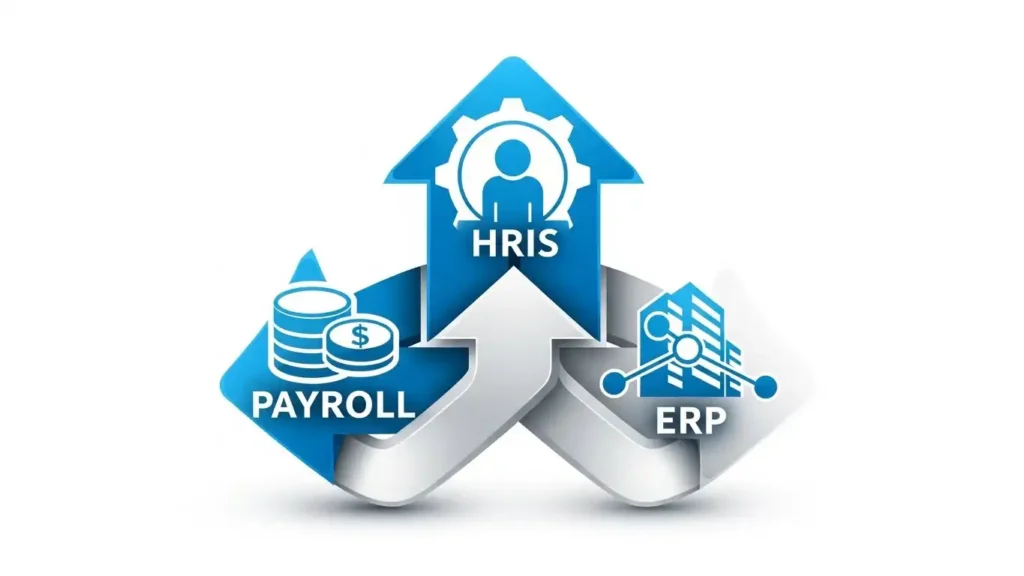
Online Technology Integrations Unifying Payroll, HRIS, and ERP Systems Seamlessly
Modern workforce management relies on the seamless unification of Payroll, HRIS, and ERP systems. By breaking down data silos, organizations can automate syncing, ensure real-time visibility, and significantly reduce administrative errors. This article explores how integrated ecosystems enhance compliance, streamline workforce planning, and prepare businesses for the future of digital operations.
Article Index
- The Shift Toward Unified Digital Ecosystems
- How Integration Enhances HR and Payroll Operations
- The Role of ERP in Organizational Integration
- Why Integration Matters for Workforce Planning
- Integrations Within an Online Work Environment
- Technology’s Role in Supporting Integration
- The Importance of Workforce Management Systems
- Emerging Skills Needed to Support Integrated Systems
- Challenges in Achieving Seamless Integration
- Strategies for Effective System Integration
- How Integrated Systems Influence Organizational Culture
Modern organizational operations rely increasingly on interconnected digital systems. As workflows become more complex and geographically dispersed, organizations have turned to integrated platforms to reduce administrative burden, eliminate redundant work, and streamline employee-related processes. Among the most important components of internal operations are payroll software, HR information systems (HRIS), and enterprise resource planning (ERP) frameworks.
Each of these systems supports a distinct function, yet they overlap significantly in how they manage employee data, financial records, and operational resources. Historically, many organizations approached these systems separately, creating silos that led to repetitive data entry, inconsistencies, errors, and time-consuming reconciliation tasks. As digital capabilities expanded, so did the need for platforms that could communicate seamlessly.
The Shift Toward Unified Digital Ecosystems
Organizations adopting integrated platforms often cite similar motivations: reliability, accuracy, and efficiency. The trend toward integration reflects a broader movement toward interconnected operations, allowing information to flow from one system to another without manual intervention.
| Fragmented Systems | Unified Digital Ecosystems |
|---|---|
| Requires manual data entry across multiple tools. | Automated data flow between Payroll, HRIS, and ERP. |
| High risk of data mismatches and errors. | Single source of truth ensures consistency. |
| Delayed visibility into labor costs. | Real-time insights for better decision-making. |
| Difficult to audit and maintain compliance. | Streamlined auditing and regulatory compliance. |
How Integration Enhances HR and Payroll Operations
At the center of organizational administration are HR and payroll functions. When these systems fail to communicate, errors compound rapidly. In integrated environments, the flow of information creates more dependable operations.
Automated Syncing
When an employee is hired, terminated, promoted, or transferred, HRIS updates immediately reflect in payroll and ERP records. This eliminates the lag time between an HR action and its financial execution.
Reduction in Errors
Manual data entry is minimized, decreasing risks such as incorrect pay rates, misapplied deductions, or outdated job classifications.
Real-Time Visibility
Managers and financial teams gain clearer insight into staffing levels, compensation costs, and labor forecasting, allowing for proactive rather than reactive management.
Improved Compliance
Integration helps organizations adhere to labor regulations, tax reporting, and record-keeping requirements without relying on manual cross-checks.
The Role of ERP in Organizational Integration
ERP systems provide the backbone for broader operational management, bringing together financial, supply-chain, procurement, inventory, and other organizational functions. When ERP tools integrate with payroll and HRIS, key benefits emerge including unified financial tracking, streamlined budgeting, and simplified auditing.
The market for ERP software is expected to grow significantly. According to market analysis, the sector is projected to expand at a compound annual growth rate (CAGR) of 11.7% from 2025 to 2030, rising from an estimated USD 64.83 billion in 2024 to USD 123.41 billion by 2030. By centralizing sensitive data and offering access controls, ERP integrations also improve data security.
Why Integration Matters for Workforce Planning
Organizations rely on accurate information to make informed decisions about staffing. Integration enhances workforce planning by providing leaders with clear insights into employee distribution, labor costs, job classifications, and departmental needs.
| Planning Area | Integration Benefit |
|---|---|
| Resource Allocation | Managers can identify staffing shortages or surpluses instantly based on real-time data. |
| Labor Forecasting | Historical and real-time data support more accurate predictions for hiring cycles and seasonal needs. |
| Compensation Strategy | Integrated systems clarify the relationship between budget constraints, market rates, and employee needs. |
| Performance Alignment | Links employee performance records with financial data to understand ROI and workload distribution. |
Integrations Within an Online Work Environment
As more work shifts online, organizations increasingly rely on digital systems to manage remote and hybrid teams. Integration becomes even more crucial under these conditions because physical workflows are less feasible.
In distributed environments, integrated systems support:
- Real-time updates regardless of employee location.
- Remote onboarding and offboarding processes.
- Centralized communication channels.
- Automated benefits enrollment via self-service portals.
- Cloud-based approval workflows for time-off and expenses.
Technology’s Role in Supporting Integration
Modern integrations rely on evolving technology frameworks that can link complex systems without requiring organizations to overhal their entire digital infrastructure.
APIs (Application Programming Interfaces)
APIs allow systems to exchange structured data securely and efficiently, acting as the bridge between disparate software.
Middleware Integration Layers
Some organizations utilize integration platforms that sit between systems, ensuring consistent data flow and translation between different data formats.
Cloud-Based Connectors & Modular Architecture
Cloud technologies support real-time syncing and automatic updates, while modular architecture allows systems to expand or adapt as organizational needs change.
The Importance of Workforce Management Systems in the Integration Process
Workforce management (WFM) systems often sit at the intersection of HRIS, payroll, and ERP. They manage time tracking, scheduling, attendance, labor allocation, workload balancing, and forecasting.
When workforce management systems integrate with other platforms, organizations gain a clearer picture of day-to-day operations. Accurate Time Data feeds directly into payroll, reducing administrative load, while Better Workforce Allocation ensures scheduling tools connect with budgetary requirements.
Emerging Skills Needed to Support Integrated Systems
Maintaining interconnected digital environments requires professionals with strong analytical and technical skills. Many organizations seek individuals who understand the interplay between HR data, financial systems, and technological infrastructure.
Interest in online technology degree pathways continues to grow as professionals look to build competencies that support integration efforts. These educational routes introduce learners to systems analysis, information management, business process engineering, and cloud architecture—foundational skills for managing modern organizational settings.
Challenges in Achieving Seamless Integration
While integration offers clear advantages, organizations often encounter obstacles when implementing unified systems. Understanding these challenges helps organizations prepare realistically.
| Challenge | Description & Impact |
|---|---|
| Legacy Infrastructure | Older systems may lack compatibility with newer platforms, requiring careful planning or middleware solutions. |
| Data Quality Issues | Integration amplifies existing errors; if records contain inconsistencies, they will propagate across all systems. |
| Resource Constraints | Integration projects require significant time, specialized training, and support from multiple departments. |
| Organizational Resistance | Teams accustomed to older workflows may hesitate to adopt new automated processes. |
| Security & Compliance | Cybersecurity frameworks must be updated to protect interconnected systems from vulnerabilities. |
Understanding these challenges helps organizations prepare realistically for integration and maintain operational continuity during transitions. Strategic workforce management is essential in ensuring that employees receive proper training and support throughout the integration process. Additionally, clear communication and effective change management strategies can help mitigate organizational resistance and ensure a seamless transition to new workflows.
Strategies for Effective System Integration
Organizations looking to unify payroll, HRIS, and ERP often benefit from adopting structured strategies:
Conduct a Needs Assessment
Identify which systems require integration and the specific workflows that will benefit most from automation.
Standardize Data Practices
Ensure naming conventions, job codes, compensation structures, and employee records follow consistent formats across all databases.
Establish Cross-Department Collaboration
IT, HR, payroll, and finance teams must collaborate to align their goals and ensure seamless transitions.
Test Incrementally & Document Workflows
Gradual rollouts help organizations address issues before full implementation, while clear documentation supports troubleshooting and future updates.
How Integrated Systems Influence Organizational Culture
When processes are unified and streamlined, employees experience greater clarity and consistency. Integrated systems help cultivate an environment where expectations are transparent, processes are predictable, and trust in internal systems increases.
With reliable systems in place, employees can focus on meaningful work rather than administrative confusion. Employee benefits and staff retention are likely to increase, as employees feel supported and empowered by efficient processes. This positive organizational culture can also lead to improved collaboration and innovation within the company.
Conclusion
Unified digital ecosystems play an increasingly important role in supporting modern organizational needs. By integrating payroll, HRIS, and ERP systems, organizations can reduce administrative burdens, enhance accuracy, and support more effective planning. As workforce expectations evolve and digital environments expand, the ability to maintain seamless system communication becomes a fundamental component of organizational effectiveness.
Ensure Total Compliance Across Your Systems
Discover how TimeTrex can unify your payroll and tax compliance strategies seamlessly.
Explore Tax Compliance FeaturesDisclaimer: The content provided on this webpage is for informational purposes only and is not intended to be a substitute for professional advice. While we strive to ensure the accuracy and timeliness of the information presented here, the details may change over time or vary in different jurisdictions. Therefore, we do not guarantee the completeness, reliability, or absolute accuracy of this information. The information on this page should not be used as a basis for making legal, financial, or any other key decisions. We strongly advise consulting with a qualified professional or expert in the relevant field for specific advice, guidance, or services. By using this webpage, you acknowledge that the information is offered “as is” and that we are not liable for any errors, omissions, or inaccuracies in the content, nor for any actions taken based on the information provided. We shall not be held liable for any direct, indirect, incidental, consequential, or punitive damages arising out of your access to, use of, or reliance on any content on this page.
Time To Clock-In
Start your 30-day free trial!
Experience the Ultimate Workforce Solution and Revolutionize Your Business Today
- Eliminate Errors
- Simple & Easy To Use
- Real-time Reporting
Saving businesses time and money through better workforce management since 2003.
Copyright © 2025 TimeTrex. All Rights Reserved.