


Time Clock Apps for Manufacturing
Article Index
- The Digital Metamorphosis
- The Operational Complexity of Shift Scheduling
- Shift Differentials and Compensation Architecture
- The Regulatory Labyrinth: FLSA and the Regular Rate
- Micro-Compliance: Donning, Doffing, and Rounding
- Architectural Paradigms: Integrated vs. Unified
- Eradicating the Hardware Tax: Biometrics
- Algorithmic Configuration in TimeTrex
- Competitive Landscape Analysis
TL;DR
The manufacturing sector's move to Industry 4.0 extends beyond robotics to human capital management. Traditional "counting time apps" are obsolete, replaced by sophisticated Workforce Management (WFM) ecosystems. For manufacturers, the primary challenge is managing complex shift differentials, blended overtime rates, and FLSA compliance without "payroll leakage." This article contrasts "Integrated" API-based systems with "Unified" database platforms like TimeTrex, demonstrating why unified architecture is the only way to accurately automate weighted average calculations and ensure compliance in a 24/7 operational environment.
The Digital Metamorphosis of Manufacturing Workforce Management
The manufacturing sector is currently navigating the profound complexities of a digital revolution frequently characterized as Industry 4.0. While public discourse and capital investment frequently center this transformation on robotics, automation, and supply chain artificial intelligence, a parallel and equally critical evolution is occurring within the domain of human capital management. The historical concept of the "counting time app" (a digital analog to the mechanical punch clock) has metamorphosed into a highly sophisticated node within a broader, algorithmic Workforce Management (WFM) ecosystem.
In the modern enterprise, labor is no longer treated as a fungible commodity where time is merely a quantity to be tallied at the end of a pay period. Instead, the contemporary digital landscape demands platforms capable of capturing time, contextualizing it through geospatial and biometric data, and immediately transmuting that raw input into financial execution via native payroll processing and real-time job costing.
For manufacturing facilities, the administrative burden of time tracking is uniquely severe and operationally paramount. Unlike standardized office environments or white-collar sectors where hours are largely predictable, manufacturing plants frequently operate on continuous, 24/7 schedules to maximize the return on capital investments in heavy machinery and facility overhead. This relentless operational tempo necessitates the deployment of complex, rotating shift patterns that push the boundaries of manual tracking and legacy software systems. Furthermore, labor costs in the manufacturing sector routinely consume up to 35 percent of gross sales, meaning that even fractional inefficiencies in payroll calculation can result in catastrophic margin degradation over a fiscal year.
When organizations rely on disparate systems, paper timesheets, or basic spreadsheet formulas to manage these schedules, they inevitably encounter severe "payroll leakage". This phenomenon is driven by a confluence of unauthorized overtime, human error in data transcription, buddy punching, and the misapplication of complex shift differentials. Industry estimates indicate that an average of 2.2 percent of gross payroll is lost solely to the fraudulent practice of "buddy punching," where employees clock in on behalf of absent or late colleagues.
The Operational Complexity of Manufacturing Shift Scheduling
The fundamental challenge of manufacturing workforce management originates directly on the production floor, where the imperative for continuous operations requires coverage models that deviate significantly from standard diurnal business hours. Organizations with 24/7, 365-day operations face immense logistical and human resources hurdles in recruiting, staffing, and retaining employees for evening, night, and weekend shifts. To satisfy ambitious production targets without causing severe employee burnout or running afoul of mandated rest periods, facilities deploy intricate rotating schedules that demand precise tracking.
Figure 1: Typical labor distribution across shifts. Managing pay rules for the 55% of staff on "Non-Standard" shifts is the primary administrative burden.
The implementation of these schedules requires WFM software capable of automating headcount requirements, shift bidding, and start times across a wide variety of structural models. Standard industrial shift patterns include the traditional 3-Shift model, the Continental 12-hour model, and Compressed Work Weeks. More extreme rotations, such as the DuPont or the 2-2-3 (Pitman) schedule, present profound administrative and physiological challenges.
| Shift Strategy | Structural Configuration | Ideal Industrial Application | Key Vulnerabilities & Operational Drawbacks |
|---|---|---|---|
| Standard 3-Shift | Three 8-hour shifts (Day, Swing, Night) | 24-hour continuous production operations | High turnover on night shifts requiring constant differential management and recruitment. |
| Continental (12-hr) | Two 12-hour shifts (Day Crew, Night Crew) | Maximizing weekend coverage and reducing turnover | Severe 12-hour shift fatigue; highly brittle schedule making it difficult to cover sudden absences. |
| Compressed Week | Four 10-hour shifts (4x10) | Facilities offering three-day weekends to staff | Requires highly specific daily overtime compliance tracking depending on state law. |
| 2-2-3 / Pitman | 12-hour shifts rotating on a 14-day cycle | 24/7 coverage with built-in staff rest days | Oscillating 36-hour and 48-hour weeks causing complex FLSA calculation; poor weekend-off distribution. |
| DuPont | 12-hour shifts on a 4-week cycle | Chemical and continuous process manufacturing | Features a "Hell Week" of six shifts in seven days; guaranteed 72-hour workweek causing high fatigue. |
When workers alternate between day, evening, and night shifts across a single bi-weekly pay period, traditional spreadsheet formulas break down entirely. Payroll specialists quickly lose track of which specific hours qualify for premium pay, leading to data entry errors that compound across hundreds of workers.
Shift Differentials and the Compensation Architecture
To successfully incentivize employees to work undesirable hours, manufacturing organizations heavily utilize shift differentials (voluntary pay premiums applied to specific, non-standard shifts). According to comprehensive industry compensation surveys, shift differentials are significantly more common in manufacturing, production, and customer support roles than in any other economic sectors, with a staggering 83 percent of manufacturing companies offering them. Furthermore, 36 percent of organizations extend these premiums beyond the hourly workforce to include salaried personnel operating in critical supervisory roles.
Figure 2: Hourly Wage Composition. Note how differentials (Orange) significantly alter the total cost per hour compared to the Base Rate (Blue).
The financial structure of these differentials varies widely based on specific company policy, geographical labor market pressures, and collective bargaining agreements. These premiums manifest in payroll systems in several distinct formats:
- Fixed dollar-per-hour addition (e.g., $0.50 to $1.25 extra per hour).
- Percentage of the employee's base hourly rate (typically ranging between 5 and 15 percent).
- Flat alternative wage rate applied to all eligible hours worked during a specific operational window.
Although shift differentials function mathematically to increase the overall pay rate of an employee, they must not be conflated with statutory overtime. Overtime is a strict legal requirement dictated by federal and state labor laws, triggered specifically by the total quantum of hours worked (e.g., exceeding 40 hours in a week), whereas shift differentials are employer-guided incentive mechanisms based solely on the temporal placement of those hours. However, this distinction creates a perilous legal intersection that traps many employers: while the offering of shift differentials is entirely voluntary, their inclusion in overtime calculations is absolutely mandatory under federal law.
The Regulatory Labyrinth: FLSA Compliance and the "Regular Rate"
Payroll compliance issues quietly cost manufacturing employers hundreds of millions of dollars annually. The most prevalent violations investigated by the U.S. Department of Labor (DOL) are rarely acts of intentional wage theft; rather, they stem from systemic miscalculations of overtime, the misclassification of supervisors, improperly handled non-discretionary bonuses, and incomplete records that quietly repeat across multiple pay periods.
The Fair Labor Standards Act (FLSA) mandates that employers compensate non-exempt employees at a rate of one-and-a-half times their "regular rate of pay" for all hours worked in excess of 40 hours in a single workweek. The central compliance trap for manufacturing organizations lies in the precise legal definition of the "regular rate." A highly common and heavily penalized error is the failure of employers to include shift differentials, non-discretionary performance bonuses, and other premium compensation in the baseline regular rate of pay before calculating the time-and-a-half overtime premium.
The Mathematics of the Weighted Average Overtime Calculation
To achieve strict legal compliance, the payroll software cannot simply apply a 1.5x multiplier to the base hourly wage. The mathematical protocol demanded by federal regulators requires a multi-step synthesis of all remuneration.
| Calculation Component | FLSA Definition & Mathematical Function | Example Application Scenario |
|---|---|---|
| Total Straight Time | All remuneration including base pay, shift differentials, and bonuses. Equation: (Base Hrs × Base Rate) + (Diff Hrs × Diff Rate). | 40 hours at $20/hr + 8 hours at $30/hr = $1,040 Total Straight Time. |
| Regular Rate (Blended) | Total remuneration for employment divided by total hours worked. Equation: Total Straight Time / Total Hours. | $1,040 / 48 Total Hours = $21.66 Blended Regular Rate. |
| Half-Time Premium | The legal overtime premium addition. Equation: Regular Rate × 0.5. | $21.66 × 0.5 = $10.83 Half-Time Premium per overtime hour. |
| Total Gross Pay | The final compliant payout. Equation: Total Straight Time + (Half-Time Premium × Overtime Hours). | $1,040 + ($10.83 × 8 OT hours) = $1,126.64 Total Gross Pay. |
A frequent and highly dangerous pitfall for manufacturers relying on outdated software or manual spreadsheets is the "Incorrect 1.5x Multiplier" method. In this flawed methodology, systems erroneously multiply the Blended Regular Rate by 1.5 and apply that new rate to the overtime hours. This calculation is fundamentally flawed because it double-pays the straight-time portion of the overtime hours, resulting in significant, continuous overpayment and financial leakage for the employer.
Figure 3: Processing time and error comparison. Automation reduces payroll processing time and manual corrections by over 90%, eliminating "payroll leakage" directly linked to FLSA miscalculations.
Micro-Compliance: Donning, Doffing, and the Mathematics of Rounding
Beyond the macroeconomic mathematical complexities of the blended rate, manufacturers face intense operational scrutiny regarding compensable time boundaries at the micro-level. In manufacturing environments utilizing hazardous materials, clean rooms, or specialized heavy machinery, the pre-shift activity of putting on protective gear (donning) and the post-shift activity of removing it and washing (doffing) frequently cross the threshold into compensable time.
To manage the chaotic influx of hundreds of workers clocking in simultaneously at shift changes, facilities rely heavily on automated time clock rounding policies. Under the U.S. Department of Labor (DOL) Electronic Code of Federal Regulations (eCFR), employers are explicitly permitted to round employee punch times to the nearest specific time increment rather than to the exact minute. Legally accepted increments include the nearest 5 minutes, the nearest one-tenth of an hour (6 minutes), or the nearest quarter of an hour (15 minutes).
However, this practice is legally predicated entirely on the presumption that the rounding "averages out" over a period of time. If a time tracking system systematically rounds down exclusively to the benefit of the employer without equitable upward rounding, it immediately triggers FLSA violations. Modern systems utilize a "Strict Schedule" feature; if an employee is scheduled for 8:00 AM and punches in at 7:48 AM, the system safely records the punch as 8:00 AM, rounding the punch forward to prevent unauthorized wage inflation while remaining legally compliant.
Architectural Paradigms: The Structural Failure of Integrated APIs
The contemporary market for workforce management software is bisected by two fundamentally opposed software architectures: the "Best-of-Breed" Integrated model and the Unified Database model.
The "Integrated" Model Risks
The "Integrated" model is championed by lightweight platforms that focus exclusively on one vertical (such as scheduling or time tracking) and rely heavily on Application Programming Interfaces (APIs) to push data to separate, specialized payroll processors. While offering modular flexibility, this model introduces severe architectural fragility. Data exists in disparate silos. Time tracking software acts as a passive container, merely collecting punch times without an inherent understanding of the complex financial tax tables, union rules, or labor laws required to process that time.
The Paradigm Standard: Unified Database Architecture
Conversely, the "Unified" architecture, pioneered and refined by comprehensive systems like TimeTrex, positions time tracking, scheduling, leave management, human resources, and the automated payroll engine natively within a single codebase, reading and writing to the exact same database tables. This structure completely eradicates the concept of "synchronization"; there are no API bridges to break, no comma-separated value (CSV) file exports required, and no data mapping conflicts.
Because the Advanced Payroll Engine is natively unified with the time clock module, the system functions as an "Active Compliance Engine". When a manufacturing employee punches out of a night shift, the unified system applies the shift differential logic at the precise "point of punch". The zero-latency gross-to-net calculation engine immediately processes the blended weighted average, computes the compliant FLSA half-time premium, and updates the financial dashboard in milliseconds.
Eradicating the Hardware Tax: Biometrics and Geolocation
Historically, manufacturing environments relied on physical "sentinel" time clocks. These legacy models, still heavily pushed by massive enterprise providers, trap employers in a cycle of high capital expenditure (CapEx) and an ongoing "Hardware Tax".
Modern software ecosystems circumvent this financial drain by commoditizing enterprise-grade security through hardware-agnostic, "Bring Your Own Device" (BYOD) and standard tablet kiosk modalities. By leveraging platforms like TimeTrex, manufacturers utilize advanced biometric validation, specifically a 1:N facial matching algorithm. This technology converts employee facial geometry into encrypted digital templates (hashes) rather than storing actual photographs, thereby maintaining strict biometric privacy standards while guaranteeing absolute identity verification.
Furthermore, to ensure off-site or field-based manufacturing employees are accurately tracked, the system features robust location intelligence using geospatial polygonal geofencing and GPS stamping. TimeTrex ensures that employees can only clock in when physically present within the authorized, digitally fenced boundaries of the manufacturing plant or job site.
Algorithmic Configuration: Automating Differentials in TimeTrex
The core competency of TimeTrex for the manufacturing sector is its limitless, rules-based engine capable of automating any permutation of shift differentials and multi-jurisdictional overtime logic. Rather than relying on rigid, pre-configured toggles that inevitably fail to cover niche union contracts, TimeTrex allows administrators to construct foundational policy "building blocks" (Pay Codes, Pay Formulas, Contributing Shifts, and Premium Policies).
Figure 4: The Unified Rules Engine. Processing happens at the point-of-punch with zero latency, eliminating the need to manually reconcile timecards with separate payroll platforms.
For highly regulated states such as California, the TimeTrex Advanced Overtime Engine is legally indispensable. California labor law strictly deviates from standard federal FLSA mandates. The TimeTrex engine automatically tracks daily thresholds, natively calculating time-and-a-half for any time worked in excess of eight hours up to twelve hours per day, double time for hours in excess of twelve hours in one day, and executing the complex logic required for the first eight hours of the seventh consecutive day of work in a single workweek.
Competitive Landscape Analysis
The SME Sector: The Limitations of QuickBooks Time
QuickBooks Time (formerly TSheets) maintains significant market penetration due to its integration with Intuit. However, its underlying architecture exhibits severe limitations when deployed in complex manufacturing environments. The primary vulnerability of QuickBooks Time is its linear, mutually exclusive rule application mechanism. Within its "Pay Rate Engine," if a timesheet triggers a specific rule (such as a shift differential), it becomes structurally locked, and no subsequent rules can be applied to that exact same block of time. Consequently, a timesheet cannot natively accommodate both a shift differential and a weekly overtime rule simultaneously within the automated engine.
The Enterprise Sector: ADP, UKG, and the Legacy Trap
At the highest end of the enterprise spectrum, platforms like ADP (Workforce Now) and UKG (Ultimate Kronos Group) offer immense global scale. However, these legacy giants present distinct disadvantages for agile manufacturing operations. Firstly, they rely heavily on the aforementioned "Hardware Tax," frequently tying their software ecosystems to expensive, proprietary physical time clocks. Secondly, industry comparisons note that within legacy platforms, the management of highly complex union rules, cascading premiums, or granular job costing often introduces the need for custom workarounds or manual administrative steps, lacking the fluid, instantaneous automation found in specialized unified engines.
As the regulatory environment tightens (evidenced by the upcoming 2026 Qualified Overtime W-2 reporting requirements) the transition to a unified, software-defined workforce management ecosystem is not merely a technological upgrade; it is an architectural and financial imperative for survival in the modern manufacturing economy.
Figure 5: Cumulative Cost Projections. Implementing an automated unified database flattens long-term administrative costs compared to the escalating expense of manual reconciliation.
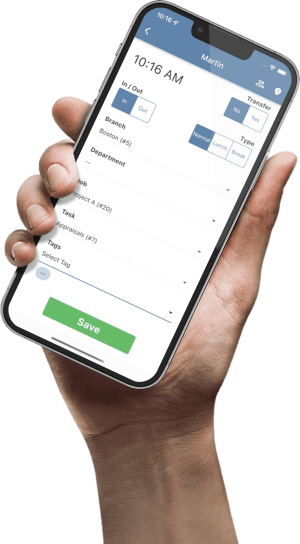
Empower Your Workforce on the Go
Eliminate buddy punching and ensure geospatial compliance with the TimeTrex Mobile App.
Explore Mobile Access Features
Disclaimer: The content provided on this webpage is for informational purposes only and is not intended to be a substitute for professional advice. While we strive to ensure the accuracy and timeliness of the information presented here, the details may change over time or vary in different jurisdictions. Therefore, we do not guarantee the completeness, reliability, or absolute accuracy of this information. The information on this page should not be used as a basis for making legal, financial, or any other key decisions. We strongly advise consulting with a qualified professional or expert in the relevant field for specific advice, guidance, or services. By using this webpage, you acknowledge that the information is offered “as is” and that we are not liable for any errors, omissions, or inaccuracies in the content, nor for any actions taken based on the information provided. We shall not be held liable for any direct, indirect, incidental, consequential, or punitive damages arising out of your access to, use of, or reliance on any content on this page.
About The Author

Roger Wood
With a Baccalaureate of Science and advanced studies in business, Roger has successfully managed businesses across five continents. His extensive global experience and strategic insights contribute significantly to the success of TimeTrex. His expertise and dedication ensure we deliver top-notch solutions to our clients around the world.
Time To Clock-In
Start your 30-day free trial!
Experience the Ultimate Workforce Solution and Revolutionize Your Business Today
- Eliminate Errors
- Simple & Easy To Use
- Real-time Reporting

Saving businesses time and money through better workforce management since 2003.
Copyright © 2026 TimeTrex. All Rights Reserved.