
Time Tracking Software for Nurses and 24-Hour Shifts
Nursing time tracking is not just a clock-in problem. It is a coverage, fatigue, payroll, overtime, break, on-call, shift-differential, and audit-trail problem. This guide explains how healthcare employers should evaluate time tracking software when nurses may work extended shifts, 24-hour duty, callback, standby, float assignments, or live-in/private-duty care.
Quick Answer
The best time tracking software for nurses working long or 24-hour shifts must capture the full story behind the hours. A payroll-ready record should show when the nurse was scheduled, when the nurse actually worked, whether the time was regular duty, standby, callback, training, meal interruption, float work, sleep-time interruption, or overtime, who approved the exception, and how the approved time moved into payroll.
For most healthcare employers, a 24-hour shift is not a normal punch. It can trigger several separate rules at once: the ordinary weekly overtime rule, hospital or nursing facility 8-and-80 overtime arrangements, shift differentials, on-call restrictions, meal-period rules, sleep-time agreements, state or provincial restrictions, collective bargaining language, fatigue-risk review, and patient-coverage handoff requirements.
TimeTrex is a fit when the organization wants one connected process for scheduling, time and attendance, approvals, leave, payroll, job costing, and reporting. The operational goal is not simply to record that a nurse worked 24 hours. The goal is to make the record explainable before payroll closes.
What the system has to answer
- Was the nurse working, waiting, sleeping, on call, or fully relieved?
- Were meal periods actually uninterrupted?
- Did the shift cross midnight, a workweek boundary, a holiday, or a premium window?
- Did a callback, handoff, charting task, or training session add compensable time?
- Did overtime include differentials, bonuses, or multiple rates correctly?
- Did the manager review fatigue, coverage, and payroll exceptions before approval?
Hours can trigger sleep-time, callback, handoff, overtime, and fatigue controls.
Federal overtime commonly starts after 40 hours in a workweek for covered nonexempt employees.
Hospitals and nursing care facilities may use a special 14-day overtime system when the requirements are met.
FLSA time records generally need to be preserved for two years; payroll records for three.
Why Nurse Time Tracking Is Different
Nursing work is continuous, high-context, and difficult to pause cleanly. A retail employee may clock out at a scheduled time and leave the floor. A nurse may be stuck waiting for relief, finishing a medication pass, completing charting, transferring a patient, responding to an urgent call light, covering a short-staffed unit, floating to another department, or staying after a shift because the next nurse is delayed.
That is why nurse time tracking software has to be designed around exceptions. The normal schedule matters, but the exceptions are where payroll risk and operational risk live. A system that records only start and end times may still leave payroll guessing about a missed meal, a callback, an on-call restriction, an emergency extension, a 24-hour private-duty case, or a fatigue-risk override.
Healthcare employers also have more stakeholders attached to the same time record. Nursing leadership cares about coverage and safe handoff. Payroll cares about hours, regular rate, overtime, and differentials. Compliance cares about recordkeeping and break rules. Finance cares about labor cost by unit, patient program, department, grant, payer, facility, or client. Employees care about being paid correctly and not having their breaks erased by default. The time record has to serve all of them.
Clinical coverage
A nurse may be physically present, actively charting, available on the unit, or waiting for relief. The record needs enough context to tell the difference between scheduled coverage, worked time, and a manager-approved exception.
Payroll calculation
Healthcare payroll often includes base rates, weekend premiums, night shift differentials, charge nurse premiums, holiday rules, callback minimums, per diem schedules, and overtime on the regular rate.
Fatigue risk
Extended nursing shifts can create safety concerns for the nurse, patient, and organization. Time data should help managers see repeated long shifts, short turnaround, missed breaks, and excessive overtime patterns.
What "24-Hour Shift" Can Mean in Nursing
The phrase "24-hour shift" is easy to say and risky to configure loosely. In bedside hospital nursing, a true 24-hour scheduled shift is usually exceptional and may conflict with facility policy, state law, union language, fatigue standards, or patient-safety practice. In other settings, however, employers may use 24-hour terminology for on-call coverage, private-duty nursing, home health cases, live-in care, emergency staffing, or combined scheduled duty plus standby.
Time tracking software should not treat every 24-hour label the same way. The system should force the employer to identify the work pattern, pay rule, sleep/rest assumption, approval requirement, and exception path. That is especially important because a single 24-hour period can contain multiple categories of time.
Continuous scheduled duty
The nurse is expected to remain on duty for the full period. This should generally be tracked as worked time unless a valid rule and agreement allow a specific exclusion, such as an eligible sleep period for a duty period of 24 hours or more.
On-call or standby coverage
The nurse may be away from the facility but restricted by response time, phone requirements, geographic limits, or patient-coverage obligations. Software needs separate fields for standby time, calls handled remotely, and time returned to work.
Callback after a regular shift
A nurse completes a shift, leaves, and returns for an urgent need. The time record should capture callback start/end, callback minimums if policy requires them, travel rules where applicable, department, patient program, and manager approval.
Private-duty or home health case
A nurse may work in a private home, sometimes for long blocks. The system needs to distinguish active care, sleep or rest arrangements, fully relieved personal time, travel between clients, and payer/client job costing.
Emergency staffing extension
A nurse scheduled for 12 hours may be held over because relief is unavailable. That is not the same as a planned 24-hour tour. It should trigger overtime, missed-break review, fatigue review, and a reason code.
Consecutive shifts across midnight
Two shifts can look like one 24-hour block if the schedule rolls through midnight or a workweek boundary. Software needs reliable day, workweek, premium, and overtime calculations instead of relying on calendar-day shortcuts.
Practical rule: never let "24-hour shift" be a single unclassified pay code. Break it into worked time, meal/rest periods, standby, sleep period, interruption, callback, travel, handoff, training, and manager-approved exception categories where those categories apply.
Compliance Controls for Nurses and Long Shifts
This article is not legal advice, and healthcare employers should configure rules with counsel or qualified payroll compliance support. Still, there are several wage/hour principles that should shape the buying checklist for nurse time tracking software.
Under U.S. federal rules, covered nonexempt employees generally must be paid for all hours worked, and overtime generally applies after 40 hours worked in a workweek. The U.S. Department of Labor also has healthcare-specific guidance covering rounding, travel time, training, meal breaks, rest breaks, on-call time, unauthorized overtime, and common nursing care facility mistakes. If software cannot capture the underlying facts, payroll cannot confidently apply the rule.
| Control area | What the rule means operationally | What the software should capture | Why it matters for 24-hour shifts |
|---|---|---|---|
| Hours worked | If the nurse is on duty, required to be at the prescribed place, or allowed to continue working, the time may be compensable even when it was not scheduled. | Actual punches, schedule variance, late charting, holdover reason, manager approval, and edit audit trail. | A long shift often grows from unscheduled extension, not a planned schedule line. |
| Overtime | Covered nonexempt employees generally receive overtime after 40 hours in a workweek; hospitals and nursing care facilities may have specific 8-and-80 arrangements when requirements are met. | Workweek start, daily hours, 14-day period where applicable, regular rate elements, premiums, differentials, and payroll rule version. | A 24-hour block can create daily overtime, weekly overtime, or both depending on the rule set. |
| Hourly nurse status | DOL guidance says hourly registered nurses should receive overtime, while some salaried RNs may meet professional exemption tests; LPNs generally do not qualify for the learned professional exemption. | Employee classification, pay type, job role, exemption status, department, and approval authority for changes. | Misclassifying a long-shift role can multiply payroll exposure quickly. |
| Meal breaks | A bona fide meal period generally requires the employee to be completely relieved from duty. Interrupted nursing meal periods can become paid time. | Scheduled meal, actual meal attestation, interruption reason, patient-care interruption, missed-meal approval, and auto-deduct override. | Automatic deductions become risky when long shifts make interruptions more likely. |
| Sleep time | For duty periods of 24 hours or more, federal regulations allow exclusion of a bona fide scheduled sleep period only under specific conditions; interruptions must be counted, and if enough sleep is not possible the exclusion can fail. | Written agreement, furnished sleep facility, scheduled sleep window, interruption punches, total sleep obtained, and payroll treatment. | Sleep-time rules are not a generic deduction. They need evidence. |
| On-call time | On-call time may be compensable when restrictions keep the employee from using the time effectively for personal purposes. Calls handled remotely and time returned to the facility need tracking. | Standby period, response-time rule, restriction level, remote call work, return-to-facility time, and callback minimums. | Some "24-hour coverage" is actually a mix of standby and worked time. |
| Rounding | Rounding must not systematically short employees. Healthcare guidance specifically warns against practices that always round down. | Raw punch, rounded punch, rounding rule, variance report, and net rounding impact by unit. | Small rounding patterns become expensive when shifts are frequent, extended, or short-staffed. |
| Recordkeeping | Covered employers must keep accurate information about hours worked and wages earned, including daily and weekly hours for covered nonexempt employees. | Daily hours, weekly hours, pay period, pay date, rate basis, overtime earnings, deductions/additions, edits, approvals, and archive retention. | A long-shift dispute is hard to resolve from a summary total alone. |
Do 24-hour shifts allow unpaid sleep time?
Not automatically. Federal regulations distinguish between duty of less than 24 hours and duty of 24 hours or more. For less-than-24-hour duty, an employee required to be on duty is generally working even if allowed to sleep or do personal activities when not busy. For duty of 24 hours or more, an employer and employee may agree to exclude a bona fide regularly scheduled sleeping period of up to eight hours, but the employer must provide adequate sleeping facilities, interruptions count as hours worked, and the rules become stricter if the employee cannot get enough sleep.
In practice, software should not hide a sleep-time deduction inside a generic unpaid break. A valid configuration should identify the employee group, the agreement, the sleeping facility, the scheduled sleep window, each interruption, the final count of paid and unpaid hours, and the manager who approved the result. If the sleep window is repeatedly interrupted, the report should show the pattern before payroll closes.
How should the system treat meal breaks on 24-hour nursing shifts?
Meal periods are a common failure point in healthcare payroll because the payroll rule often assumes the nurse was relieved, while the unit reality may be different. A nurse who keeps a phone, answers patient requests, handles call lights, charts, receives a physician call, assists with care, or remains responsible for patients during the meal window may not have received a full duty-free meal period.
For long shifts, the system should make meal-break status explicit. The safest design is an attestation and exception workflow: the schedule creates the expected meal period, the nurse confirms whether it was taken uninterrupted, interruptions require a reason, managers approve missed or interrupted meals, and payroll sees the final payable result with the audit trail.
Fatigue Risk Is an Operations Signal, Not Just an HR Topic
Time tracking software cannot make a clinical staffing decision by itself, and it should not pretend to replace nursing judgment. What it can do is make fatigue risk visible. Repeated long shifts, short rest periods, back-to-back nights, missed breaks, excessive overtime, high callback volume, and late departures are measurable signals. If those signals stay buried in payroll totals, managers lose the chance to intervene.
NIOSH training for nurses and nurse managers emphasizes that shift work, long hours, sleep, circadian rhythms, rest breaks, schedule design, and fatigue management are workplace safety issues. NIOSH also points to fatigue risk management systems that use policy, reporting, incident investigation, training, sleep disorder management, corrective action, and continuous improvement.
Limit hidden overtime
Long-shift overtime should be visible before payroll day. A good dashboard shows nurse, unit, supervisor, shift type, overtime reason, and whether the extension was planned, emergent, or avoidable.
Protect recovery time
Software should flag short turnaround, consecutive extended shifts, post-call work, and repeated missed breaks so managers can adjust schedules before fatigue becomes normalized.
Track break quality
Breaks are not just a payroll deduction. Track whether breaks were taken, interrupted, skipped, or converted to paid time, then review patterns by unit and shift.
| Fatigue signal | How it appears in time data | Manager action | Payroll or scheduling control |
|---|---|---|---|
| Repeated 16+ hour days | Two shifts joined together, late relief, or repeated emergency extensions. | Review staffing pool, call-in rules, and coverage assumptions. | Require reason codes and approval for extended-shift overrides. |
| Missed or interrupted meals | Auto-deduct reversals, meal attestations, or manager corrections. | Review patient assignment, break relief, acuity, and charge nurse coverage. | Pay interrupted meals and report repeated missed-break clusters. |
| Short turnaround | Clock-out and next clock-in are too close for meaningful recovery. | Reschedule, call backup staff, or approve a safer alternative. | Use schedule warnings before publishing and exception reports after work occurs. |
| Frequent callback | Standby periods convert into paid work repeatedly. | Review whether baseline staffing or specialized coverage is too thin. | Separate standby from callback and track remote work versus return-to-site time. |
| Sleep-time interruptions | Interrupted sleep windows on 24-hour duty or private-duty cases. | Review whether the sleep-time arrangement is realistic for that patient or unit. | Count interruptions as worked time and flag cases where the exclusion no longer fits. |
Software Requirements for Nurse Time Tracking
A nurse time tracking system should not be judged only by whether the clock-in screen looks simple. The better buying question is whether the software can create a complete, auditable, payroll-ready workflow from schedule planning to employee punch to manager approval to payroll calculation to reporting.
Scheduling that understands healthcare
The scheduler should handle day, evening, night, weekend, holiday, per diem, float, charge nurse, on-call, standby, callback, split assignment, and leave coverage patterns. It should warn managers about overtime, short turnaround, uncovered shifts, and policy conflicts before schedules are published.
Time capture that fits the setting
Facilities may need kiosks, browsers, mobile devices, biometric time clocks, or supervisor-entered corrections. Home health and private-duty teams may need mobile capture, location context, client/job assignment, and exception notes without turning time tracking into a surveillance-heavy experience.
Break and sleep-time evidence
For long shifts, the system should distinguish unpaid meal periods, paid rest periods, duty-free sleep windows, interrupted sleep, patient-care interruptions, and fully relieved personal time. Payroll needs the facts, not a vague unpaid block.
Premium and differential logic
Nurses may have night, weekend, charge, preceptor, holiday, callback, standby, float, specialty, or crisis premiums. Time tracking should feed payroll rules that calculate the regular rate correctly where applicable.
Manager approvals by exception
Nurse managers should not have to reread every normal punch. They need a worklist for missing punches, late departures, meal interruptions, overtime, callback, unapproved sleep-time exceptions, short turnaround, and shifts crossing pay rules.
Reporting that improves staffing
The system should turn time data into staffing insight: overtime by unit, missed meals by shift, late relief by department, callback by specialty, premium cost by role, and payroll corrections by manager.
Buying filter: if the software cannot explain why a 24-hour period was paid the way it was paid, it is not enough for complex nursing operations.
How TimeTrex Fits the Nurse Time Tracking Workflow
TimeTrex should be evaluated as a connected workforce management system: schedule the shift, capture the time, classify the work, approve exceptions, calculate payroll, preserve the record, and report the pattern. That matters for nurses because long-shift payroll cannot be fixed reliably at the end of the pay period with a spreadsheet and memory.
| Workflow step | Nursing use case | TimeTrex capability to review | Result to measure |
|---|---|---|---|
| Schedule | Build day, evening, night, weekend, float, on-call, and leave coverage while watching overtime and fatigue risk. | Scheduling & Leave Management | Fewer uncovered shifts, fewer last-minute extensions, and fewer short-turnaround assignments. |
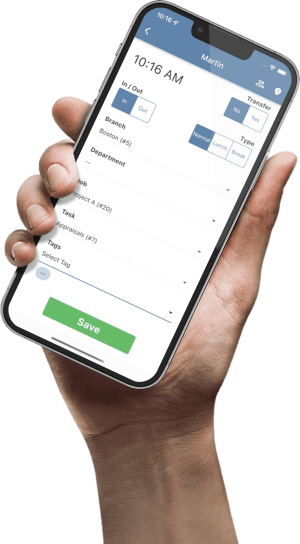
| Capture | Record punches, mobile entries, kiosk entries, time clock punches, and corrections with enough detail for payroll review. | Time & Attendance | Fewer missing punches, cleaner timecards, and faster manager review. |
| Classify | Attach time to department, location, program, client, patient service line, task, cost center, or funding source. | Job Costing | Better labor-cost visibility by unit, client, grant, payer, program, or service line. |
| Approve | Route overtime, missed meals, callback, sleep-time interruptions, and exceptions to the right manager before payroll starts. | Workforce management features | Fewer payroll edits and fewer unresolved exception questions. |
| Pay | Calculate base pay, overtime, premiums, differentials, deductions, direct deposit, and payroll reports from approved time. | Payroll Software | Shorter payroll close, fewer manual calculations, and clearer audit trails. |
24-Hour Shift Configuration Blueprint
Before turning on a long-shift rule, map the workflow. A good configuration blueprint protects both the employee and the employer because it makes the pay result traceable. Use this as a practical setup checklist.
Define the employee group
Separate hourly RNs, salaried exempt RNs, LPNs, nurse aides, home health nurses, private-duty nurses, travel nurses, agency staff, and supervisors. Rules can differ by role, contract, facility, and jurisdiction.
Set the workweek
Document the workweek start and whether the facility uses ordinary weekly overtime or a valid healthcare 8-and-80 arrangement. Do not rely on pay period length as a substitute for overtime logic.
Classify the 24-hour pattern
Choose whether the shift is active duty, standby, callback, private-duty care, live-in domestic service, emergency extension, or a combination. Each pattern needs its own approval path.
Configure break evidence
Use meal attestations, missed-break reasons, rest-break visibility, sleep windows, interruption punches, and manager review. Do not bury break data in a single payroll deduction.
Build premiums and differentials
Map night, weekend, holiday, charge, callback, standby, float, specialty, crisis, and contract premiums. Confirm how each item affects regular-rate and overtime calculation.
Create exception approvals
Route missing punches, unauthorized overtime, late relief, interrupted meals, interrupted sleep, callback, short turnaround, and policy overrides to the manager who can explain them.
Audit the first two pay cycles
Review raw punches, rounded punches, edits, approvals, missed meals, sleep interruptions, premium calculations, and employee questions before expanding to more units.
Turn patterns into staffing decisions
If a unit repeatedly uses long shifts, missed meals, or callback, use the time data to revisit schedules, staffing levels, relief coverage, float pool rules, and fatigue controls.
Risk Matrix for Nurse Time Tracking Software
The risk matrix below translates common nursing time problems into controls that can be configured, monitored, and improved. This is where buyers should pressure-test a vendor demonstration.
| Risk | How it shows up | Operational impact | Control to build in software |
|---|---|---|---|
| Unpaid interrupted meals | Auto-deducts stay in place even when nurses keep working through patient needs. | Payroll corrections, employee distrust, wage/hour risk, and poor break coverage visibility. | Meal attestation, interruption reason, paid-meal conversion, manager approval, and missed-meal trend report. |
| Misclassified 24-hour coverage | Standby, active duty, sleep time, callback, and travel are grouped under one generic shift code. | Payroll cannot explain why hours were paid or unpaid. | Separate pay codes and approval workflows for active duty, standby, callback, sleep interruption, and fully relieved time. |
| Overtime calculated on the wrong base | Shift differentials or bonuses are ignored when overtime is calculated. | Underpayment risk and repeated manual payroll cleanup. | Regular-rate rules, premium mapping, payroll audit reports, and test pay scenarios before launch. |
| Unauthorized overtime ignored | A nurse works late to finish charting or patient care, but the extra time is removed because it was not preapproved. | Potential unpaid-hours risk and inaccurate staffing data. | Pay worked time, flag the policy violation separately, and route repeat patterns to management. |
| Fatigue hidden inside payroll totals | Managers see total labor cost but not repeated long shifts, short rest periods, missed breaks, or callback clustering. | Staff burnout, safety risk, morale problems, and avoidable turnover pressure. | Fatigue dashboard showing extended shifts, missed meals, short turnaround, and overtime by unit and manager. |
| Payroll edits without explanation | Corrections are entered after the fact with no reason, no approver, or no employee acknowledgement process. | Audit gaps, disputes, and payroll dependency on individual memory. | Edit history, reason codes, approval chain, employee attestation, and locked-payroll close process. |
Implementation Plan for Nursing Teams
The safest way to implement nurse time tracking is not to switch every rule at once and hope payroll day goes well. Start with one unit, one facility, one home health region, or one nurse group. Build the schedule-to-payroll workflow, run real exceptions through it, and then expand.
1. Map the current pay story
List each nurse group, rate type, premium, differential, overtime rule, standby rule, callback rule, meal-break process, sleep-time arrangement, union rule, and manual spreadsheet. If payroll currently needs a person to "just know" the exception, that knowledge belongs in the configuration plan.
2. Build the exception dictionary
Create reason codes for late relief, patient emergency, charting after shift, missed meal, interrupted meal, sleep interruption, callback, remote call handling, on-call restriction, float assignment, training, and supervisor correction.
3. Pilot real long-shift scenarios
Test a 12-hour shift with missed meal, a 16-hour holdover, a shift crossing midnight, a standby period with callback, a private-duty 24-hour case, and a sleep interruption. The pilot should prove the whole pay result, not just the punch screen.
4. Train managers by workflow
Manager training should focus on what to approve each day: missing punches, overtime, interrupted meals, sleep-time exceptions, callback entries, short rest, and unclassified time. Avoid training that only shows where buttons are.
5. Run payroll parallel checks
For the first two pay cycles, compare system output to expected payroll results. Pay special attention to overtime, shift differentials, holiday pay, callback, standby, auto-deduct reversals, and edits after approval.
6. Review staffing patterns
After the system is stable, use the reports to improve scheduling. Long-shift data should help leaders see where staffing assumptions are driving fatigue, overtime, missed breaks, and payroll exceptions.
The Nurse Manager Routine Before Payroll Closes
Nurse managers do not need more administrative noise. They need a short, high-signal routine that protects patients, staff, and payroll. A good time tracking system should make that routine easy enough to complete daily or at least before payroll cutoff.
| Routine check | Question to answer | Report or workflow | Decision owner |
|---|---|---|---|
| Missing punches | Are all start, end, meal, callback, and correction entries present? | Missing punch report and employee/manager correction workflow. | Unit manager or payroll timekeeper. |
| Overtime and holdovers | Was overtime planned, emergent, patient-driven, staffing-driven, or unauthorized but worked? | Overtime reason-code queue and schedule variance report. | Nurse manager with payroll review. |
| Meals and rest breaks | Were meals uninterrupted, interrupted, missed, or converted to paid time? | Meal attestation and interrupted-break approval queue. | Unit manager and payroll compliance owner. |
| Callback and on-call | Which standby periods became remote work or return-to-site work? | Standby/callback report by nurse, unit, specialty, and response type. | Clinical operations and payroll. |
| Sleep-time exceptions | Were sleep windows valid, interrupted, or too short to support the deduction? | Sleep window and interruption log with manager approval. | Program manager and payroll compliance owner. |
| Fatigue pattern | Are long shifts, short turnaround, missed breaks, or excessive overtime repeating? | Fatigue-risk scorecard by unit and schedule group. | Nursing leadership, staffing office, and HR. |
Mistakes to Avoid When Tracking Nurse Shifts
Using one pay code for every long shift
A single "24-hour shift" code hides the distinction between active duty, standby, sleep, interruption, callback, handoff, and fully relieved time. That may be convenient for scheduling, but it is weak for payroll and audit review.
Letting auto-deduct meals run without evidence
Auto-deduct policies need a reliable exception path. Nurses should be able to report interrupted or missed meals, managers should approve them, and payroll should see a clear paid/unpaid result.
Treating fatigue as invisible
Long shifts should create operational signals: short turnaround, excessive overtime, missed breaks, late relief, and repeated callback. If the system only shows payroll totals, managers lose the early warning signs.
Assuming on-call always means unpaid
On-call rules depend on restrictions and actual work performed. The system should capture standby requirements, remote work, call handling, and return-to-facility time instead of collapsing everything into a single note.
Forgetting the regular rate
Healthcare payroll often includes differentials and premiums. Overtime calculations should be tested with real nurse examples, not just base hourly wages.
Buying a clock instead of a workflow
A clock collects time. A workforce workflow schedules, captures, classifies, approves, pays, reports, and improves the staffing model. Nursing teams usually need the workflow.
Build a Payroll-Ready Nursing Time Workflow
For nurses and 24-hour coverage, the right time tracking system should protect the pay record, the manager routine, and the staffing decision. TimeTrex brings scheduling, time and attendance, payroll, job costing, and reporting into one connected workforce process so healthcare teams can approve cleaner time before payroll starts.
FAQ: Time Tracking Software for Nurses and 24-Hour Shifts
Can nurses legally work 24-hour shifts?
There is no single answer for every employer, role, state, province, facility, or collective bargaining agreement. A 24-hour period might be continuous duty, standby, callback, private-duty care, emergency extension, or live-in care. Healthcare employers should review federal, state, local, contract, licensure, patient-safety, and internal policy rules before scheduling or paying any 24-hour nursing pattern.
What should nurse time tracking software do for 24-hour shifts?
It should classify the time, not merely total it. The system should capture scheduled duty, active work, standby, callback, remote work, meal periods, interrupted meals, sleep windows, sleep interruptions, overtime, premiums, differentials, manager approvals, and payroll edits. The final record should explain why the shift was paid the way it was paid.
Are meal breaks unpaid during long nursing shifts?
Only when the meal period qualifies as a bona fide duty-free meal period under the applicable rules. If a nurse is frequently interrupted or remains responsible for patient care during the meal window, the time may need to be paid. A strong system uses meal attestations, interruption reasons, manager approvals, and auto-deduct overrides.
Can sleep time be deducted during a 24-hour shift?
Under federal rules, a sleep-time exclusion for duty of 24 hours or more depends on specific conditions, including an agreement, adequate sleeping facilities, a bona fide scheduled sleep period, and counting interruptions as hours worked. Employers should not treat sleep time as a generic unpaid break. The time record should show the agreement, sleep window, interruptions, and final paid/unpaid calculation.
How does on-call time differ from callback time?
On-call or standby time is the period when the nurse is available under certain restrictions. Callback time is the time spent responding, working remotely, or returning to the facility. The software should track both separately because restrictions, response requirements, actual work, and pay treatment can differ.
What reports should nurse managers review before payroll?
Start with missing punches, late departures, overtime, missed or interrupted meals, callback, standby conversions, sleep-time interruptions, short turnaround, schedule variance, unapproved timecards, and payroll edits. For long-shift environments, add fatigue-risk reporting by unit, role, supervisor, and shift pattern.
How can TimeTrex help healthcare employers manage nurse time?
TimeTrex connects scheduling, time and attendance, approvals, leave, job costing, payroll, and reporting. That helps healthcare employers move from raw punches to approved payroll-ready time while keeping the exception history needed for long shifts, overtime, missed breaks, callback, and staffing review.
Sources and Further Reading
- TimeTrex workforce management: https://www.timetrex.com/
- TimeTrex healthcare workforce management: https://www.timetrex.com/industries/healthcare
- TimeTrex time and attendance: https://www.timetrex.com/time-and-attendance
- TimeTrex scheduling and leave management: https://www.timetrex.com/scheduling
- TimeTrex payroll software: https://www.timetrex.com/payroll
- TimeTrex job costing: https://www.timetrex.com/job-costing
- U.S. Department of Labor, healthcare hours worked: Fact Sheet #53
- U.S. Department of Labor, healthcare overtime: Fact Sheet #54
- U.S. Department of Labor, nurses and FLSA exemptions: Fact Sheet #17N
- U.S. Department of Labor, nursing care facilities: Fact Sheet #31
- U.S. Department of Labor, recordkeeping: Recordkeeping and Reporting
- eCFR, 29 CFR Part 785 Hours Worked: 29 CFR Part 785
- U.S. Department of Labor, domestic service hours worked: Fact Sheet #79D
- NIOSH training for nurses on shift work and long hours: NIOSH Publication 2015-115
- NIOSH extended-shift guidance: Extended Shifts
- NIOSH fatigue risk management systems: Fatigue Risk Management Systems