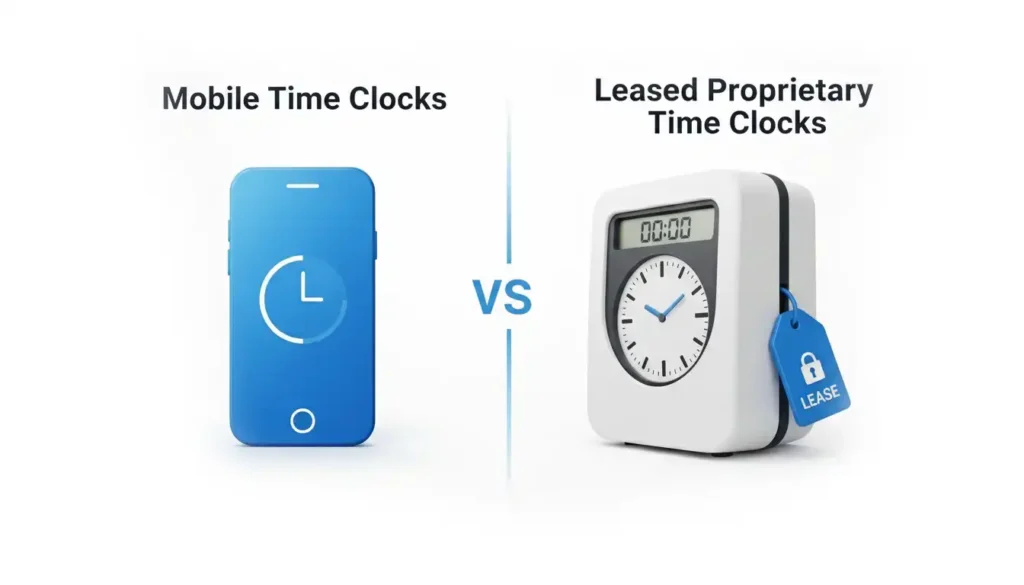

Mobile Time Clocks vs. Leased Proprietary Time Clocks
- The Economic Architecture of Workforce Management Hardware
- The Biometric Paradigm Shift: From Fingerprint to Face
- Deep Dive: Technical Specifications and Feature Parity
- Total Cost of Ownership (TCO) Deep Dive
- Operational Flexibility: The "Any Device" Advantage
- Comparative Market Analysis: TimeTrex vs. The Giants
- Implementation and Change Management
- Strategic Recommendations and Conclusion
TL;DR
The global workforce management industry is shifting from expensive, proprietary hardware to flexible, software defined solutions. Legacy providers like UKG and ADP rely on high hardware exclusivity and long term leasing, creating a significant "hardware tax." In contrast, TimeTrex Time Clocks leverage commodity consumer electronics (BYOD/COPE) to reduce hardware costs by over 80%. This report analyzes the financial and operational benefits of this shift, highlighting how tablet based facial recognition improves resilience and hygiene in industrial settings, offering a blueprint for modernizing workforce management infrastructure.
Use any iPad or Android tablet ($100-$300)
Own your hardware, no monthly rental fees
Biometrics via standard cameras
The Economic Architecture of Workforce Management Hardware
To fully appreciate the magnitude of the savings offered by the commodity hardware model, one must first deconstruct the prevailing economic architecture of the traditional time and attendance market. Historically, the "time clock" was a distinct physical asset - a mechanical, and later digital, appliance purpose built for a single function: stamping a time entry onto a physical card or magnetic tape. As the industry digitized, this proprietary hardware evolved into networked terminals, yet the business model remained rooted in the sale and lease of the physical box.
The Proprietary Premium: Deconstructing Legacy Hardware Costs
The traditional WFM model, utilized by giants like ADP and UKG, treats the time clock not merely as an input device, but as a primary recurring revenue stream. The physical device - often a customized Android tablet encased in a ruggedized, branded shell - is sold or leased at premiums significantly above the cost of the underlying components. This pricing strategy effectively subsidizes the vendor's R&D and support structures but imposes a heavy burden on the customer's balance sheet.
The Lease Trap and Monthly Recurring Costs
Major providers typically gate their most advanced hardware behind opaque leasing structures. The financial burden of these leases is often obscured in bundled "Per Employee Per Month" (PEPM) fees, but a granular analysis of pricing disclosures reveals the true cost. For instance, local resellers for Kronos (UKG) have been documented charging base monthly fees plus per employee fees, with physical time clock leases costing between $100 to $140 per month per device. This creates a perpetual expense where the hardware is paid for many times over its useful life. Similarly, ADP’s hardware pricing reflects a premium valuation of proprietary interfaces. Municipal contract disclosures and internal pricing schedules indicate that ADP time clocks with biometric capabilities can command lease prices of approximately $240 to $260 per month under certain service agreements.
When an organization opts to lease, they are not merely paying for the device; they are paying for the privilege of accessing the ecosystem. Over a standard five year contract, a single ADP biometric clock leased at $240 per month accumulates a total cost of $14,400. This figure stands in stark contrast to the actual manufacturing cost of the device, which likely ranges in the low hundreds of dollars. This disparity represents the "proprietary premium" - a margin that TimeTrex eliminates by utilizing generic hardware.
The "Hardware Tax" and Maintenance Fees
For organizations that attempt to avoid the lease trap by purchasing hardware outright, legacy vendors impose significant barriers. An ADP biometric clock can cost upwards of $5,000 per unit as a capital expenditure (CAPEX). However, ownership does not absolve the customer of recurring fees. Mandatory annual maintenance contracts are standard, often costing an additional $395 per year per clock.
The Hidden Costs of One Proprietary Clock
UKG similarly invoices customers annually for "Equipment Support Charges". These contracts cover the depot repair or replacement of their specialized devices. Because the hardware is proprietary, the customer cannot simply replace a broken unit with a generic alternative bought from a local electronics retailer; they are strictly tethered to the vendor’s supply chain. This dependency creates a rigid cost structure where "break fix" cycles result in operational downtime and significant administrative overhead for Return Material Authorizations (RMAs). The maintenance fee essentially acts as an insurance policy for a device that the customer has already purchased at a premium, further inflating the Total Cost of Ownership (TCO).
The TimeTrex Disruption: Decoupling Logic from Device
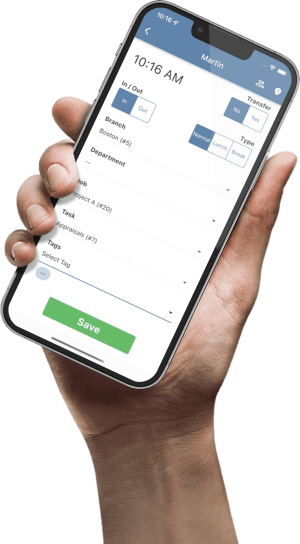
TimeTrex fundamentally alters this economic equation by treating the hardware as a commodity rather than a proprietary asset. By decoupling the timekeeping logic from the physical interface, TimeTrex allows general purpose consumer electronics - specifically Apple iOS and Android smartphones and tablets - to function as enterprise grade attendance terminals.
Commodity Economics and Supply Chain Agility
The economic advantage of this approach lies in the massive economies of scale inherent to the global consumer electronics market. A high quality 10.2 inch iPad or a robust Samsung Galaxy Tab - devices with processing power, screen resolution, and touch sensitivity often superior to proprietary time clocks - can be purchased for $300 to $500 as a one time expense. Even when factoring in the cost of a ruggedized industrial enclosure or a secure wall mount, which ranges from $23 to $190, the total hardware CAPEX for a TimeTrex station rarely exceeds $600.
The Initial Investment Gap (Per Unit)
Comparing this to a $5,000 proprietary clock or a $2,880 annual lease (at $240/month), the immediate hardware cost reduction is staggering - often exceeding 90%. Furthermore, because the hardware is generic, it carries no mandatory "equipment maintenance" fees from the software vendor. If a tablet fails, the organization is not beholden to a vendor's shipping schedule; a replacement can be procured instantly from a local retailer, eliminating the "downtime tax" associated with proprietary shipping and repair cycles.
The "Kiosk Mode" Licensing Model
It is important to distinguish between hardware costs and software licensing. While TimeTrex offers a "Community Edition" with no licensing fees for technically savvy businesses, its commercial editions (Professional, Corporate, Enterprise) operate on a per user subscription model, ranging from roughly $3 to $10 per user/month. Specifically, the Kiosk Mode - which transforms the tablet into a stationary time clock - may incur additional licensing fees depending on the specific edition and configuration. However, even if a modest software fee is attributed to the kiosk functionality, it is a software cost, not a hardware rental. The customer retains ownership of the asset (the tablet), which can be repurposed or resold, unlike a leased proprietary clock which must be returned. This distinction shifts the expenditure from a sunk cost (rent) to an asset investment, fundamentally improving the organization's balance sheet.
Comparative Cost Structure Analysis
To visualize the divergence in cost structures, the following chart contrasts the financial outlay of a typical 5 year deployment for a single biometric time clock station under the legacy model versus the TimeTrex commodity model.
5-Year Cumulative Cost Projection (10 Units)
Legacy model costs explode over time due to leases and maintenance. TimeTrex costs remain flat.
| Cost Component | Legacy Proprietary Model (e.g., ADP/UKG Leased) | TimeTrex Commodity Model (iPad + App) | 5-Year Savings |
|---|---|---|---|
| Hardware Acquisition | $0 (Leased) | $400 (iPad Gen 9 + Charger) | -$400 (Initial Outlay) |
| Enclosure/Mount | Included in Lease | $150 (Rugged Wall Mount) | -$150 |
| Monthly Hardware Fee | $240/month | $0 (User Owned) | +$14,400 |
| Annual Maintenance | Included in Lease | $0 (No Vendor Contract) | $0 |
| Software License | Bundled or Separate | Kiosk Mode Fee (Low)* | Variable (Net Lower) |
| Hardware Refresh | Vendor Discretion (End of Life cycles) | User Discretion (e.g., Year 4) | Flexible |
| Total 5-Year TCO | ~$14,400 per device | ~$950 per device (includes 1 replacement) | ~$13,450 per device |
Note: The savings of over $13,000 per device is purely on the hardware side. When multiplied across an enterprise deployment of 50 or 100 clocks, the capital preservation reaches hundreds of thousands of dollars.
The Biometric Paradigm Shift: From Fingerprint to Face
The cost savings of the TimeTrex model are not achieved by sacrificing capability. On the contrary, the shift from proprietary fingerprint scanners to tablet based facial recognition represents a technological upgrade that addresses the inherent limitations of legacy biometrics. This transition is not merely about swapping one sensor for another; it is a fundamental move towards "Touchless Efficiency" that has profound implications for operational continuity and hygiene.
The Failure of Legacy Fingerprint Scanning in Industrial Environments
For years, the industry standard for preventing "buddy punching" (one employee clocking in for another) was the optical fingerprint scanner. While effective in clean, climate controlled office environments, these proprietary sensors suffer from significant operational flaws in industrial, medical, and service sectors.
Environmental Degradation and "Failure to Read"
In manufacturing, construction, and automotive sectors, employees' hands are frequently exposed to grease, dust, dirt, and chemicals. These contaminants wreak havoc on traditional optical and capacitive fingerprint scanners. A scanner requires a clean, high contrast image of the friction ridges to verify identity. When a worker with oil stained fingers attempts to clock out, the scanner often fails to read.
This failure cascades into a series of costly operational inefficiencies:
- Multiple Attempts: The employee tries repeatedly, creating a queue at the clock and delaying their departure (or entry), which steals production time.
- Manual Overrides: Frustrated employees eventually bypass the biometric lock using a PIN or simply walk away, forcing a manager to manually edit the timesheet later.
- Sensor Damage: Abrasive particulates on fingers can scratch the delicate glass platen of the scanner, degrading its accuracy permanently and necessitating expensive hardware replacements.
Hygiene and Disease Transmission
The COVID 19 pandemic fundamentally altered the perception of shared surfaces. A fingerprint scanner is a high touch point where every employee in a facility places their finger on the exact same square inch of glass. This creates a highly efficient vector for disease transmission. Legacy providers scrambled to offer "touchless" add ons or expensive hardware upgrades to address this, often passing the costs on to the customer. TimeTrex’s native facial recognition avoids this entirely, providing a sanitary, safe clocking experience without additional hardware investment.
The Superiority of Software-Defined Facial Recognition
TimeTrex leverages the high resolution front facing cameras of consumer tablets to implement Facial Recognition as the primary biometric credential. This shift offers distinct economic and operational advantages that proprietary hardware struggles to match.
Operational Reliability and "Touchless" Speed
Facial recognition is inherently contactless. An employee simply looks at the tablet, and the system verifies their identity in seconds. This eliminates the hygiene risks of fingerprint scanners and the "failure to read" errors caused by dirty or worn fingerprints. TimeTrex's algorithms are sophisticated enough to recognize users wearing glasses, hats, or facial hair. This robustness is critical in industrial settings where Personal Protective Equipment (PPE) such as safety glasses or hard hats is mandatory. Unlike fingerprint scanners which require the removal of gloves and cleaning of hands, facial recognition allows for a seamless "glance and go" workflow, significantly reducing shift change bottlenecks.
Security, Privacy, and Liveness Detection
A common hesitation regarding facial recognition is security: "Can an employee clock in using a photo of their coworker?" TimeTrex addresses this through advanced liveness detection algorithms. While the specific technical implementation details are proprietary, modern tablet cameras (such as the TrueDepth camera system on iPads) support depth sensing and 3D mapping, which software like TimeTrex can leverage to distinguish between a flat photograph and a live, three dimensional face. Crucially, TimeTrex adheres to strict privacy standards regarding biometric data. The system does not store actual photos of employees' faces for the purpose of matching. Instead, it converts facial features into encrypted digital codes (hashes). This irreversible transformation ensures that even in the unlikely event of a data breach, the raw biometric data cannot be reconstructed into a photograph. This approach mirrors the security standards of modern consumer electronics (like FaceID on iPhones) and offers a higher privacy standard than many legacy systems that stored raw fingerprint images.
The ROI of Anti-Buddy Punching
The primary ROI driver for any biometric system is the elimination of time theft. Buddy punching is estimated to cost employers 2.2% of gross payroll. For a company with a $5 million annual payroll, this equates to $110,000 in lost wages per year. By democratizing access to biometric security - making it affordable enough to deploy on a $300 tablet rather than a $5,000 clock - TimeTrex allows businesses to deploy more clocks in more locations. In a legacy deployment, high hardware costs often force companies to funnel all employees through a single gate. With TimeTrex, tablets can be placed in every department or break room. This ubiquity ensures that high security biometric verification is applied to 100% of punches, not just those at the main entrance, capturing the "lost" 2.2% of payroll and delivering a Return on Investment (ROI) often within the first few months of deployment.
Deep Dive: Technical Specifications and Feature Parity
A critical component of this analysis is verifying that the "cheaper" hardware solution does not result in a loss of functionality. A granular technical comparison reveals that generic tablets running TimeTrex offer functional parity - and often superiority - to proprietary hardware.
Biometric Security Specifications
The following table compares the technical characteristics of legacy fingerprint scanners against TimeTrex's facial recognition implementation on consumer tablets.
| Feature | Proprietary Fingerprint Scanner (Legacy) | TimeTrex Facial Recognition (Tablet) | Operational Advantage |
|---|---|---|---|
| Identifier | Friction Ridges (Fingerprint) | Nodal Points (Face Map) | Face: Contactless, Hygienic, Works with dirty hands |
| Matching Mode | 1:1 (Verification) or 1:N (Identification) | 1:N (Identification) | Parity: Both support "Identify Me" mode (no badge needed) |
| Data Storage | Minutiae Template (Proprietary format) | Encrypted Digital Hash | TimeTrex: Privacy focused, GDPR compliant, no raw image storage |
| Liveness Check | Variable (often low on cheap scanners) | Dynamic (Blink/Head movement) | TimeTrex: Resists photo spoofing using camera depth sensors |
| Throughput | 3-5 seconds (positioning finger) | < 2 seconds (glance) | TimeTrex: Faster shift changes, less queuing |
| Failure Rate | High (wet/dirty/cut fingers) | Low (works with glasses/hats) | TimeTrex: Higher reliability in industrial/construction use |
The "Offline Mode" Architecture: Resilience Without the Cost
A common critique of app based solutions is their perceived reliance on constant cloud connectivity. Legacy clocks often tout their "store and forward" capabilities as a justification for their high cost. However, TimeTrex’s mobile first architecture was built with offline first principles, matching this capability without the proprietary hardware premium.
- Mechanism: When the tablet loses internet connectivity (e.g., a power outage or a remote job site), the TimeTrex app automatically switches to a local encrypted database stored on the device's flash storage.
- Data Integrity: Punches recorded during offline mode are cryptographically signed and stored securely. The employee experience remains unchanged; the facial recognition and punch logging continue to function instantly.
- Synchronization: A background service continually monitors connectivity. Upon restoration of the network, the data is automatically pushed to the TimeTrex server. Crucially, business rules (such as overtime calculations, rounding, and grace periods) are applied retrospectively once the data reaches the server, ensuring that payroll remains accurate regardless of when the sync occurs.
This matches the "store and forward" capability of high end clocks like the UKG InTouch, but leverages the massive storage capacity of modern tablets (starting at 64GB) compared to the often limited onboard memory of legacy clocks.
Job Costing and Granular Data Entry
Legacy clocks often struggle with the complex user interfaces required for job transfers (switching from "Job A" to "Job B"). The limited screen real estate and often resistive (pressure sensitive) touchscreens make detailed data entry frustrating and error prone. Utilizing the rich multi touch interface of an iPad or Android tablet, TimeTrex offers a granular job costing interface that resembles a modern app rather than an ATM. Employees can easily select projects, tasks, or cost centers from a hierarchical list, or scan QR codes to instantly switch jobs. This improves the accuracy of labor allocation data, which is directly tied to profitability analysis in manufacturing and construction. The high responsiveness of consumer screens means fewer input errors and faster interactions.
Total Cost of Ownership (TCO) Deep Dive
The financial superiority of the TimeTrex model becomes most apparent when analyzing the Total Cost of Ownership over a typical enterprise software lifecycle. This analysis distinguishes between "Hard Dollar" savings (hardware, licenses) and "Soft Dollar" savings (administration, maintenance, agility).
Hard Dollar Savings: The End of the "Lease-for-Life"
In the legacy model (ADP/UKG), the customer effectively rents the hardware forever. There is rarely a "buyout" option that eliminates the monthly fee, or if there is, it is accompanied by high annual maintenance costs. This is analogous to renting a modem from an ISP versus buying one; over 5 years, the rental fees dwarf the purchase price. Let us model a specific scenario for a mid sized logistics company requiring 20 time clocks.
- Legacy Model (ADP/UKG):
- Lease Cost: 20 clocks * $240/mo = $4,800/month.
- Annual Cost: $57,600.
- Five Year Total Hardware Cost: $288,000.
- TimeTrex Commodity Model:
- Hardware Purchase: 20 iPads (Gen 9) @ $400 ea = $8,000.
- Enclosures: 20 Rugged Wall Mounts @ $150 ea = $3,000.
- Hardware Refresh: Assume replacement of all units at Year 4 = $8,000.
- Five Year Total Hardware Cost: $19,000.
Result: A $269,000 reduction in hardware spend alone over five years. This capital can be reallocated to software licensing, employee training, or other operational improvements. Even if TimeTrex charges a Kiosk feature fee, the gap is so wide that the proprietary model cannot compete on price.
Soft Dollar Savings: Maintenance and Agility
The "Soft Dollar" savings are equally critical. Proprietary hardware creates a dependency on the vendor's support infrastructure.
- RMA vs. Retail Replacement: When a UKG InTouch clock fails, the IT department must open a ticket, wait for a shipping container, pack the old unit, and wait for a replacement. This process consumes hours of IT labor and creates days of downtime. With TimeTrex, if a tablet fails, the site manager can purchase a replacement at a local electronics store (Best Buy, Target, etc.), download the TimeTrex App, and re authenticate. The downtime is measured in minutes, not days.
- Obsolescence Cycles: Legacy vendors often declare hardware "End of Life" (EOL) to force upgrades. ADP, for example, has terminated support for clocks on legacy operating systems, forcing customers to upgrade or migrate. This "forced march" upgrade cycle often comes with new lease terms or installation fees. Because TimeTrex runs on iOS/Android, it rides the wave of consumer OS updates. As long as the tablet supports the OS, the time clock remains viable. When the tablet eventually becomes too old, the customer chooses when to upgrade, not the vendor.
Infrastructure Savings: Power over Ethernet (PoE) vs. WiFi
Legacy clocks often require hardwired Ethernet connections and specific power drops (PoE) to function reliably, driving up installation costs. While TimeTrex Kiosks can use PoE for continuous power, they are natively designed for wireless operation. The robust offline mode means that the tablet can function reliably even in areas with spotty WiFi, syncing data once connection is restored. This reduces the need for expensive low voltage cabling runs to every clock location, which can cost hundreds of dollars per drop in unionized facilities.
Operational Flexibility: The "Any Device" Advantage
The TimeTrex model introduces a level of operational flexibility that proprietary hardware cannot match. This is the concept of "Hardware Agility."
Scalability and Seasonal Workforce Management
For industries with seasonal peaks (retail, agriculture, logistics), the legacy model is rigid. You cannot easily lease 50 extra clocks for two months and then return them without penalty or complex contract renegotiations. TimeTrex allows for rapid scaling. A company can deploy 50 inexpensive Android tablets for the holiday season and then repurpose them for inventory management, Point of Sale (POS) tasks, or training modules afterwards. The hardware is not "single purpose e waste"; it is a general purpose computing asset. This multi use capability increases the utility of the hardware investment significantly compared to a device that can only clock people in.
Geolocation and Geofencing Integration
TimeTrex’s use of mobile devices (both personal and kiosk) natively integrates GPS tracking. Legacy clocks are typically fixed to a wall. If a construction crew moves to a new site, a wall mounted clock is useless. TimeTrex allows a foreman's tablet to become a "roaming kiosk," creating a geofenced punch zone anywhere on earth. This extends the "money saving" aspect beyond hardware costs to the actual accuracy of field labor tracking. By utilizing geofencing polygons, the system ensures employees are physically present at the specific job site before the clock starts, preventing time theft where employees might clock in from the parking lot or while en route.
The Strategic Advantage of BYOD (Bring Your Own Device)
While the Kiosk model replaces physical clocks, TimeTrex also supports a pure BYOD model where employees use their own smartphones. This eliminates hardware costs entirely ($0 CAPEX). Legacy providers like ADP have attempted to pivot to BYOD, but often with mixed results due to their legacy backend architectures or by charging per user fees that negate the hardware savings. TimeTrex's pricing transparency and "Community Edition" availability make BYOD a viable zero cost hardware strategy for small businesses or trusted remote teams. However, for businesses concerned about security or labor laws regarding personal device usage, the Tablet Kiosk model remains the gold standard for balancing cost and control.
Comparative Market Analysis: TimeTrex vs. The Giants
To fully contextualize the value proposition, we must directly compare the TimeTrex offering against the specific hardware strategies of its primary competitors.
Hardware Comparison: Legacy Clock vs. TimeTrex Tablet
| Feature | Legacy Clock | BYOD Tablet (TimeTrex) |
|---|---|---|
| Touch Screen Quality | Low Res / Resistive | Retina / HD Capacitive |
| Biometrics | Expensive Fingerprint Sensor | FaceID (Free w/ Camera) |
| Connectivity | Wired Ethernet (Usually) | WiFi / 4G / 5G |
| Repairability | Mail-in Service (Days/Weeks) | Replace Instantly (Local Store) |
| Offline Mode | Limited Memory | Massive Storage Capacity |
TimeTrex vs. UKG (Kronos)
UKG Strategy: High end, "white glove" hardware experience. The InTouch DX is marketed as a premium device with a "slim profile" and "intelligent software". It targets large enterprises where IT budgets are siloed, and hardware lease costs are less scrutinized. The device is impressive but represents a closed ecosystem.
TimeTrex Advantage: TimeTrex democratizes the "DX" experience. The user interface on a modern iPad is arguably superior (more responsive touch, higher resolution, better viewing angles) than the screens found on even high end industrial clocks. TimeTrex matches the biometric security (Face ID) without the proprietary premium. Furthermore, TimeTrex offers a "Community Edition", providing an entry point that UKG simply does not match.
TimeTrex vs. ADP
ADP Strategy: A mix of reselling third party hardware (like Kronos clocks) and their own Kiosk app. However, ADP often bundles hardware into "Managed Payroll" contracts, obscuring the true cost. Their Kiosk app exists but serves as a secondary option to their lucrative hardware leasing business, and support for it can be fragmented.
TimeTrex Advantage: TimeTrex is hardware agnostic by design, not as an afterthought. It does not try to upsell a proprietary clock. The platform's ability to run on open source operating systems and its transparent pricing (Professional/Corporate editions) contrast with ADP’s "quote based" opacity. TimeTrex's focus is on the software engine, allowing the customer to source the most cost effective hardware available.
TimeTrex vs. Legacy Fingerprint Vendors
Legacy Strategy: Sell "iron." The value proposition is tied to the physical robustness of the metal box on the wall.
TimeTrex Advantage: The value is in the data and the logic. By removing the physical barrier to entry (the expensive clock), TimeTrex encourages wider adoption of automated timekeeping. Small businesses that couldn't afford a $5,000 clock can afford a $50/month TimeTrex subscription and a $300 iPad.
Implementation and Change Management
Transitioning from a legacy hardware model to a tablet based system requires careful planning, but the barriers to entry are significantly lower.
Deployment Velocity Comparison
The Legacy Way
The TimeTrex Way
Mounting and Physical Security
One concern with tablets is theft or damage. However, the market for tablet kiosks is mature. High grade steel or aluminum enclosures can be bolted to walls, preventing removal of the device. For mobile crews, military grade drop tested cases (e.g., OtterBox, Rokform) provide protection comparable to industrial time clocks. Even with these accessories, the total cost remains a fraction of proprietary hardware.
Employee Adoption
The shift to tablet based clocking is often welcomed by employees. The user interface of an iPad or Android tablet is familiar to almost everyone, reducing training time to near zero. The "glance to clock in" speed of facial recognition is perceived as a convenience rather than a security hurdle, improving overall workforce sentiment compared to struggling with a finicky fingerprint sensor.
Strategic Recommendations and Conclusion
The Strategic Pivot
For organizations currently utilizing UKG, ADP, or other legacy hardware providers, the data suggests a clear strategic pivot. The era of the "dumb terminal" time clock is over. The computing power in a standard consumer tablet vastly exceeds that of most industrial time clocks, and the biometric capabilities of modern camera sensors coupled with AI software (TimeTrex) are superior to legacy optical fingerprint readers.
Calculating the ROI of Switching
Organizations should conduct a hardware audit to quantify the potential savings:
- Identify all leased time clocks and sum the monthly lease + maintenance fees.
- Calculate the cost of replacing these with standard iPads or Android tablets (CAPEX).
- Factor in the licensing cost of TimeTrex (OPEX).
Result: In almost all scenarios, the "payback period" for the tablets is less than 4 months of the legacy lease payments.
Conclusion
TimeTrex saves customers money not merely by being a "cheaper alternative," but by fundamentally restructuring the economics of workforce management. By leveraging the Bring Your Own Device (BYOD) and Commodity Hardware trends, it eliminates the artificial scarcity and inflated pricing of proprietary biometric clocks. It replaces "Rented Hardware" with "Owned Assets" and "Vendor Lock in" with "Platform Agility." In the contest between "Generic Tablets" and "Proprietary Scanners," the tablet - powered by intelligent software like TimeTrex - wins on every economic and functional metric. It offers a future proof, secure, and financially rational path forward for modern enterprise workforce management.
Experience the Future of Workforce Management
Ready to eliminate the "hardware tax" and modernize your time tracking? Discover how TimeTrex can transform any tablet into an enterprise-grade biometric time clock today.
Explore Mobile Access FeaturesDisclaimer: The content provided on this webpage is for informational purposes only and is not intended to be a substitute for professional advice. While we strive to ensure the accuracy and timeliness of the information presented here, the details may change over time or vary in different jurisdictions. Therefore, we do not guarantee the completeness, reliability, or absolute accuracy of this information. The information on this page should not be used as a basis for making legal, financial, or any other key decisions. We strongly advise consulting with a qualified professional or expert in the relevant field for specific advice, guidance, or services. By using this webpage, you acknowledge that the information is offered “as is” and that we are not liable for any errors, omissions, or inaccuracies in the content, nor for any actions taken based on the information provided. We shall not be held liable for any direct, indirect, incidental, consequential, or punitive damages arising out of your access to, use of, or reliance on any content on this page.
About The Author

Roger Wood
With a Baccalaureate of Science and advanced studies in business, Roger has successfully managed businesses across five continents. His extensive global experience and strategic insights contribute significantly to the success of TimeTrex. His expertise and dedication ensure we deliver top-notch solutions to our clients around the world.
Time To Clock-In
Start your 30-day free trial!
Experience the Ultimate Workforce Solution and Revolutionize Your Business Today
- Eliminate Errors
- Simple & Easy To Use
- Real-time Reporting
Saving businesses time and money through better workforce management since 2003.
Copyright © 2026 TimeTrex. All Rights Reserved.